Although I have only just submitted Assignment 2 and am still working through the course material for Part 3, I find that I am already thinking about possible approaches to this next assignment. I have not done any active research yet but already some ideas are staring to form and today I managed to take some initial test shots to see what the outcome might look like.
At this stage, rather than focusing on one specific landscape I am exploring different iterations of the same sort of physical environment, particularly memorials. I am not so much interested in, for example, large scale, municipal monuments but something much more low key, and even private. One idea that I have had relates to impromptu, temporary roadside monuments which often seem to spring up at the sites of accidents: bundles of flowers tied to lampposts, soft toys, photographs. I have not explored this yet as at the moment I cannot think of enough such sites locally that would offer enough scope for a project.
For now what I am exploring is memorial benches. I do not know why it should be the case but there seems to have been an explosion of them in recent years. In my own village, for example, I can immediately think of at least four private commemorations and one formal one, at the village war memorial. There will be plenty more in the other villages and towns along the valley.
What particularly intrigues me about these memorials is the way they lend a sense, real or imagined, of significance to a particular location that it might not otherwise have. Everywhere is just “space”. It only becomes a “place” when there is some form of human intervention. That might be a physical intervention, as here with the act of setting up a bench, or by simply giving somewhere or a physical feature a name. Turning a space into a place is an act of appropriation, colonisation. The sites that I have looked at so far are not significant in themselves. Setting up a memorial though establishes a sense of significance at least for the person remembered (invariably now dead). Because a place had some significance for someone else in a way makes it significant for the subsequent visitors and viewers, even if only in that it was significant to someone else.
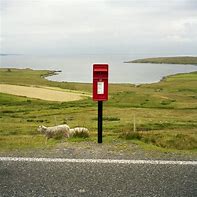
Although I have not done any conscious research yet, there are a couple of artists that I can think of immediately whose work has, inter alia, explored this notion of making a space a place by way of human intervention in and on it. One is Martin Parr’s Scottish post-boxes work: I am not familiar with it and have not yet explored it any further but I am at least aware of it and from what little I have seen, even if it was not necessarily the point for Parr when making the work, I think it is an interesting illustration of my point.
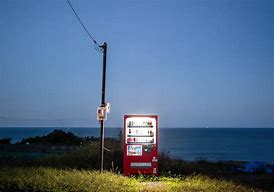
The other, who does appear in my own library, is Eiji Ohashi and his pictures of vending machines in Japan. Some of those that he photographed are in the middle of nowhere. Their very presence though, and I also think the act of photographing them, turns that nowhere into a somewhere.
That said, in some of the cases that I can think of, the chosen sites for the memorials give no indication of having been significant to those remembered. In at least one case that I have looked at today the site seems to have been chosen simply because it is a convenient public space. The result is that even though that space is not inherently significant it nevertheless becomes significant simply as a result of the siting of the memorial.
Two other points also occurred to me as I started to think about this. One is that, in my experience, despite being benches, self-evidently designed and built for the purpose of being sat upon, people rarely do in fact sit on them. For example, one is in a common field just a few metres from where I live that is frequented daily by local dog owners. Occasionally, particularly during the summer months, one might see someone sitting on the bench while their dog plays, but it is not an everyday occurrence.
The other relates to the siting of the benches. Whilst those I have looked at so far are in attractive locales, the views from them are not particularly picturesque. Although they offer welcome respite and rest on a walk they do not necessarily offer views that you would want to experience for their own sake.
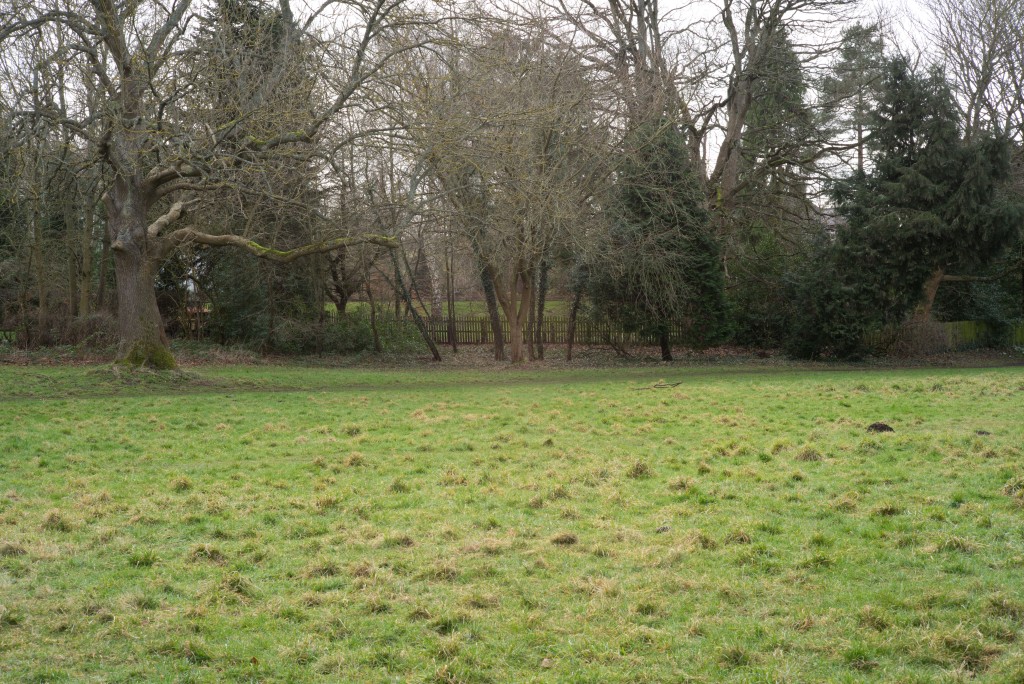
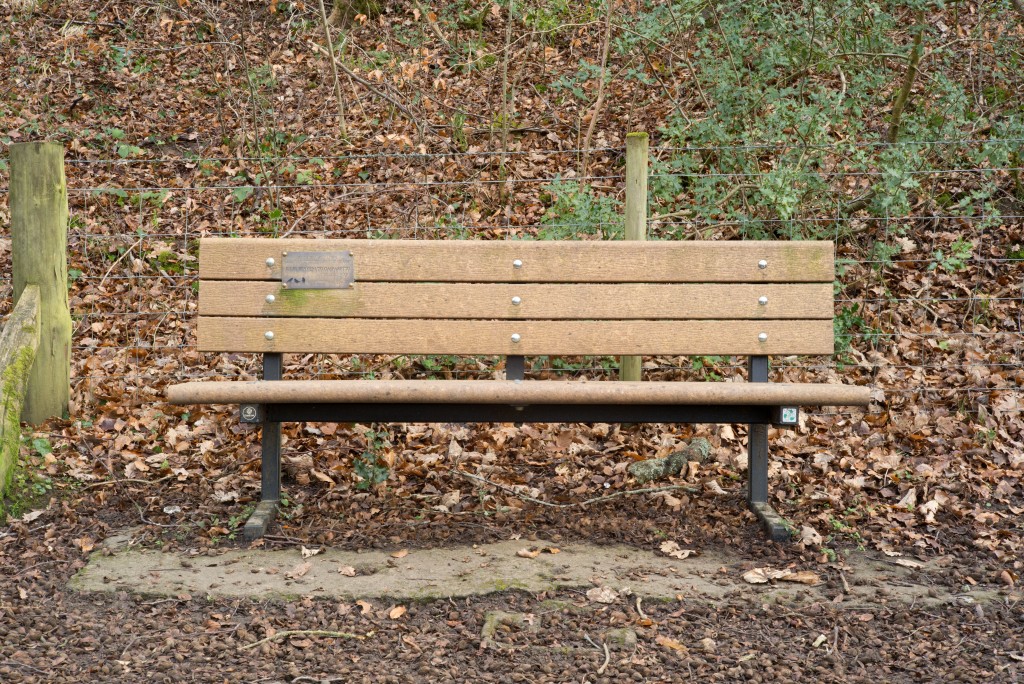
Bearing these points in mind, what I have explored so far is the idea of producing a series of diptychs, showing the bench and its immediate surroundings, together with a view from it. For that view I have chosen one straight ahead, at right angles to the line of the bench in order to avoid giving a partial or distorted impression by choosing one over another.
Not for the first time, and almost certainly not for the last, I find myself at the moment indulging in a typological approach influenced by the Bechers!
By way of a further experiment, in addition to using a digital camera I am also using a medium format film camera, in black and white only for now (this is, I guess, a nod in the direction of the influence of Fay Godwin that is almost certainly lurking at the back of my mind when I think of a project like this) but obviously I need to finish the first roll before I can develop it, scan, and post the resulting images. Here is what I have got so far just from the digital camera:



Ohashi, E, (2017). Being There. Tokyo: Case Publishing
Ohashi, E, (2017). Roadside Lights. Tokyo: Zen Foto Gallery
 Mark Robinson's OCA Landscape, Place & Environment Blog