James Morris
Apart from noting a reference to him in Alexander (2015, at page 124) I did not really know much bout the work of James Morris before now. Indeed my first reaction was to confuse him with the writer of the same name who lives in north Wales!. Now that I have looked at some of his Welsh images I find a comparison with John Davies to be quite illuminating.
Leaving aside the obvious difference that Davies has worked primarily in monochrome where as Morris works predominantly (exclusively?) in colour, I am initially struck by the similarities in some of their work: subject matter (obviously), point of view, framing, format. The big difference is that Davies has done a lot of before-and-after shots whereas Morris concentrated on single images. His pictures though often manage to encapsulate elements of both before and after. Many of the landscapes he focuses upon have not really change after the demise of the industries that formed them. His work is therefore political but in a slightly different way: he highlights how the industrial landscapes of Wales, and presumably the communities that remain in them, have effectively been abandoned, or at least overlooked in the sense that there has been no post-industrial amelioration, restoration, or gentrification. In a way this makes his work more shocking to me than Davies’s.
For example, an old slate quarry that remains just at it must have looked when work stopped for the last time:
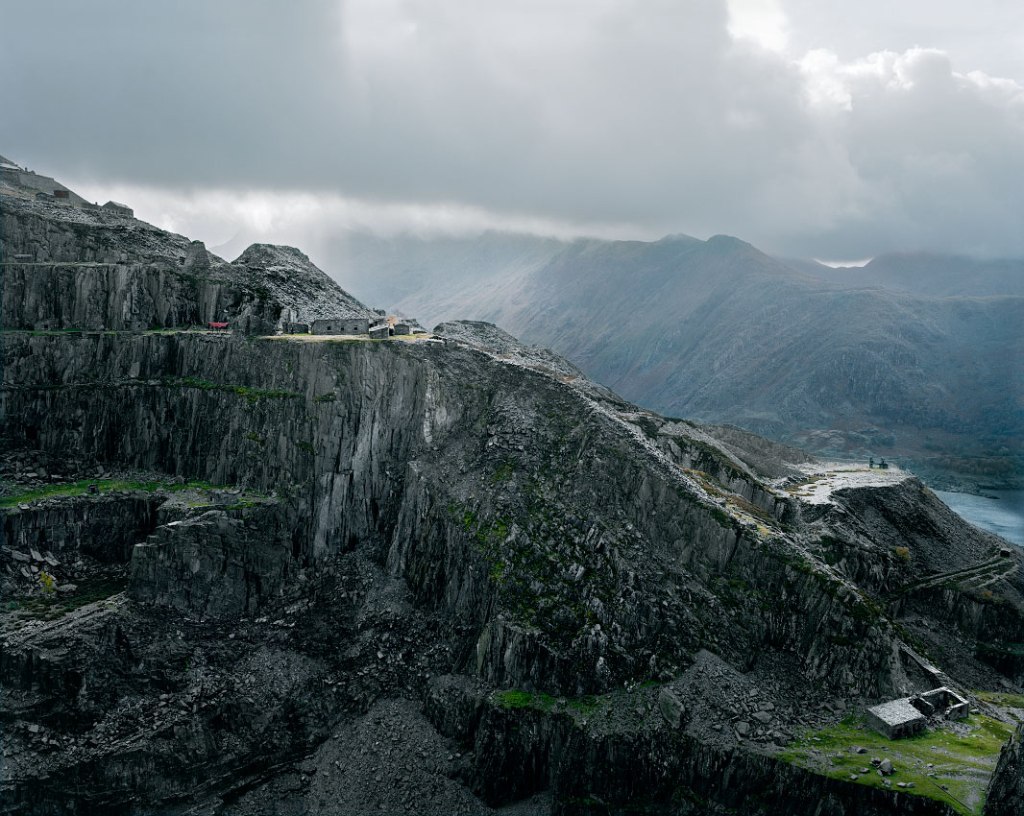
What they also share is a sense of the Sublime, as this example exemplifies. I do think though that Morris does sometimes come closer to the Picturesque, as in the case of this image from Port Meirion, famously the setting for The Prisoner, for those old enough to remember the television show:
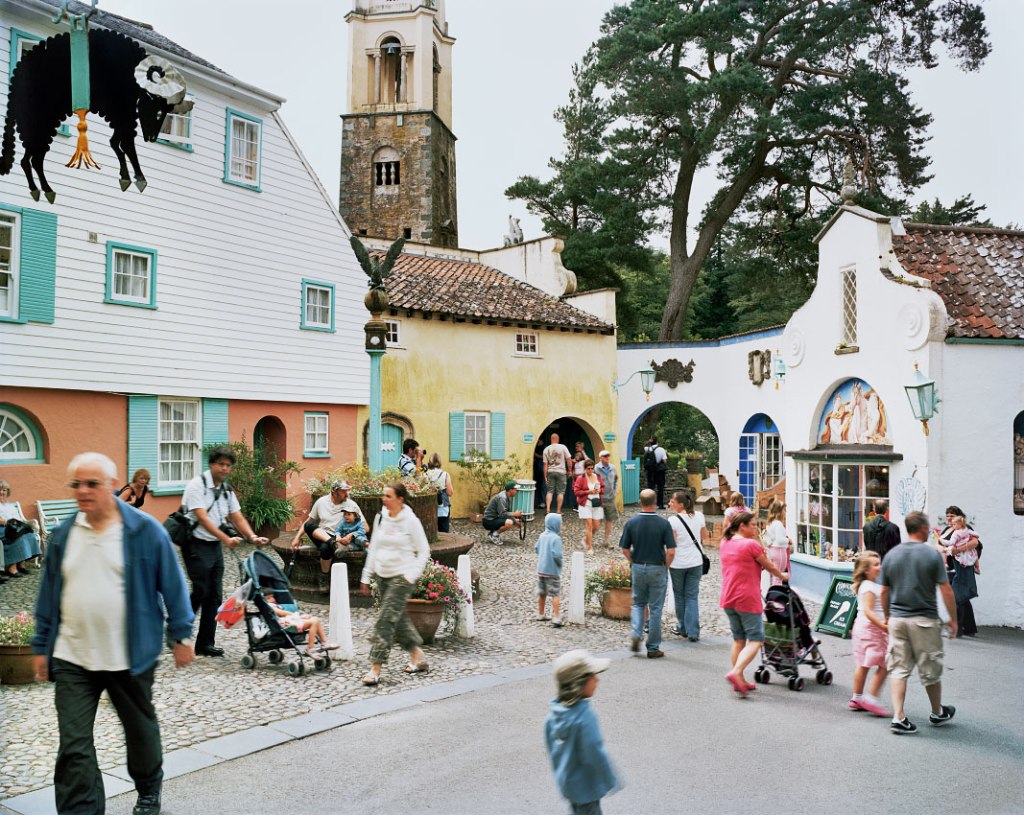
However, the feeling that I get is that he is not just looking for a “pretty picture” and rather that there is again a political point being made. This time it is about a different form of exploitation, not for natural resources and industry, but this time cultural: when not industrial or post industrial, the Welsh landscape is presented as picturesque, something to the delight and amusement of people from outside. I suppose this is exemplified by his image of the car park in the Llanberis Pass at the foot of Snowdon, a magnet for hiking boot clad tourists. (I plead guilty here having trudged up to the summit as part of the Three Peaks Challenge almost sixteen years ago. Mea culpa.)
Patrick Shanahan
It would similarly have been interesting to draw comparisons with Shanahan’s Eden Project work. Unfortunately though the link in the course material no longer works, and I cannot otherwise find anything on the ffotogallery website. There is a website for a photographer of the same name but it has nothing within it about this particular project, so I cannot even be sure it relates to the same person. Similarly nothing seems to show up on, for example, Bing Images. I am afraid therefore that I am a bit in the dark here.
I wonder though, are there parallels here with the work of Ilkka Halso, mentioned in the previous section of the course material (and also considered by Alexander), whom I have not yet addressed? Halo’s images deal with the imminent extinction of natural habitats and a fictionalised, constructed, account of their preservation by effectively turning them into a theme park.
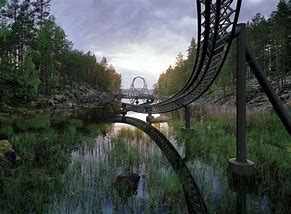
Can the Eden Project, which I confess I have not visited, be said to be doing something similar? Does this make it, to an extent, just another form of physical exploitation of the landscape, and cultural exploitation of the people who visit it? I do not want to be judgmental about it but there is something here that troubles me.
Coincidentally, Halso’s work has been used to illustrate a chapter on Landscape Futures, dealing both with their possible future fate and their value as commodities in a book that I will mention further in the next post on urban exploration: Manaugh (2009), chapter five (page 186, ff.). I first read this a decade ago but at the time Halso’s work did not really make an impact on me. Now I can see it in a different light.
Alexander, J.A.P, (2015). Perspectives on Place. London: Bloomsbury
Manaugh, G, (2009). The BLDG/BLOG Book. San Francisco: Chronicle Books
 Mark Robinson's OCA Landscape, Place & Environment Blog