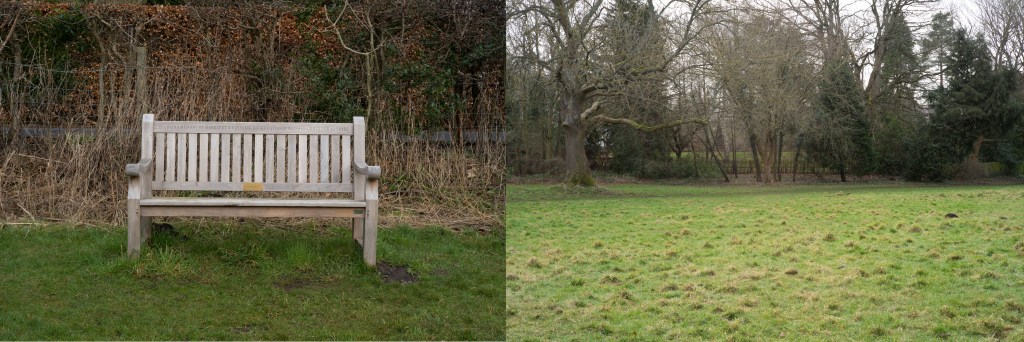
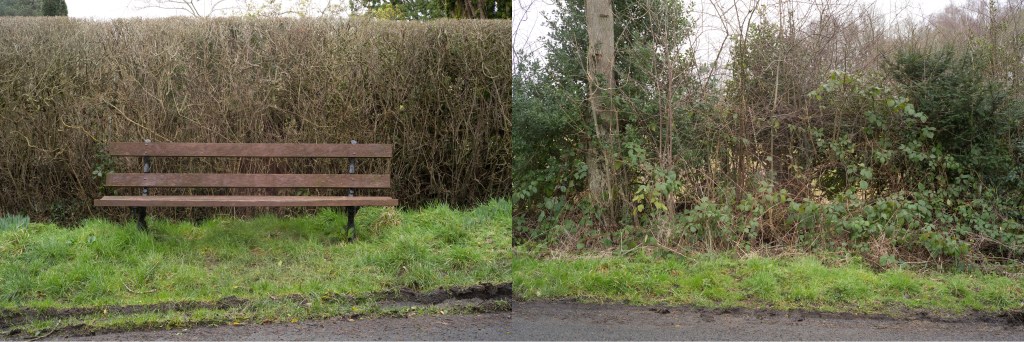
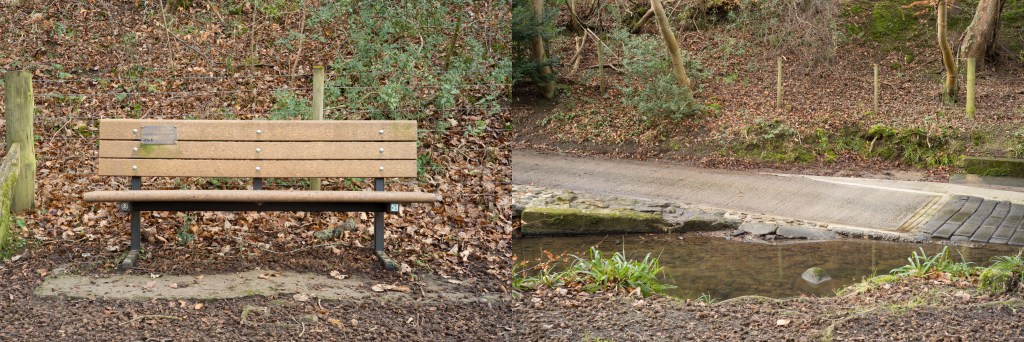
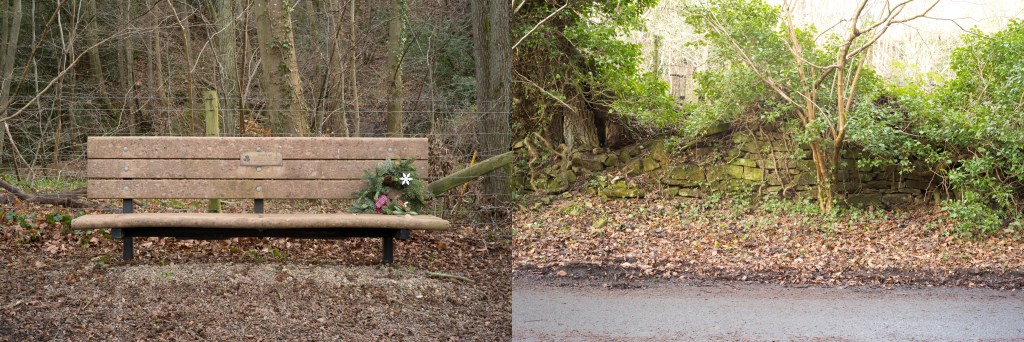
As outlined in earlier posts I have decided for this assignment to focus on the idea of spaces becoming specific places, with some sense of significance, as a result of human intervention. To explore this idea I have concentrated on a series of public benches at various locations around the village where I live. Some of these are specifically memorial benches, commemorating particular individuals, or historical events (for example, the First and Second World Wars, the Silver Jubilee of 1977). Others are simply benches, presumably installed by the local Parish council, that do not have any obvious memorial function.
Some of the memorial benches carry public, easily understood memories. For others the memories are more personal, known to only a select group of people, and not apparent to others.
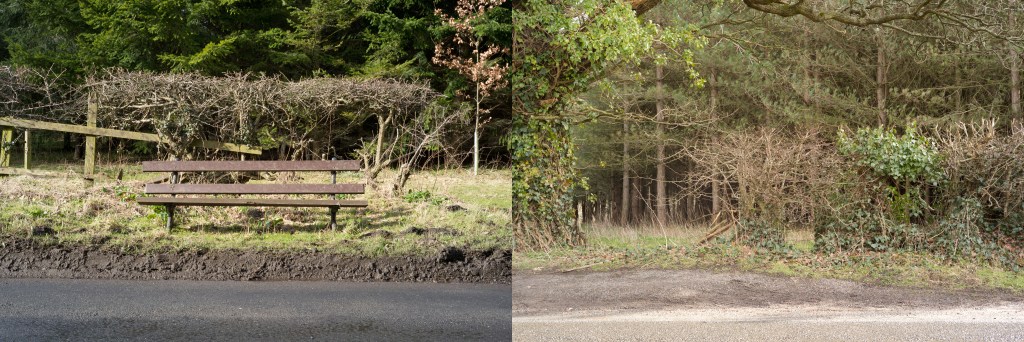
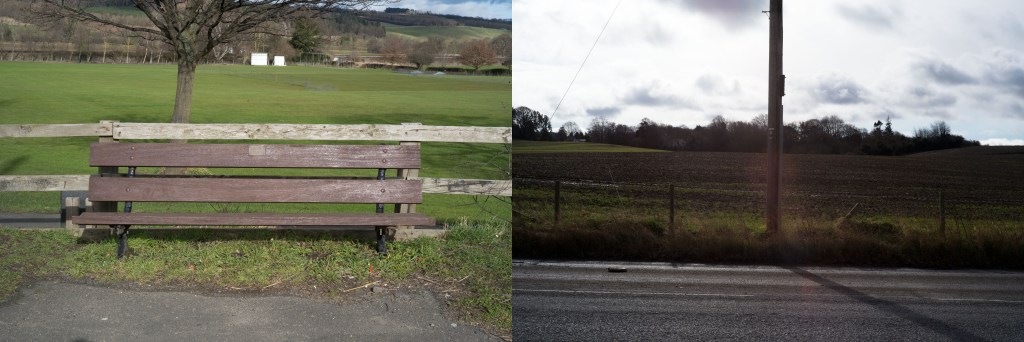
All have in common, with one exception, that it is not clear what direct connection there is between the memory and the site, or why it might have been chosen. The one exception (fourth in the sequence) states explicitly that the dedicatee had a fondness for that particular location.
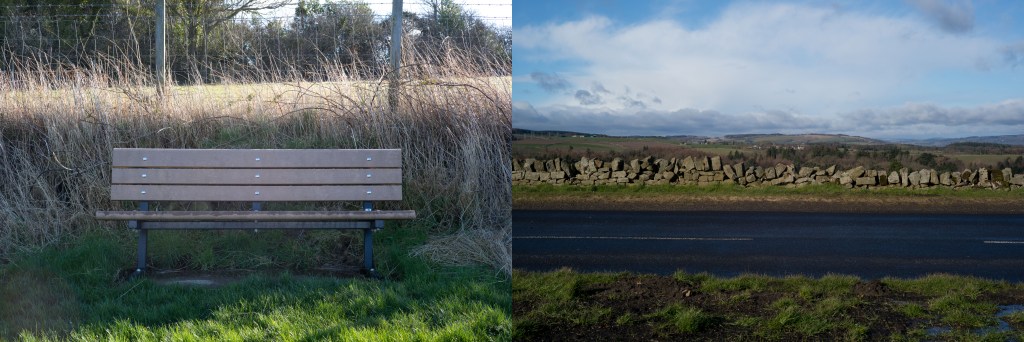
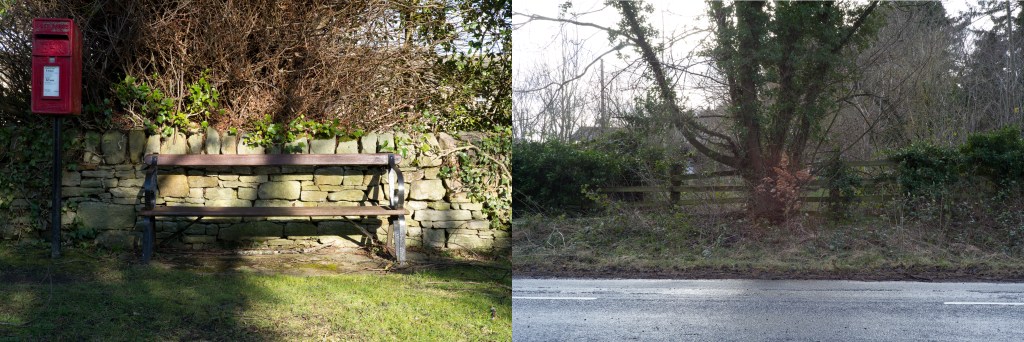
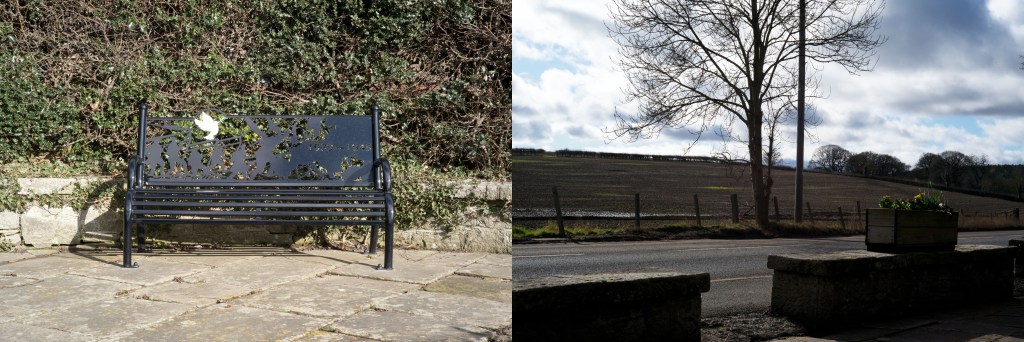
One other thing they have in common is that the sites do not even have anything that might be described as a picturesque view. The “view” directly opposite is of little more than a hedge, or an otherwise featureless or characterless space. Most are sited in locations that are otherwise attractive. But that attractiveness is not apparent from the view directly in front of the bench. Only one (the fifth) offers a more expansive view, looking across the valley opposite. Even this is limited: the view is of the road, a stone wall, and then sky. The valley vista is not actually visible from the bench. Tellingly, there is another bench on the far side of the road, just out of shot to the left, that does have an expansive view. (Because of its location it was not practical to photograph it as well.)
As if to emphasise the lack of intrinsic significance of these locations, I only rarely see anyone sitting on a few of these benches. Some I have never ever seen being used at all.
The images have been arranged into diptychs help root the benches in their locations. The addition of coordinates reflects the fact anywhere can become a “place” by the simple act of specifying its geographical coordinates, turning it into somewhere that is locatable using, for example, GPS, or a map. The sequence is simply determined by the position of each site on a clockwise loop from my house.
In terms of physical presentation, having settled on a typological approach, rather than a linear arrangement I feel that a block layout, in a manner similar to the some of the Bechers’s, and Anton Kuster’s Blue Skies project, would have greater visual impact. For this to work properly though I feel that a considerably larger number of images would be needed than the assignment brief calls for.
 Mark Robinson's OCA Landscape, Place & Environment Blog