At long last the book is finished. It seems to have taken an inordinate amount of time, but I have to recognise that my studio has been out of action for quite a while and a number of other commitments have intervened. Nevertheless, it has taken much longer than I anticipated, not least because I underestimated how much work is actually involved in making a book of this nature; not surprising, perhaps, because I have never before made anything quite like this.
Nevertheless, it is now done, and as a first attempt at such a project I have to say I am pretty pleased with it. It is not perfect and is still, as I anticipated, very much a mock-up, a maquette, but nevertheless I think it looks good. It is on the one hand quite a solid piece of work, not least because in part it is three layers thick – photographs, hinges, map backing – but on the other feels a bit fragile. Possibly this is simply because of its hand-made nature and the fact it is, so to say, a prototype, lacking in a certain professional finish.
A bit of technical background on its construction. The photographs are digital prints on Canon Pro Platinum paper, hinged together with strips of envelope (a bit more robust than the other papers I have available). The map sections (prints of a scanned, hand-drawn map) are on ordinary plain printer paper and overlap the joins of the photographs, reinforcing the hinges. The covers are cut from some fibre board that I happened to have lying around in the studio – just the right weight and thickness – and covered with a smooth finish rayon dark blue bookcloth These are in turn lined with a white ribbed kraft paper. Everything was stuck together with a rice starch and PVA paste, which has the advantage of being slow drying, so that everything could be adjusted and aligned properly before going into the press, dries without staining, and smooths out any folds or creases in paper. As each step of the construction was completed the growing book went into an old cast-iron bookbinder’s press (which is incredibly heavy!) to keep everything flat while the paste set. (Despite this there is a clear tendency for the photos to curl slightly so it is clear that over time it is going to be necessary to keep the book firmly closed to keep the contents flat.) I have added a small colophon plate to the inside of the front cover and an extra photo, not part of the original sequence for this assignment and on a smaller scale, by way of a coda onside the back.
The specialist bookbinding materials (bookcloth, paste, a couple of tools) I bought from Shepherds in London, a Mecca for bookbinders. I have not visited their shop but I expect it will be an Aladdin’s cave! (My favourite such shop of all is probably Cornelissen near the British Museum, that dates back to 1855, from which I have in the past bought much of my print-making materials.)
Here are some views of the finished article:
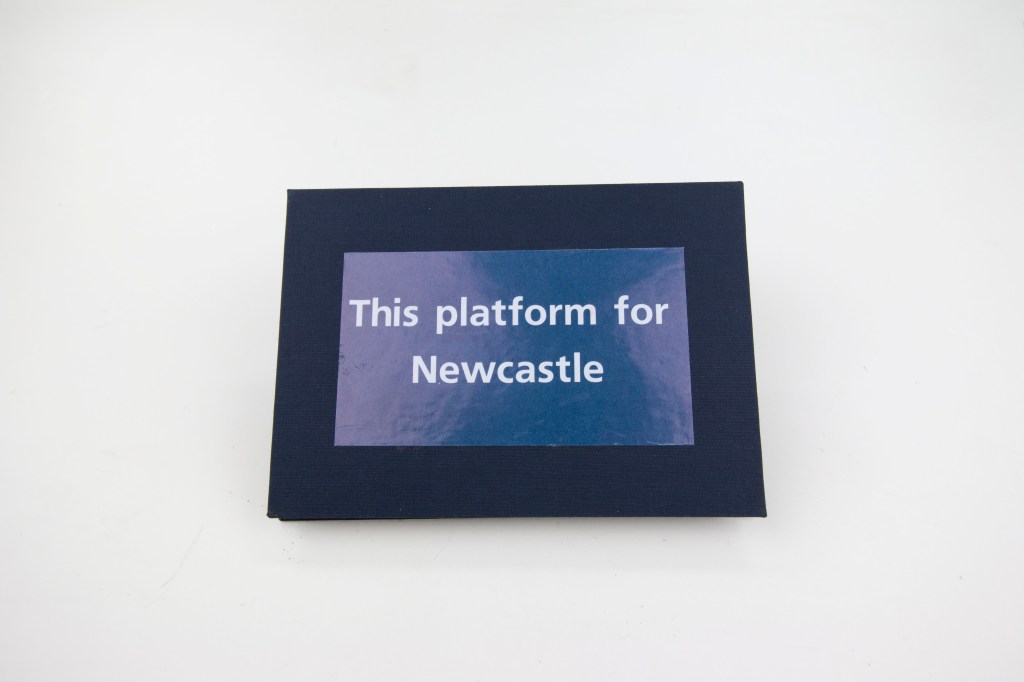
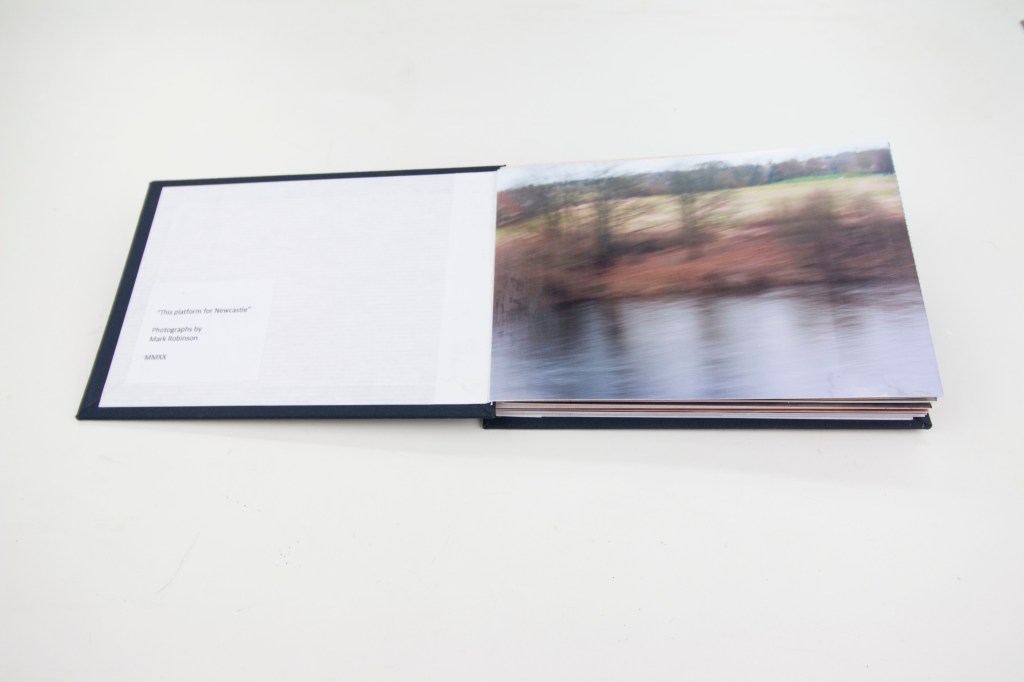
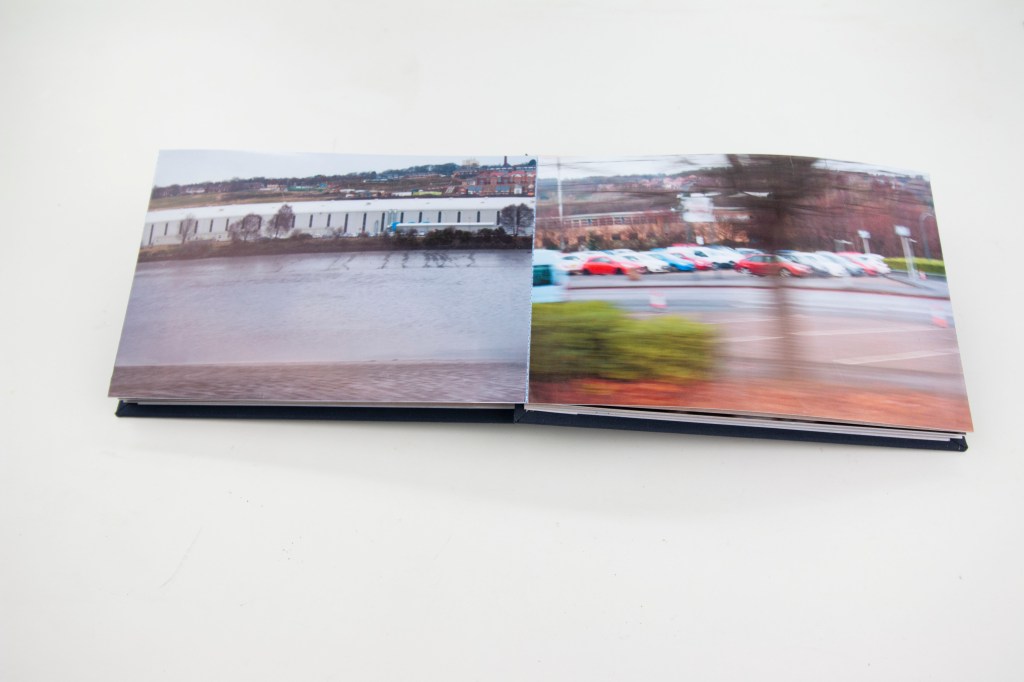
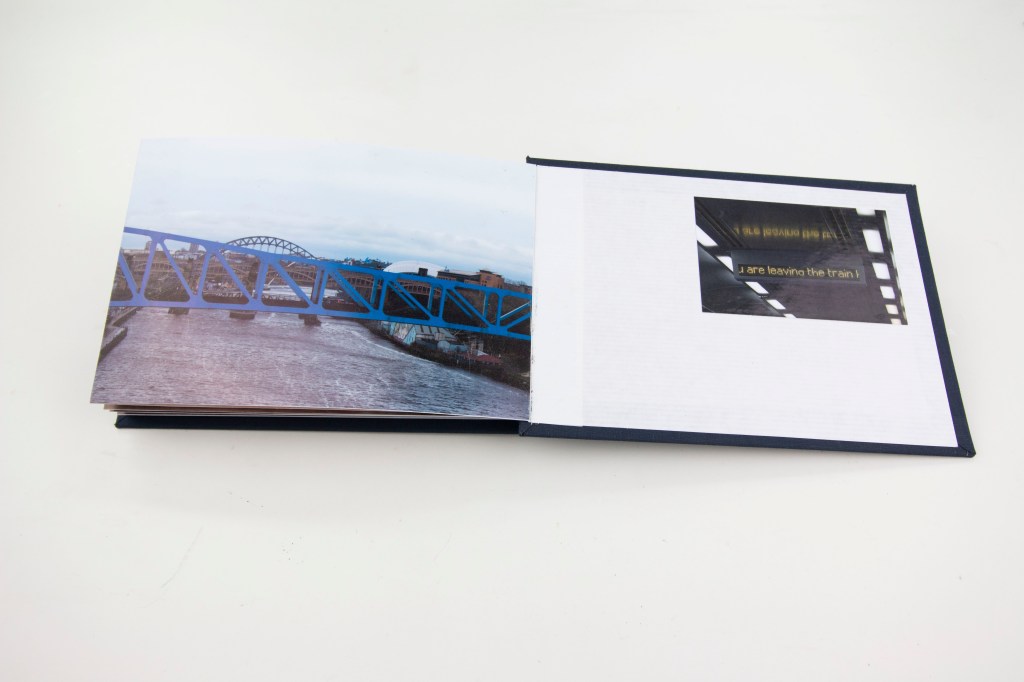
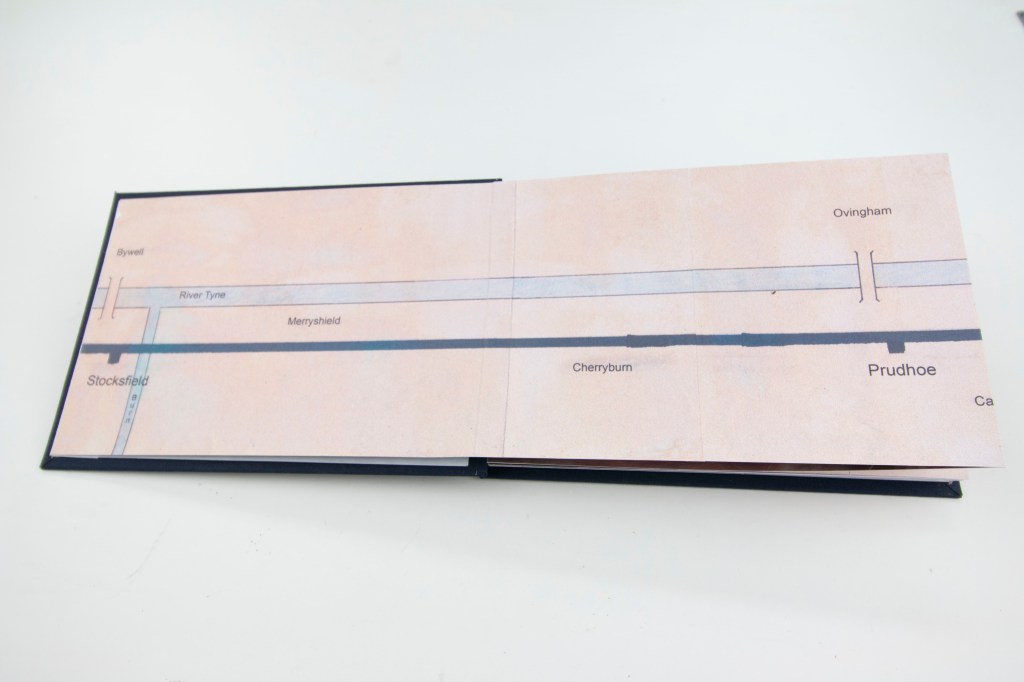
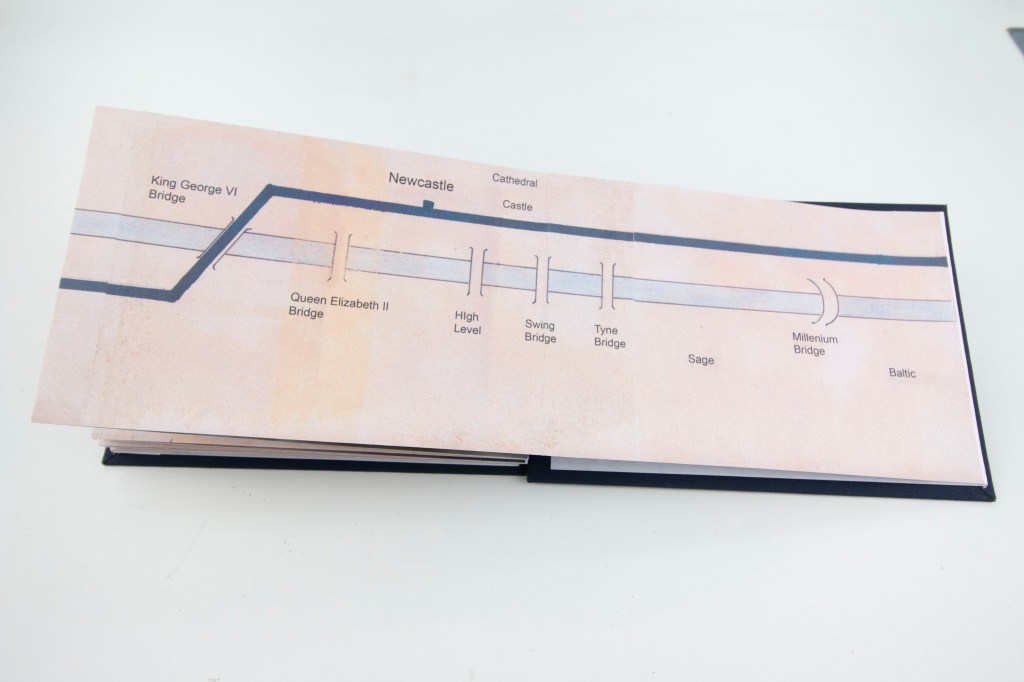
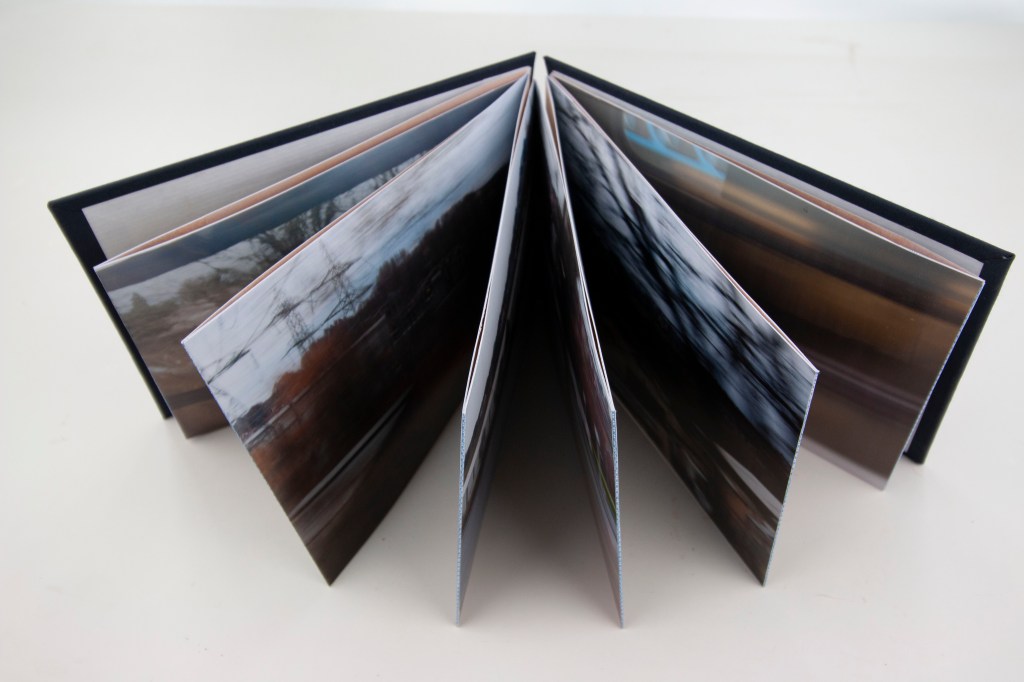
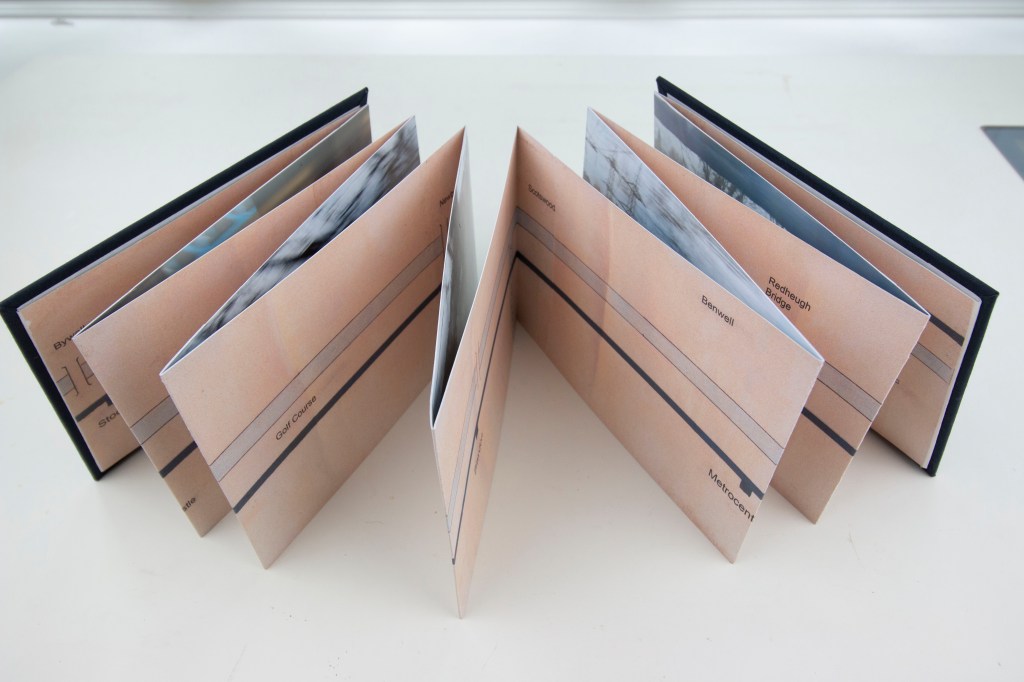
And a short video to give some further sense of the physicality of the book as an artefact:
It could be said that, in a sense, this has been a bit of a distraction in that I did not need to make this book. Nevertheless, I feel it has been a very useful, and enlightening, not to mention valuable, diversion. I have learned so much about the physical process of producing a book (at least one in concertina form) that I am sure is going to be valuable in the future and open up more possibilities worthy of consideration for the presentation of work. It has also itself, as a physical process, simply been enjoyable and satisfying and worth doing from that point of view alone.
 Mark Robinson's OCA Landscape, Place & Environment Blog