This article concentrates on thinking about, and the use of ideas of, landscape as used during the Second World War but I think the points actually go deeper, are much older, and are fundamental to enduring ideas of “Britishness”.
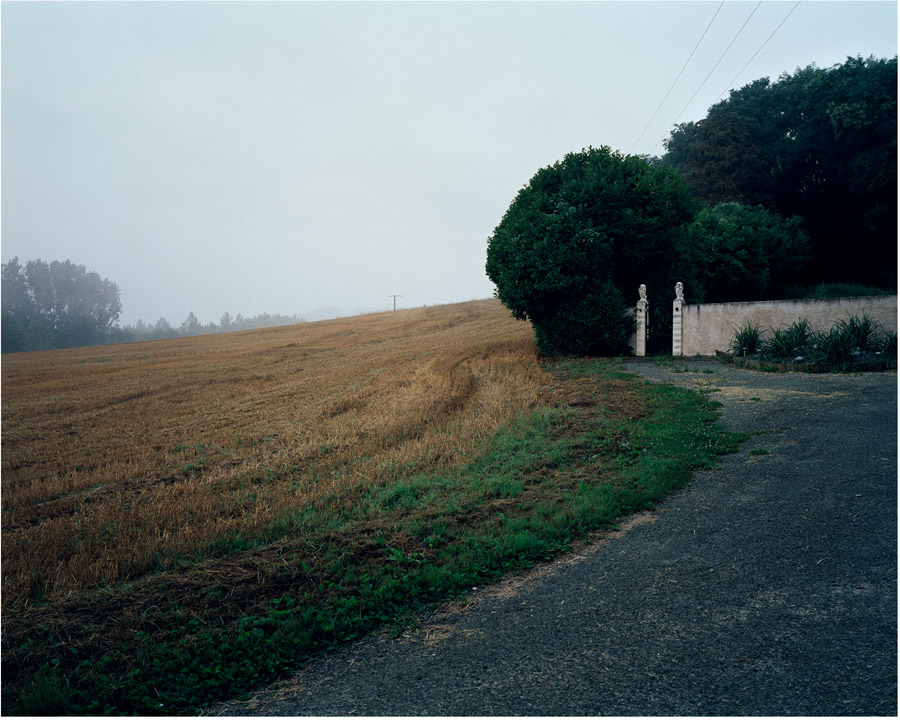
One irony that the article touches on is that these ideas of landscape are very much rooted in England, and Englishness, but have come to stand for Britain and Britishness as a whole, at least in some circles. Our idealised landscapes are nearly all English, particularly southern English. At best some of the ideal images will come from, for example, the Lake District, but most of the rest of the nation does not get much of a look-in. There might be the odd view from the South-west, particularly if related to that great “British” myth of King Arthur, or a suitably picturesque, but rugged and wild – sublime even? – view from the Scottish Highlands, but little from anywhere else. It is ironic that this is essentially a bucolic, rural myth, whereas the majority of the population live in cities, a disjunction all the more striking in the south given the huge proportion of the population that lives in London alone.
The key theme, particularly in relation to the war years, is how viewing the landscape has been, and still is, very much rooted in the past. Sometimes an imagined, even mythical past (King Arthur again), but nevertheless an idea of the past as something different from, and better than, the present but that helps to define the present. What is more, and this is an idea that from my admittedly jaundiced and sceptical 21stcentury view I struggle with personally, the landscape was seen to go as far as defining, or at least helping to define, a quintessentially English way of life.
One idea I find particularly interesting in the article is the way, during the war, the landscape was closed off, not only to outsiders (the hiding of place names, road signs, and so on), but also to the inhabitants of these islands behind barbed wire fences and other physical defences, so that in a way the landscape was put away for safe-keeping for the duration. The image that came to my mind while reading this piece was of the works of art that were taken from public galleries and stored in quarries and mines in remote areas out of harms way. It is as if the landscape had been packed up and hidden in a cave.
The article makes much of the way the presentation of the landscape as something that had to be preserved, that was worth fighting for, almost indeed why the war was being fought (which I think is a rather reductive view but I can see why that message might have been put across at the time), served to unite the different classes and groups within society who had, notably during the inter-war years, but in fact going back far, far longer, been at odds over land use and ownership. I am not sure that these conflicts have in fact yet been resolved, or indeed ever will be, and with the war past are as alive today as ever before.
The other major point that the article brings out is the sense of the nation as a fortress. This was of course nothing new and probably goes back as far what one might regard as the birth of a distinct, single, united nation of England (deliberately leaving out for now Scotland, Wales, pre Act of Union, and Ireland) after the last successful European invasion in 1066. The idea of the “fortress” island promoted during the war at the very least leads me to think of John of Gaunt’s “scepter’d isle’’ speech in Shakespeare’s King Richard II (Act II, Sc. i, lines 43 – 49):
“This fortress built by Nature for herself
Against infection and the hand of war;
This happy breed of men, this little world,
This precious stone set in the silver sea,
Which serves it in the office of a wall, or as a moat defensive to a house,
Against the envy of less happier lands;”
A bit ironic today in light of the coronavirus! Whilst this myth of “England” has been alive and well of late in the context of Brexit it is not much help, let alone protection, in the face of Covid-19, which shows up the myth for what it is.








 Mark Robinson's OCA Landscape, Place & Environment Blog