Category: Research

Assignment 1 – Further research

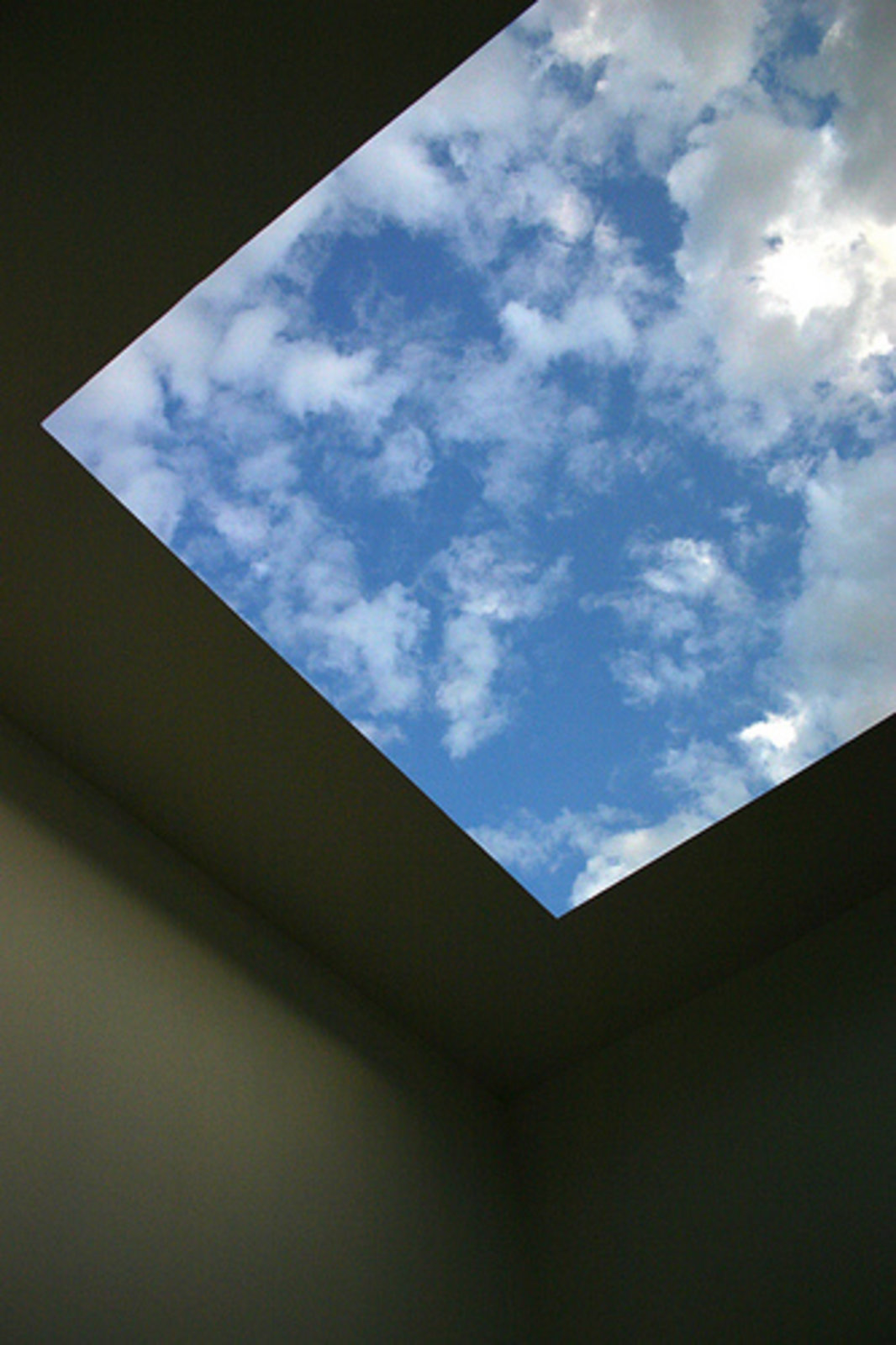
The two Dutch artists recommended by my tutor, Berdnaut Smide and Jan Dibbetts, are both new to me. In the context of the work that I have done for this first assignment I think the former is more interesting and relevant.

Dibbets’s geometrical collage approach is certainly striking and I can see some contexts in which I might want to experiment with this sort of form.
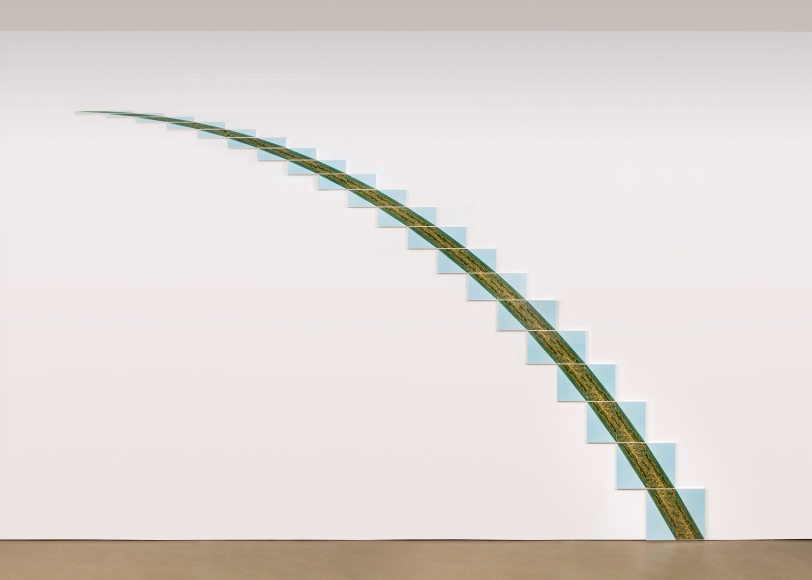
Comet Land 3º – 60º Sky Land Sky

For the present cloud/skyscape series though I struggle to see how it might be applied constructively.

Smide’s work, which at least in its static forms has some similarities with Judy Chicago’s smoke photos that I have written about briefly separately, but what I find more intriguing is his dynamic, video based work.
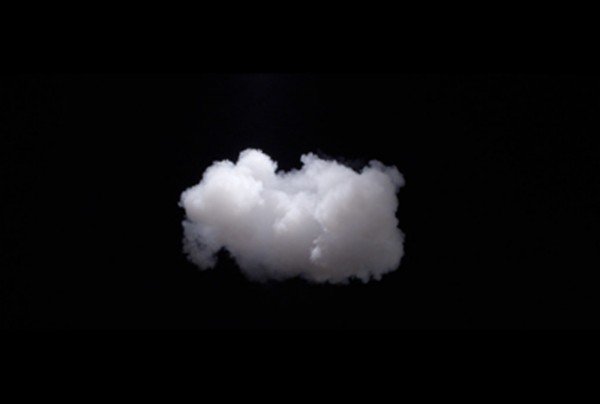
Nimbus Atlas

This was one of the influences for exploring the possibility of some sort of slideshow presentation, as discussed in my last post. I have no idea how he achieves this effect but clearly as it is video based it is potentially more successful as it avoids any sense of discontinuity which I fear is always going to be an inherent problem with any progression of still images.

I have kept what I hoped would be the best tip last, the interview with Hiroshi Sugimoto. I have to say though that I am a bit disappointed. I find this interview rather shallow, no doubt as a result of limited space and enforced brevity, and rather disjointed, so that it does not really do justice to any of the varied strands of his work. The references to spirituality in general and Buddhism in particular are unfortunately too superficial to add much that is useful to my understanding of Sugimoto’s work from this point of view.

What I did find interesting though is his observation on black and white photography, that it is the best medium to show “the tonality of darkness to light”, which is a view I share, and which perhaps goes to explain why so much of the work in my library of photobooks and the prints that I have collected are in black and white.

https://baltic.art/whats-on/judy-chicago

http://www.berndnaut.nl/

https://www.huffpost.com/entry/interview-with-hiroshi-su_b_8924692

https://www.peterfreemaninc.com/exhibitions/jan-dibbets2?view=slider#6
Assignment one: Beauty and the Sublime – Postscript

Almost inevitably, having posted on this assignment yesterday something else has come up today that is worthy of comment.

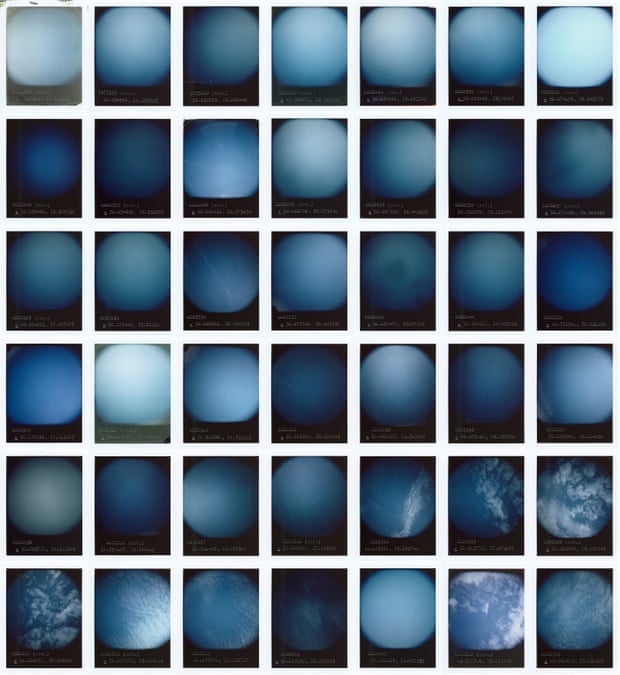
In the Guardian this morning there was a piece on the latest Deutsche Börse photography prize and what caught my eye was the Anton Kuster Blue Skies Project. This is a series of ‘Polaroid’ photographs taken of the skies above the known, ‘official’, 1078 Nazi concentration camps. This has obviously not been an influence on me at all in the choice of subject for my assignment submission as I did not know about it until today. I am nevertheless very much struck by it and clearly this is an example of the Sublime, in the sense of provoking awe and even terror. A lot more serious than my little project!

One thing that is worthy of note, and which I have not covered in any of the previous posts on my own work, is the vignetting. I do not know how Kusters has achieved this with his work. I did think about doing something like this, most likely by adding a mask in post-production, but ultimately rejected the idea because I felt it would make the resulting images much too derivative of Turrell’s work, in which the sky is seen within a frame created by an aperture in the roof of the structure. A sense of framing is also important in, for example, Hiroshi Sugimoto’s movie theatre work. For good or ill though I decided I did not want an artificial frame within the confines of the image itself. I preferred to let the limits of the photographic images themselves serve that purpose. In a way this again links back to some of the Buddhist ideas that have informed my project. The final images are a bit like thoughts drifting across one’s consciousness while meditating. They are insubstantial and fleeting, to be neither welcomed nor rejected or resisted, but merely to be noticed as they pass and let go on their way. Introducing some sense of frame would, I fear, give these “thoughts” too great a sense of solidity that would not fit within the particular conception of the Sublime that I have chosen to explore.

And how do I react to this work? That is a bit difficult as I have not seen it in the flesh. My first thoughts though are that it must be overwhelming simply because of the scale of the project, the number of individual images involved, small as they appear to be individually. Nothing can ever really convey or encompass the sheer scale and horror of the camps (even my own visit to Auschwitz a few years ago did not really convey a sense of the full scale of the evil at work though the experience of being there was itself shocking, deeply disturbing, and chilled me in a way that nothing has ever done before, and haunts me still) but the number of pictures does perhaps at least give some sense of it. If nothing else the affectless, almost abstract nature of the photos, lacking any inner context other than that provided by the stamped captions, gives some idea of the way that for the Nazis the death camps became paradoxically mundane, even banal, the killing merely a mechanical, bureaucratic process: which I find quite difficult to say and which serves only to emphasise how utterly horrific this enterprise was.

I do not honestly think this is the sort of project I could ever undertake and to that extent it does not lead me to think that there is anything I would necessarily do fundamentally differently if I was to address my own project again.

https://antonkusters.com/theblueskiesproject

https://www.theguardian.com/artanddesign/2019/nov/05/deutsche-borse-photography-prize-mohamed-bourouissa-anton-kusters-mark-neville-clare-strand

Exercise 1.7: Assignment one preparation – 2

I am not entirely sure why the course material now requires me to record correspondence with my tutor about my chosen subject for Assignment One. It is not something that any of the other modules have asked for. Nevertheless, suitably redacted to concentrate on the principal subject, here is my email and my tutor’s reply:

“Whilst the idea of the Beautiful has not really engaged me I feel more drawn to the ideas of the Sublime and that is the path I want to go down.  If you have a look at my recent blog-post, particularly on 1.6 The contemporary Abyss and preparatory work in 1.7 you will get an idea of where my thinking is heading at the moment.  The ideas that appeal most to me are the Sublime as representing the unrepresentable, the void, and Buddhist notions of emptiness/nothingness.  The two particular artists who are influencing me most at the moment are Hiroshi Sugimoto and James Turrell.  What I have been concentrating on is a series of sky-scapes, cloud-scapes, with a view to producing images that are in a way devoid of any meaning or significance in and of themselves – other than at a most basic level, meteorological records – almost abstract, hinting at something ineffable and transcendent (without wishing to sound too much likes Pseuds’ Corner!).

If you have a moment please take a look and yours thoughts would be most welcome.  All going well I would hope to have this assignment finalised within the next few weeks, at which point I would propose simply to produce a further blog post covering the points required by the brief and a final set of images.  I will probably also include contact sheets to give some idea of the preparatory work and final selection process.”

Reply:

“The direction you’re taking A1 looks fine, with some solid points of research – Turrell, Sugimoto and Richter: they all have a solid conceptual framework for their work.  Also, very detailed exercises uploaded to your LL.”

Exercise 1.7: Assignment one preparation

Looking ahead to Assignment One I am thinking about concentrating on the Sublime, rather than the Beautiful, as this should give me greater scope to explore the ideas of presenting the unpresentable and of nothingness/emptiness that I have written about recently.

What I would most dearly like to do, as I have lady suggested, is work on a seascapes project. However I have to admit that this would in many ways probably be far too derivative of Sugimoto, even if I was to go for somewhat more dramatic scenes, such as those made by Garry Fabian Miller. From a practical point of view I doubt the feasibility at the moment of making such work given the length of the round-trip to the nearest bit of coast.

As an alternative I am currently thinking more along the lines of James Turrell’s Skyspaces. This will link back to the cloud paintings of the likes of Cozens, Turner, and Constable all of whom I mentioned in Exercise 1.3. It also still fits with the idea of the void in Sugimoto’s work, and the concepts of the sublime that have appealed to me from the outset.

Again it is not really practical at the moment for me to make repeated trips to the nearest Turrell to me at Kielder. It is not that far away but still at least an hour’s drive in each direction – it is easy to forget how big and relatively empty this county is! Really though I do not need to go there and can shoot sky scenes in the comfort of my own garden.

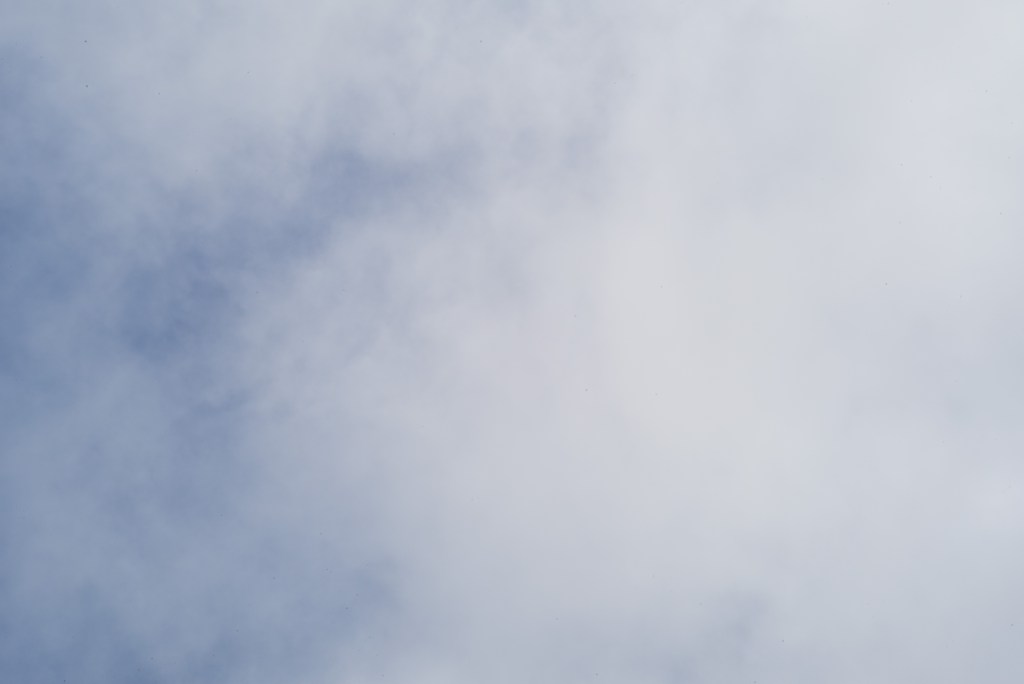
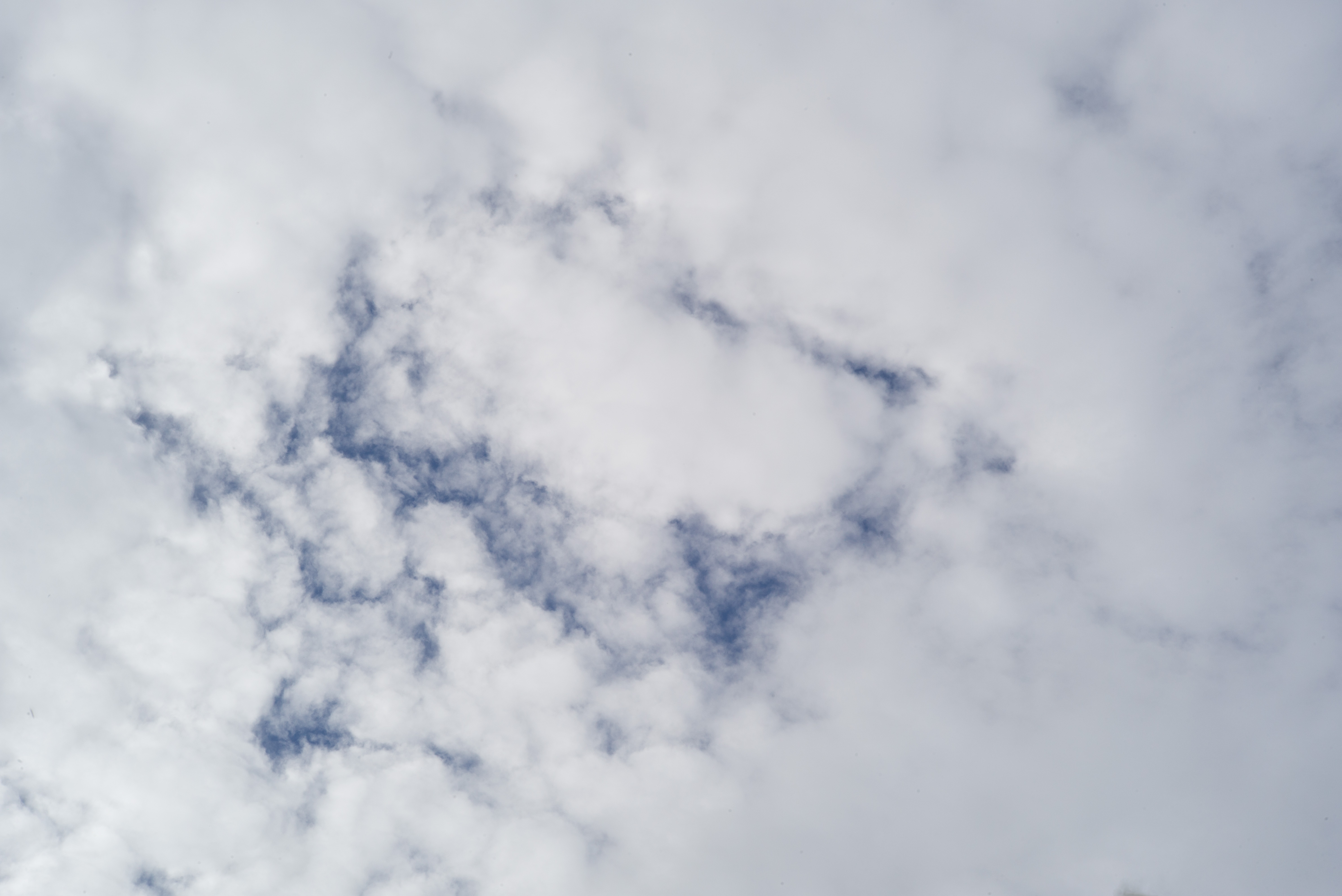
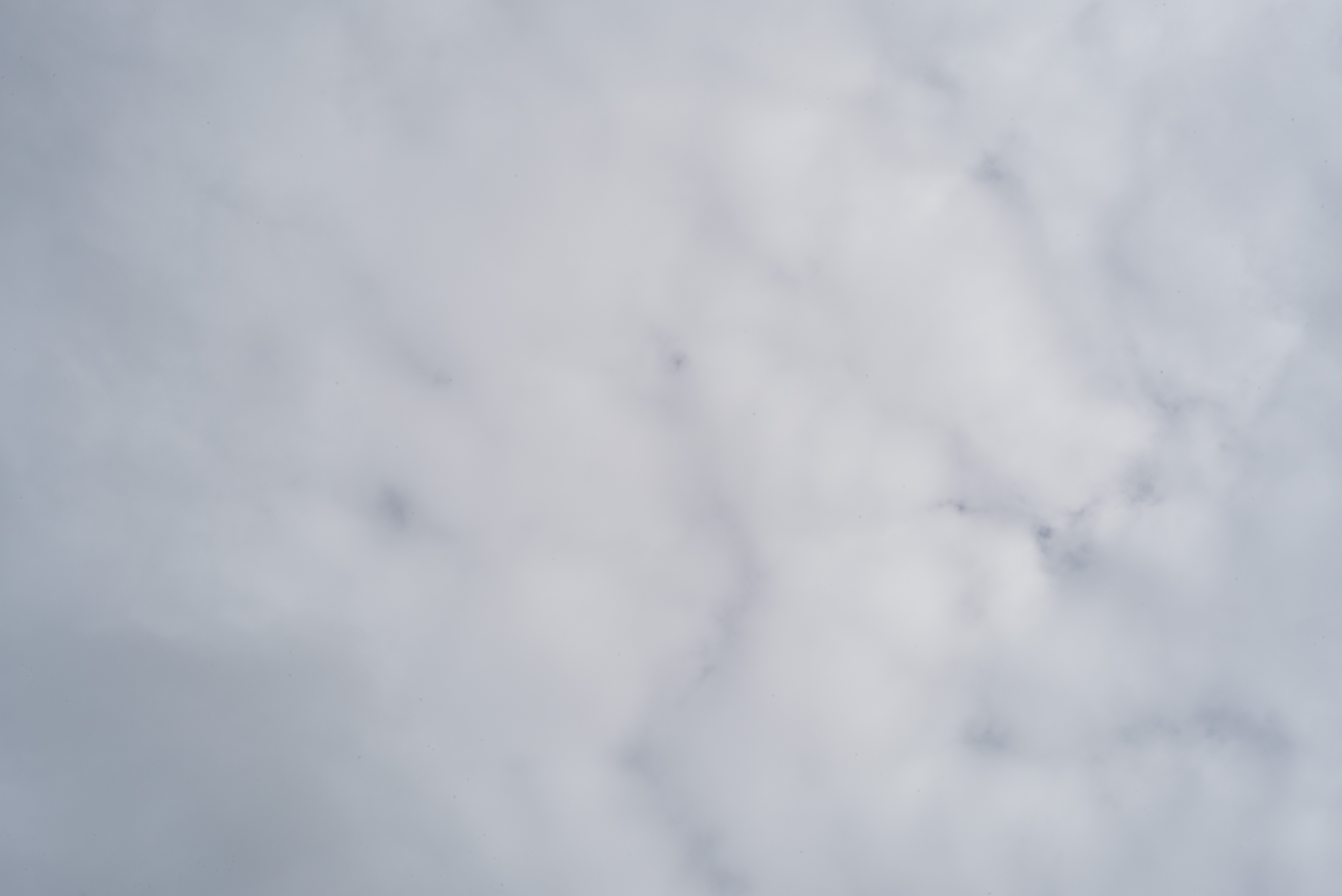
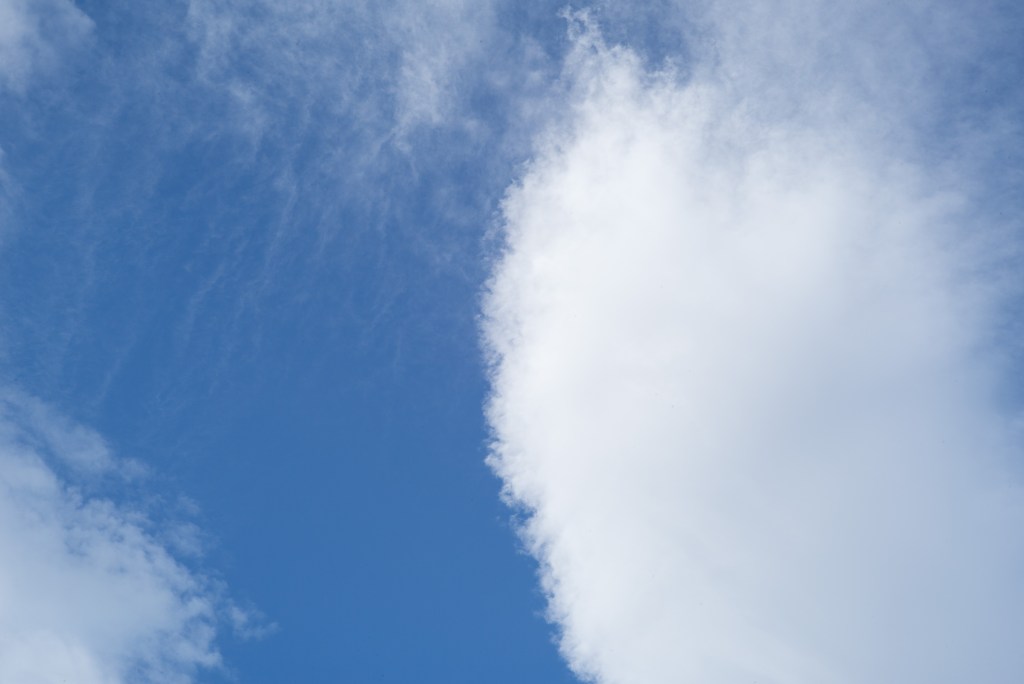
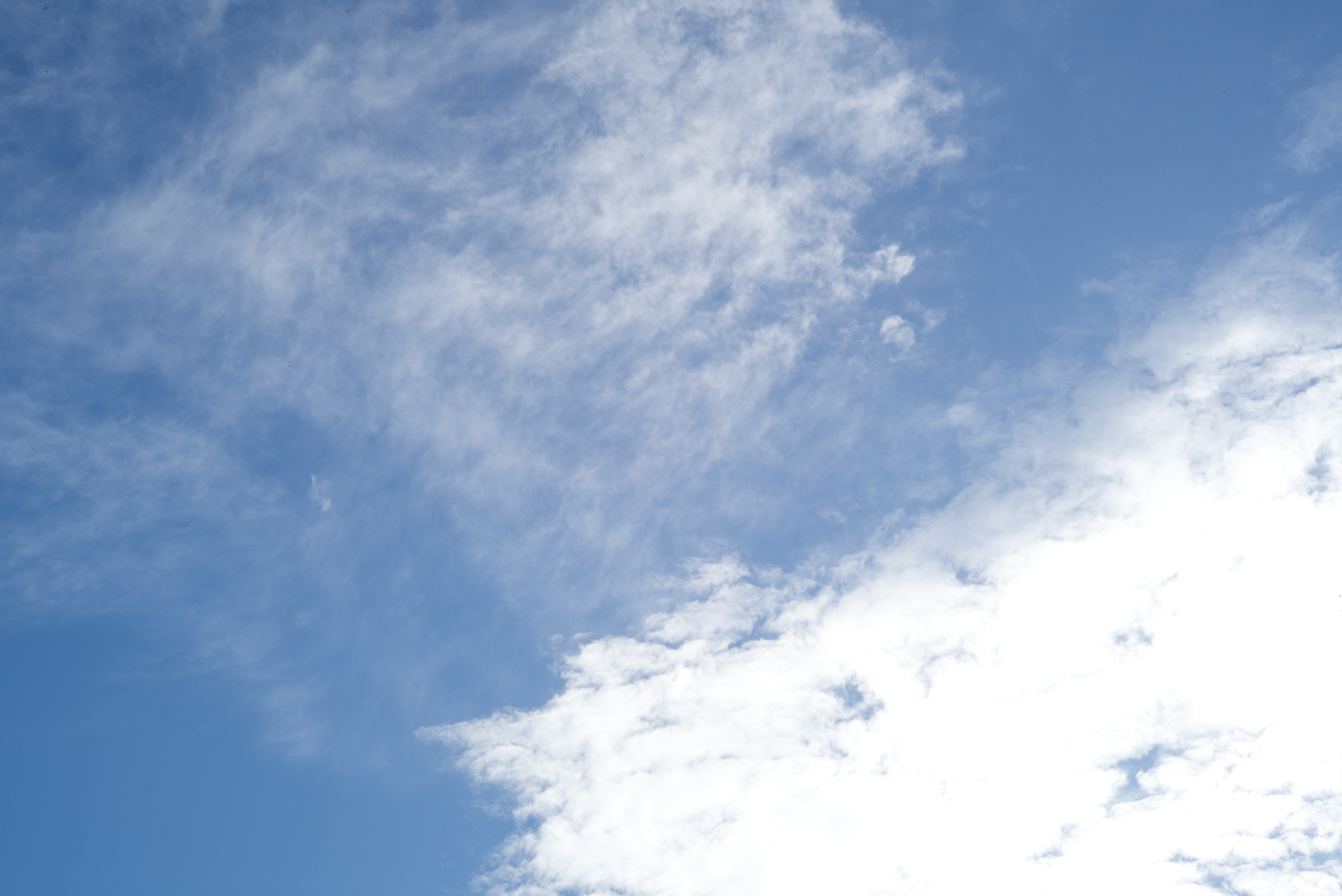
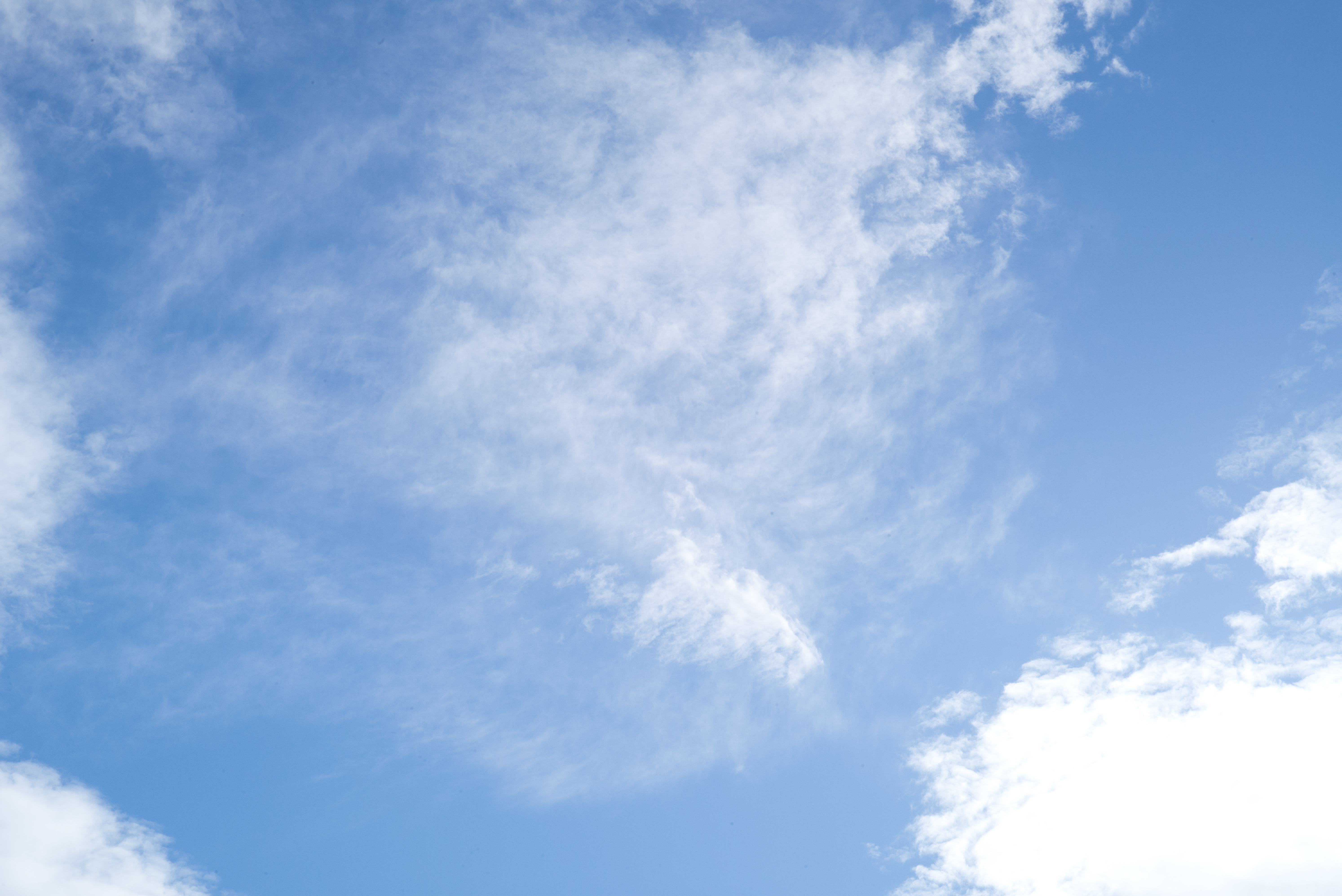
Here are the first couple of experiments, taken yesterday and today. Yesterday was very overcast so the picture actually reveals little – it is a void, empty, a picture of nothingness. Today was a bit more broken so the picture is more easily recognisable as clouds.

14/10/2019
15/10/2019

I will continue with this experiment over the next couple of weeks (weather permitting) and try a shot each day and see what we get. I will also, in the meantime, think about some other possible approaches.

16/10/2019
16/10/2019
20/10/2019
22/10/2019
22/10/2019

23/10/2019
23/10/2019
23/10/2019
23/10/2019
23/10/2019

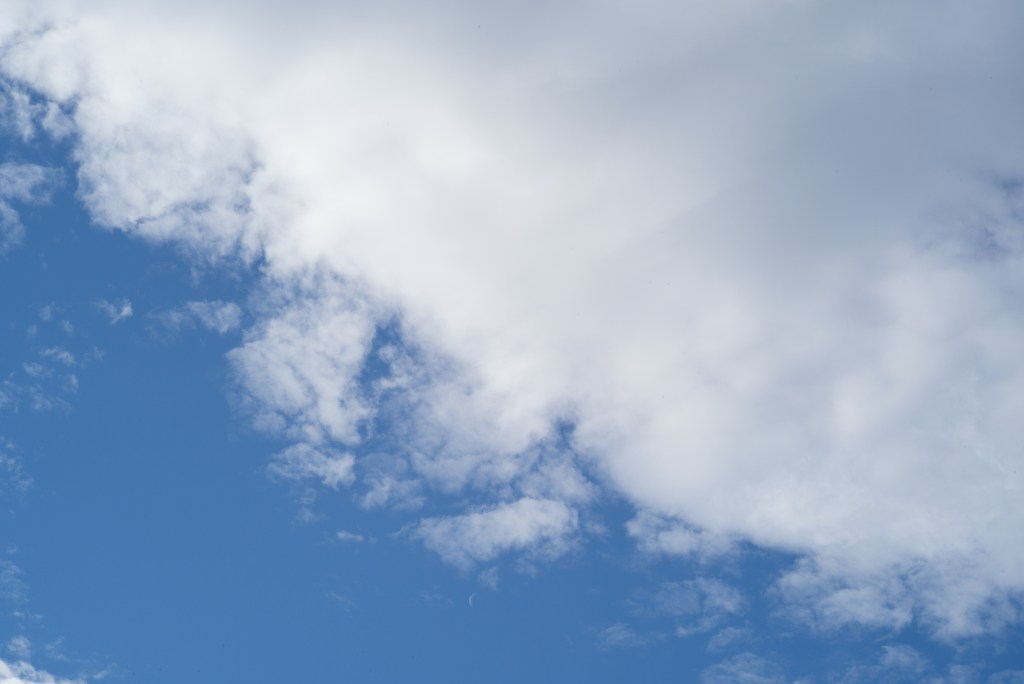
These were all taken over the course of the same afternoon. It was quite breezy so the sky was constantly changing. Though not easy to see, the third in this day’s sequence managed to catch the moon, a very small crescent in the middle towards the booth of the picture, just below the cloud edge.

While working on this I have been giving further thought to other potential influences on what I am trying to achieve. One of course has to be Alfred Stieglitz and his “Equivalents”, photographs of clouds that are arguably the first abstract pictures ever made. I do not though feel any conscious influence. Yes of course I am doing something similar with my cloud pictures but only up to a point. Stieglitz was, I think, very much pursuing a pictorialist line of approach. His could pictures do not carry, so far as I can divine, any deeper meaning or significance. It is not clear to me that he “meant” anything in particular in making these pictures. In a way what he was doing was more closely aligned with what Cozens, Turner, and Constable were doing.

The other is Gerhard Richter who made a number of sea- and sky-scape paintings in the late 1960s and early 1970s. While working on my pictures I had this nagging feeling at the back of my mind that a contemporary artist had done this sort of work but it is only now, now that I am just about ready to submit this first assignment, that I have realised that it is Richter that I have had in mind and have gone back to look at this work. Although not an active, conscious influence this work has clearly had an effect, even if only at an unconscious level because clearly Richter was seeking to do with his cloud paintings what I am trying to do now. As Mark Godfrey points out (2011, at page 83): “these are not just paintings of skies – they are paintings that show Richter’s attraction to the ‘unknowable and unrepresentable’…” This fits exactly with the interpretation that I have sought to place upon the Sublime.

Wolken, 1970

Godfrey, M, & Serota, N, (2011). Gerhard Richter: Panorama.  London: Tate