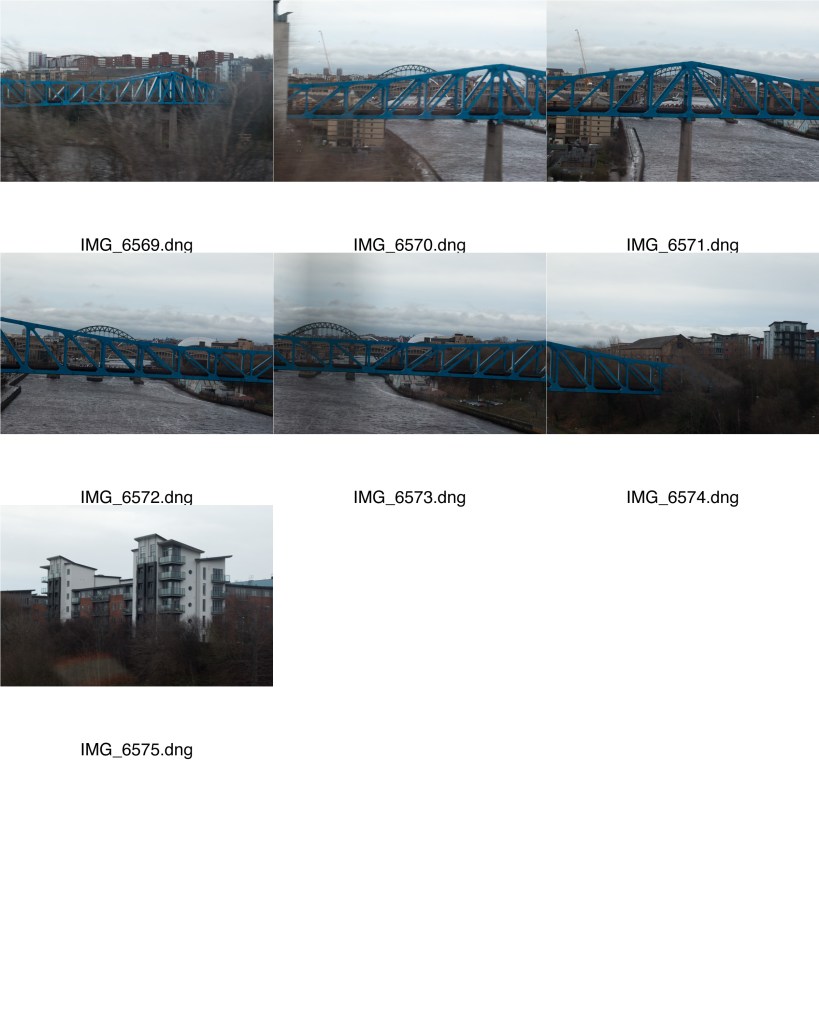
Category: Assignment 2

Assignment 2: The Journey

Much of what the brief for this assignment calls for by way of interpretation, relationship with cultural aspects covered in this part of the course material, technical choices, and influences, I have already covered in previous posts for this assignment, specifically: First Thoughts; First Contact Sheets; Further Research; and Some Further Thoughts. To that extent I am not sure how useful or productive it would be to go over the same ground again, albeit in perhaps a more condensed form.

What I certainly need to cover is the choice of the final twelve images.

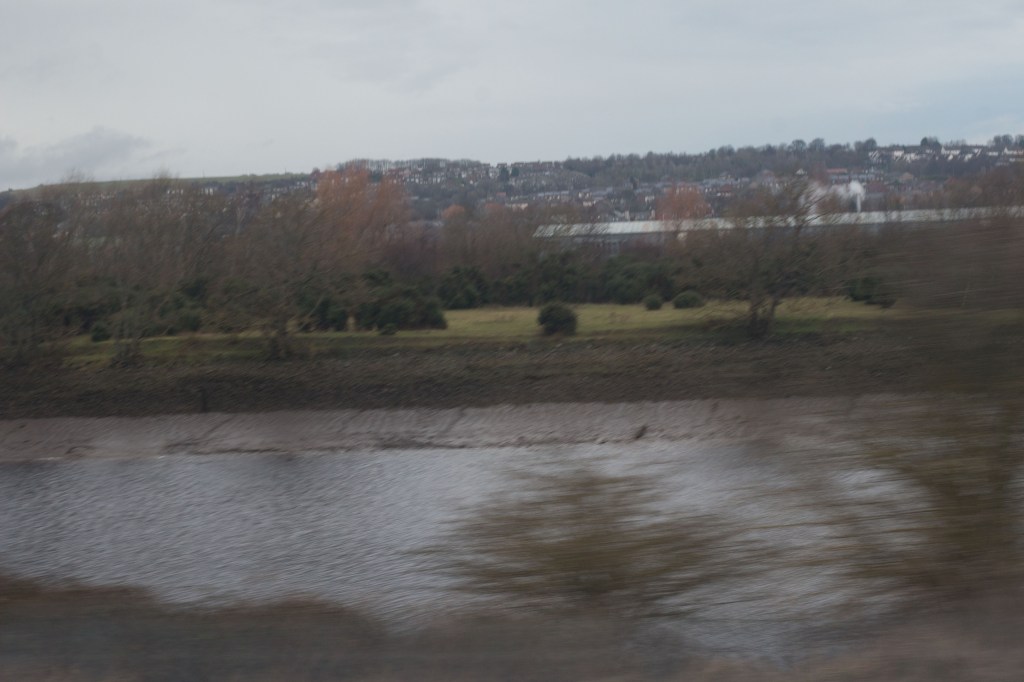
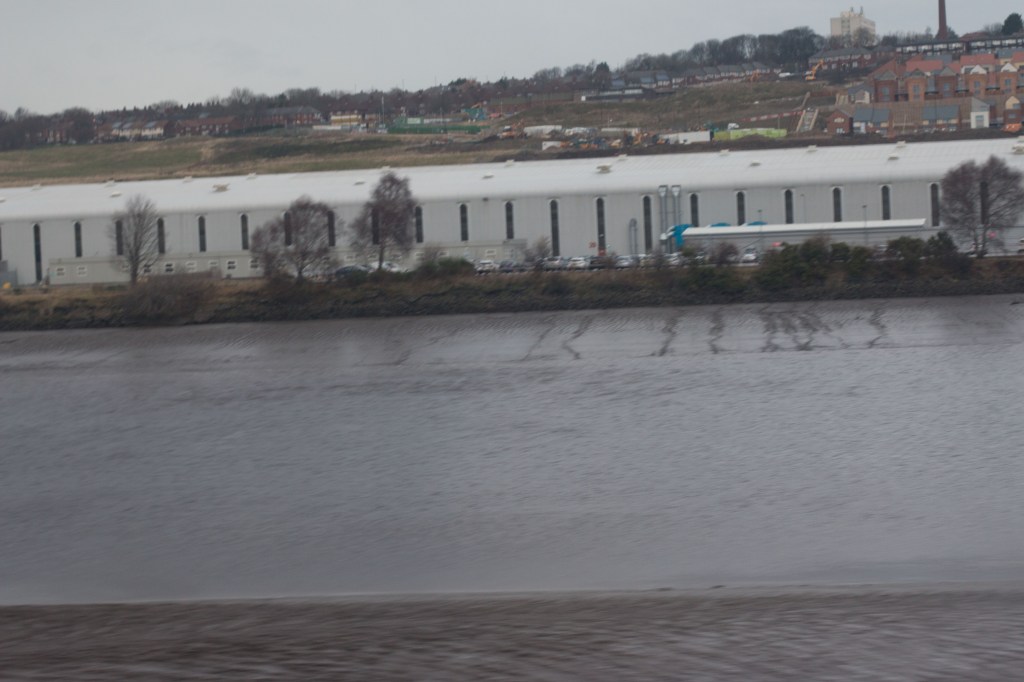
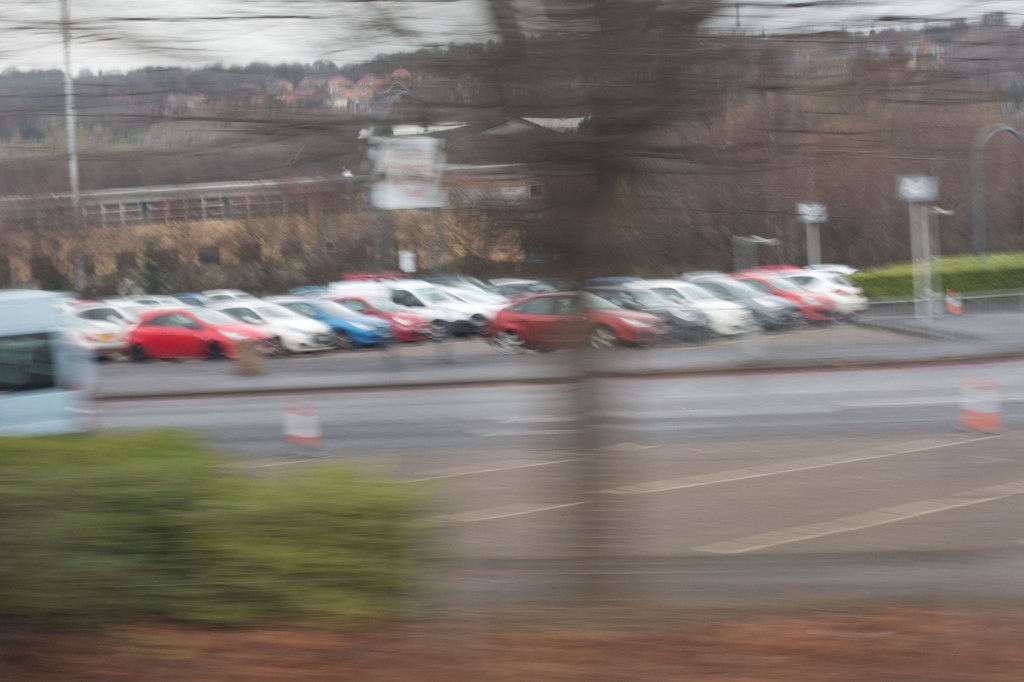
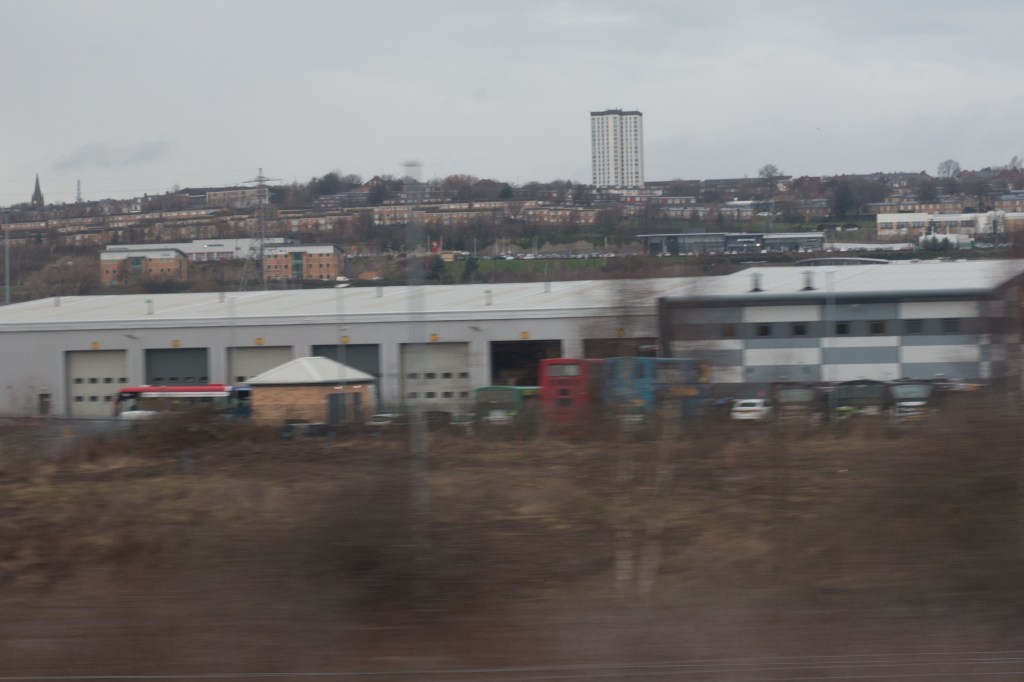
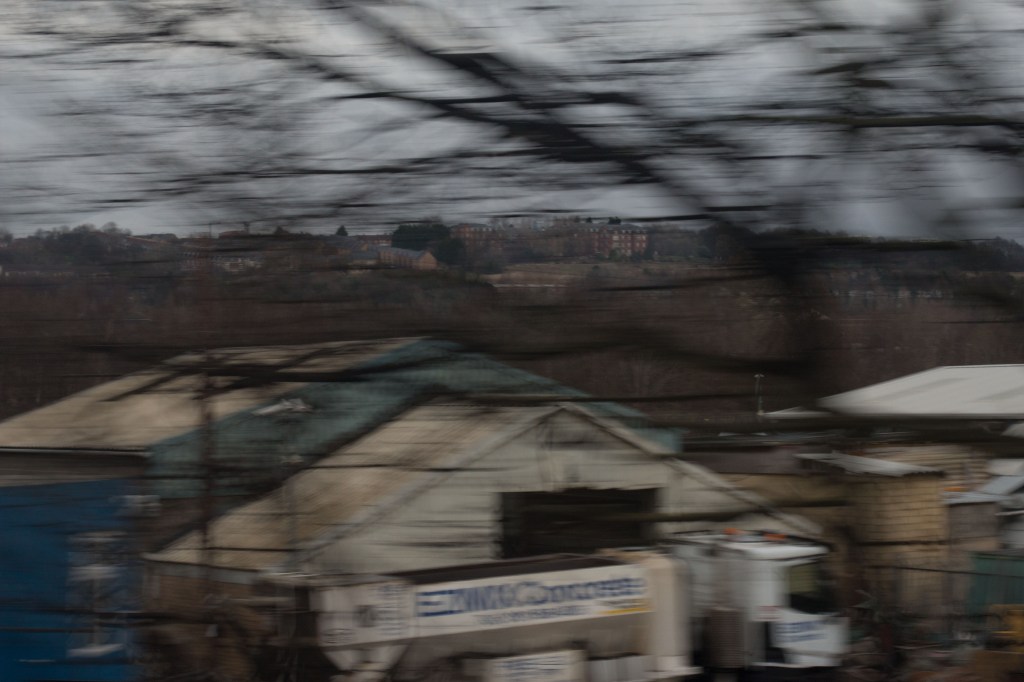
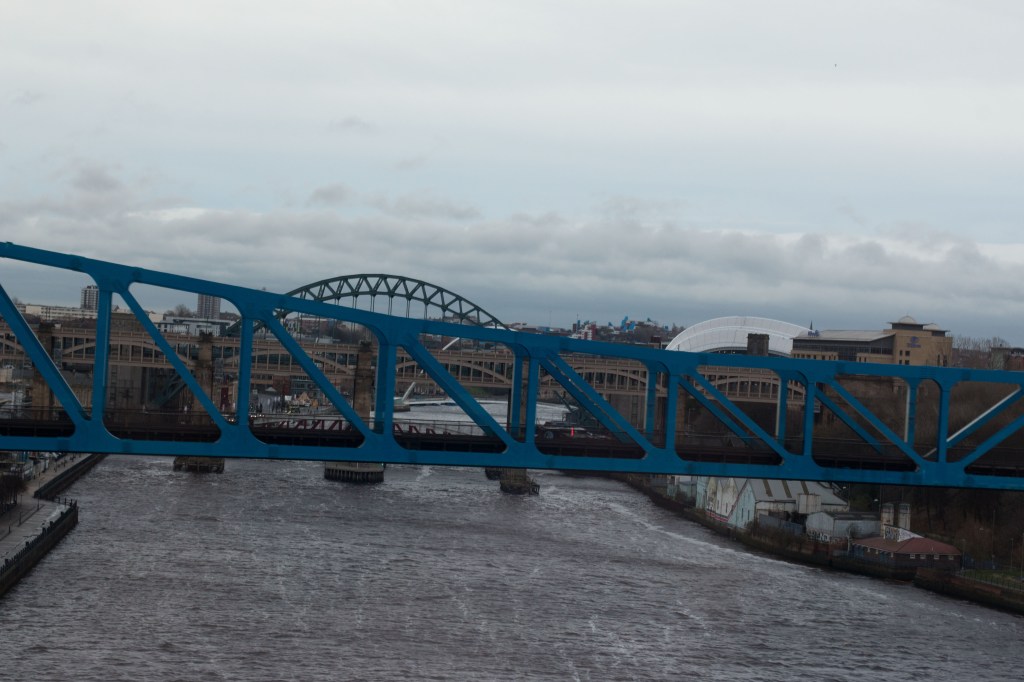
One aspect of the following sequence has inevitably been dictated by the nature of the assignment itself: the final images appear in the order in which they are encountered on the journey: The first image is from where the railway meets and runs alongside the river for the first time just after leaving Stocksfield station; the last is a somewhat out of the ordinary view of the iconic bridges over the River Tyne between Newcastle and Gateshead just before the train enters Newcastle Station.

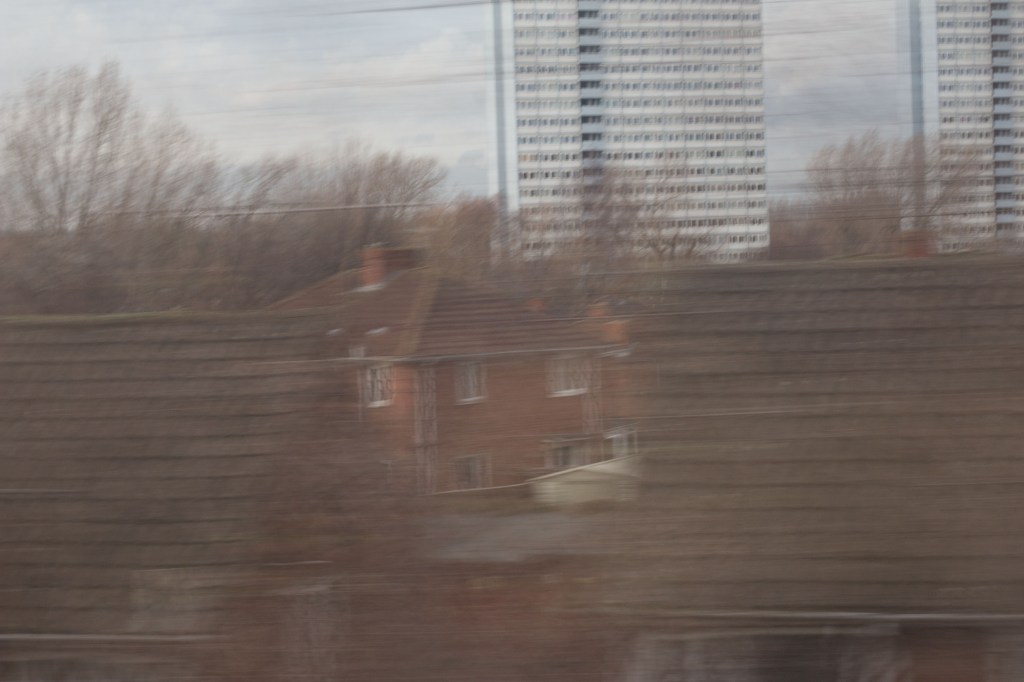
Those in between I have chosen to give an indication of the way the landscape changes from largely rural, with the only major town before the outskirts of Newcastle are reached being Prudhoe, then becoming increasingly industrial, and briefly residential, before the bridges. In geographical terms, as might just be apparent from the photograph I have included in the Mapping post, the physical distances between the waypoints illustrated by these images become smaller as the urban environment itself becomes denser along the way.

Here is my final set for this particular approach to the assignment:
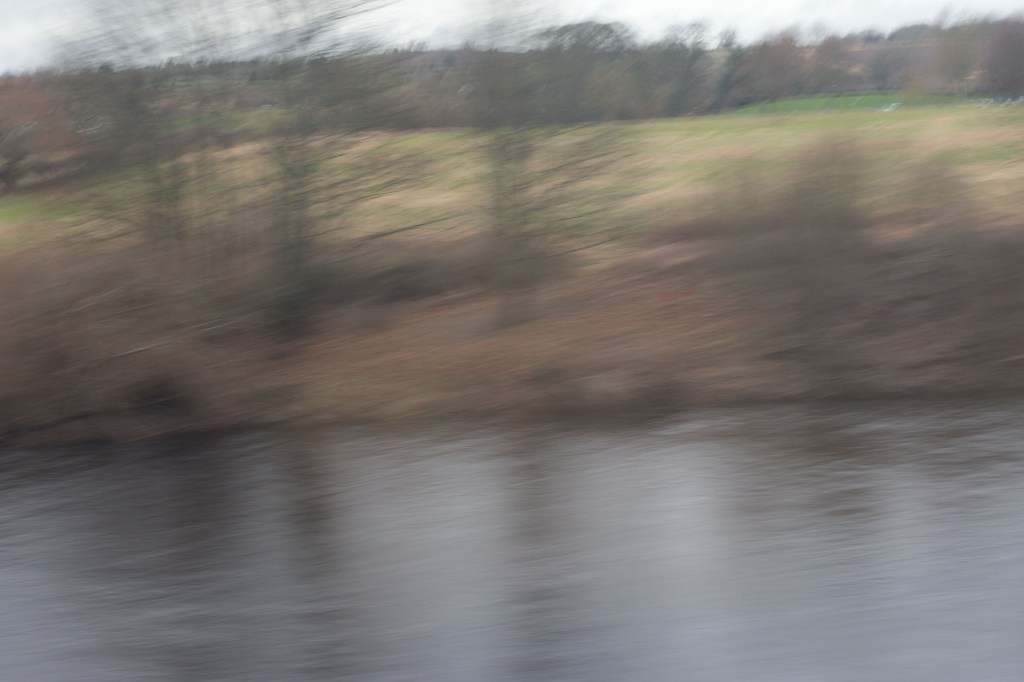
Stocksfield
Prudhoe
Wylam
Ryton
Ryton Power Station
Lemington
Scotswood
Metro Centre
Elswick
Dunston
Gateshead
Tyne Bridges

Evaluating the strengths and weaknesses of a set is invariably something that I find difficult at this stage because I am still too close to the work to be able to view it wholly impartially. I usually find the critical process easier once I have had some discussion with my tutor. I have though at least been giving some thought, having now followed one particular path, to how I might approach the project differently and I think this will help in pointing up what might need improvement.

I have already tried a wholly text based approach from inside the train and I do not honestly think this works. I think it gives too narrow a view, and not a particularly interesting one, of the journey. I have also found that it is not easy to pull off from a technical point of view. I still remain uncomfortable with the idea of a people-based set, not least because of the practical difficulties, perhaps exacerbated by lack of time on a relatively short journey, of negotiating consent (without which I would not do it anyway). Kazuma Obara did feature people in his Chernobyl train sequences, but in a way his work was more about the local people, and the effect of the disaster on them, then and now, than on the train journey itself. Here I am more concerned with just the process and experience of the journey.

I have though been wondering about the possibility of a more mixed approach, including other elements beyond just the view from the train, combining some of the text based images, and others simply taken outside the train. I am not sure that a limit of twelve or so images is necessarily going to be enough to accommodate such a wider approach (I do feel the recommended limit in the brief is a bit too constraining) but I am going to try another experiment, that I will address in another post.
Assignment 2: Mapping

When I first started to think about this assignment I initially rejected the idea of doing anything with maps as unhelpful given the nature of the journey I wanted to depict. Whilst that view has not changed I have nevertheless come back to the role of maps, not as an inspiration or means of arriving at the subject matter for the project, but more as an outcome of the project, as an artefact that is itself the result of working through the assignment.

This has largely been the result of reading an article on the Magnum website about the work of Alec Soth who produced maps, not in order to make his various books, but as a result of having done so. Soth is of course one of the artists that I referred to earlier in connection with photographic depictions of journeys, though explicitly not one who influenced my thinking or choice of subject matter in this case.

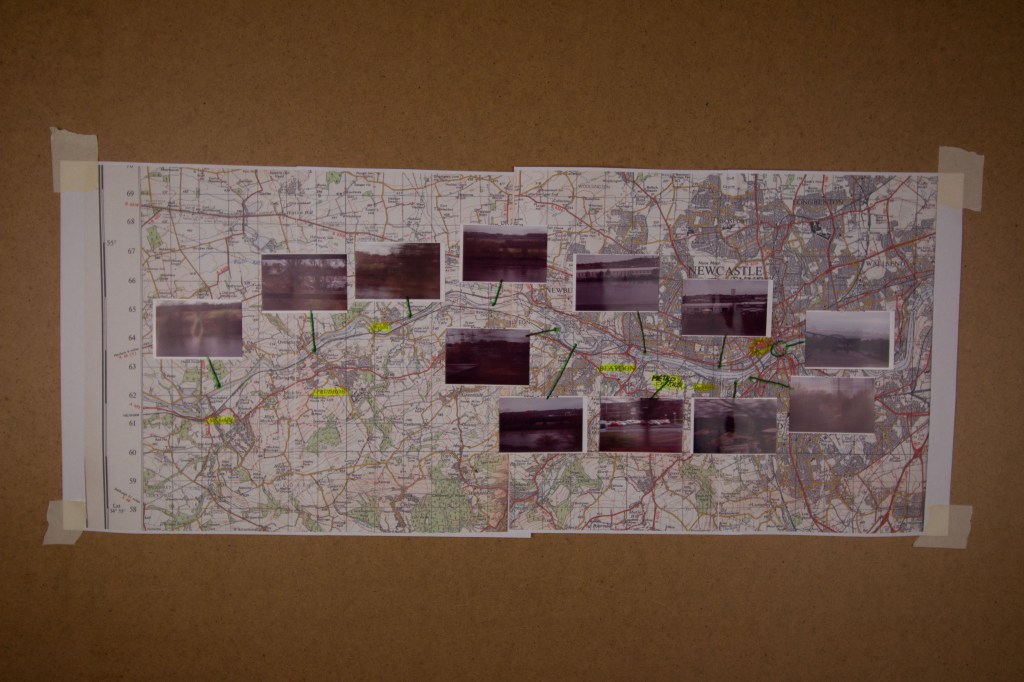
What I have done for this is scan an OS map that shows the route between where I live and the city of Newcastle, blown it up, and reprint it. Onto this new copy I have put thumbnails of the images I have chosen for the final set, indicating where on the map they relate to.

As it happens this is the only OS map that I have that covers all of this area and it turns out it is thoroughly out of date, going back to 1971! Most significantly what has changed in the interim, for the purposes of this project, is the line of the railway itself, though that is admittedly hard to see in the photo below. It now runs along the south side of the river as far as Gateshead and then crosses the river over the second up-stream bridge marked on the map into Newcastle. Back in 1971 the line crossed the river at Blaydon and ran along the north side of the river, following the route of an otherwise long disused line that ran along that side from Wylam, where there is still a very fine bridge that now serves only pedestrians and cyclists. (There are plenty of other differences, such as the absence of the current dual-carriageway version of the A69, and of the Metro Centre, which has its own dedicated train station. These are though not really relevant for the purposes of this assignment and would really only mean something to anyone who knows the area now.) I like this map though because it has a distinctive style that the OS no longer uses which is much sharper than the modern versions.

https://www.magnumphotos.com/theory-and-practice/desire-lines-reframing-american-road-trip-narrative-alec-soth-rebecca-bengal/?utm_source=shop+newsletter&utm_medium=email&utm_campaign=editorial&utm_content=280120+button&mc_cid=9ba521d022&mc_eid=5ae4cfc0d6

Assignment 2 – An attempt at a text-based version

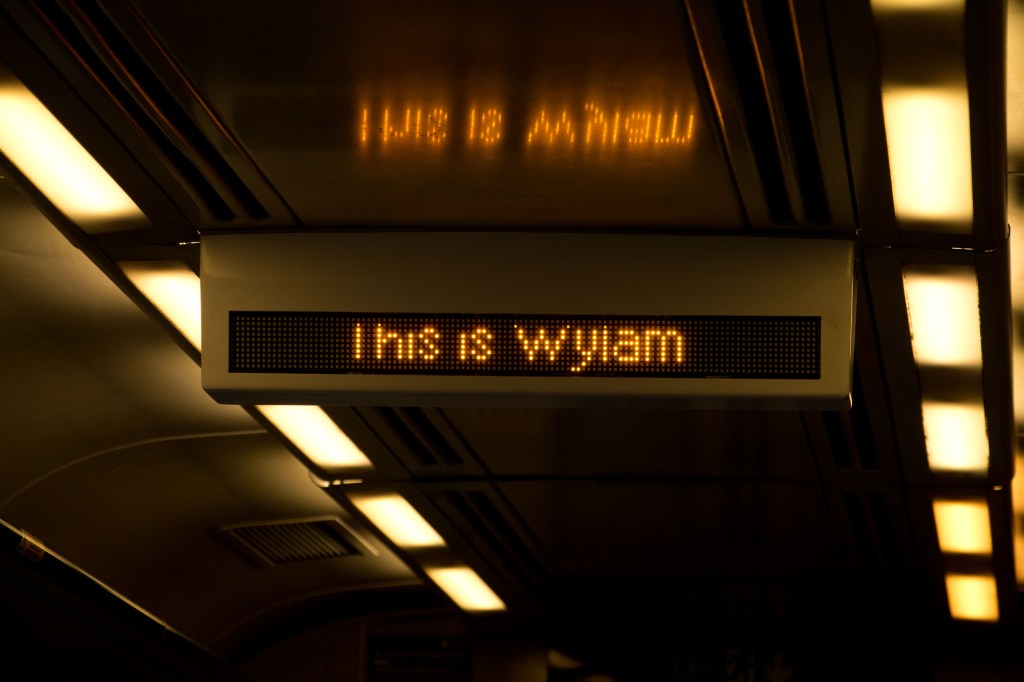
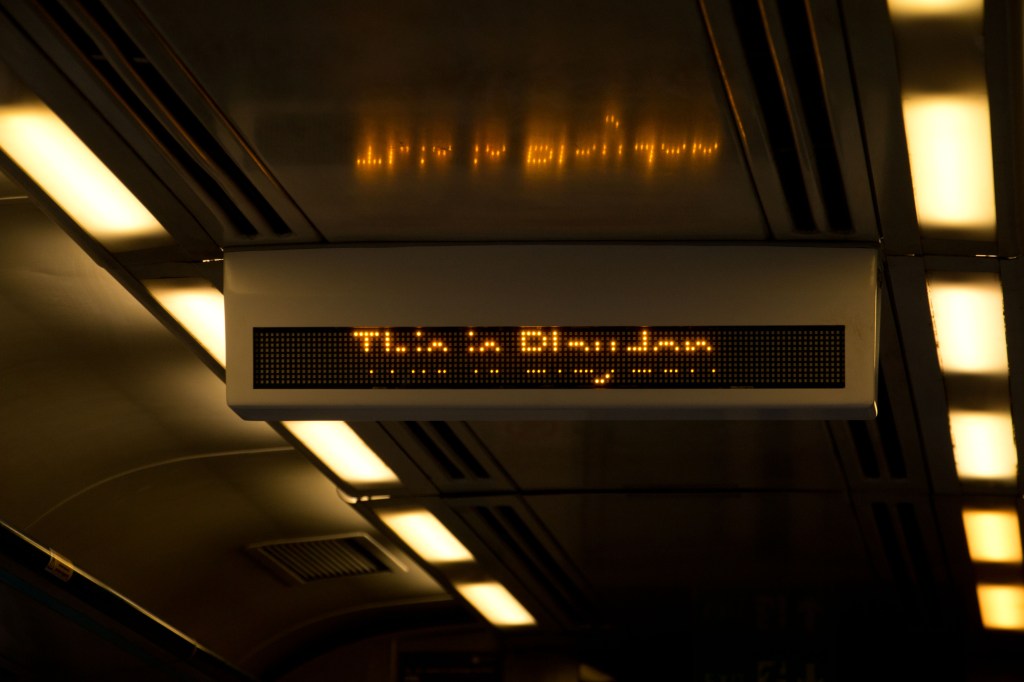
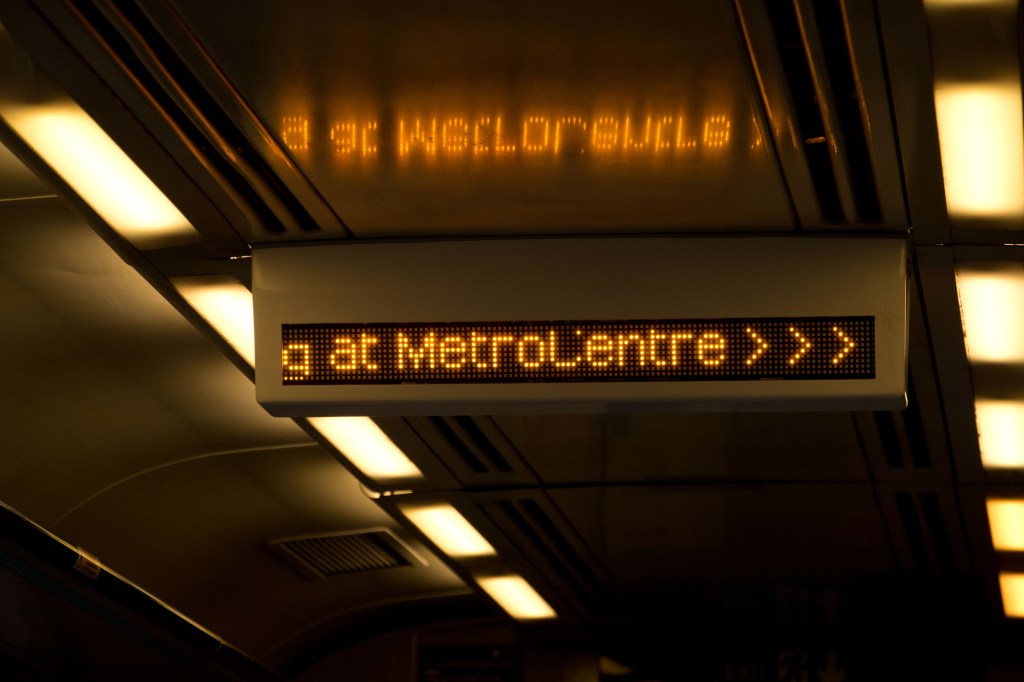
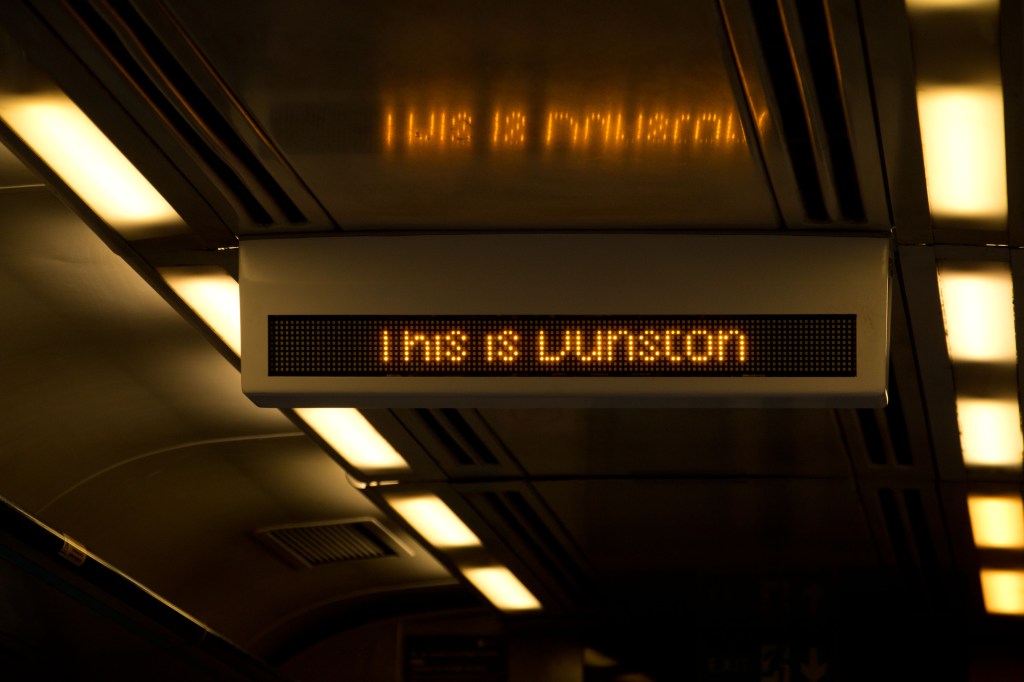
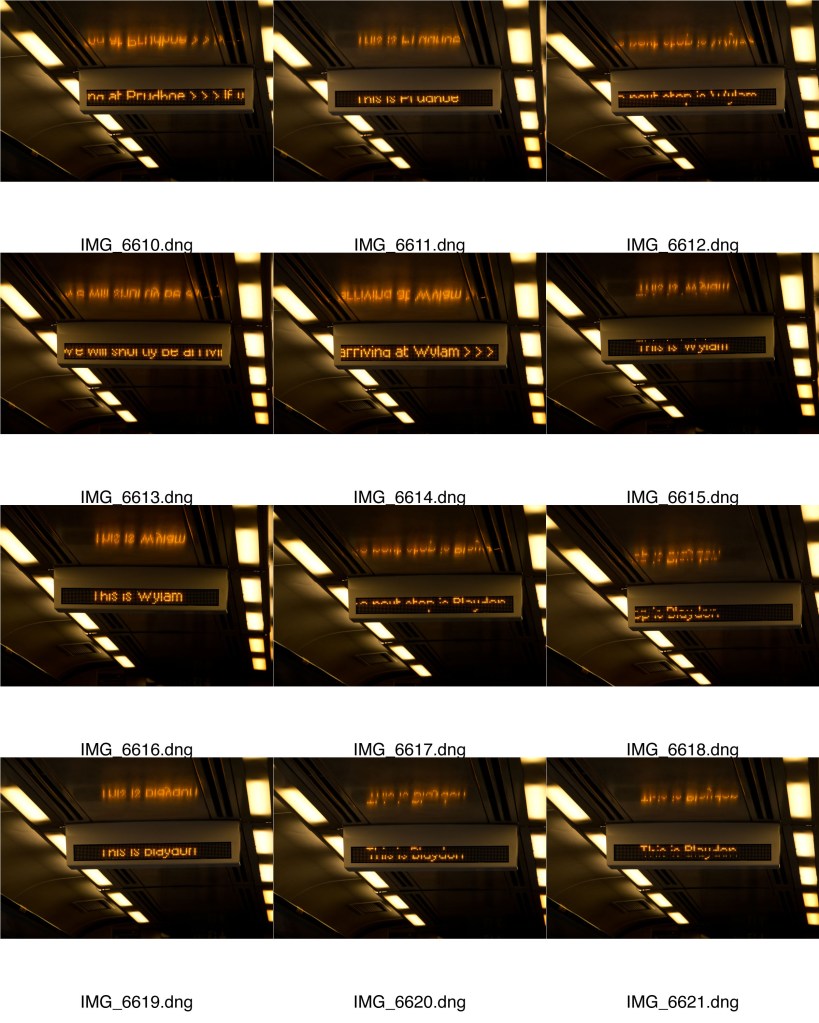
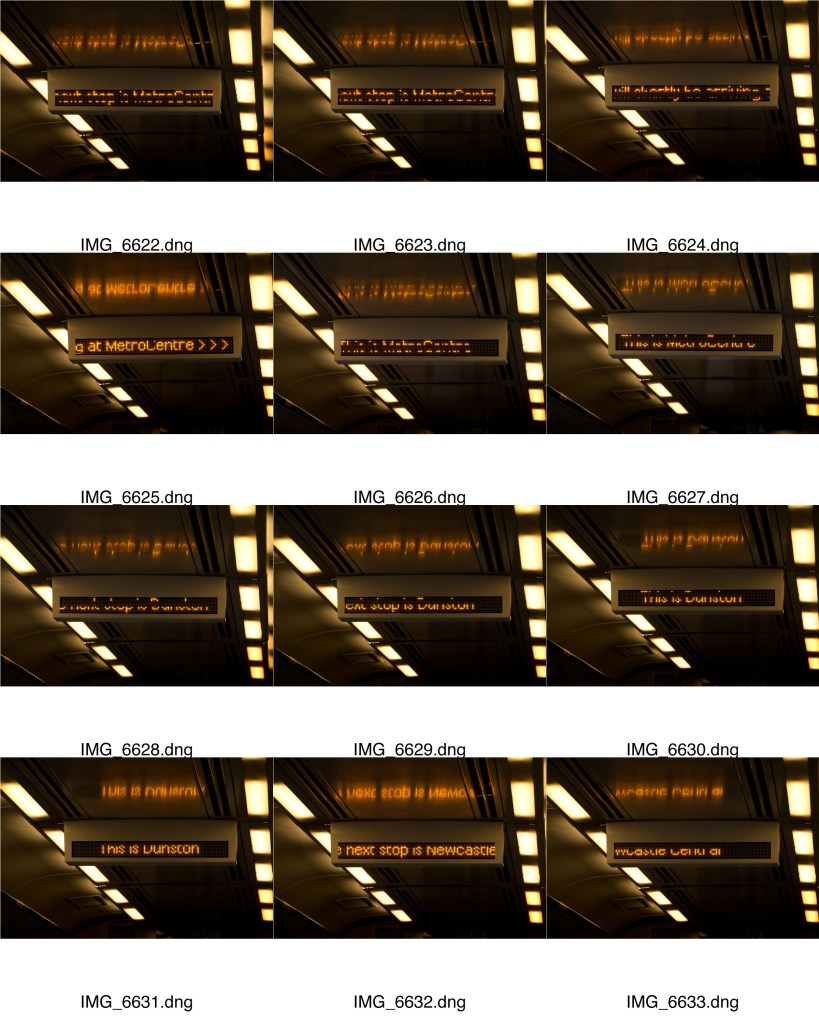
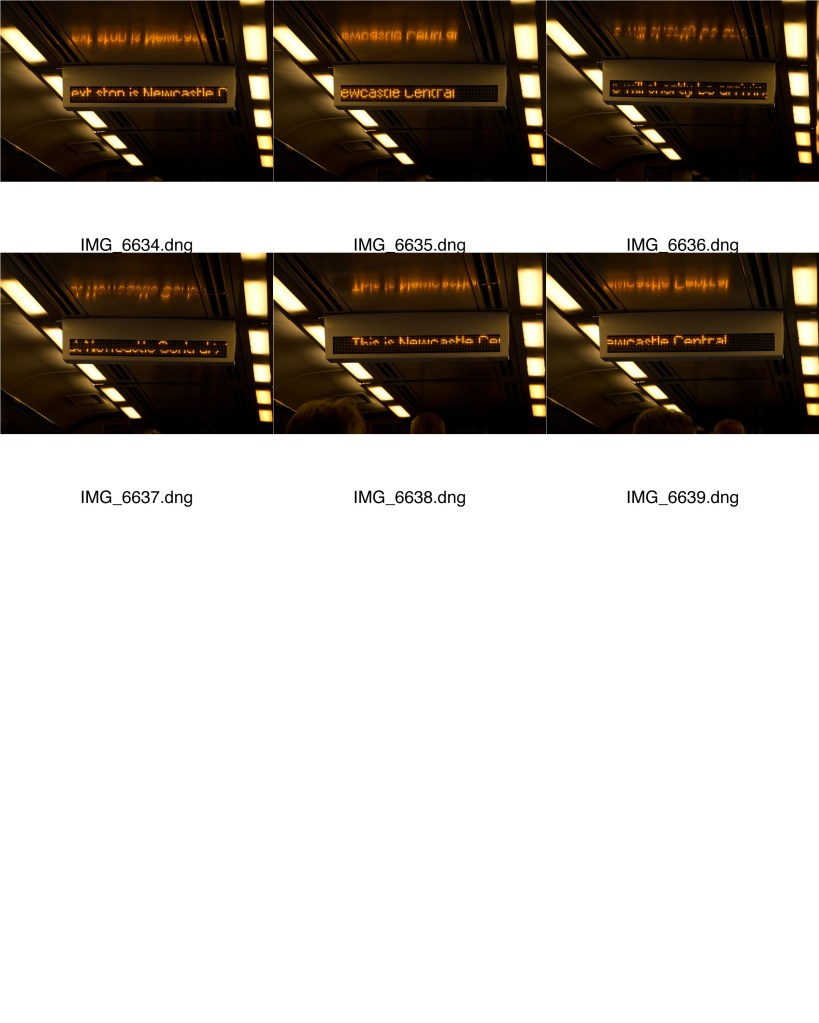
Looking over the contact sheets I made following the second shoot for this assignment I am not sure they entirely work. Firstly I do not think I have quite enough good quality material: it turns out it is much harder than I anticipated to get a clear shot of the moving-light display. Nevertheless there are enough in order to be able to put together at least an attempt at what a better set might look like. Doing a reshoot, unless doing the whole thing from scratch again, would I suspect be quite difficult. I can already see from this first attempt that getting a sufficient degree of consistency is quite difficult, so I am not sure how well images from two or more shoots, put together, would actually form a harmonious whole.

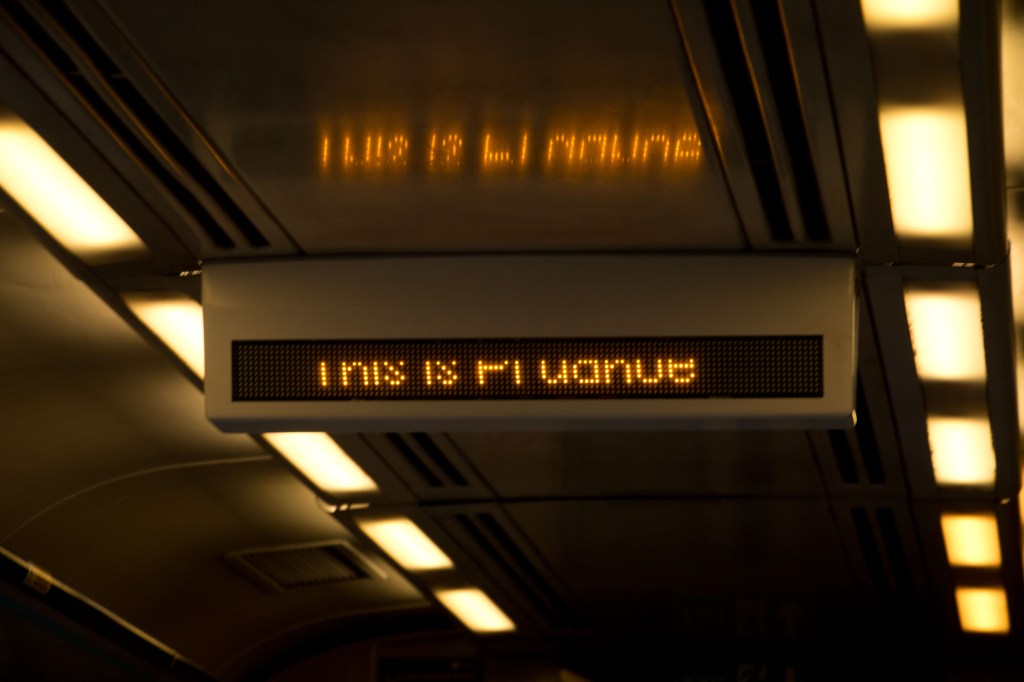
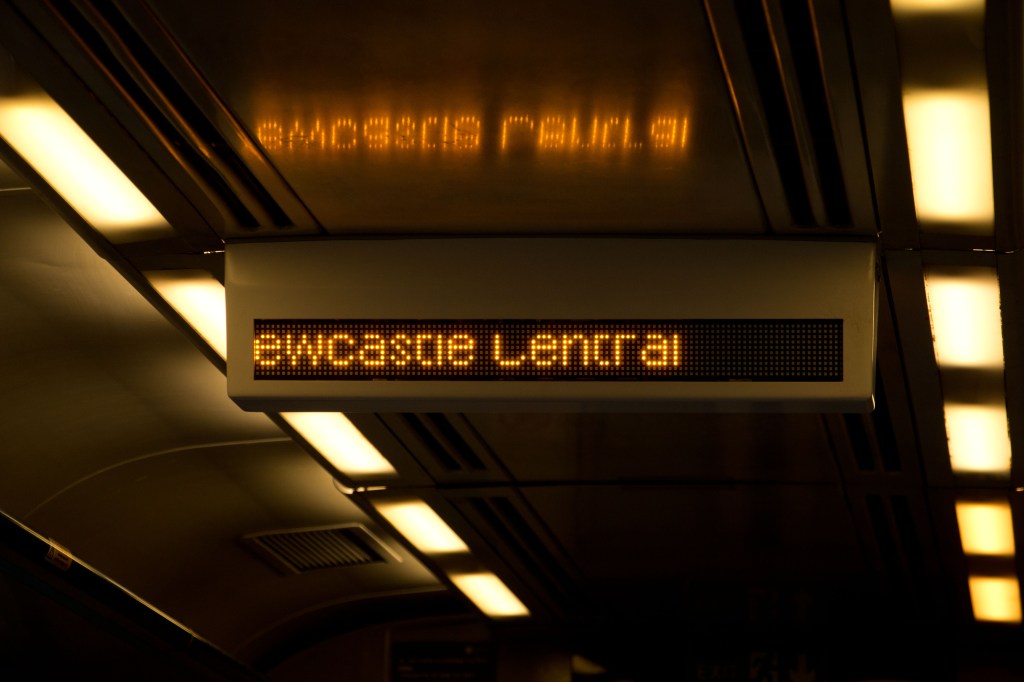
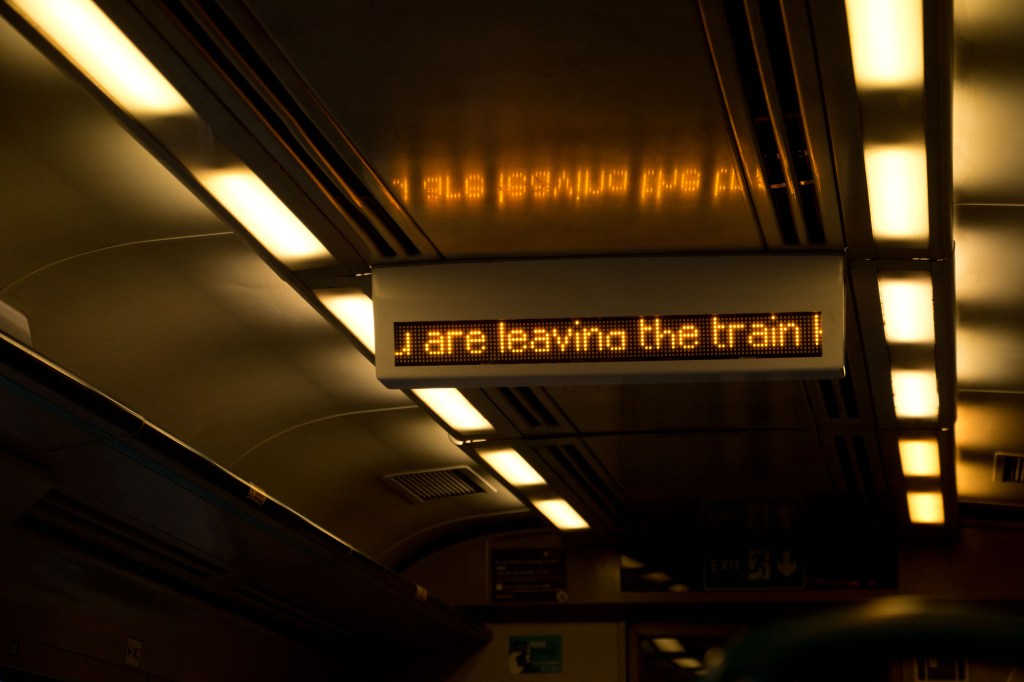
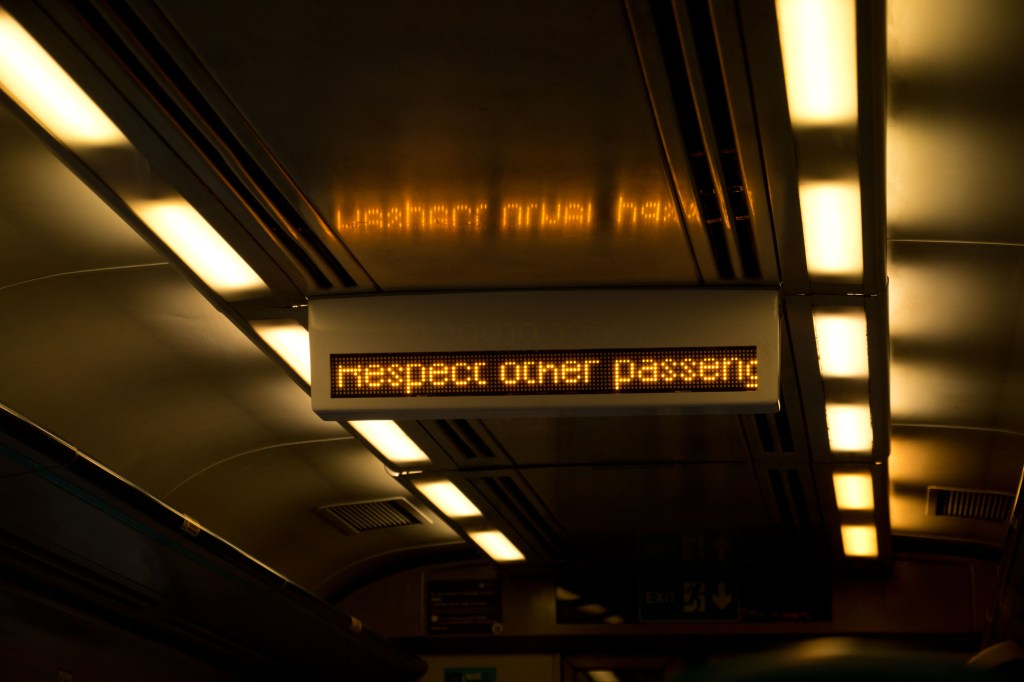
It is also evident to me that a mix of the platform display and the on-train screen does not really work. For this experiment I have therefore stayed with just the on-board images for the sake of consistency, concentrating on the names of the stations through which the train passes. One accidental by-product of this is that all the images shared the same dashed light strips. This is significant to me for two reasons. One is that they recede into the background and in doing so point in the direction of travel, giving a pictorial, though static, impression of movement. The other is that they call to mind the sprocket holes on 35mm film negatives. I shot these digitally rather than on film but I think the effect is that the pictures carry within themselves a marker of their own artificiality, a self-referential reminder that this is a series of photographic images.

I have also taken one image out of the order in which they were taken, the last one in this sequence, as it seemed to offer, without having planned or intended it, a sense of the end of the journey. The first image in the sequence again just seemed, serendipitously, to form an appropriate starting point.

Thinking about presentation, as with the Sublime set for Assignment 1 my initial thought is that again a slide show arrangement might work quite well, the melding of one image into another adding something of a sense of movement. I will experiment!

Assignment 2 – Some further thoughts

Working on the exercise on the Picturesque and rereading sections of Andrews (1999) a couple of things caught my eye that are relevant to what I have in mind for this assignment.

One (at page 116) is the reference to the Claude glass that travellers used was a means of creating picturesque views of the countryside through which they passed, framing the landscape and so “fixing it”. I suppose that the camera is in a way a modern equivalent framing the view and creating a composition.

The other is his discussion a couple of pages earlier (pages 114 and 115) of Train Landscape, 1940, by Eric Ravilious, and its strangely static nature:

“What is particularly unsettling about this picture is that there is no suggestion of any movement that would normally have the effect of blurring the contours of the exterior world. We are now very used to seeing landscape move rapidly past us through the window frames of train compartments or cars, so that the frame hardly contains a stable composition as it does through a house window. But the car, train or carriage passenger can enjoy a linked sequence of landscapes from that point of view. We imagine ourselves, by an odd transference, as seated in a stationary interior with the world rushing past outside …”

That is very much the effect that I am interested in achieving.

Andrews, M, (1999).  Landscape and Western Art.  Oxford:  Oxford University Press

Assignment 2 – Second contact sheets

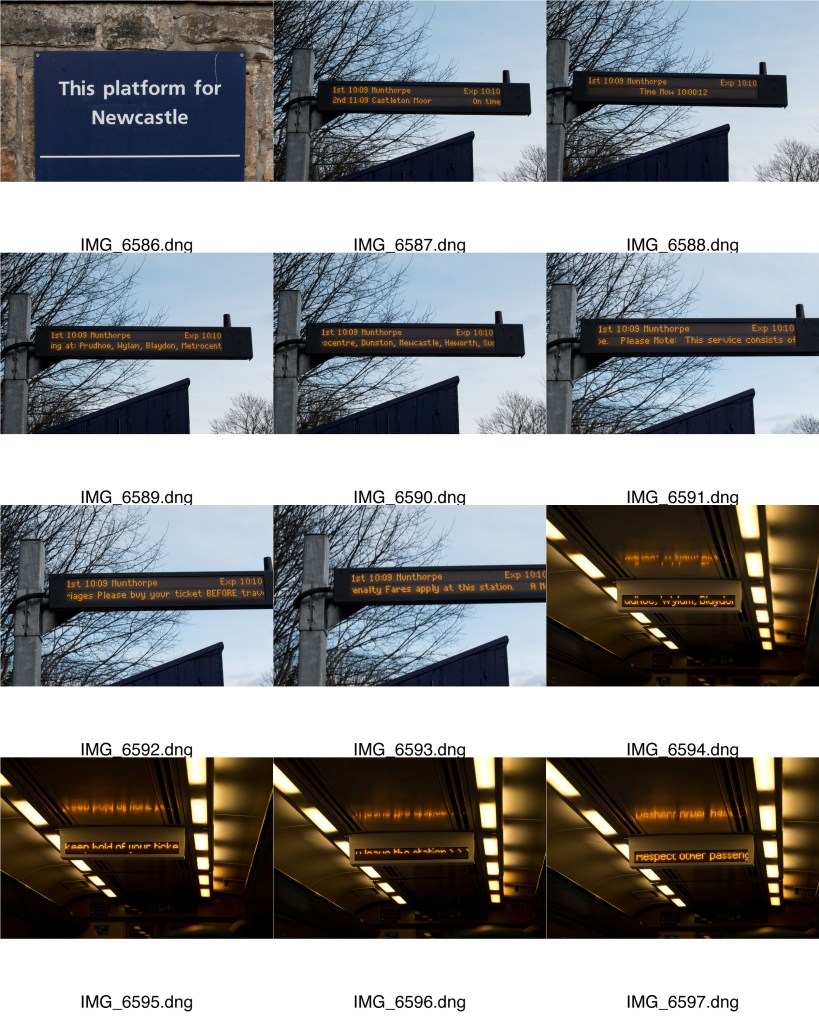
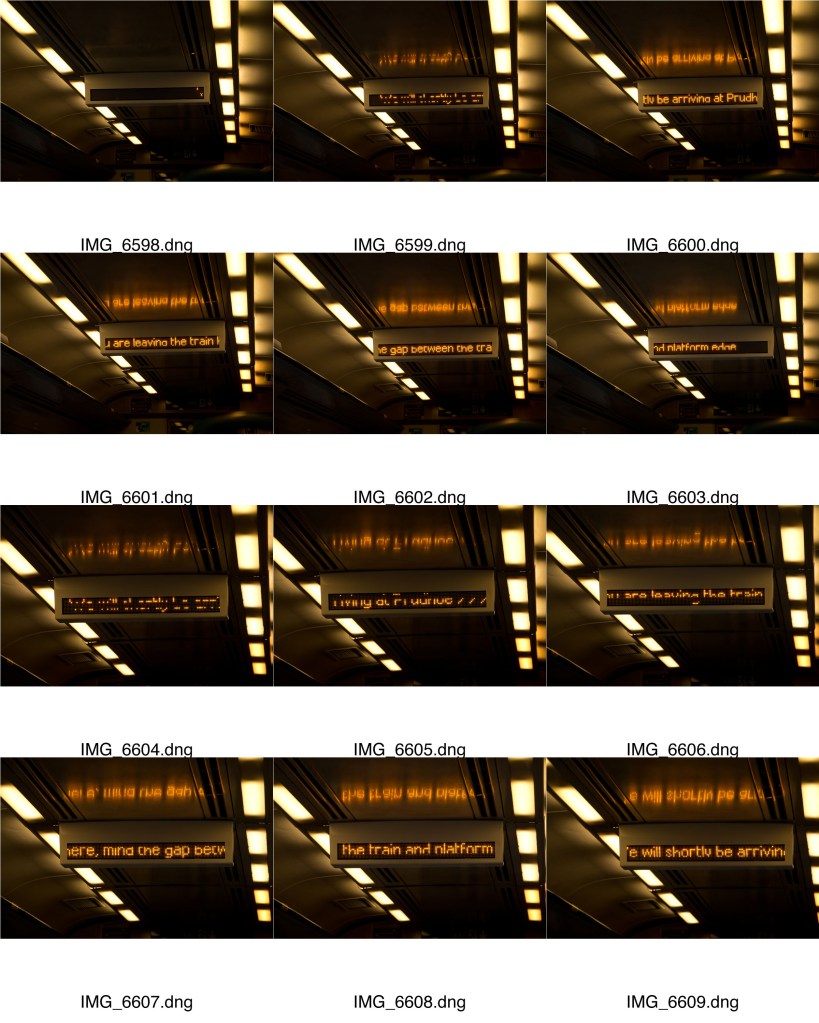
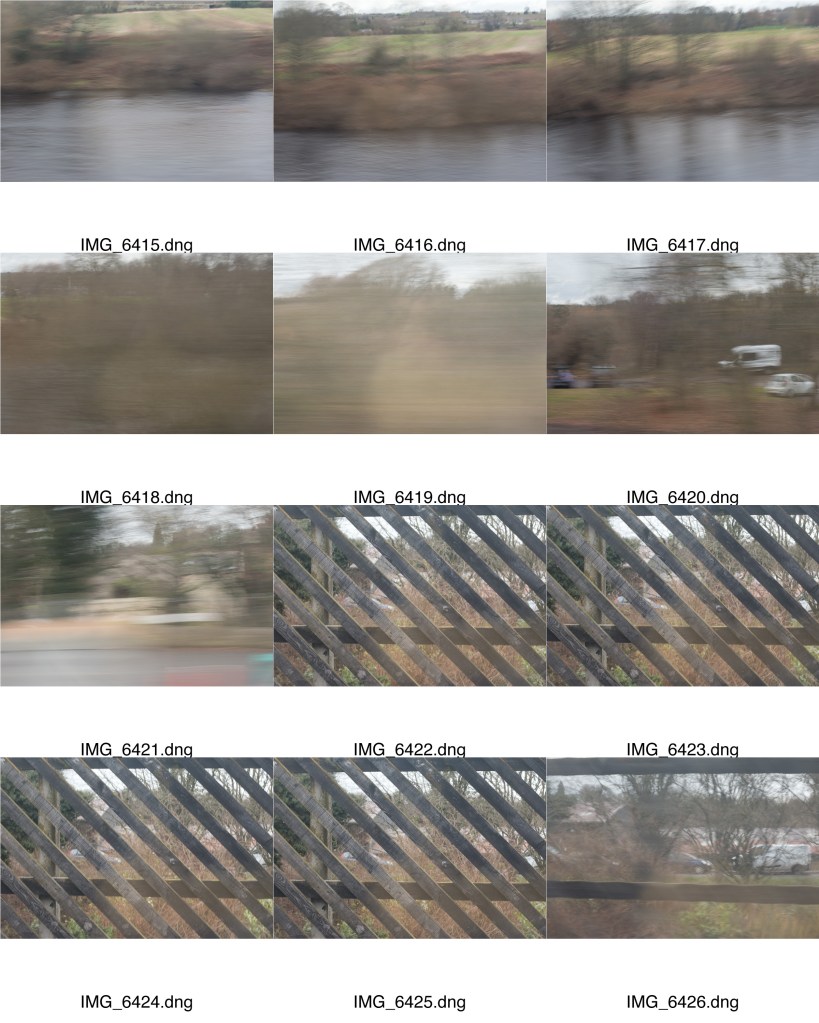
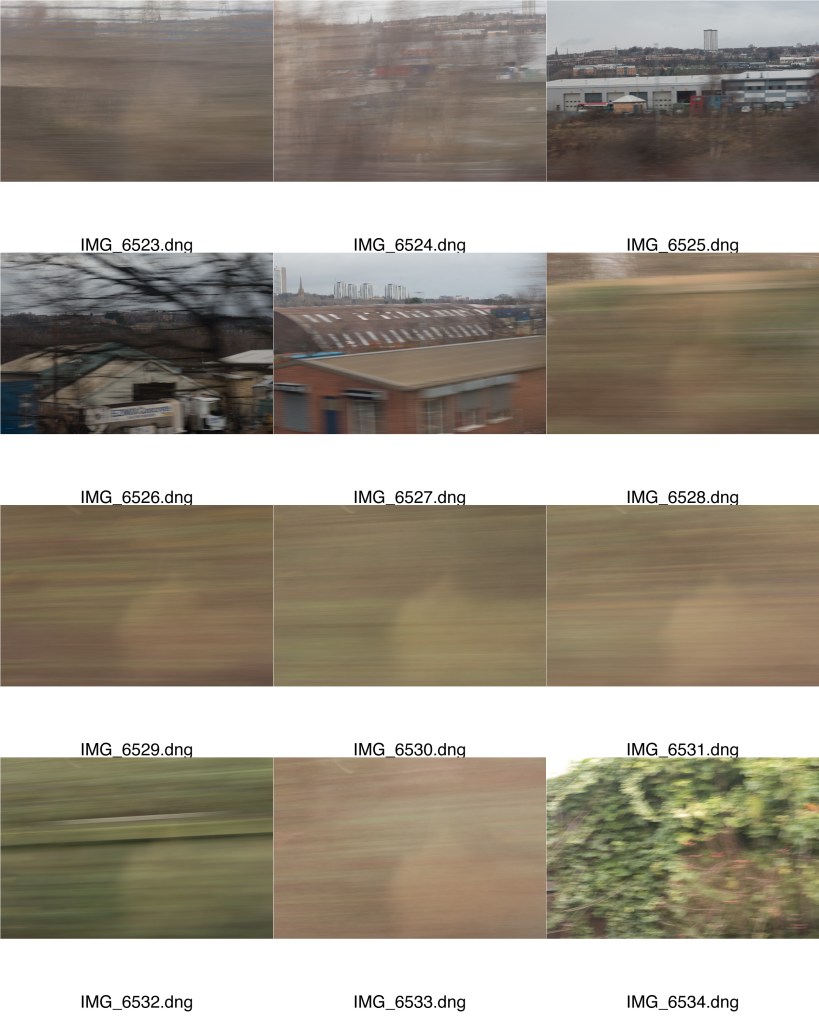
I managed to go into Newcastle by train this morning so took another sequence of experiments for this assignment, this time concentrating purely on text. Here are the raw contact sheets.

I still have to go through these in detail and edit them but my immediate reaction while putting these sheets together is that a short sequence based on station names might work. I will see what it looks like over the next few days.


Assignment 2: Further research

I have found in the process of completing a number of assignments for the various modules of this course to date that often my own ideas develop independently of the work of others. Or at least I am not much influenced consciously by other artists. There might be one or two who do have some impact, from whom I might steal some ideas, but not many.

I am experiencing that now with this assignment. I have done a lot of reading around the recommended texts for this part of the course (not everything but much of it) and I am not feeling that it is having much impact on my current thinking. It is still the case that the two most direct influences, in the sense of encouraging me in the direction of a train journey, are still Kazuma Obara and Wang Fushun, both of whom I have already written something.

I have though continued to think about other possible directions and influences. So far the one artist who is impinging more than any other on my thinking is Richard Long, and particularly his text based works. There is I suppose also a bit of a nod in the direction of Ed Ruscha, Barbara Kruger and Mark Titchner, about all of whom I am afraid I was a bit dismissive earlier, but I still find their abstract approach – by which I mean that the image and text do not necessarily complement each other and their juxtaposition does not necessarily add much to the overall meaning of the combined elements – to be not very helpful or inspiring. The idea though of using text based on elements of the journey itself, as Long has done, has got me thinking again about how I might approach a number of photographs for my projected series that focus on the interior of the train, rather than the external landscape through which it passes.

One particular idea I am playing around with, but have not yet been able to try in practice – that will not be until next week when I hope to be able to get back on the train – centres on the text displays on board that announce the route the train is taking and the arrival at each station along the way. I will have a play and see how it looks.

Otherwise I have been going through my own library again to see what other sources I might usefully mine. Funnily enough there does not so far seem to be much. There are plenty of books that are based around journeys but mostly they are generic, or wide ranging, not just a record of moving from A to B, and are more about moving through a wider landscape and society. I think here in particular of the likes of Robert Frank’s The Americans, Stephen Shore’s Uncommon Places, Guido Guidi’s Per Strada and In Sardegna. A couple with more of a sense of a linear trip with a start and an end are Alec Soth’s Sleeping by the Mississippi and Vanessa Winship’s She Dances on Jackson. These are though still quite big, wide-ranging journeys, seeking to capture people and places rather than the process of the journey (or journeys as I cannot imagine these series were created in one go and in a sequential manner) and so, admirable though they are, I do not feel they are much help to me here.

The only book that I can think of for now that records a discrete, finite, journey, is Craig Mod’s and Dan Rubin’ record of an eight day trip, on foot and by bus, along the Kumano Kodo to Koya San in Japan. As they say in their introduction it is not meant as a guide: “It’s simply a catalogue of moments. It says: There is a place in the world that looks and feels like this.” This comes some way towards what I am thinking about: this is the country that my train passes through and this is what it looks and feels like to make this trip.

Rather than try to choose some representatives images from the book (which can any event easily be found using Bing or Google Images) I have included below a link to their web-page that gives a flavour of the project.

Frank, R (2016).  The Americans.  Göttingen: Steidl

Guidi, G, (2019).  In Sardegna: 1974, 2011.  London:  MACK

Guidi, G, (2018).  Per Strada.  London:  MACK

Mod, C & Rubin, D, (2016).  Koya Bound: Eight days on the Kumano Kodo.  Tokyo: self published

Obara, K, (2018).  Exposure / Everlasting.  Cordoba:  Editorial RM / RM Verlag

Shore, S, (2014).  Uncommon Places.  London:  Thames & Hudson

Soth, A, (2017).  Sleeping by the Mississippi.  London:  MACK

Winship, V, (2018). And Time Folds. London: MACK

https://walkkumano.com/koyabound/

Assignment 2 – First contact sheets

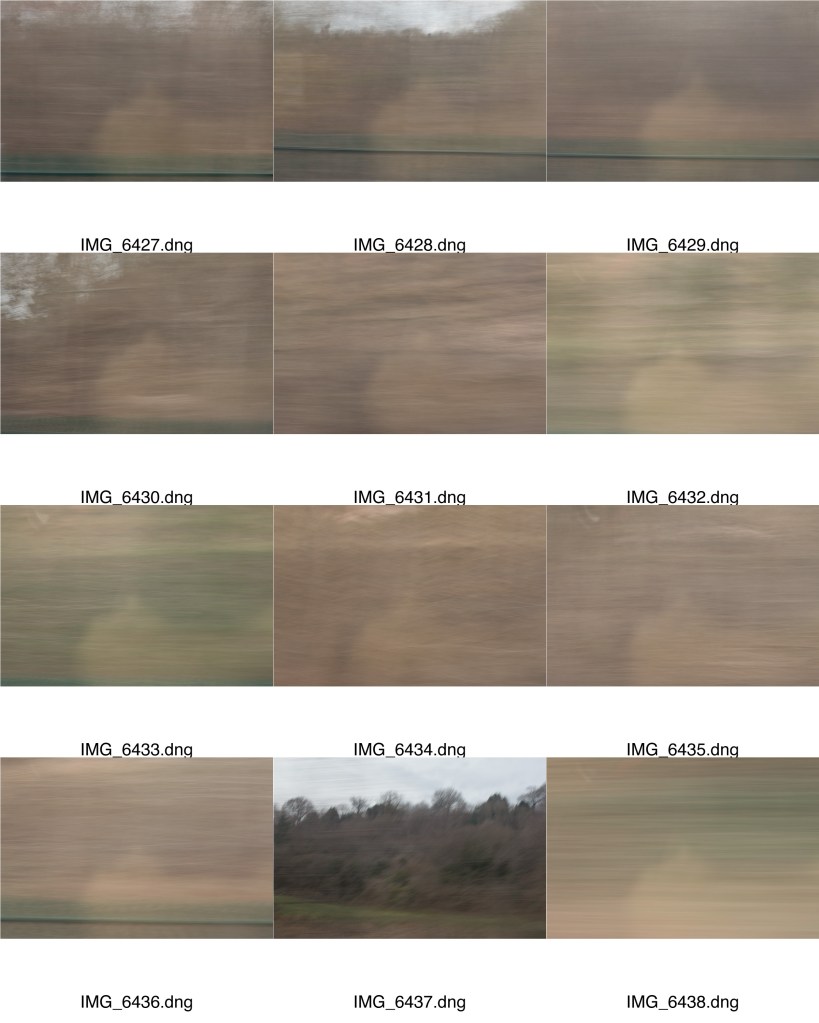
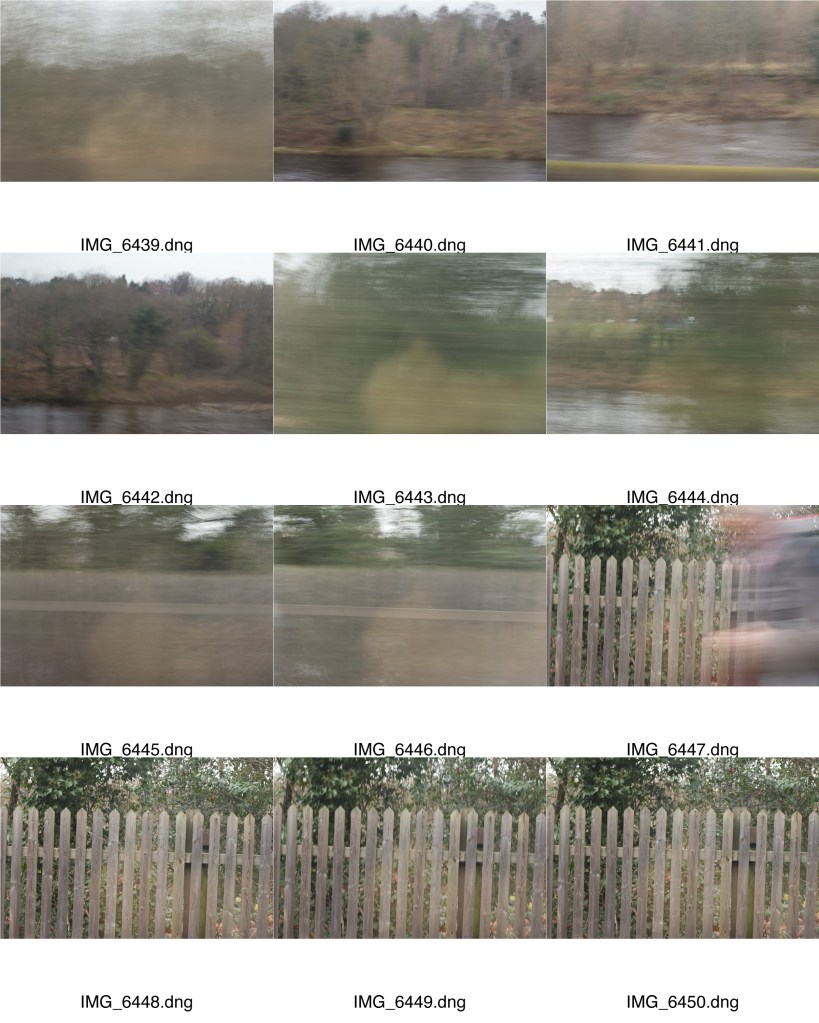
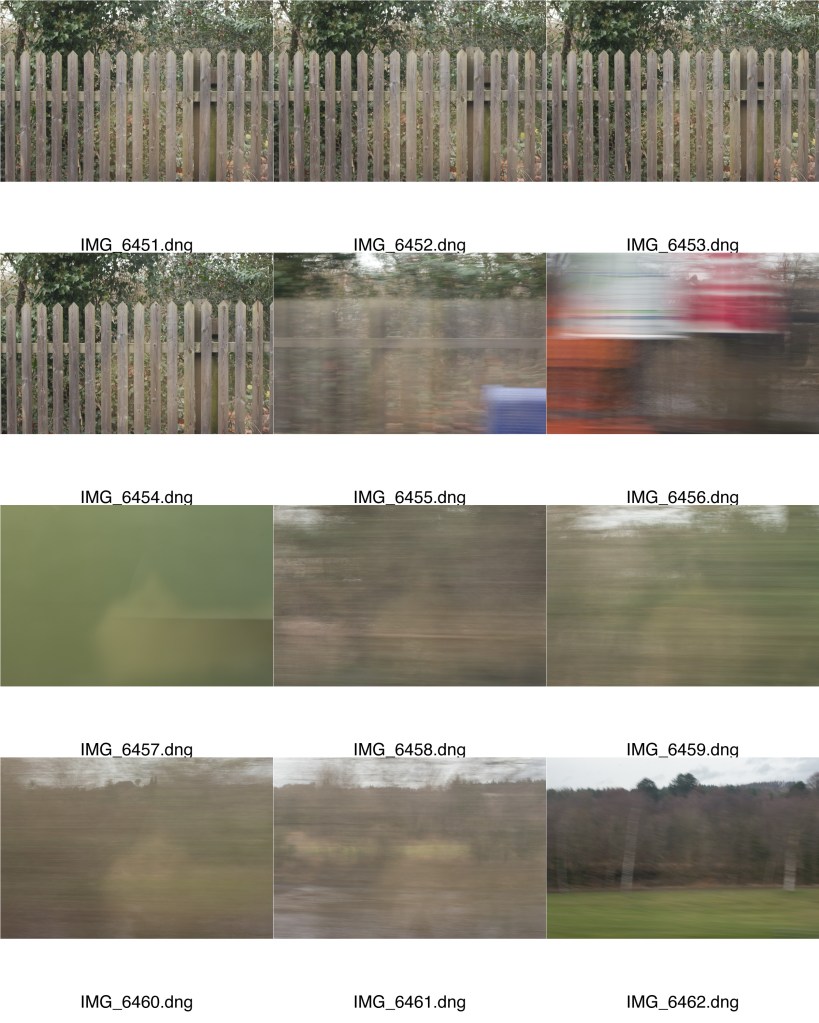
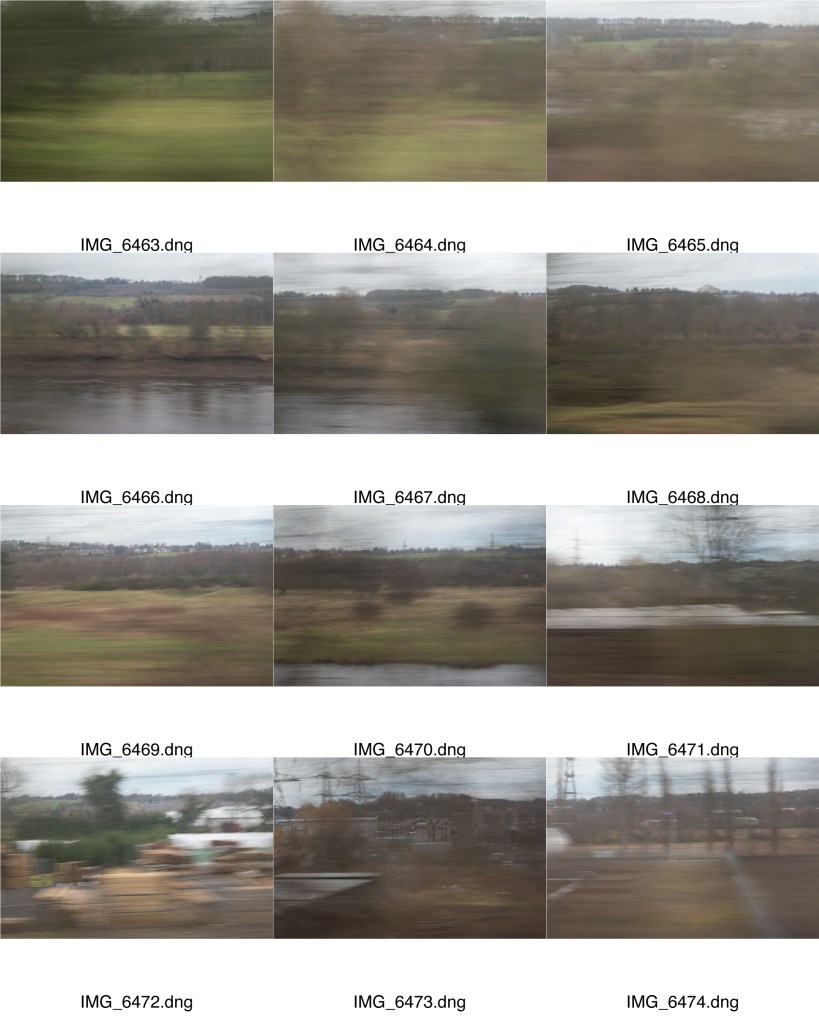
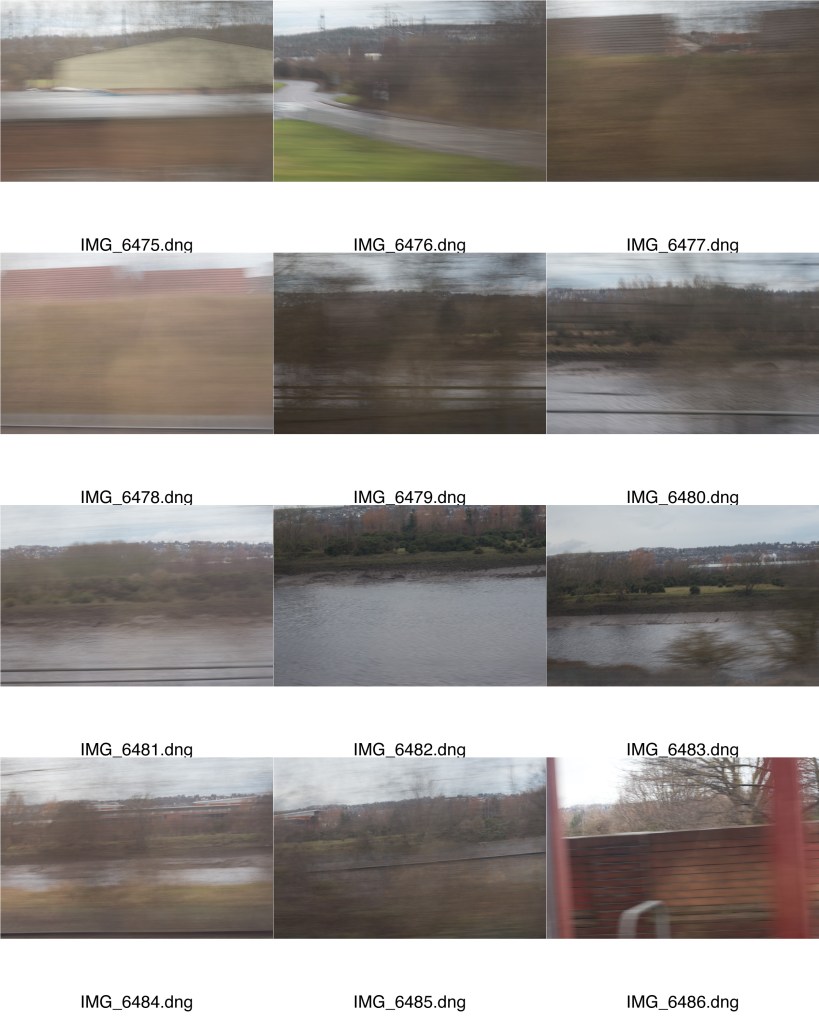
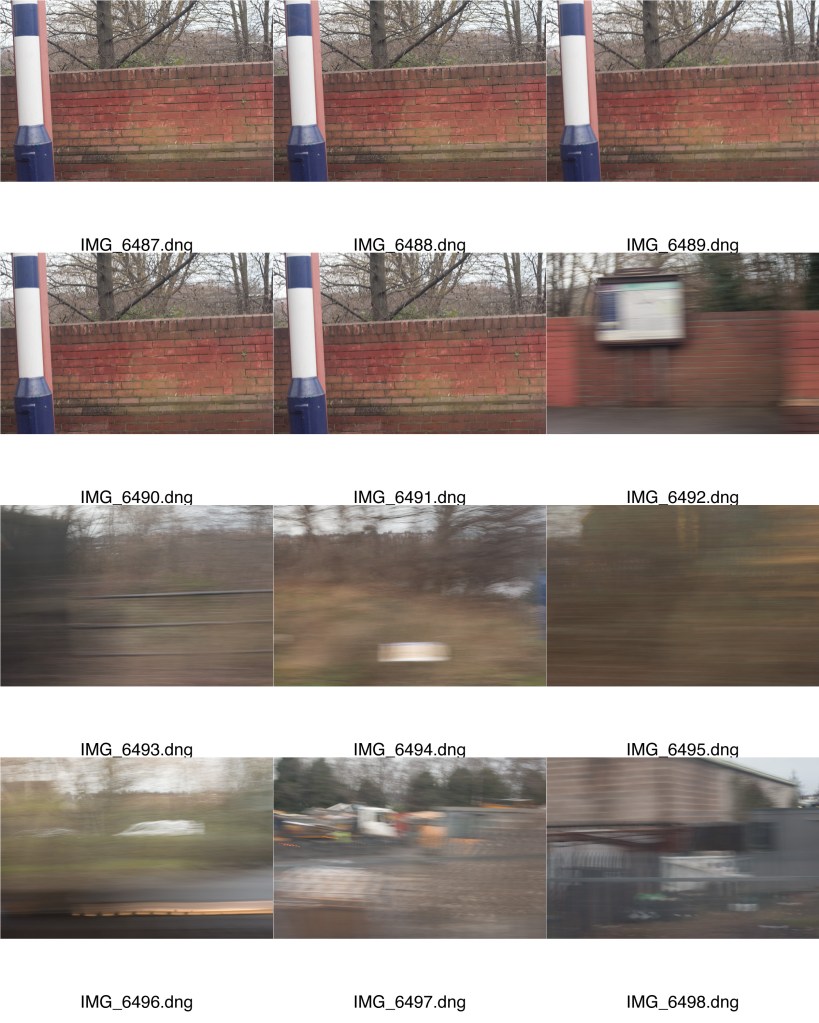
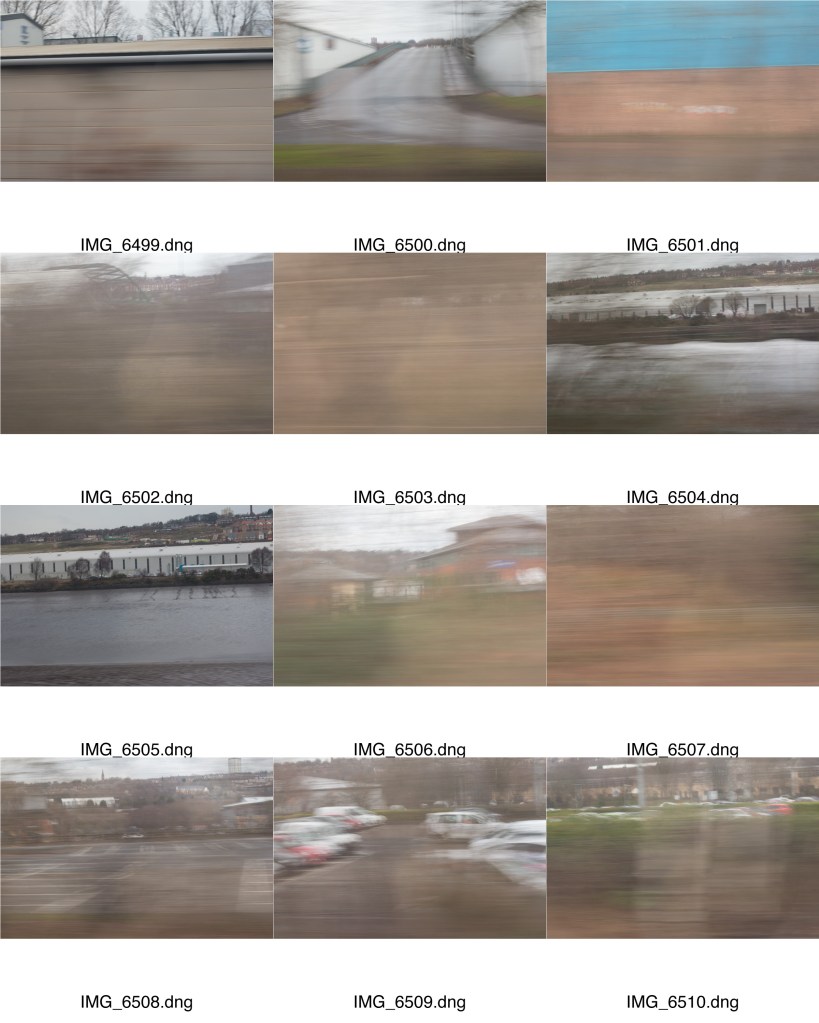
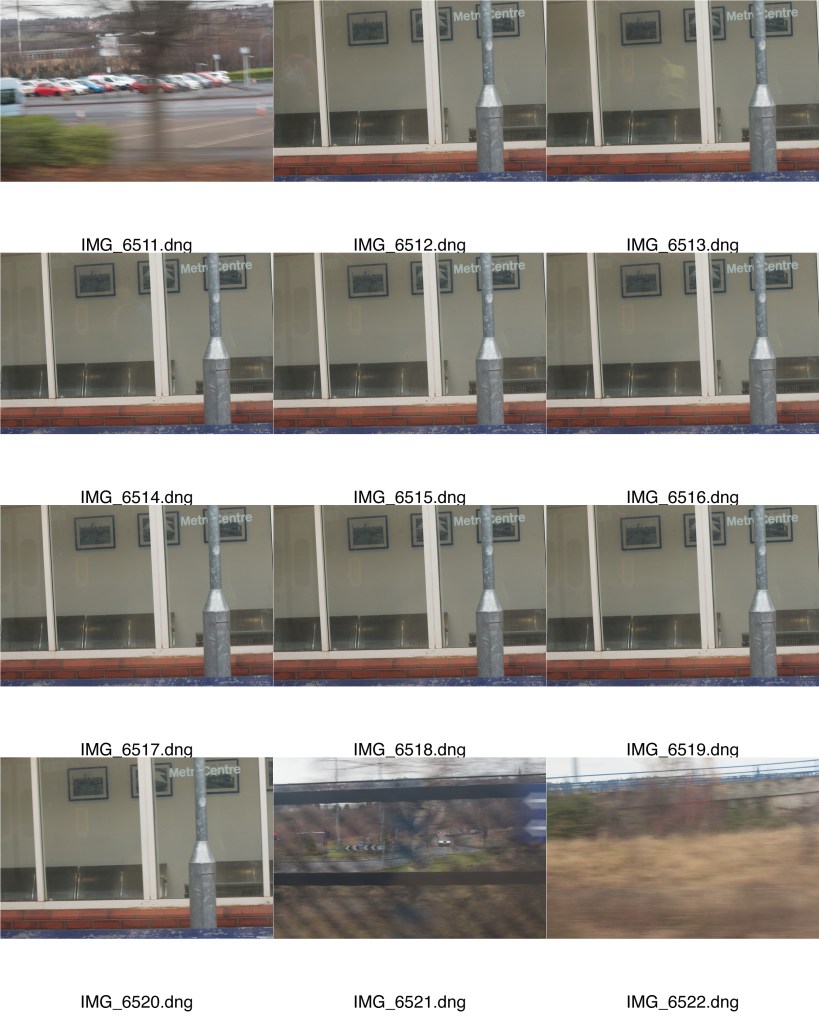
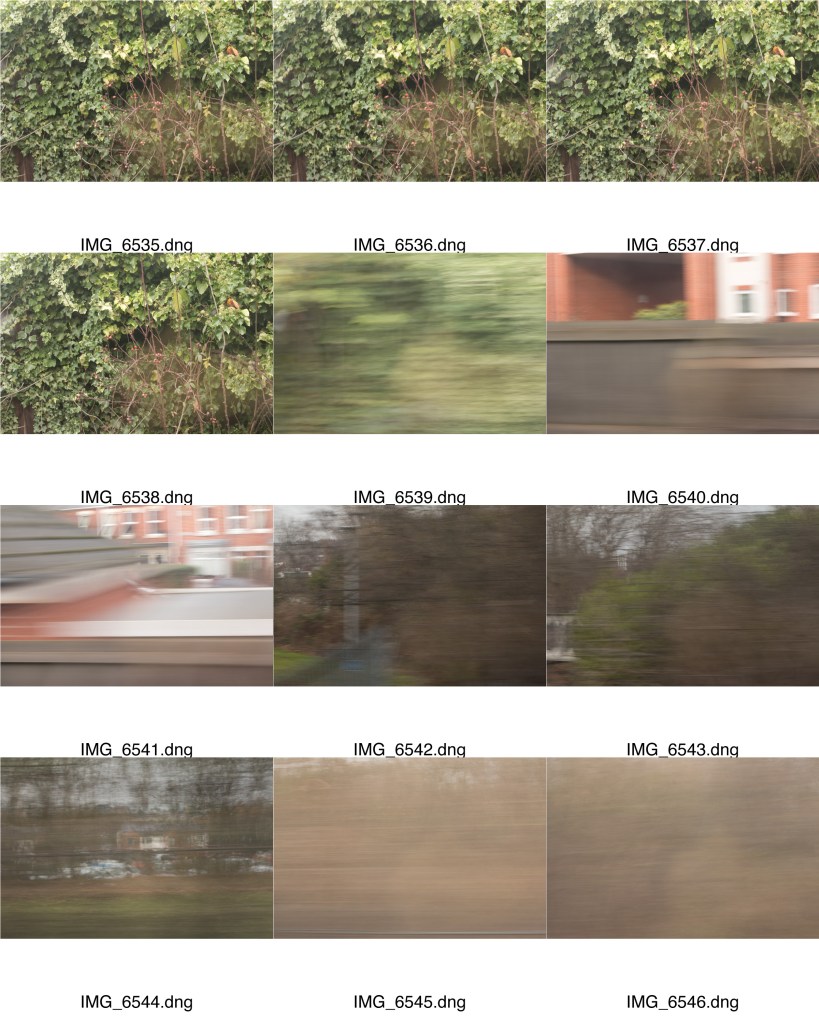
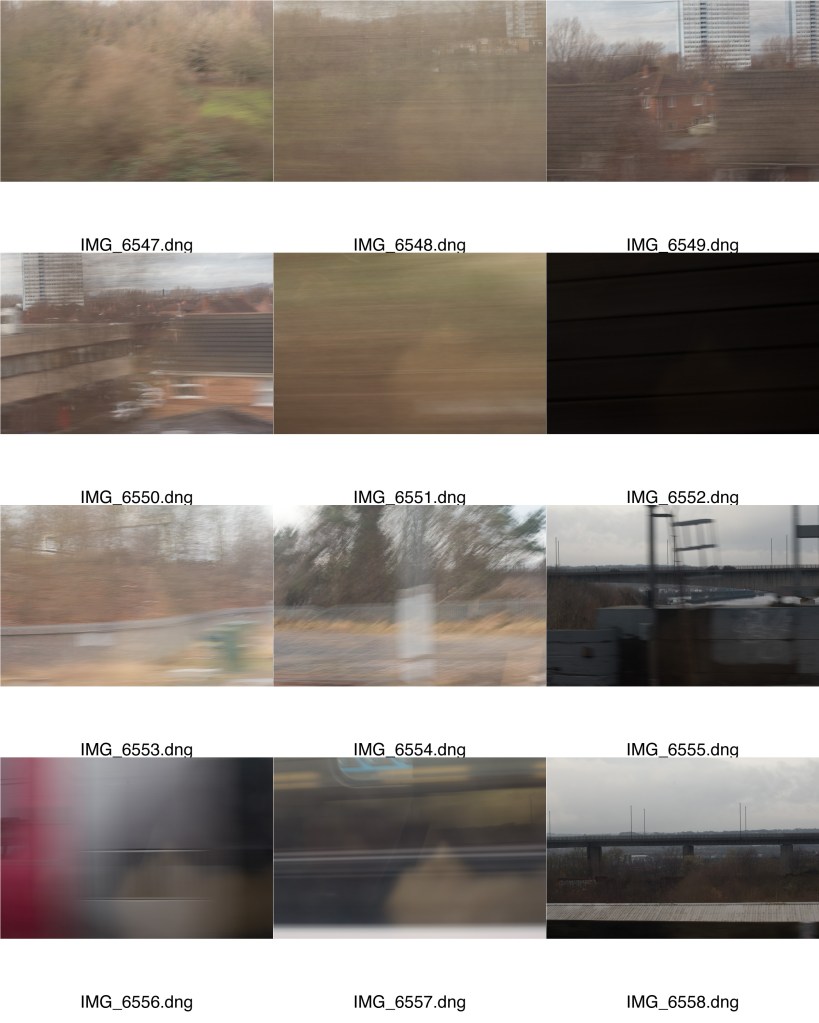
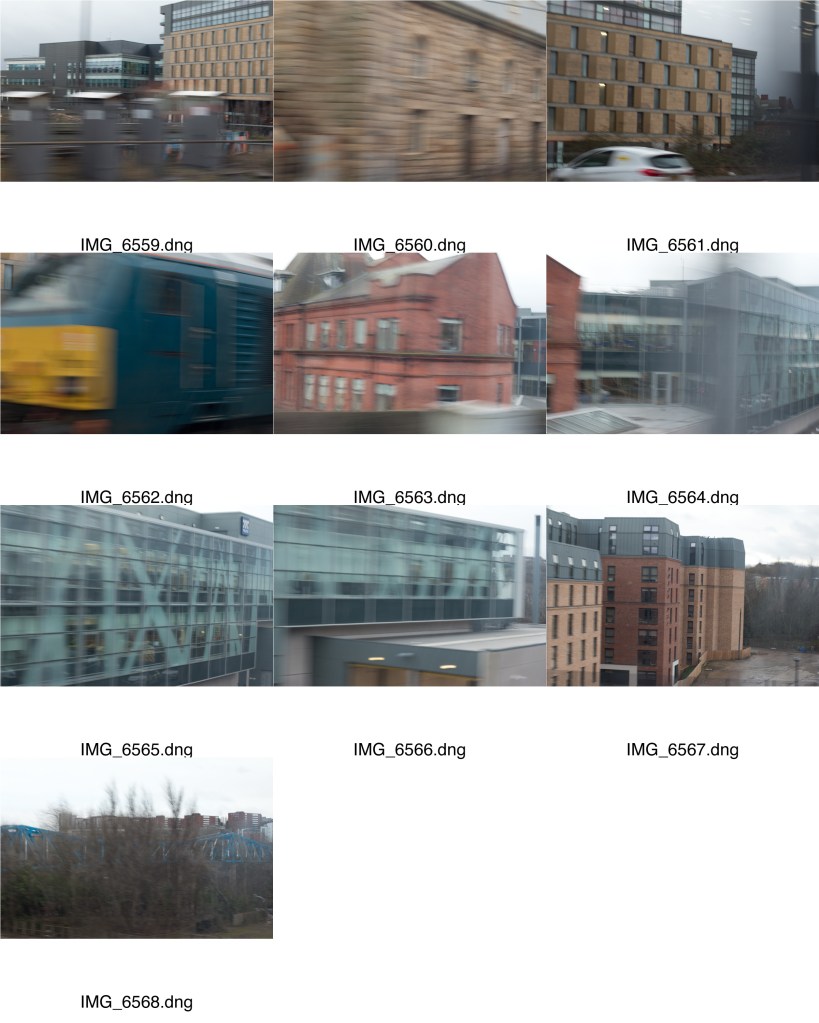
At last I have got around to organising the pictures I took a couple of weeks ago on my first foray into this assignment, all 160-odd of them! Here are the contact sheets (fourteen in total), unedited and unprocessed. It is striking how much repetition there is, perhaps not surprising as much of the route is rural and along the river, and how long the train sits at each station. I had not realised until now that the train is only in each station for about a minute but a minute and a half for the Metro Centre, probably because it is the busiest stop along the route.

How I am going to distill a usable set from this lot remains to be seen!

Land Art

I had not thought about it before but I suppose there is indeed a distinction between the works of the likes of Robert Smithson (which I have not seen in the flesh) and that of Richard Long, Hamish Fulton, and others. The polar differences are defined by the permanence or ephemerality of the work: Spiral Jetty still exists, although from time to time either swallowed up by the lake water, or left high and dry as the water recedes: much of Long’s work, such as A Line Made by Walking and his mud paintings (which I last saw about twelve years ago in Edinburgh) now exist only as photographs.

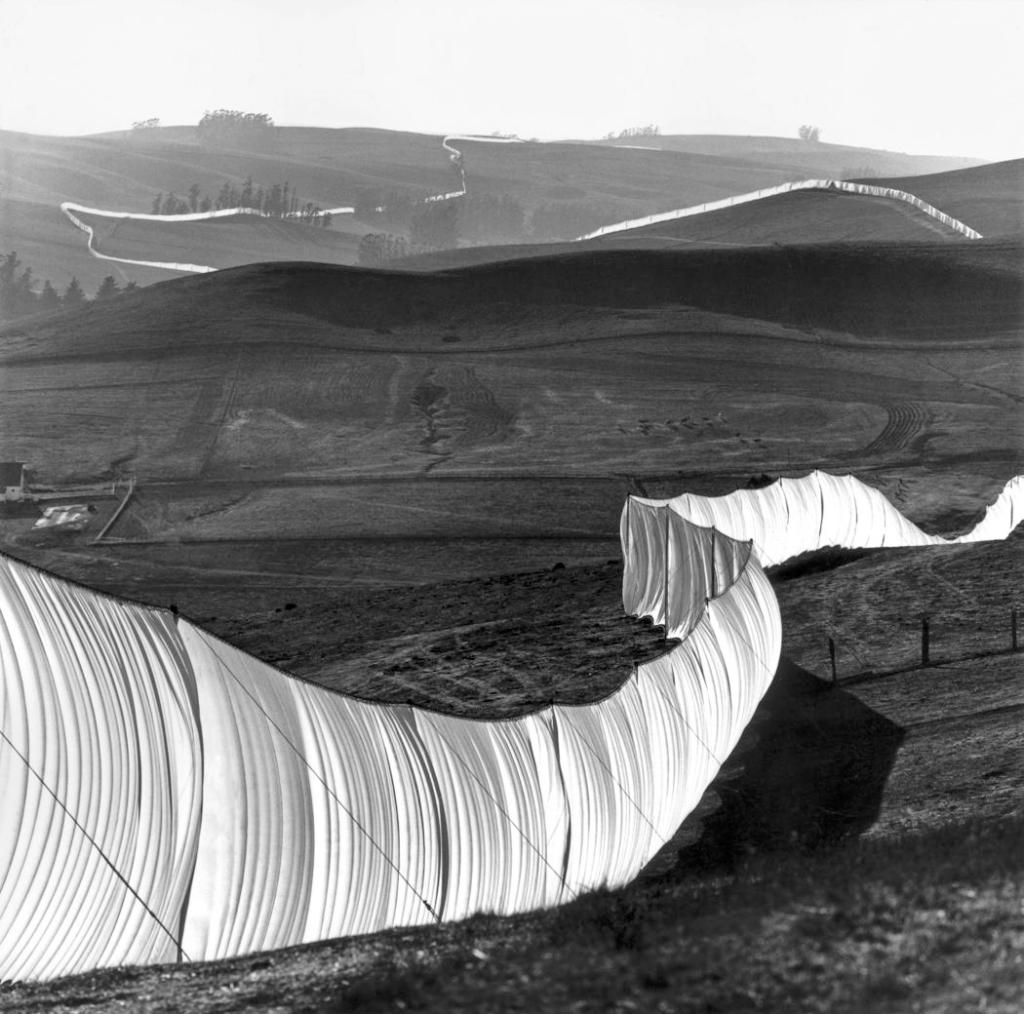
Christo and Jean-Claude are also mentioned in the part of the course material but I would place their work somewhere in between. Certainly it is “capitalist” art, to use Long’s phrase, in so far as these projects are expensive to implement. However their lasting impact on the ground is limited, they sit on more than in or as part of the landscape, and are ephemeral in their installed form – Running Fence, for example, took four years or so to plan and install but was then in place only for a brief time in 1976.

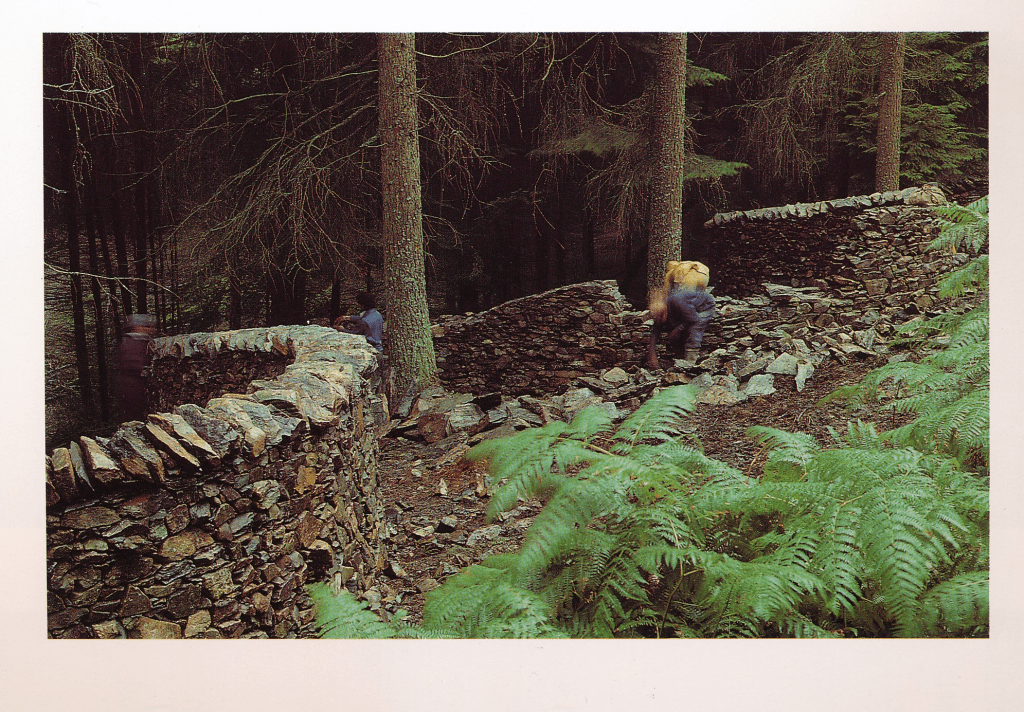
Another artist who comes to mind, much more environmentally minded and drive than Christo, is Andy Goldsworthy. Some of his works remain, such as “Wall that went for a walk” in Grizedale, but many, such as the ice or leaf sculptures, were naturally short-lived and remain now only as photographs.

What I think sets Long’s work apart is the mixture of approaches: physical artefacts both long-lived (gallery installations, painted sculptures) and temporary, some accessible, many not; photography; text; and the conceptual, the otherwise unrecordable activity simply of walking. (One other artist who occasionally mixes the physical with the conceptual that comes to mind here is David Nash. In particular I think of his Wooden Boulder which was both a physical artefact, a large carved wooden boulder, and the conceptual in the form of its journey down stream from Ffestiniog to the sea and its ultimate disappearance.)

It is this conceptual element, the idea that simple activity can itself be art is one of the aspects of Long’s work that I find particularly interesting and it is this part of his approach that has heavily influenced my efforts in the text in art exercise. (https://markrobinsonocalandscape.photo.blog/2019/12/27/exercise-2-5-text-in-art/). It is though also an influence on my thinking for Assignment 2 and the idea that it is the act of performing the journey, rather than for example simply recording the landscape through which it passes, that is important. I am similarly attracted by his use of chance in his work. As he says in the Guardian interview: “I guess I’m an opportunist, really. I go out into the world with an open mind, and I rely to a degree on intuition and chance.” Thesis one of the thoughts that has driven my first experiments with the camera simply pointed through the train window and images taken automatically with the interval timer.

Goldsworthy, A, (1994). Stone. London: Viking

Long, R, (2007).  Walking and Marking.  Edinburgh:  National Galleries of Scotland

Nash, D, (2007). David Nash. London: Thames & Hudson

http://www.richardlong.org

https://www.theguardian.com/artanddesign/2009/may/10/art-richard-long

Assignment 2: First thoughts

Having just completed exercise 2.4 I am now prompted to set out some thoughts on Assignment 2. In fact I have been thinking about it, and indeed working on it, for a few weeks now.

The first task has been to identify a journey that I can document. This has more than anything come down to a simple matter of practicalities. I do not make many journeys these days, and even fewer at this time of the year (today is Christmas Eve) and most of them are fairly short car journeys. See evidently it is difficult to photograph and drive at the same time and I do not particularly want to have to keep stopping to get out to take pictures. I do of course make lots of “journeys” on foot while walking my dog but I know from experience it ids difficult to handle a camera at the same time. I have also already explored such an approach back in EYV when doing the Square Mile project.

The journey that presents itself as the more practical is my monthly train ride into Newcastle so by default, if nothing else, this is going to be my subject.

Exercise 2.4 suggests making some maps using Google Maps or some other system. I do not though feel this is particularly useful for what I want to do. I am not concerned to identify and photograph particular places along the route, which in any event I already know pretty well have done this trip, I calculate, more than 4,500 times over the last fourteen years. Rather I am more interested in the process of the journey and how I relate to it, how I experience it.

Prompted by the Wang Fuchun exhibition that I wrote about recently (https://markrobinsonocalandscape.photo.blog/2019/12/04/one-billion-journeys-exhibition/), particularly the almost exclusively inward looking focus of the train passengers, I realised that for many of those journeys the landscape outside through which the train passes, along the Tyne valley, right next to the river itself for much of the route, has passed as little more than a blur. Most of those journeys have focused on something else, within the train: reading my paper, doing some work, occasionally falling asleep (it is a wonder that only twice in all those years did I miss my stop on the way home because I nodded off), or simply because it was dark outside (during the winter both in the morning and the evening). What I am interested in is therefore a sense of movement, of being in motion, and little more than snatched glimpses of things, places, people, fleetingly visible through the window.

I have been consciously influenced in this regard by the work of Kazuma Obara that I have mentioned before (2018) where he has pictured the passing landscape from within the Slavutych/Chernobyl train. Unlike the rest of his work in that project my intention is not to photograph the interior of the train or its passengers, given that the sense of the physical movement of the journey is what interests me more. That said, I might well try some interior shots on my next trip just to see what they achieve and how they might fit with the exterior shots.

With that scheme in mind I have already done some test shots, using my last trip into town. To achieve what I want I realised early on in the planning that I did not want to try to pick subjects and targets as the train moves along. I know from experience in any event that this can be quite difficult to pull off. Instead what I wanted was a sense of randomness. I therefore set up the camera facing straight out of the window on a block of foam (to dampen some of the vibrations) perched on top of my camera bag. I then set a remote interval timer so that the camera would take a picture automatically every ten seconds of whatever happened to be visible. The camera itself was therefore recording whatever passed in front of it without me having to make any active choices about what to photograph, and what not. Because the train was moving the autofocus occasionally could not find a target so a number of possible shots were not taken, adding an extra element of randomness.

I still have to sort out some contact sheets from this first foray (there are something like 160 shots that need to be organised) but I can already see that some interesting pictures have emerged.

Obara, K, (2018).  Exposure / Everlasting.  Cordoba:  Editorial RM / RM Verlag

One Billion Journeys – Exhibition

I only found out about this exhibition quite by chance a week ago and managed to see it today. This is an exhibition at Locomotion at Shildon (which is about an hour’s drive away for me), an outpost of the National Railway Museum in York, which is the site of one of the very earliest locomotive building workshops. Despite its relative closeness I had no idea it even existed, which is a shame because it is an absolute gem. I am not really a railway buff but have visited the main site in York in the past and I enjoyed this visit even more because of the rather less overwhelming scale of the museum and its exhibits, which are still pretty impressive.

What I particularly wanted to see was this small but nicely staged exhibition of the work of Chinese photographer Wang Fuchun, of whom I had not heard before. Apparently over a period of forty years or so – the earliest images in this show date back to the 1970s, when China was very clearly a remarkably different country from what it is now – he travelled on every train in China and took hundreds of thousands of photos of people on those trains. Out of that massive haul of images this show contains just 45 but they seem to be very well chosen to give a true flavour of his work, and the way China has developed throughout the recent decades.

Nearly all of the photos are black and white: there are just a couple in colour and they stand apart as being shots of trains rather than in them and strike me as being rather too stylised. Nevertheless, still interesting enough in their own right as they depict some of the last steam trains (although, as I say, not a railway buff, I do have a soft-spot for steam trains – don’t we all, or at least those of us old enough to remember when they were not just curiosities or tourist attractions?).

The bulk of the work is simply of people on trains, each particular train route being identified in the caption with details such as the time the journey takes. Captions apart they are not really pictures about particular journeys, rather about the way people relate to those journeys. It is particularly striking that as the images become more contemporary so the passengers become more isolated from the country through which the trains travel as the trains become more ‘sealed’ and air-conditioned (more like aeroplanes in a way; indeed some of the seats look more like what you might expect on a plane) but also from each other as they become more engrossed in their mobile phones and tablets. There is hardly anyone in the more recent pictures who is depicted as doing anything as mundane as looking out of the window! (This is, I am sure, not just a Chinese thing and you would in all likelihood see the same things on any train today anywhere.)

Wang’s approach to his subjects is particularly interesting. Whilst photographs are proliferating at an unprecedented rate, and ‘every man and his dog’ is taking pictures on their phones, he has found that openly photographing people leads to too much hostility. People are happy to take pictures but not necessarily be photographed by others. He therefore does so subtly, if not surreptitiously. There is some interesting footage of him at work in a brief video interview that accompanies the stills: instead of a big camera he uses a compact automatic (in fact a Sony RX100) which he can point at his subjects without them necessarily being aware of what he is doing, or at least without him being blatantly obvious. The results are still technically good but benefit in particular from being candid and unstaged. In fact some people are evidently so engrossed in their phones that they were probably oblivious to his presence.

This style has parallels with the work of, for example, Daido Moriyama, who similarly uses a small compact camera and is practiced at catching people unawares. The main difference between the two though is that I guess Wang is pursuing a fairly refined aesthetic whereas Moriyama, in common with a number of other Japanese photographers that come to mind – the Provoke group, Masahisa Fukase, Hajime Kimura, for example – have much less refined, often positively ‘dirty’, anti-aesthetic approach.

So far as this course is concerned, this has been quite a timely discovery as I am already starting to think about how I might approach the journey theme in the next assignment. Bearing in mind also the pictures taken by Kazuma Obara on the Chernobyl train I have been thinking about making a sequence on my old train commute line into Newcastle. At the moment though I am leaning more to the idea of taking shots of the landscapes through which the train passes rather than of the people on board. I will return to this again and in more detail later.

https://www.locomotion.org.uk/whats-on/one-billion-journeys