Having started to think about the strengths and weaknesses of the first final set that I have chosen, as discussed in my last post, and about other ways in which this project might be presented, I have come up with another set.
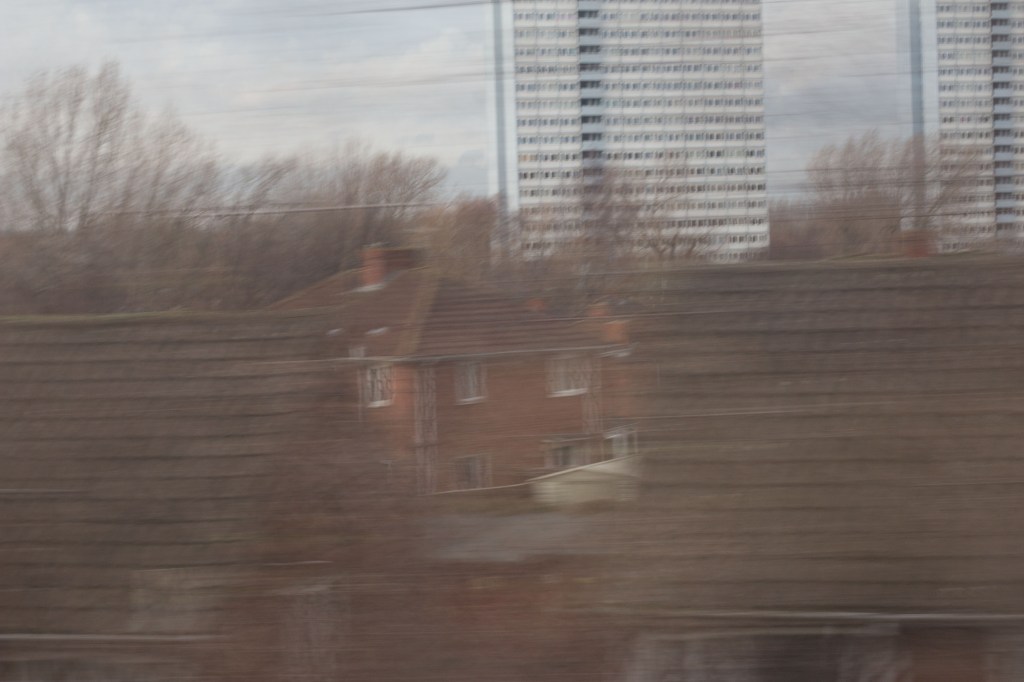
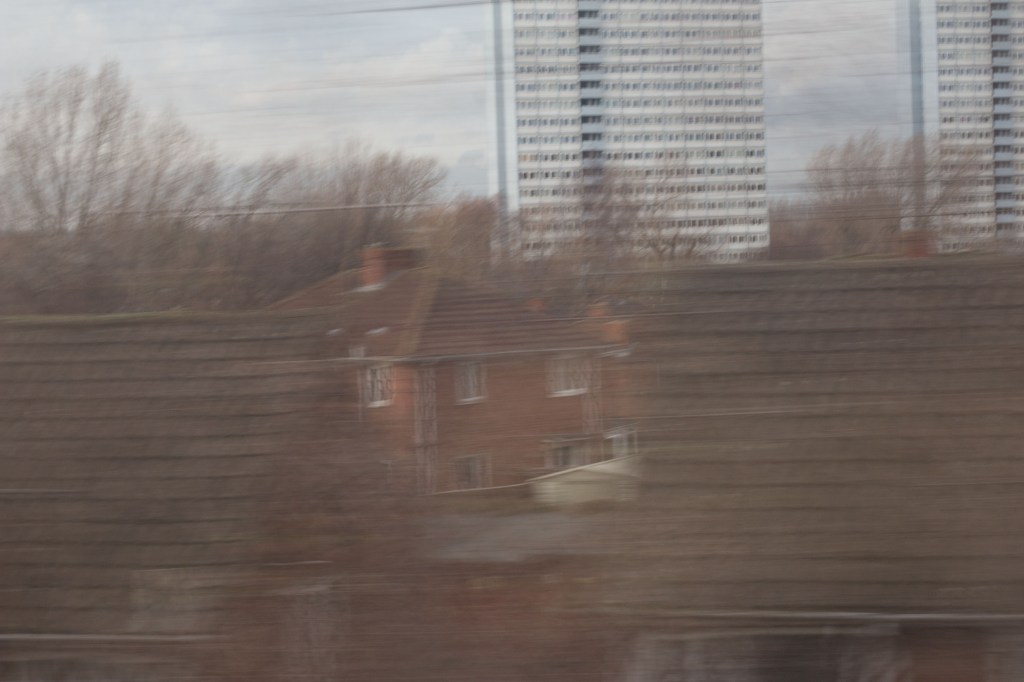
The last set was very much based on the visual experience of being on the train and experiencing the journey through the window, observing the landscape as the train passed through it. For an alternative approach I have put together a more varied set describing the journey itself, from boarding the train to getting off, as a more abstract experience. A number of images have been carried over from the previous set. Some have come from the attempt at a text based set. I have though added a few new ones from the first shoot. Again, I have tried to highlight the contrast between country and town, this time adding a bit more emphasis on the build up of residential areas as the train comes into town. I have also hinted at the presence of other train traffic as one approaches Newcastle: the ante-penultimate image is of another train crossing the King Edward VII bridge into Newcastle.
Whether this is better I am not sure. It is at least more varied from a visual point of view. I can see an almost infinite number of possible combinations of the pictures that I took for this project but this one will do for now and at least I think it works.
Much of what the brief for this assignment calls for by way of interpretation, relationship with cultural aspects covered in this part of the course material, technical choices, and influences, I have already covered in previous posts for this assignment, specifically: First Thoughts; First Contact Sheets; Further Research; and Some Further Thoughts. To that extent I am not sure how useful or productive it would be to go over the same ground again, albeit in perhaps a more condensed form.
What I certainly need to cover is the choice of the final twelve images.
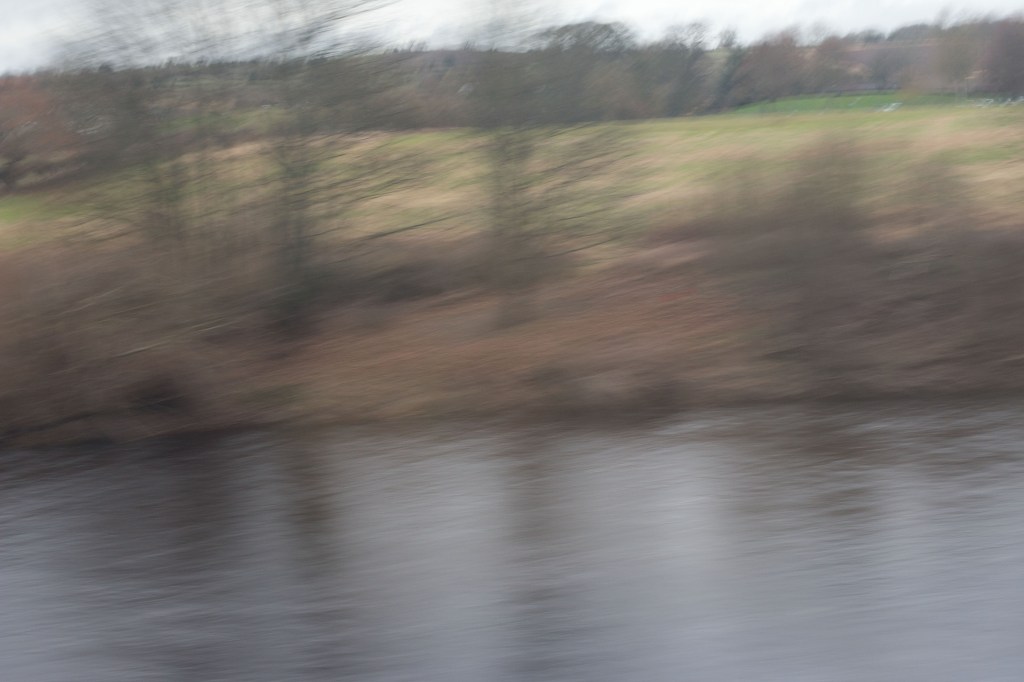
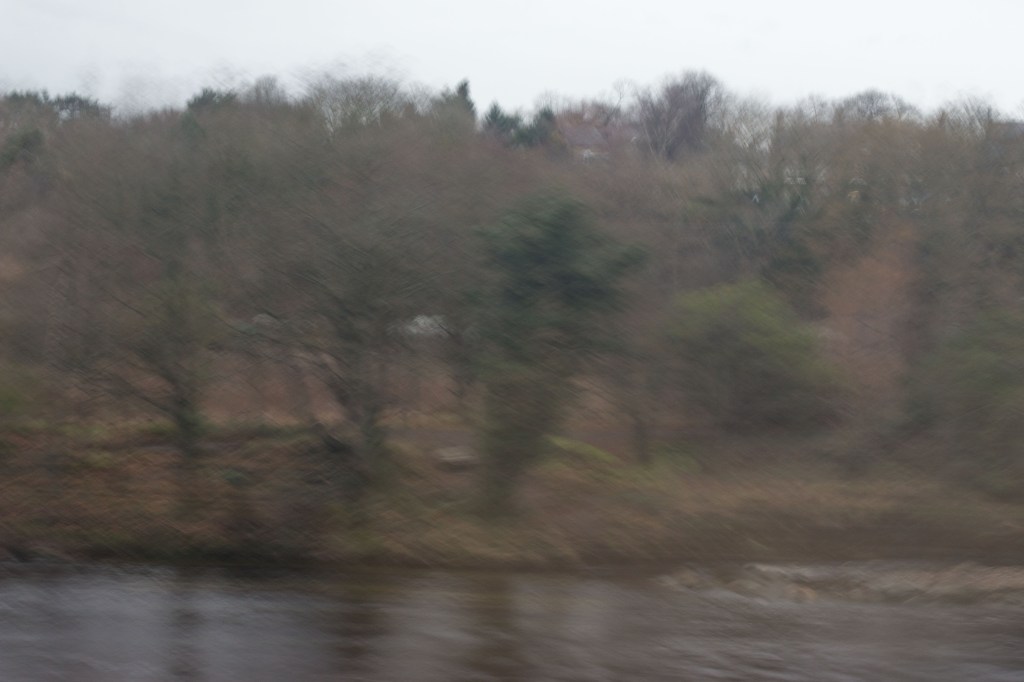
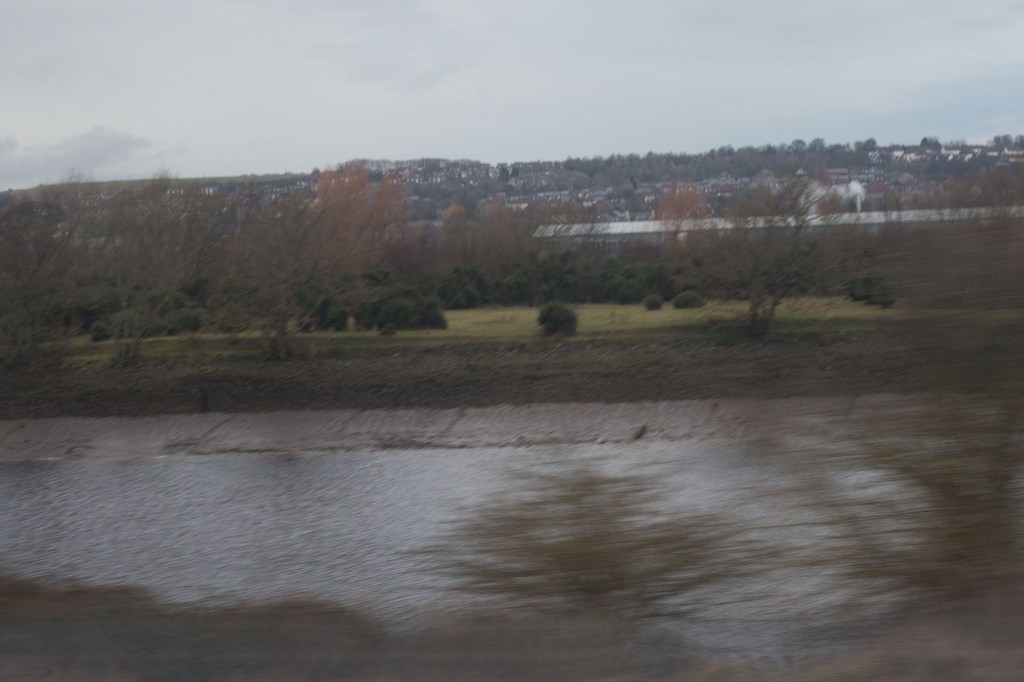
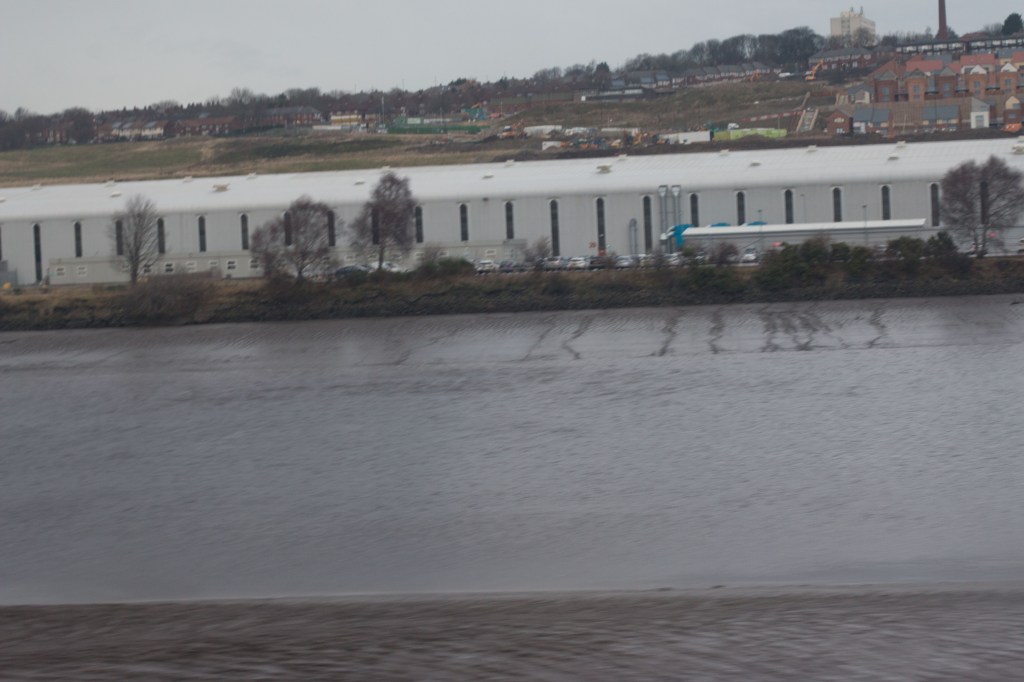
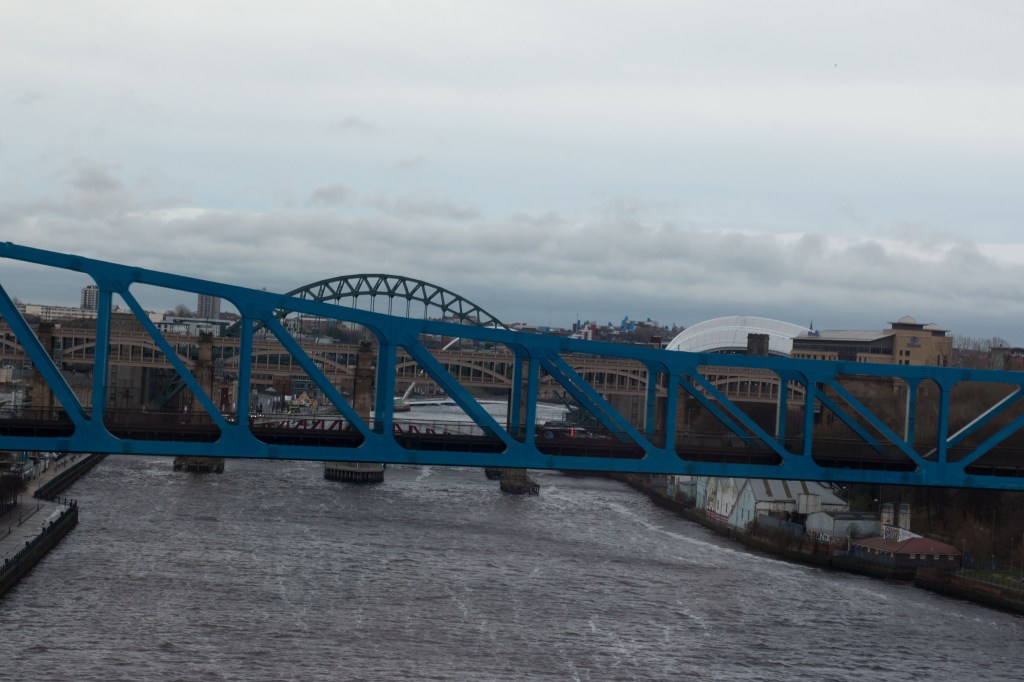
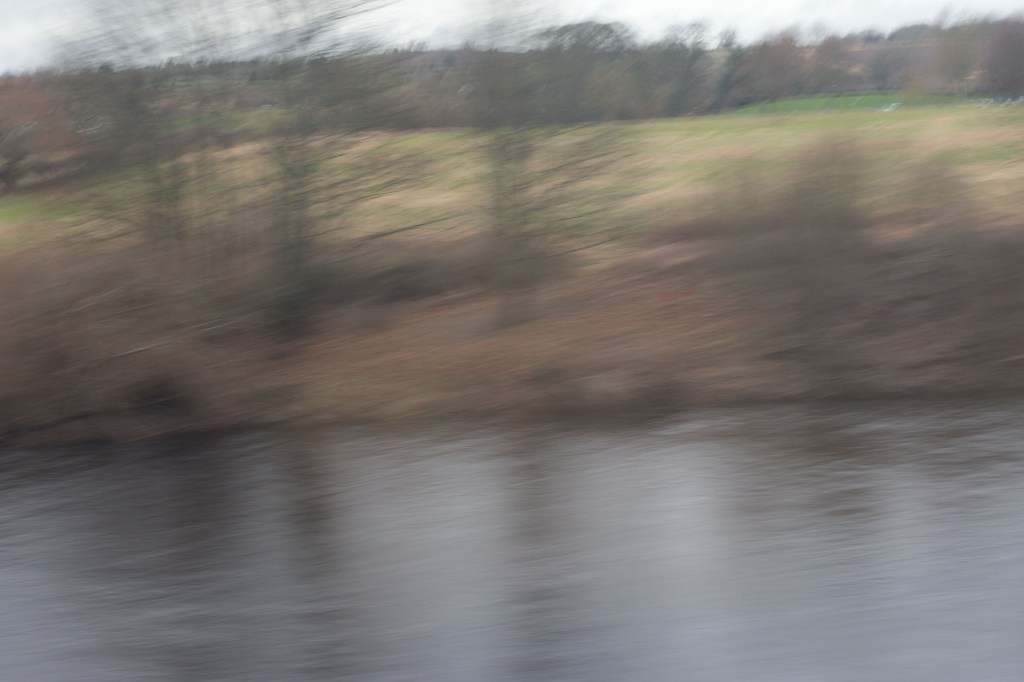
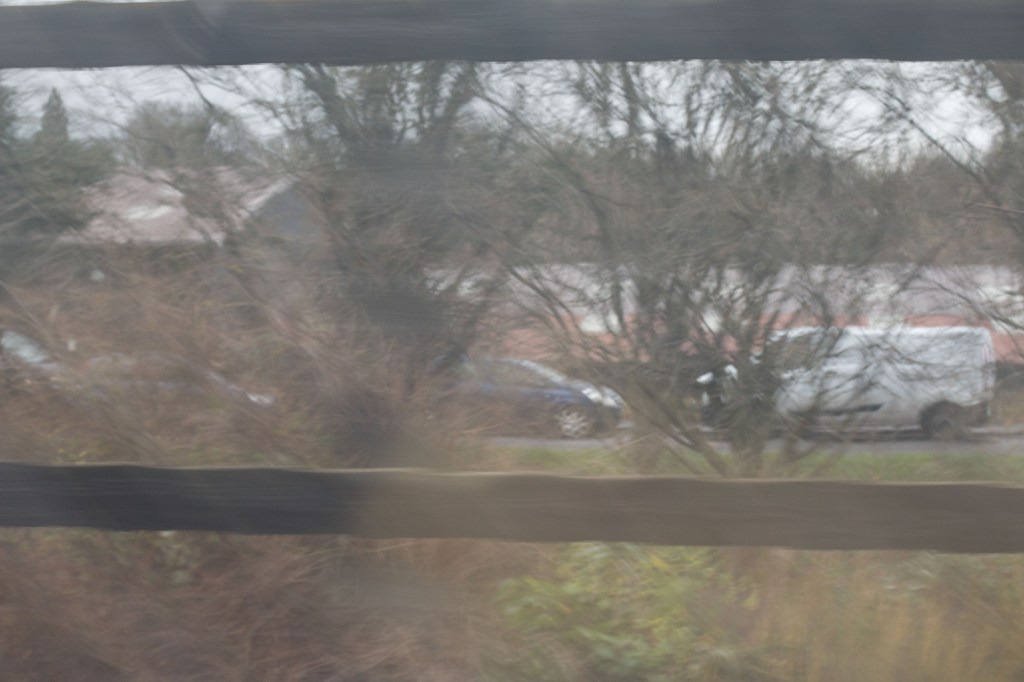
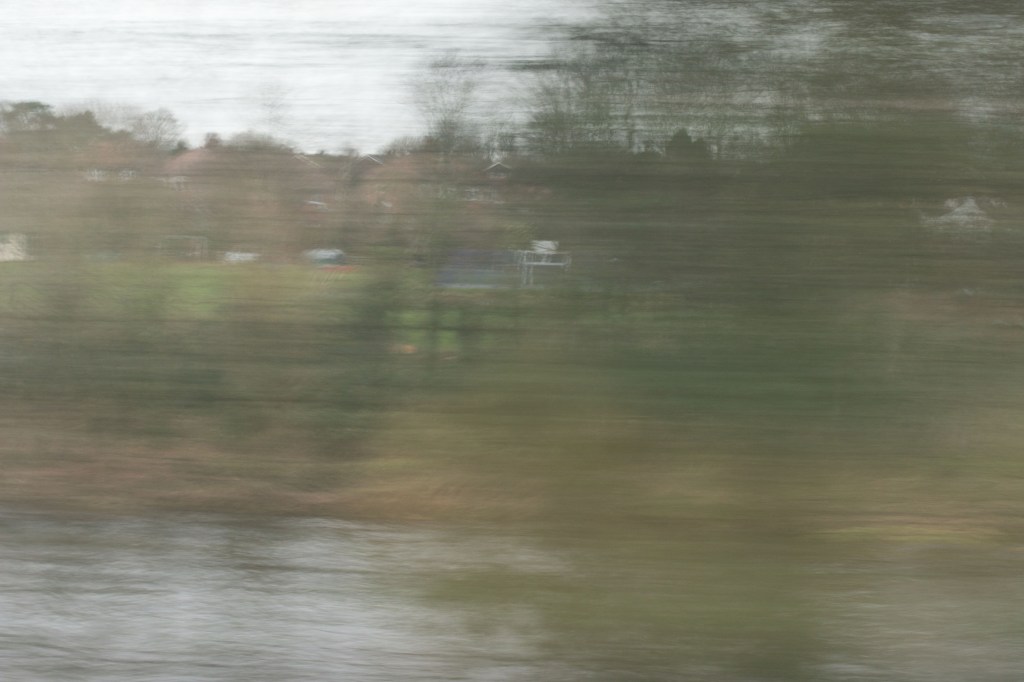
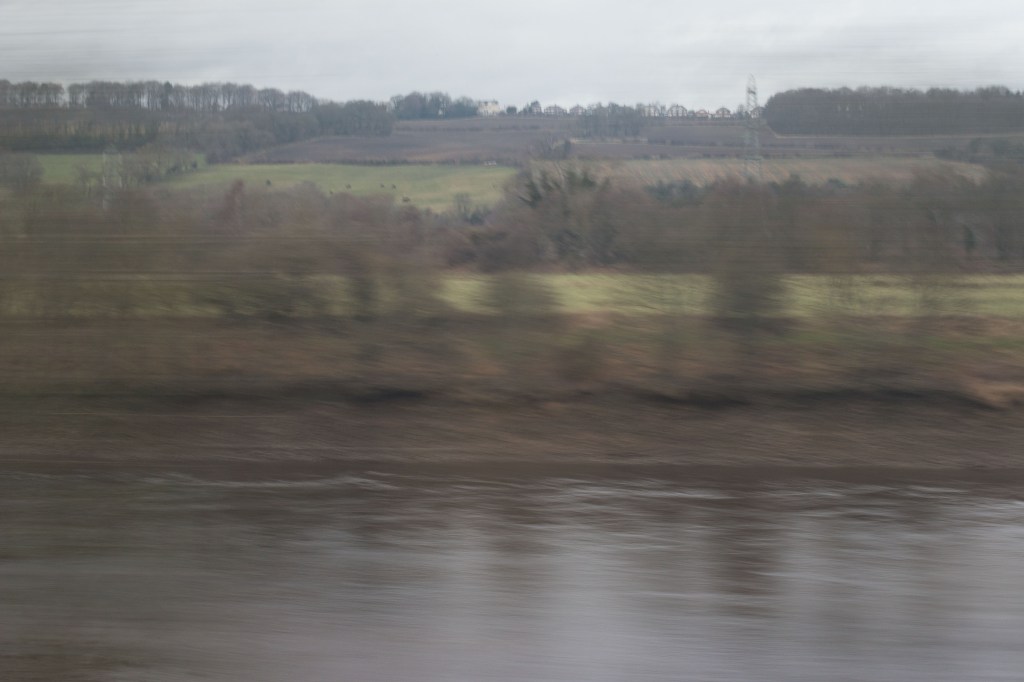
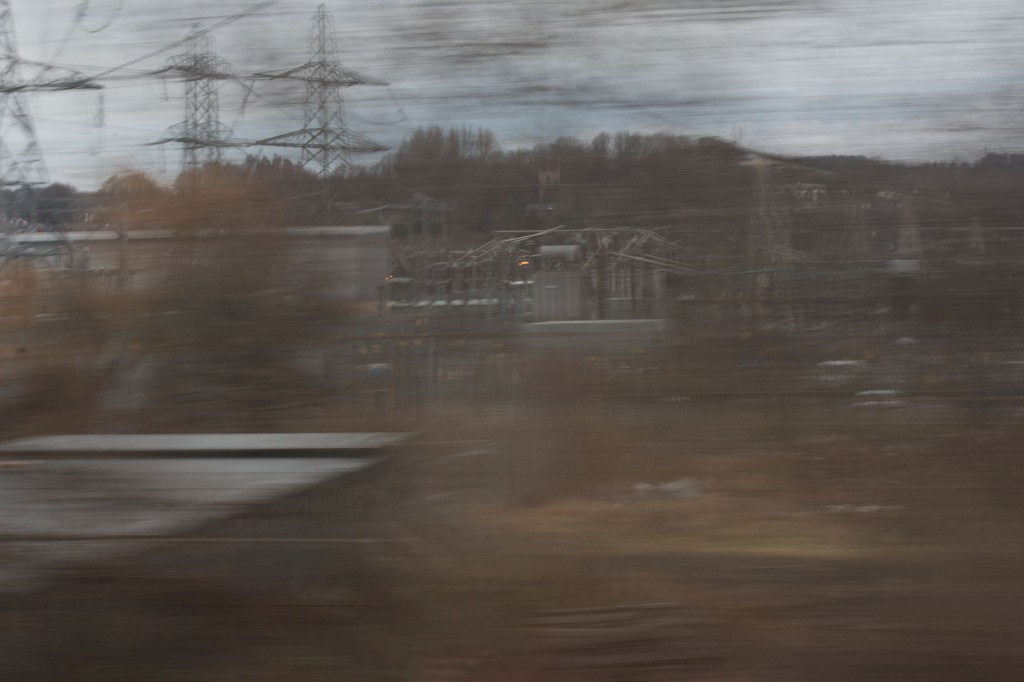
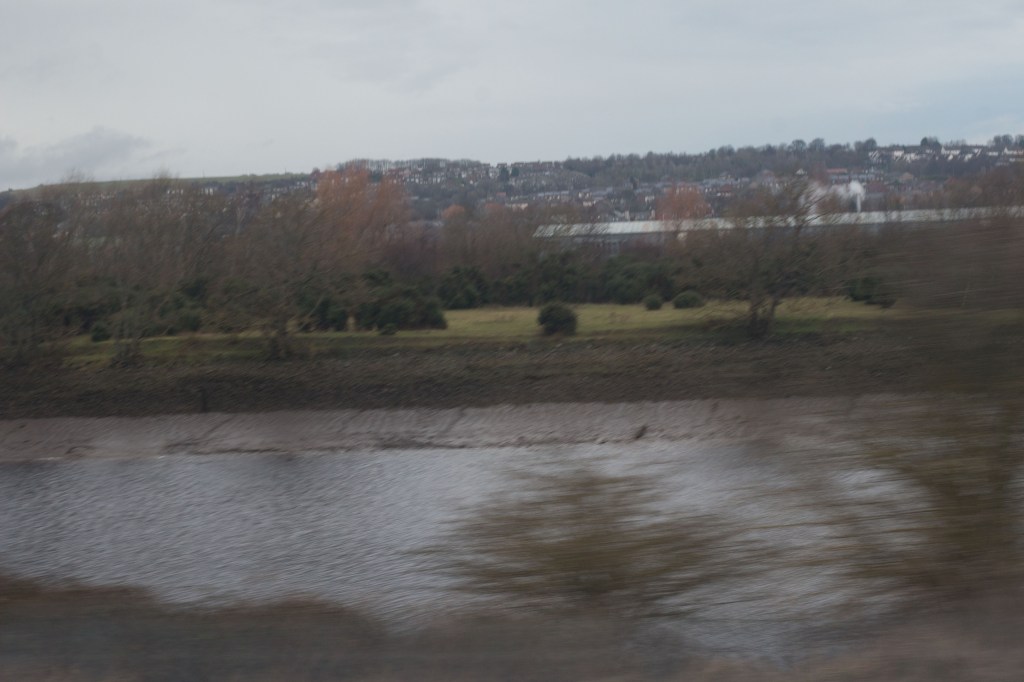
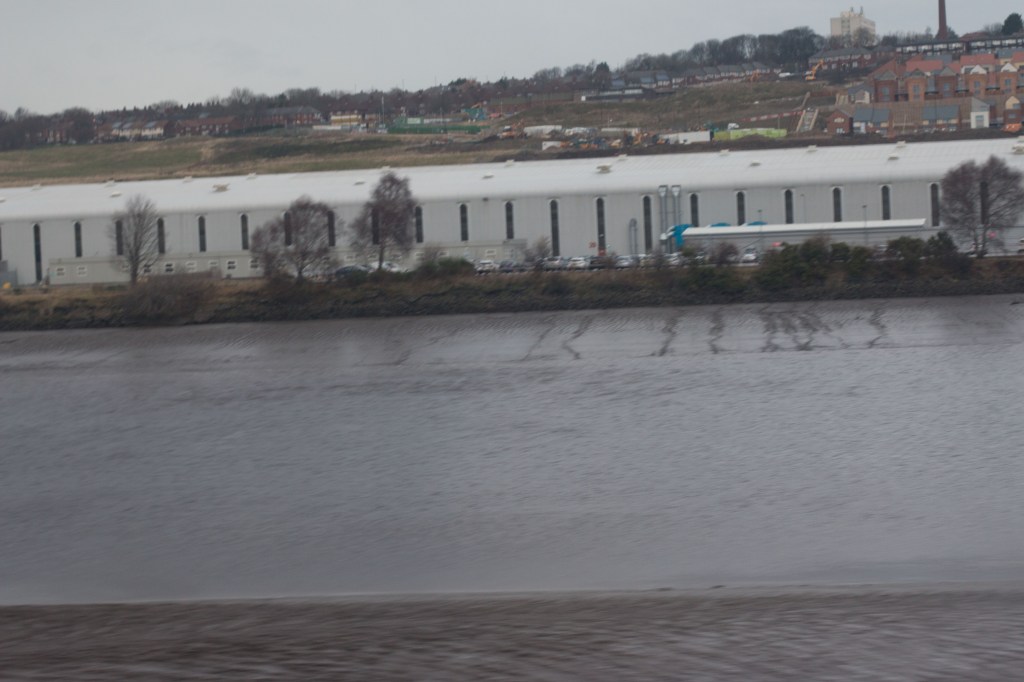
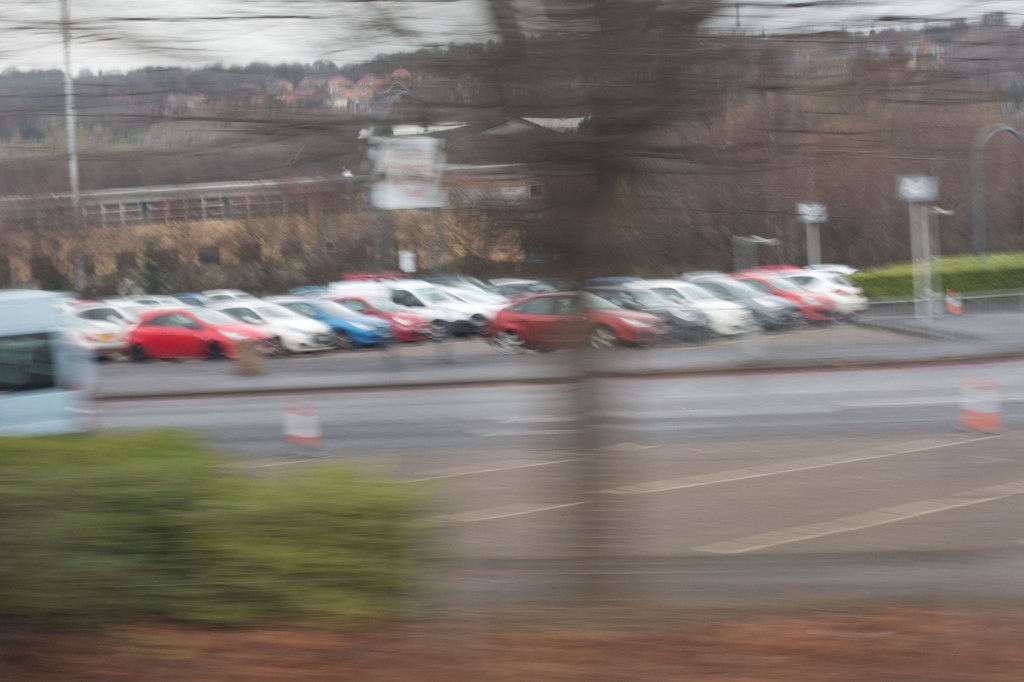
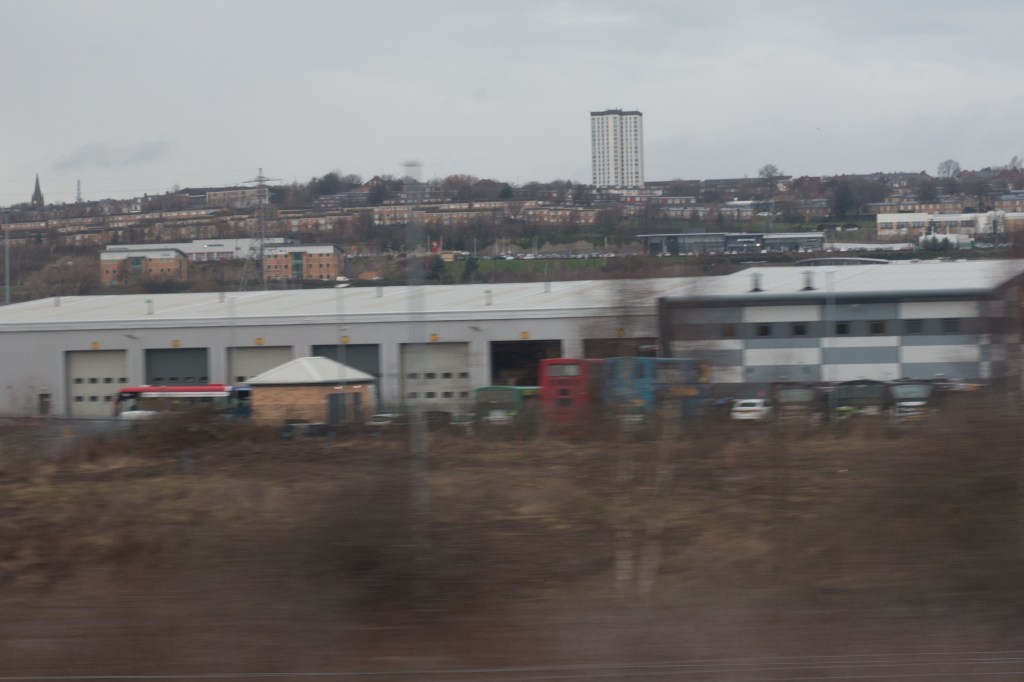
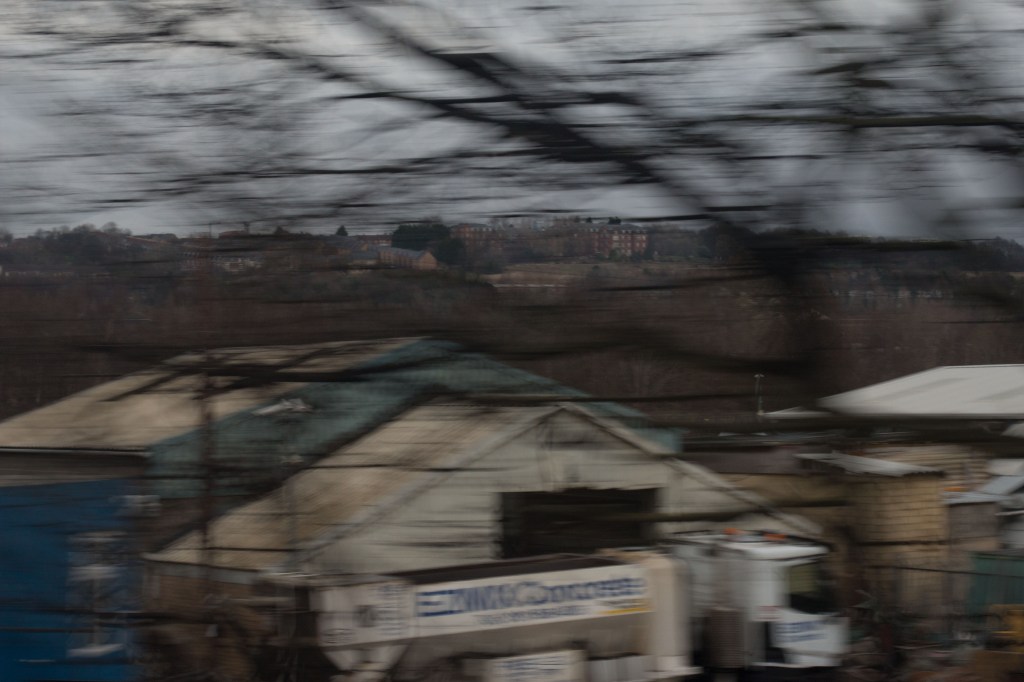
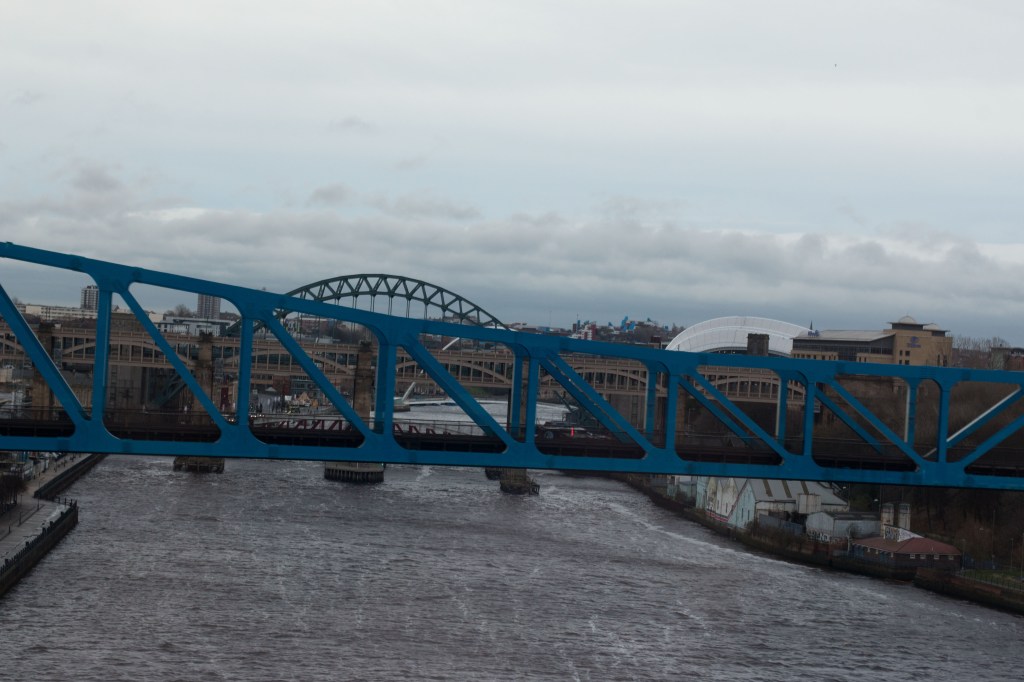
One aspect of the following sequence has inevitably been dictated by the nature of the assignment itself: the final images appear in the order in which they are encountered on the journey: The first image is from where the railway meets and runs alongside the river for the first time just after leaving Stocksfield station; the last is a somewhat out of the ordinary view of the iconic bridges over the River Tyne between Newcastle and Gateshead just before the train enters Newcastle Station.
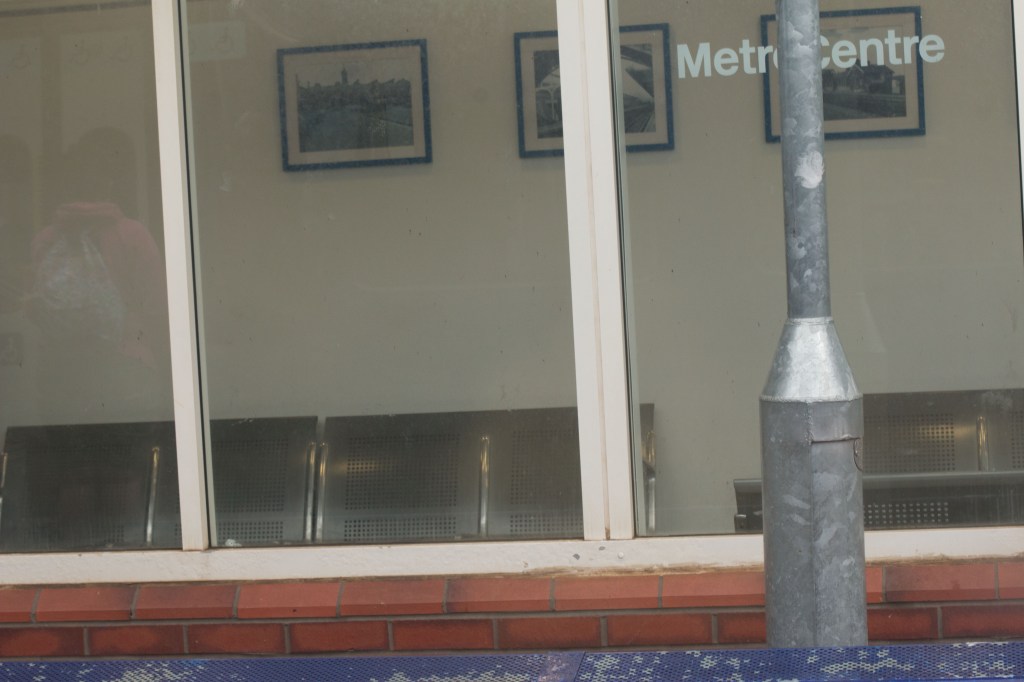
Those in between I have chosen to give an indication of the way the landscape changes from largely rural, with the only major town before the outskirts of Newcastle are reached being Prudhoe, then becoming increasingly industrial, and briefly residential, before the bridges. In geographical terms, as might just be apparent from the photograph I have included in the Mapping post, the physical distances between the waypoints illustrated by these images become smaller as the urban environment itself becomes denser along the way.
Here is my final set for this particular approach to the assignment:
StocksfieldPrudhoeWylamRytonRyton Power StationLemingtonScotswoodMetro CentreElswickDunstonGatesheadTyne Bridges
Evaluating the strengths and weaknesses of a set is invariably something that I find difficult at this stage because I am still too close to the work to be able to view it wholly impartially. I usually find the critical process easier once I have had some discussion with my tutor. I have though at least been giving some thought, having now followed one particular path, to how I might approach the project differently and I think this will help in pointing up what might need improvement.
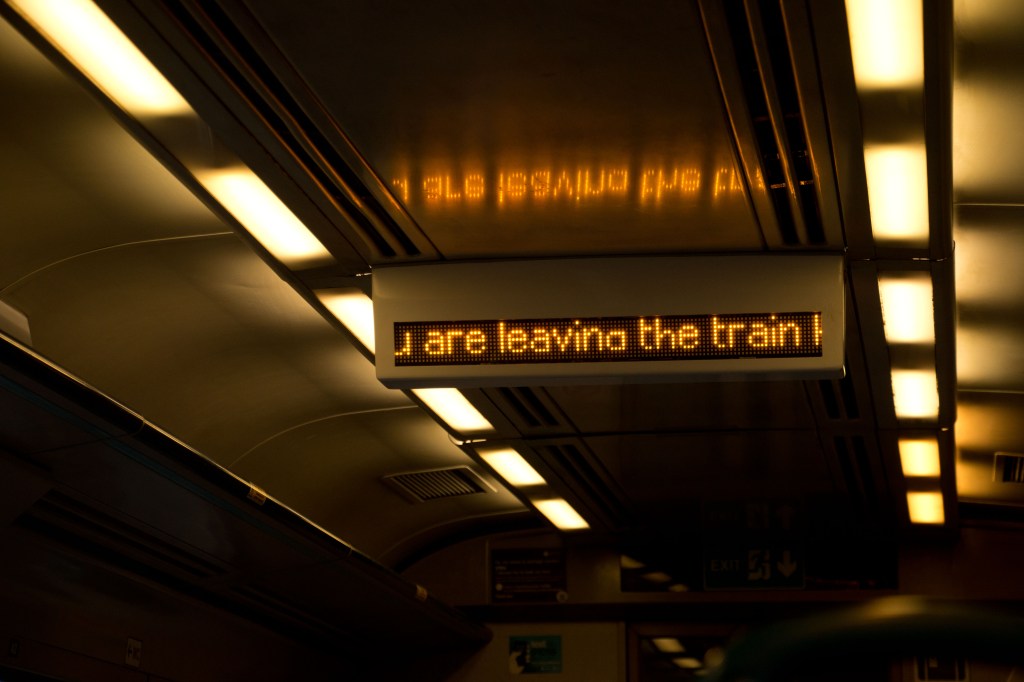
I have already tried a wholly text based approach from inside the train and I do not honestly think this works. I think it gives too narrow a view, and not a particularly interesting one, of the journey. I have also found that it is not easy to pull off from a technical point of view. I still remain uncomfortable with the idea of a people-based set, not least because of the practical difficulties, perhaps exacerbated by lack of time on a relatively short journey, of negotiating consent (without which I would not do it anyway). Kazuma Obara did feature people in his Chernobyl train sequences, but in a way his work was more about the local people, and the effect of the disaster on them, then and now, than on the train journey itself. Here I am more concerned with just the process and experience of the journey.
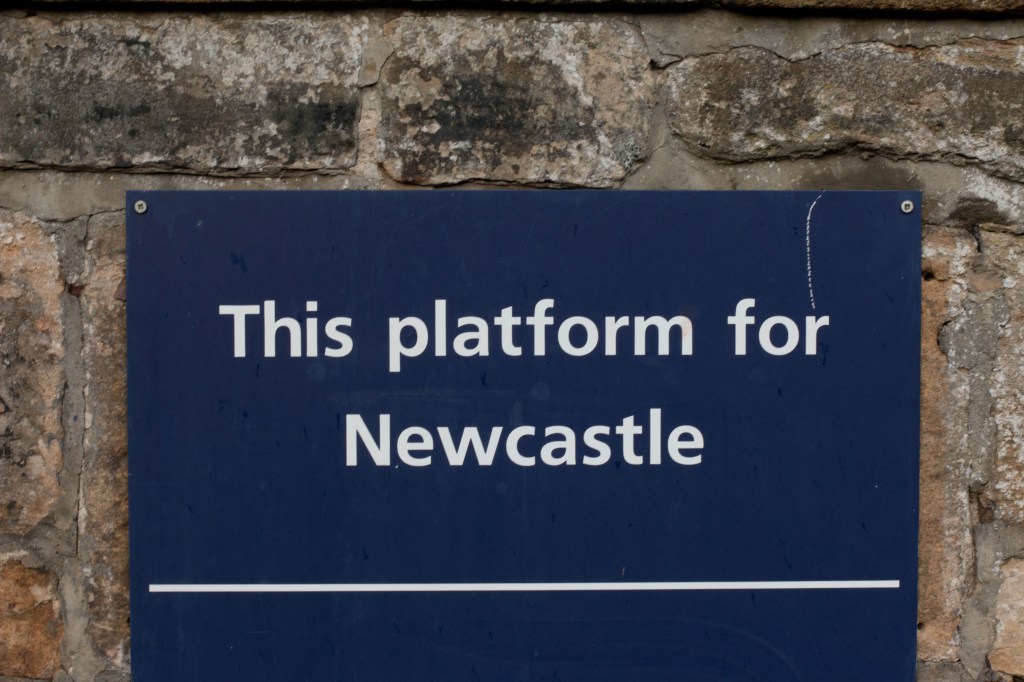
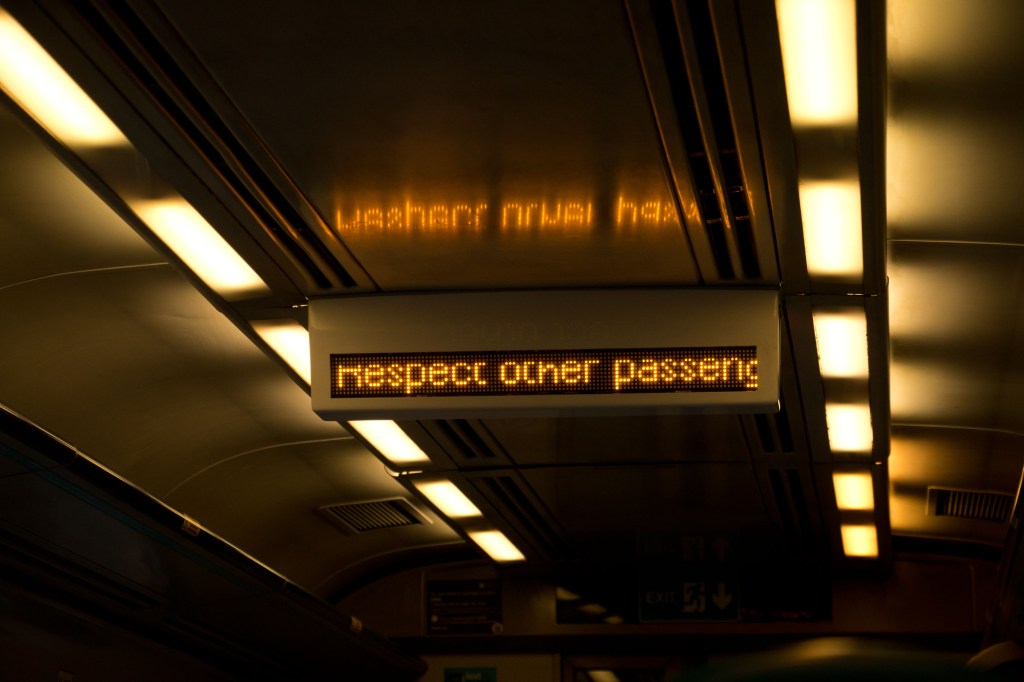
I have though been wondering about the possibility of a more mixed approach, including other elements beyond just the view from the train, combining some of the text based images, and others simply taken outside the train. I am not sure that a limit of twelve or so images is necessarily going to be enough to accommodate such a wider approach (I do feel the recommended limit in the brief is a bit too constraining) but I am going to try another experiment, that I will address in another post.
 Mark Robinson's OCA Landscape, Place & Environment Blog