Category: Assignment 3

Assignment 3 – Another Viewpoint

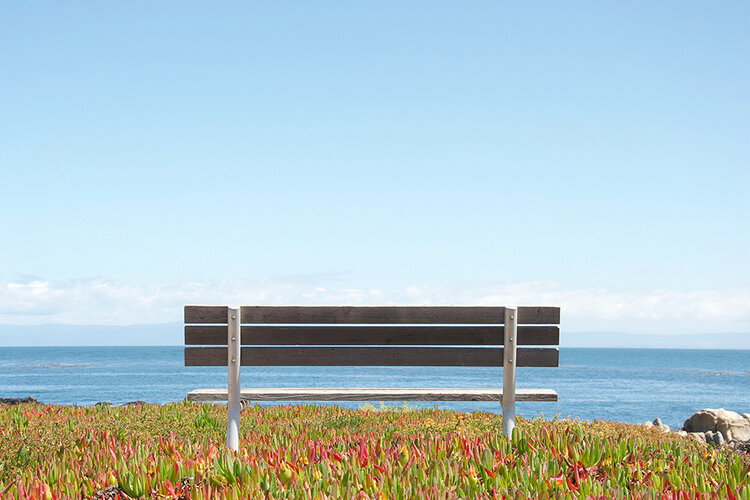
The other day I picked up a reference in an email from the French L’Oeil de la Photographie website to some work by a Chinese American artist that has some similarities to the work that I did for Assignment 3.  Journey Gong, of whom I had not heard before, has made a series of images titled Viewpoint that shows benches looking out onto panoramic views, mostly over the sea.  Whereas my sequence focused on the benches and juxtaposed them with the views visible from them, Gong’s work shows the benches as part of the view.  The views themselves are, as with my set, fairly nondescript; apart from distant hills and the line of the horizon, there is not much more to see.  While it is far from explicit, I guess that he was exploring issues similar to those that I was looking at in my work, judging from the last line of the brief accompanying text:  “This is where nothing happened, everything yet to take place”.

Looking at his website, I cannot say that his work moves me much at all.  This sequence though does appeal, even if only because of the visual and ‘theoretical’ background (if I have interpreted the work correctly) similarities to my own work.

https://www.journeygong.com/#/viewpoint/

https://loeildelaphotographie.com/en/journey-gong-df/?ct=t%28Newsletter+EN+10102020%29

Reflection on Tutor feedback

Whilst the feedback from my tutor on Assignments 3 and 4 has been very positive, indeed throughout this course, I have nevertheless been thinking about whether there is still anything that I need to reflect upon and address.

So far as Assignment 3 is concerned I think there are two points, both of which I have already addressed to an extent elsewhere.  The first relates to presentation of the work.  At the time I produced the work I did not give this much thought.  Since then I have of course gone on to use the final set for the print on demand exercise and have had actually had the book made up.  For the purposes of presentation for assessment I do not now think there is anything more that I need to do with this work and I could simply put the book forward in the vent of physical submission.  Whether OCA reverts to this of course remains to be seen.

The other point relates to the development of a personal voice, which was something my tutor and I discussed at some length.  This is something that I wrote about specifically at the time (https://markrobinsonocalandscape.photo.blog/2020/04/29/further-musings-on-development-of-a-voice-body-of-work/).  I have since continued to think about this issue but I am not sure I have got very much further forward with it.  The issue is, I feel, that whilst I do seem to be finding a particular voice of my own, it is at the moment, inevitably, very much tied to the nature of the work required by this module.  I have found an aspect of landscape photography that especially interests me and that has produced a recurring theme throughout that I have done so far.  Whether I will want to continue in a similar vein once this module has been completed, whether it will feed through into what I do for the next module, or whether I will explore this further in my personal projects (not that I have much time for them at the moment!), I cannot yet tell.  For now I have to recognise that I am still developing and there are plenty of other avenues yet to explore.

This actually strikes me as a good thing and that development and change are to be welcomed and embraced.  And this leads me to my second general point from the feedback.  In previous modules it has been a case of completing an assignment and moving on to the next.  To an extent that is perhaps a result of the nature of the earlier modules and the way they have been constructed.  The present LPE module comes across to me as more integrated, at least thematically linked and consistent.  As a result, each step calls for a reassessment of what has gone before.  This, as my tutor has observed, is what I have been doing by going back to look again at the work done for earlier assignments and reconsidering it in the light of more recent work and developments in my thinking and experience.  It has felt important to me to consider how earlier work might be developed or readdressed, so that the assignments have become for me, to an extent, not fixed but dynamic pieces of work.  This is why I have gone back to each of the first three assignments and done more work on them, in particular with a view to means and modes of presentation.  This is probably also what is behind my decision for Assignment 5 to produce two distinct sets of images exploring different ideas about landscape photography.

So far as Assignment 4 is concerned, I do not think there is much more that I can add for now.  I still very regard this as an introductory piece, a first look into my chosen subject that in some ways raises more questions than it answers.  It would really benefit from expansion and development but I do not see that as a realistic prospect within the confines of the current course.  I suspect though that in the future I am going to think more about those further questions as I can see that they might well be relevant to work that I do in the future.  Whilst the essay in its current form does not necessarily, at least at face value, fit within the continuum of the work for the previous three assignments, and what I am doing for the next two, I do nevertheless see what the work on the essay has done is affect might broader thinking about landscape and the role of photography as a means of expressing my ideas of landscape.

On a few other points that have arisen out of the tutorial: I did look at Chris Steele Perkins Japanese work in connection with Assignment 2, but I will look at it again with a view to working out how best to present the work for Assignment 6.  Shibata’s influence on what I am doing for Assignment 5 is something I have already addressed in writing about research for that project.  Otherwise, I will follow up the Mass Observation and Jimmy Forsyth suggestions soon.

Exercise 5.3: Print-on-demand mock-up

Working in a rather roundabout fashion I have now got back to this exercise.  I have been rather more concerned with producing a physical book (not something I can do through the likes of Blurb given my chosen format) which has been taking up an inordinate amount of time.  Turning to this exercise has been something of a light relief!

As I am now using Lightroom I thought I would start with the Book Module contained within it.  Although it would appear to be a fairly simple matter if the book is to contain only photos it seems to be of another order of difficulty to incorporate and combine with text.  There is no doubt a way of doing it but I have not found it yet.  I have therefore fallen back on Blurb’s own Bookwright program and this has proved to be remarkably easy to use and I have come up with something, albeit not yet very refined, after just a few hours work.

As I have barely got off the ground with Assignment 5, for which I do intend to make a book, I have, for sake of ease, gone back to an earlier project and used the images produced for Assignment 3.  For these I have adopted Blurb’s standard landscape format, one image per double page spread, on the righthand page alone, with the map reference captions.  Simply for the purposes of experimenting I have also added a single page of text at the end which is a lightly edited version of the text that accompanied the final set in my blog post for the assignment.  The only other addition is a title page:  somewhat mockingly I have decided to call this book version “Sedes Memorabiles”, Latin for memorable seats, which of course ironically, not all of them are and even some of those with a memorial function are not easily readable by a general public.

I have no training in or prior experience of book design but I am well aware it is not a simple matter of putting some images and text on a page.  What I see though from looking at photobooks in my own library is that for most keeping things simple is what works best.  There are of course exceptions:  William Klein’s New York book works precisely because it is busy and slightly disorienting:  some of my favoured Japanese photographers’ works are also more successful because of their sometimes unorthodox presentation.  I also just like the idea of one image per spread, or no more than one per page, with minimal text.  I do not think my effort is anything that someone else would want to go out and buy but as an exercise, an experiment, and first dipping of the toes into the waters of making books, I think it is not bad.  No doubt it could be refined further but I am otherwise reasonably pleased with it as a first attempt.  Not to mention surprised at how relatively easy it was to put together.

Proof copies of the cover and main body are accessible below:

Assignment 3 – Tutor feedback

Happily, good feedback from my tutor on this assignment. We also had a good discussion about Assignment 4, as a result of which I have decided to go ahead with my original proposal, though I think I have slightly revised and refined my ideas about exactly how the argument should develop.

The full report is below. I have though redacted out one paragraph that is not for general consumption:

Overall Comments

As always, a detailed conversation which covered all aspects of the course.

In addition to the coursework and assignment, we discussed critical reflection*, identifying the photographer’s voice, your highly involved research and evidence of theory into practice and engagement with peers. *I will attach a pdf to the email.

Feedback on assignment 

Over all a good response to the Assignment brief.  The diptych arrangement worked well.  We did though discuss other possible means of presentation.   We agreed that given the relative lack of material other forms of presentation might well be difficult and unlikely to work well.  That apart, could the work be presented in book form, as a slide -show, or in some other way?  Does the format of landscape orientation work or could the images be arranged in some other way?  The experiment with the black and white film in square format suggests that the letterbox format does indeed work and having the extra height in the pictures does not add anything.  The letterbox format actually helps to emphasise the relative lack of (interesting) view from the vantage point of each bench.

We also discussed my reflection on the work and the difficulties of forming an objective view of how well it meets the assessment criteria.  Some further guidance from OCA on how this might be might be done more practically and consistently.  Subject to that, my response addressing the issue of development of a personal voice was a wholly satisfactory one.

Coursework

I am continuing to engage well with the course material.

Research

I am drawing on a wide range of sources and influences, literary and visual, and synthesizing it well, posting a lot of material on my learning log.

Learning Log

You have gone so far as to recommend to some of your other students that they might usefully read some of the material on my learning log.

Suggested reading/viewing 

Picking up a reference in one of my learning log posts to the book Shimagatari by Yasuhiro Ogawa, you recommended having a look at the Japanese film The Naked Island, about life on a small, remote island. (Having checked, it does appear to be on You Tube and I will follow this up.)

You also recommended, by way of further research on the ideas explored in Assignment 3, the work of Chloe Dewe Matthews, in particular her series Shot at Dawn.

Pointers for the next assignment / assessment

We discussed at some length my ideas for the critical review that forms Assignment 4, taking the subject of street photography as a possible means of exploring the idea of landscape phototgraphy.  We agreed that this opens up lots of possible avenues for exploration that it will not be possible to investigate fully, or indeed at all, within the confines of the set word limit:  for example, what is it that makes New York City more attractive to and productive for practitioners of street photography than so many other cities?  What is it about the form and physical structure that makes a difference, compared with, say, Paris or London?  How might thinking about the nature and creation of architectural space be brought in? What about ideas about design of architecture for people?  As a result your recommendation is that the review perhaps be treated more as an abstract, opening up possible ideas and themes for further enquiry in due course. It might also be useful to look at the work of OCA tutor Clive White and even to reach out to him.”
Landscape as memory device – redux

Continuing to indulge my interest in and fascination with Japanese photography I have just picked up a couple of books by Koji Onaka. I have been particularly struck by how similar thematic threads are running through the work of a number of artists whose work I have been looking at of late that are relevant to some of the issues addressed in this course.

These two books have something in common with Ogawa (2014) in so far as they are exploring parts of Japan, islands and smaller towns, away from the metropolitan centres, exploring a sense of memory of and in these places, memorialising them as they were, while they now change and are in danger of losing their original character. Onaka though takes the idea of the memory device a bit further.

Although put together quite recently both of these books are made up of photographs taken in the 1980s and 90s. They are, in a way, little memory capsules of Onaka’s time visiting and photographing these places. There are two points though that I find particularly interesting. In the earlier of the two books Onaka writes:

“I have plenty of negatives, which I’ve already forgotten, in which situation I shoot the films. So it was up to me to label them as old pictures, nonetheless, I somehow knew that it doesn’t matter when and where I took them and why I took those pictures.”

As photographs are generally unreliable so far as “truth” is concerned, so too are they unreliable as memory devices. The photographer’s memories, embedded in the images, are no longer accessible even to the person who made them.

The other point, which reinforces this last observation, comes from the more recent book. Onaka did not edit this set of images but left it to someone else. His editor has chosen and sequenced this set in such a way that they can be read as telling particular story, as Onaka puts it, of adolescent first love, a story that he says he could not have produced himself. The original memories have again become inaccessible and in their place has grown a new “memory” that is in fact entirely fictional. Nevertheless, there it now is, embedded in specific places at specific times. Or has the editor taken her own memories, from different places and times, and overlaid them on Onaka’s memories, obscuring their origins?

Ogawa, Y, (2014). Shimagatari. Tokyo: Sokyu-Sha

Onaka, K, (2019). Faraway Boat. Tokyo: Kaido Books

Onaka, K, (2013). twin boat. New York: Session Press

https://markrobinsonocalandscape.photo.blog/2020/03/08/landscape-as-a-memory-device-shimagatari-book-further-thoughts-on-assignment-3/

Assignment 3 – Further research

I have now had feedback from my tutor on the submission for this assignment and will do a separate post on our discussion later. In the meantime I have followed up his recommendation for a further artist to look at whose work is relevant to the approach that I took for this project.

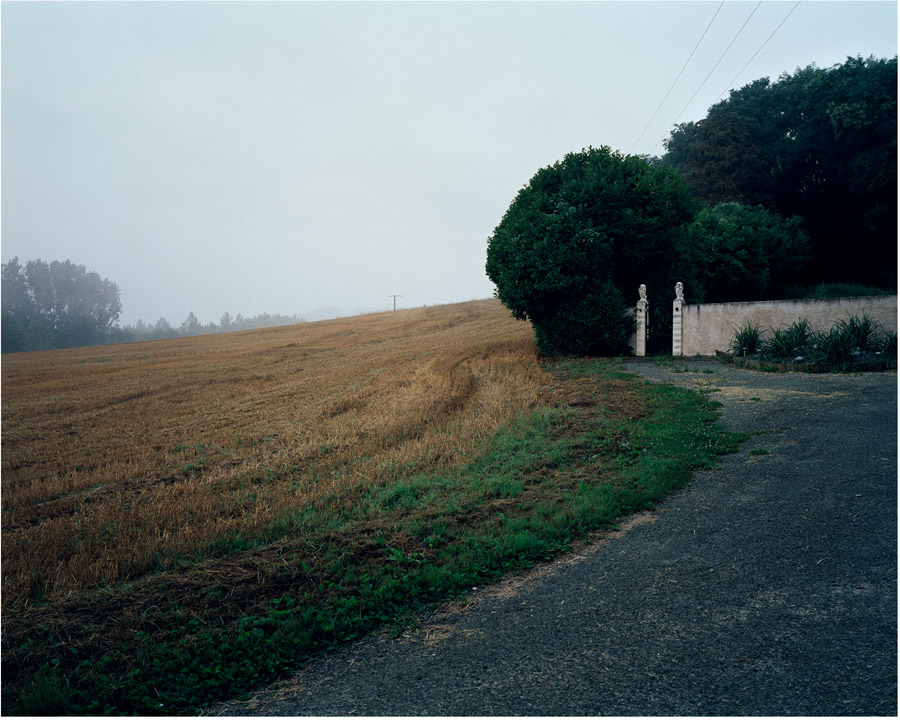
Chloe Dewe Mathes produced a series of images made at the places where during the First World War soldiers were executed for cowardice (still after a century a deeply controversial subject). In each case the locations are now quite ordinary, banal even, giving little if any hint of what happened there a hundred years ago. These are photographs of landscapes as memory devices but without knowing the context a viewer would be hard put to it to know what memory has been inscribed and recorded in that specific place.

This is something that I have been exploring with my work though this is much more significant and moving set of images.

To take just one example:

The other suggestion relates to the post I wrote about landscapes as memory devices using the book Shimagatari as an example (https://markrobinsonocalandscape.photo.blog/2020/03/08/landscape-as-a-memory-device-shimagatari-book-further-thoughts-on-assignment-3/). My tutor has recommended the film The Naked Island, which is set on a small, remote Japanese island. It is available on YouTube and I now just need to find a quiet hour and a half to watch it.

http://www.chloedewemathews.com/shot-at-dawn/

https://www.youtube.com/watch?v=watGzwZ6S-c&has_verified=1

Assignment 3: Reflection on Assessment Criteria

One might be forgiven for thinking that by this stage in the degree course I would have properly got my head around exactly what is required when reflecting on the assessment criteria when submitting an assignment. Notwithstanding, it is still something that I struggle with. The difficulty that I continue to have is that although I understand the criteria I find it hard, if not impossible, to form a proper objective view, not on whether the criteria have been met, but how well. My blind-spot, no doubt, but I also cannot help thinking that it would be useful if the course actually included some practical guidance in this regard.

Subject to that, I am reasonably content that I tick most, if not all, of the relevant boxes (pace, how well) and I do not think, on reflection, that I would approach this assignment differently if starting afresh.

One area that does still trouble me somewhat is the development of a personal voice. Clearly a work in progress but I do think there are certain elements that are coming together, particularly so far as conceptualisation is concerned. I do not feel I have yet developed anything that might be described as a distinctive “look”. I try though not to let this worry me too much. At the moment I feel that there is, over the course to date as a whole, such a diversity of subject matter, exercises and projects that they invite a variety of approaches and experiments and it is from this process of exploration, trial and error, that a more personal vision will develop in time.

Assignment 3 – Final Set

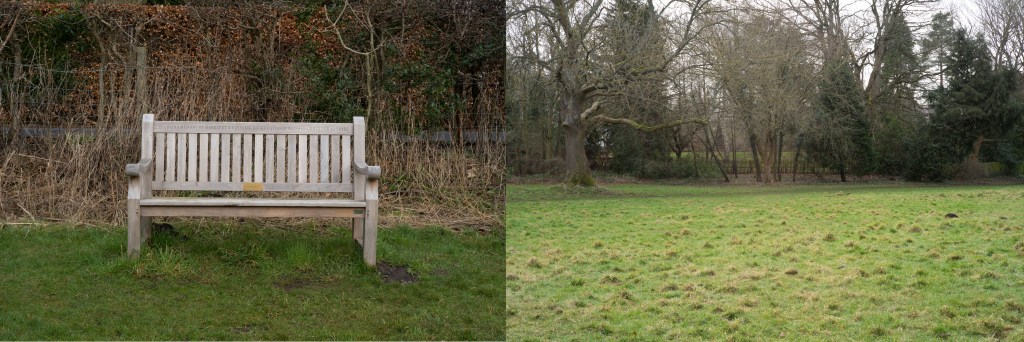
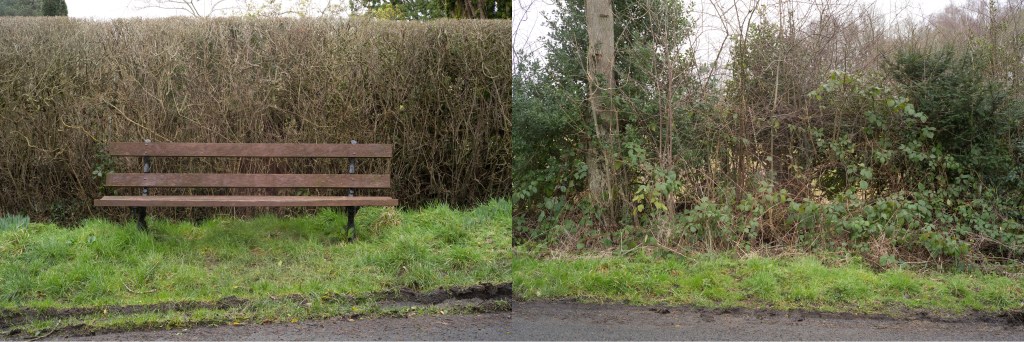
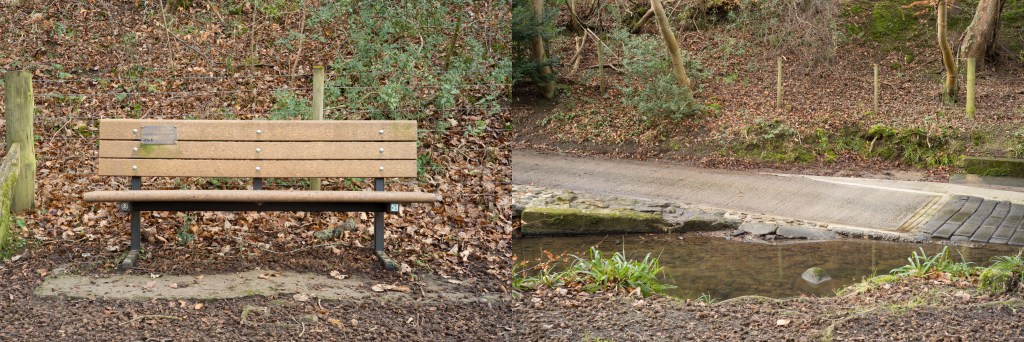
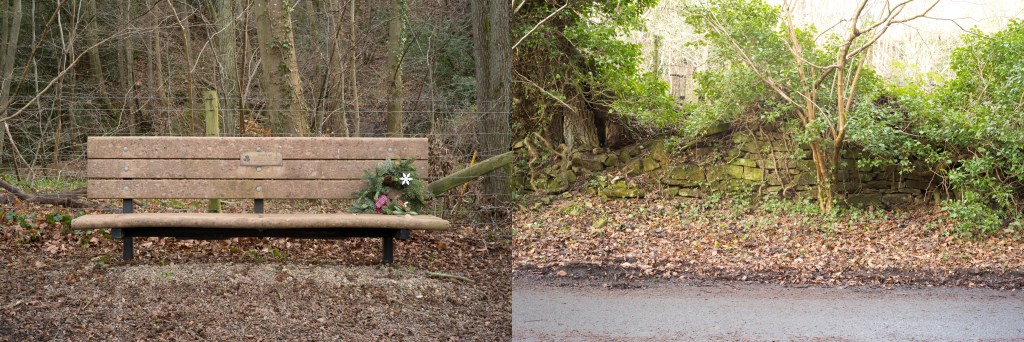
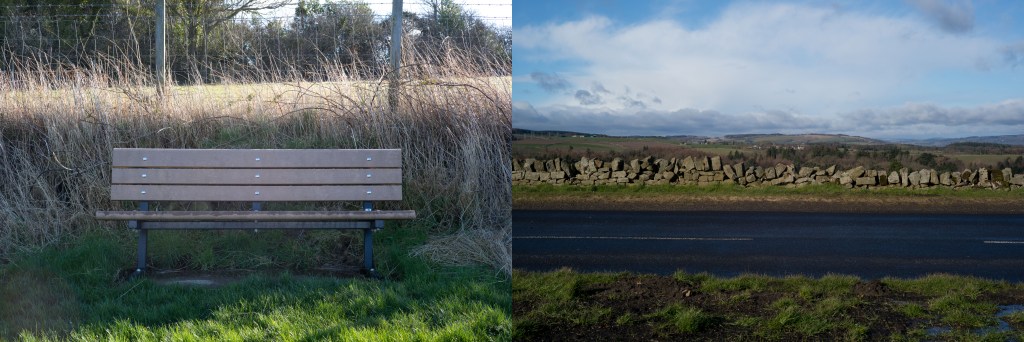
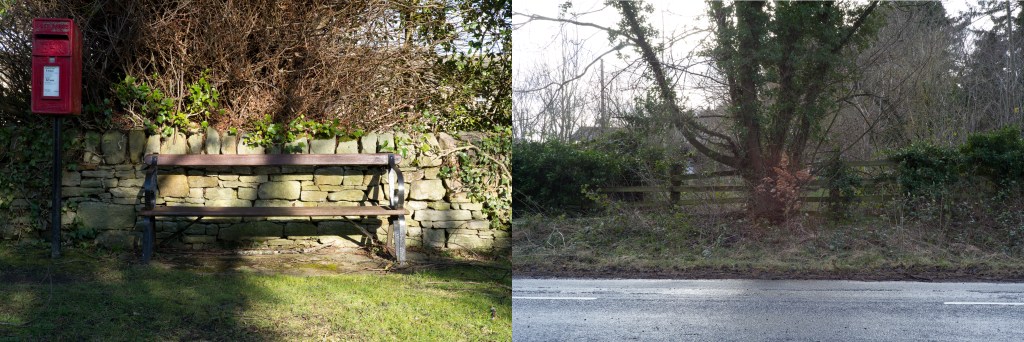
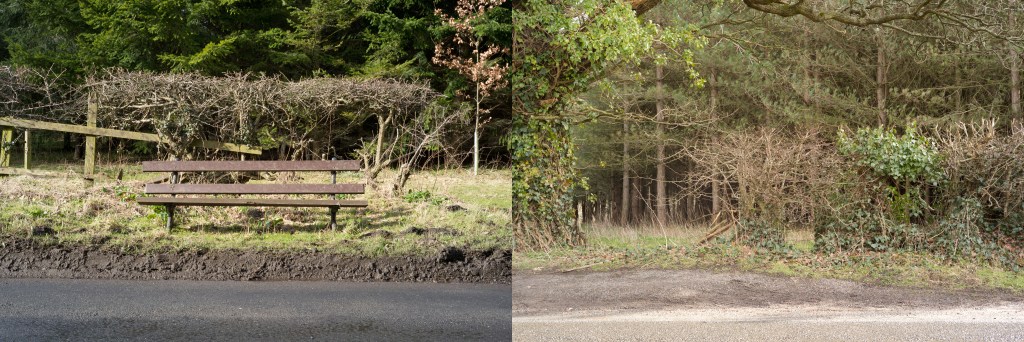
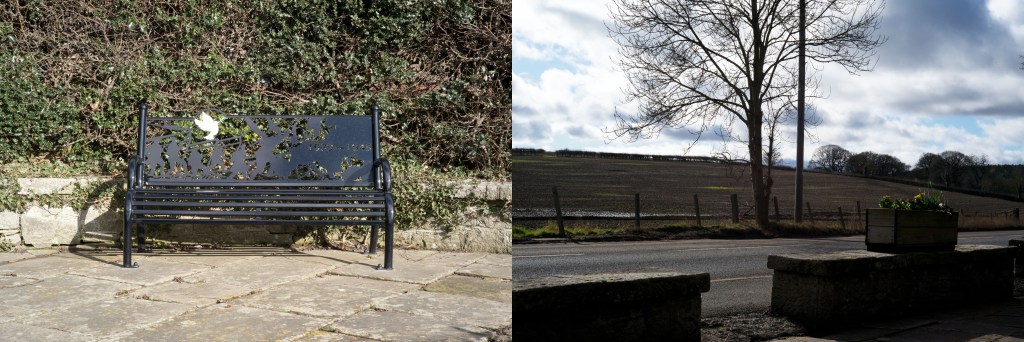
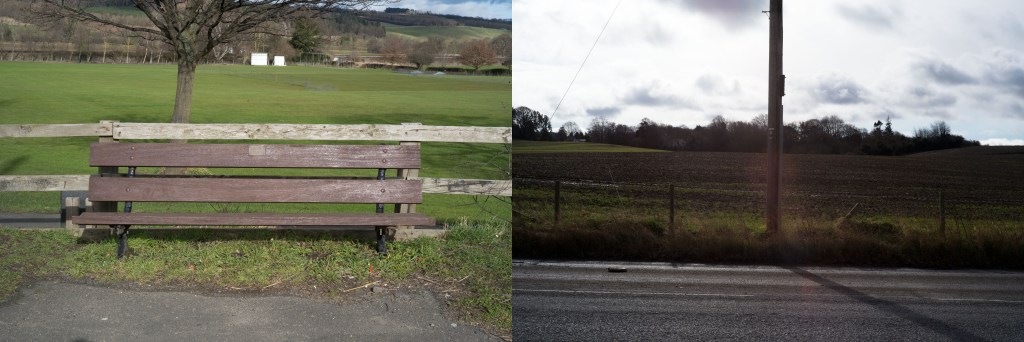
As outlined in earlier posts I have decided for this assignment to focus on the idea of spaces becoming specific places, with some sense of significance, as a result of human intervention.  To explore this idea I have concentrated on a series of public benches at various locations around the village where I live.  Some of these are specifically memorial benches, commemorating particular individuals, or historical events (for example, the First and Second World Wars, the Silver Jubilee of 1977).  Others are simply benches, presumably installed by the local Parish council, that do not have any obvious memorial function.

Some of the memorial benches carry public, easily understood memories.  For others the memories are more personal, known to only a select group of people, and not apparent to others.

All have in common, with one exception, that it is not clear what direct connection there is between the memory and the site, or why it might have been chosen.  The one exception (fourth in the sequence) states explicitly that the dedicatee had a fondness for that particular location.  

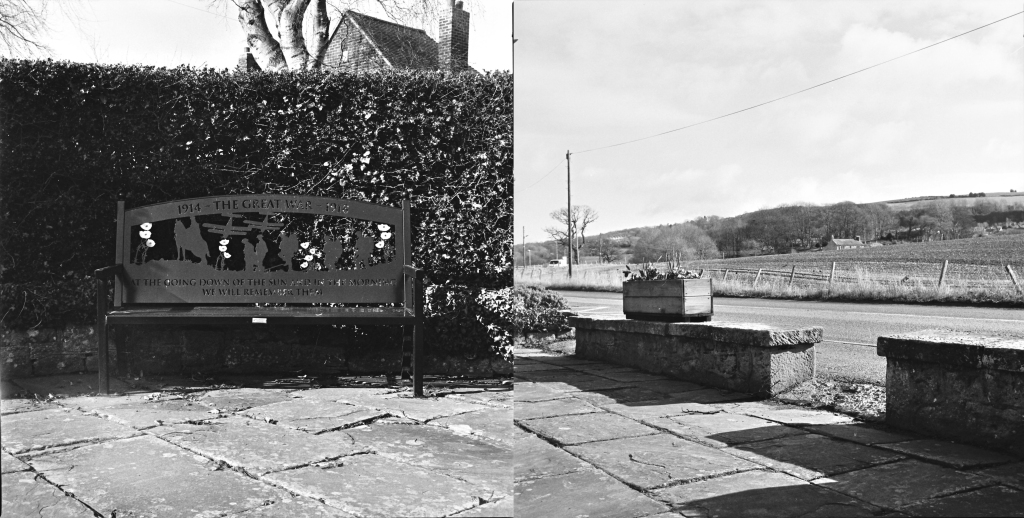
One other thing they have in common is that the sites do not even have anything that might be described as a picturesque view.  The “view” directly opposite is of little more than a hedge, or an otherwise featureless or characterless space.  Most are sited in locations that are otherwise attractive.  But that attractiveness is not apparent from the view directly in front of the bench.  Only one (the fifth) offers a more expansive view, looking across the valley opposite.  Even this is limited: the view is of the road, a stone wall, and then sky.  The valley vista is not actually visible from the bench. Tellingly, there is another bench on the far side of the road, just out of shot to the left, that does have an expansive view.  (Because of its location it was not practical to photograph it as well.)

As if to emphasise the lack of intrinsic significance of these locations, I only rarely see anyone sitting on a few of these benches.  Some I have never ever seen being used at all.

The images have been arranged into diptychs help root the benches in their locations.  The addition of coordinates reflects the fact anywhere can become a “place” by the simple act of specifying its geographical coordinates, turning it into somewhere that is locatable using, for example, GPS, or a map.  The sequence is simply determined by the position of each site on a clockwise loop from my house.

In terms of physical presentation, having settled on a typological approach, rather than a linear arrangement I feel that a block layout, in a manner similar to the some of the Bechers’s, and Anton Kuster’s Blue Skies project, would have greater visual impact.   For this to work properly though I feel that a considerably larger number of images would be needed than the assignment brief calls for.

54.938641 -1.907353
54.936288 -1.909689
54.935301 -1.914846
54.934656 -1.916042
54.928091 -1.914941
54.919518 -1.916366
54.942782 -1.919470
54.948463 -1.911240
54.948747 -1.910016

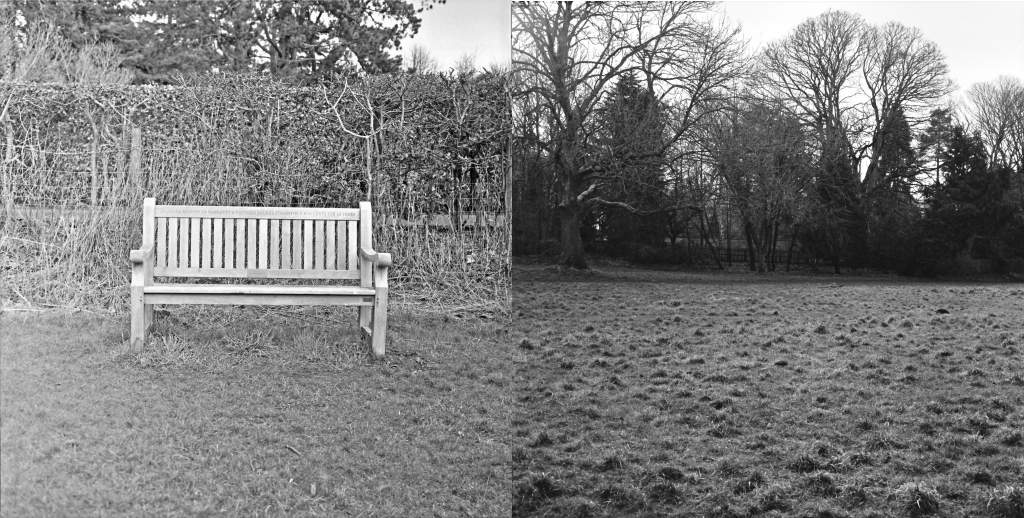
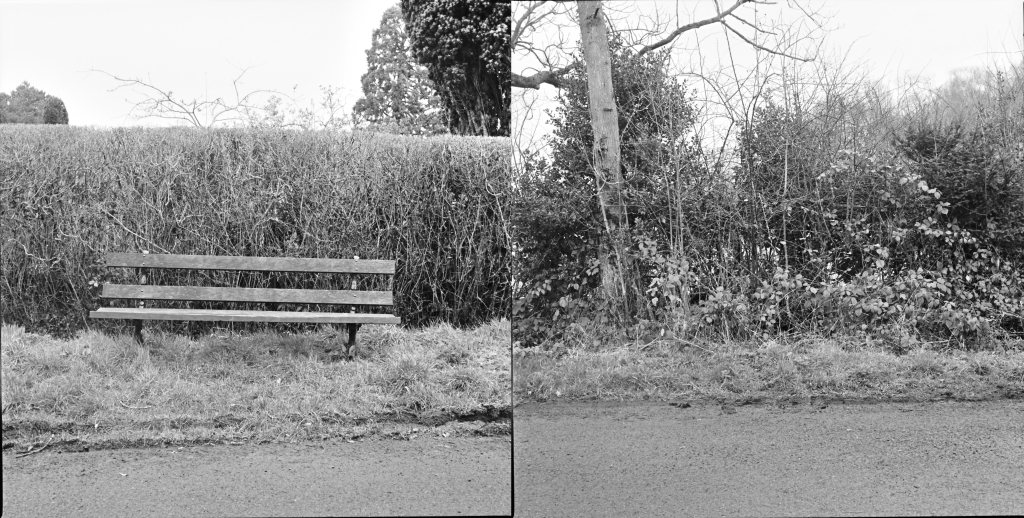
Assignment 3: Black & White film

As a result of the increasing chaos surrounding the Covid-19 epidemic and, adding insult to injury, a problem with my computer’s connection to the internet (which with luck will be fixed in a couple of days), it seems to be taking forever to get this assignment completed. At last though I think I am nearly there!

I have now developed the films that I shot as an experiment while taking the digital shots for this task. By and large they have worked fairly well, though a couple have needed a bit of editing in Photoshop and if I was to use them for a final set there are a few that could ideally do with reshooting.

Nevertheless, if nothing else it has been a useful and interesting experiment, not to mention an opportunity to get to know my medium format film camera a bit better. I have only run a few rolls of film through it of late so I still have plenty to learn. Not least I need to develop more confidence and ability using a light-meter. Interestingly though I think I am already getter a better feel, on the basis of how pictures have come out so far, for what settings are likely to be right for varying light conditions without having to meter first. Practice, practice, practice! Indeed, I am toying with the idea of using film (probably 4×5 on my large format camera) for the final set for Assignment 5, which I have already started to think about and for which I already have some ideas.

In the meantime, here are the film shots for this assignment, with minimal editing, but organised into diptychs. These are for all eleven of the sites I shot, though as I have already indicated I will use fewer for the final set (I am in the process of making the final choice now), and they are not in any particular order.

Assignment 3: Contact Sheets

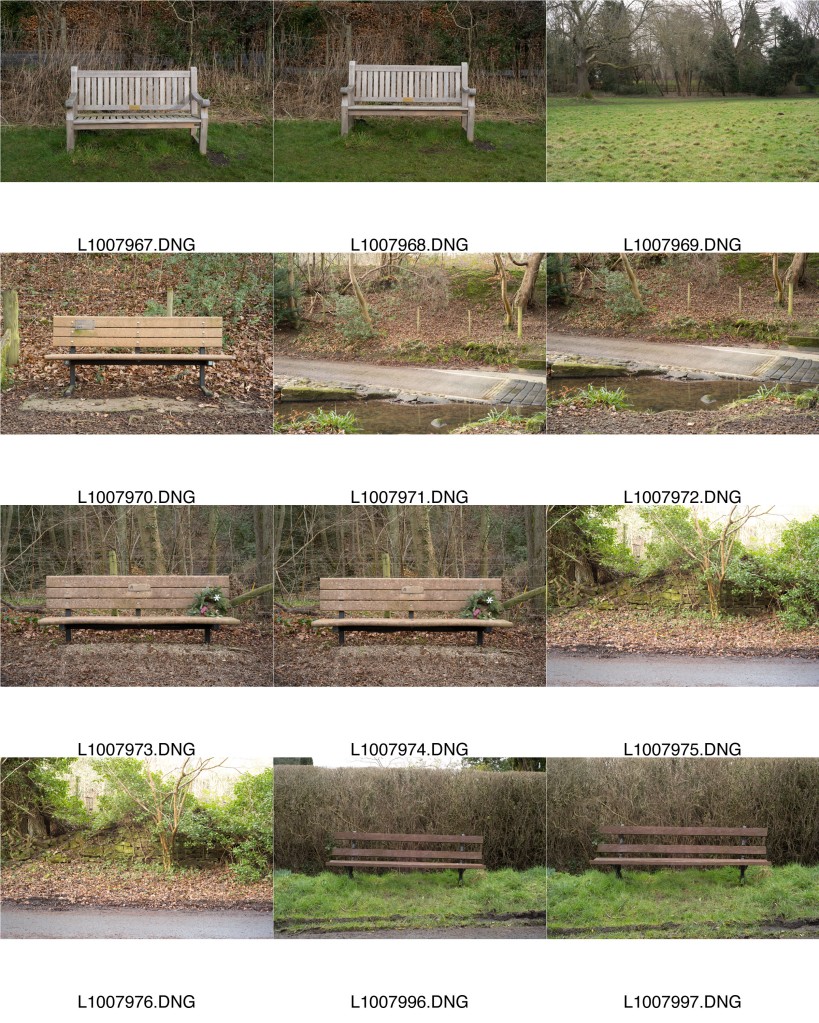
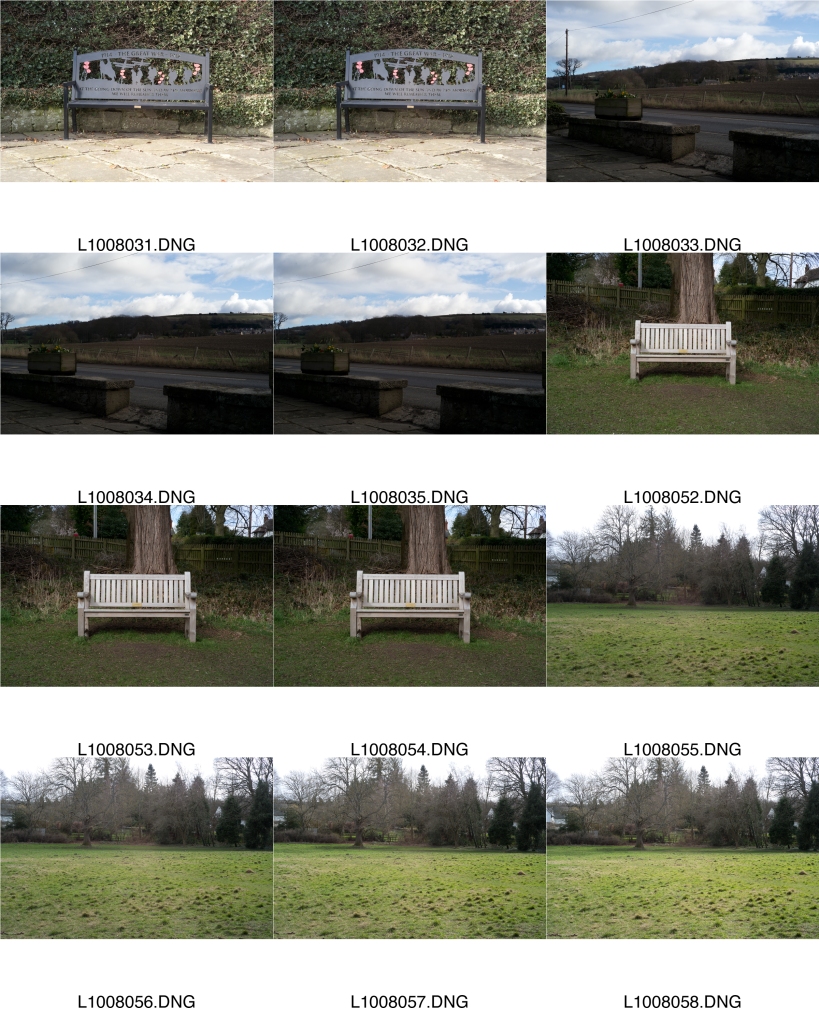
I think I have pretty much all I need for this assignment now, having photographed eleven sites, so I have now put together the contact sheets. Of these eleven I think I will actually only use nine or ten; the two war memorial benches are right next to each other and using both would be an unnecessary duplication. I am similarly not sure about using the last bench on the fourth contact sheet as this also to an extent duplicates the very first one. I will make a final decision once I work out a sequence for them, and note the coordinates for each site. Otherwise the images that I am going to use have all been selected and the diptychs produced in Photoshop.

Otherwise, I need to develop the rolls of film that I shot as well and see what they have captured.