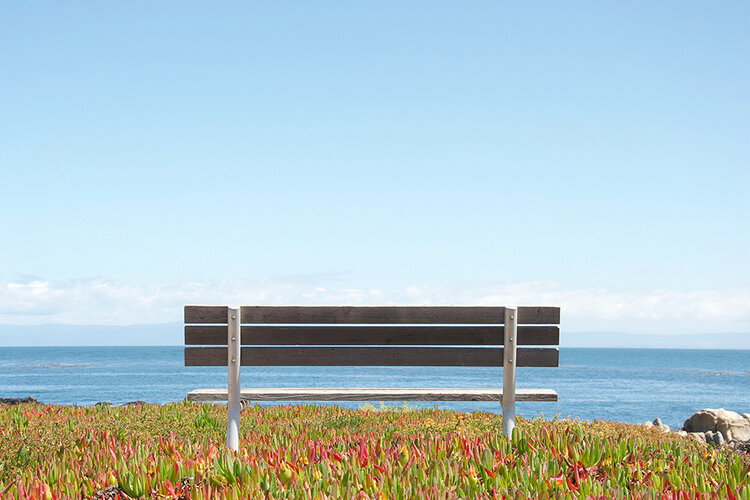
The other day I picked up a reference in an email from the French L’Oeil de la Photographie website to some work by a Chinese American artist that has some similarities to the work that I did for Assignment 3. Journey Gong, of whom I had not heard before, has made a series of images titled Viewpoint that shows benches looking out onto panoramic views, mostly over the sea. Whereas my sequence focused on the benches and juxtaposed them with the views visible from them, Gong’s work shows the benches as part of the view. The views themselves are, as with my set, fairly nondescript; apart from distant hills and the line of the horizon, there is not much more to see. While it is far from explicit, I guess that he was exploring issues similar to those that I was looking at in my work, judging from the last line of the brief accompanying text: “This is where nothing happened, everything yet to take place”.
Looking at his website, I cannot say that his work moves me much at all. This sequence though does appeal, even if only because of the visual and ‘theoretical’ background (if I have interpreted the work correctly) similarities to my own work.
Continuing to indulge my interest in and fascination with Japanese photography I have just picked up a couple of books by Koji Onaka. I have been particularly struck by how similar thematic threads are running through the work of a number of artists whose work I have been looking at of late that are relevant to some of the issues addressed in this course.
These two books have something in common with Ogawa (2014) in so far as they are exploring parts of Japan, islands and smaller towns, away from the metropolitan centres, exploring a sense of memory of and in these places, memorialising them as they were, while they now change and are in danger of losing their original character. Onaka though takes the idea of the memory device a bit further.
Although put together quite recently both of these books are made up of photographs taken in the 1980s and 90s. They are, in a way, little memory capsules of Onaka’s time visiting and photographing these places. There are two points though that I find particularly interesting. In the earlier of the two books Onaka writes:
“I have plenty of negatives, which I’ve already forgotten, in which situation I shoot the films. So it was up to me to label them as old pictures, nonetheless, I somehow knew that it doesn’t matter when and where I took them and why I took those pictures.”
As photographs are generally unreliable so far as “truth” is concerned, so too are they unreliable as memory devices. The photographer’s memories, embedded in the images, are no longer accessible even to the person who made them.
The other point, which reinforces this last observation, comes from the more recent book. Onaka did not edit this set of images but left it to someone else. His editor has chosen and sequenced this set in such a way that they can be read as telling particular story, as Onaka puts it, of adolescent first love, a story that he says he could not have produced himself. The original memories have again become inaccessible and in their place has grown a new “memory” that is in fact entirely fictional. Nevertheless, there it now is, embedded in specific places at specific times. Or has the editor taken her own memories, from different places and times, and overlaid them on Onaka’s memories, obscuring their origins?
I have now had feedback from my tutor on the submission for this assignment and will do a separate post on our discussion later. In the meantime I have followed up his recommendation for a further artist to look at whose work is relevant to the approach that I took for this project.
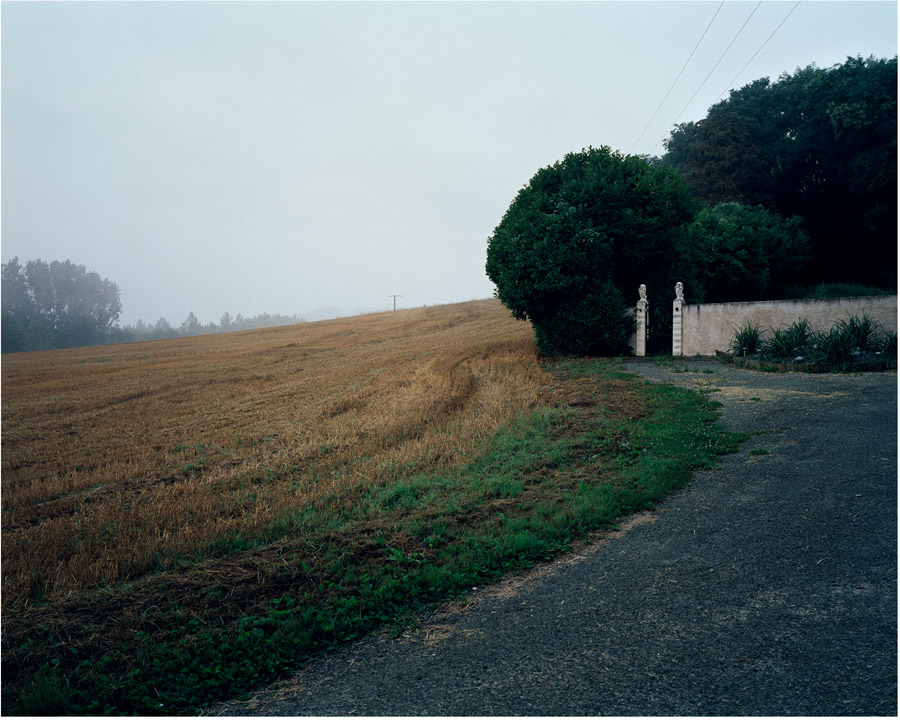
Chloe Dewe Mathes produced a series of images made at the places where during the First World War soldiers were executed for cowardice (still after a century a deeply controversial subject). In each case the locations are now quite ordinary, banal even, giving little if any hint of what happened there a hundred years ago. These are photographs of landscapes as memory devices but without knowing the context a viewer would be hard put to it to know what memory has been inscribed and recorded in that specific place.
This is something that I have been exploring with my work though this is much more significant and moving set of images.
I think I have at last finished shooting for this assignment. A number of sites I had in mind I have since discounted as they have too much of a “view”. One of the common threads running through the bulk of the places I have chosen so far is that the view is pretty nondescript, not something that in its own right would justify the siting of a bench, memorial or otherwise. A handful of sites in Hexham that I had in mind all have too much of a view and so would not fit.
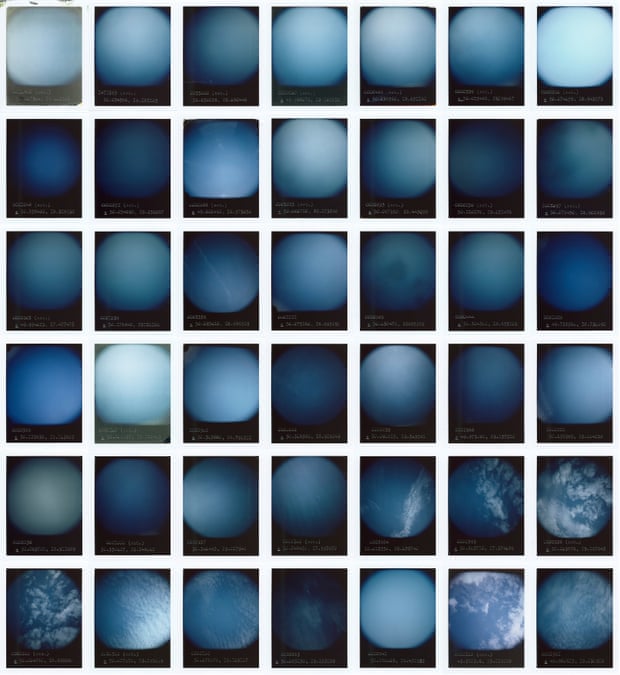
One last decision though that I have made is to include for each diptych its geographical coordinates: the spaces in question have become specific, definable, and locatable places. This decision has largely been influenced by Anton Kuster’s Blue Skies project that I looked at in connection with Assignment 1, and in which each photograph is annotated with the coordinates of the position from which it was taken.
I now just need to get on with editing and putting together a final set.
Whilst working on the sections of the course on Photography, memory and place (on which I still have to write something, and particularly Exercise 3.6, my primary focus has been on the idea of the photograph itself being a site of and aid to memory. What I have to some extent lost of is the idea that the landscape itself does the very same, and that this is what is captured in the photograph. This is implicit in the work I did for Exercise 3.5 on local history (https://markrobinsonocalandscape.photo.blog/2020/02/16/exercise-3-5-local-history/) and is also a growing idea in the context of Assignment 3, on which I am continuing to work.
This thought occurred, or perhaps re-occurred, while looking at Yasuhiro Ozawa’s book (2014) which has recently been reissued. What caught my eye in particular is part of his introduction:
“On Japan’s outlying islands (off the larger main islands of the archipelago) you find a kind of build-up of history, almost like a bank of snow. Emotions and recollections of the people and fragments of time accumulate layer upon layer to exude an air unique to the islands. Sometimes, as I walk the islands, that distinctive air becomes overwhelming and I hurry to board the return ferry. Yet once back on the mainland, I am gripped by a feeling that I’ve left something precious behind, and I find myself heading to the islands again.”
That sense of landscape as a place of, shaped by, and in turn, shaping history is something I get very strongly from Ogawa’s work in this book (even some of his older work that does not relate at all to Japan) and is in a way helping to refine, and define, my own understanding of what makes a given landscape important, rather than simply picturesque.
Whilst I am continuing to beaver away with shooting for this assignment – I have been very much hampered by the weather of late and it is amazing how much time it all takes, particularly as I am shooting both digitally and with medium format film (more as an experiment in its own right if anything and an opportunity to get to know the camera properly): last week it took more than two hours to cover just five, fairly close, locations – I am nevertheless still looking at possible influences, both on the subject matter and on the mode of presentation.
After this last shoot I remembered some work by former OCA student “Rob TM” that was featured briefly in C&N, in particular his series “A Forest”. This consists of views of woodland, all fairly anonymous and undistinguished in their own right, juxtaposed with studio shots of rubbish and detritus he found at each particular spot. I think there are parallels here between his work and what I am exploring, how a location can take on a particular identity or significance as a result of some human intervention. Here is an example of his work. (I have not been able to find any freely available images on-line so this is an edited screen shot from his website.)
I had also already been thinking about how my images might be displayed and from the outset have conceived of them as a series of diptychs, quite possibly unconsciously influenced this work. The aspect ratio of the digital camera that I have been using is much wider than this so the resulting image is shallow but wide. Nevertheless I think it works. Here is an example, produce by simply copying and pasting the two related pictures into a new, double width file in Photoshop:
When I get round to developing the medium format film the aspect ratio will be much more like that above as 120 film in my Hasselblad produces 2 1/4 inch square frames.
I stil have more pictures to take, but I have at least identified some more potential sites that should give me enough to make up a set.
Although I decided where I wanted to go with this assignment a while ago I have nevertheless continued to give it further thought as I work on it. Given the amount of Fay Godwin’s work I have been looking at in response to the course material of late I have given some consideration to another possible approach.
As I have written at various times, going right back to EYV, one of the strands in Godwin’s work that particularly appeals to me, increasingly at a political level, is those images that deal with people being excluded from a landscape: the ubiquitous notion of the “keep out” sign. This seems to me to be a particularly negative way of turning a space into a place. It does to though by exclusion: what was previously an open space, theoretically at least, open to and accessible by all, becomes a place, a specific place from which everyone other than the “owner” is now excluded.
Many of us do it, putting up fences and hedges around our homes, installing gates, intercoms and CCTV (as I have explored within my own village). Increasingly corporations are creating places around their buildings that appear to be public until you run into the security guards, note the cameras, discover the rules and regulations specifying what you can and cannot do (No Food, No Drinks, No Dogs, no rights!). Perhaps it is a natural human impulse.
I do think this offers fertile ground. I am though wary at the moment of getting into another rant (I do not know about any readers but it makes me tired) and so am going to stick with the more neutral, unpolitical approach that I have already started to work on.
So far as that project is concerned, having started out concentrating just on memorial benches, I have discovered that there are not in fact quite as many locally, despite the surprisingly dense cluster within a kilometre of my house, to provide enough material. I have however observed plenty of other, non-memorial, benches that share the same sort of apparently almost random citing that creates “non-views”, spaces becoming a sort of non-place, or at least one without any obvious significance. As they all have this particular factor in common I am going to spread my net a bit wider to include some of these other idiosyncratic spaces/places.
Although I have only just submitted Assignment 2 and am still working through the course material for Part 3, I find that I am already thinking about possible approaches to this next assignment. I have not done any active research yet but already some ideas are staring to form and today I managed to take some initial test shots to see what the outcome might look like.
At this stage, rather than focusing on one specific landscape I am exploring different iterations of the same sort of physical environment, particularly memorials. I am not so much interested in, for example, large scale, municipal monuments but something much more low key, and even private. One idea that I have had relates to impromptu, temporary roadside monuments which often seem to spring up at the sites of accidents: bundles of flowers tied to lampposts, soft toys, photographs. I have not explored this yet as at the moment I cannot think of enough such sites locally that would offer enough scope for a project.
For now what I am exploring is memorial benches. I do not know why it should be the case but there seems to have been an explosion of them in recent years. In my own village, for example, I can immediately think of at least four private commemorations and one formal one, at the village war memorial. There will be plenty more in the other villages and towns along the valley.
What particularly intrigues me about these memorials is the way they lend a sense, real or imagined, of significance to a particular location that it might not otherwise have. Everywhere is just “space”. It only becomes a “place” when there is some form of human intervention. That might be a physical intervention, as here with the act of setting up a bench, or by simply giving somewhere or a physical feature a name. Turning a space into a place is an act of appropriation, colonisation. The sites that I have looked at so far are not significant in themselves. Setting up a memorial though establishes a sense of significance at least for the person remembered (invariably now dead). Because a place had some significance for someone else in a way makes it significant for the subsequent visitors and viewers, even if only in that it was significant to someone else.
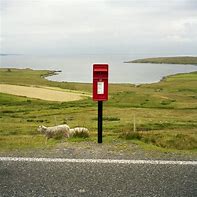
Although I have not done any conscious research yet, there are a couple of artists that I can think of immediately whose work has, inter alia, explored this notion of making a space a place by way of human intervention in and on it. One is Martin Parr’s Scottish post-boxes work: I am not familiar with it and have not yet explored it any further but I am at least aware of it and from what little I have seen, even if it was not necessarily the point for Parr when making the work, I think it is an interesting illustration of my point.
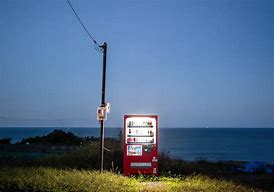
The other, who does appear in my own library, is Eiji Ohashi and his pictures of vending machines in Japan. Some of those that he photographed are in the middle of nowhere. Their very presence though, and I also think the act of photographing them, turns that nowhere into a somewhere.
That said, in some of the cases that I can think of, the chosen sites for the memorials give no indication of having been significant to those remembered. In at least one case that I have looked at today the site seems to have been chosen simply because it is a convenient public space. The result is that even though that space is not inherently significant it nevertheless becomes significant simply as a result of the siting of the memorial.
Two other points also occurred to me as I started to think about this. One is that, in my experience, despite being benches, self-evidently designed and built for the purpose of being sat upon, people rarely do in fact sit on them. For example, one is in a common field just a few metres from where I live that is frequented daily by local dog owners. Occasionally, particularly during the summer months, one might see someone sitting on the bench while their dog plays, but it is not an everyday occurrence.
The other relates to the siting of the benches. Whilst those I have looked at so far are in attractive locales, the views from them are not particularly picturesque. Although they offer welcome respite and rest on a walk they do not necessarily offer views that you would want to experience for their own sake.
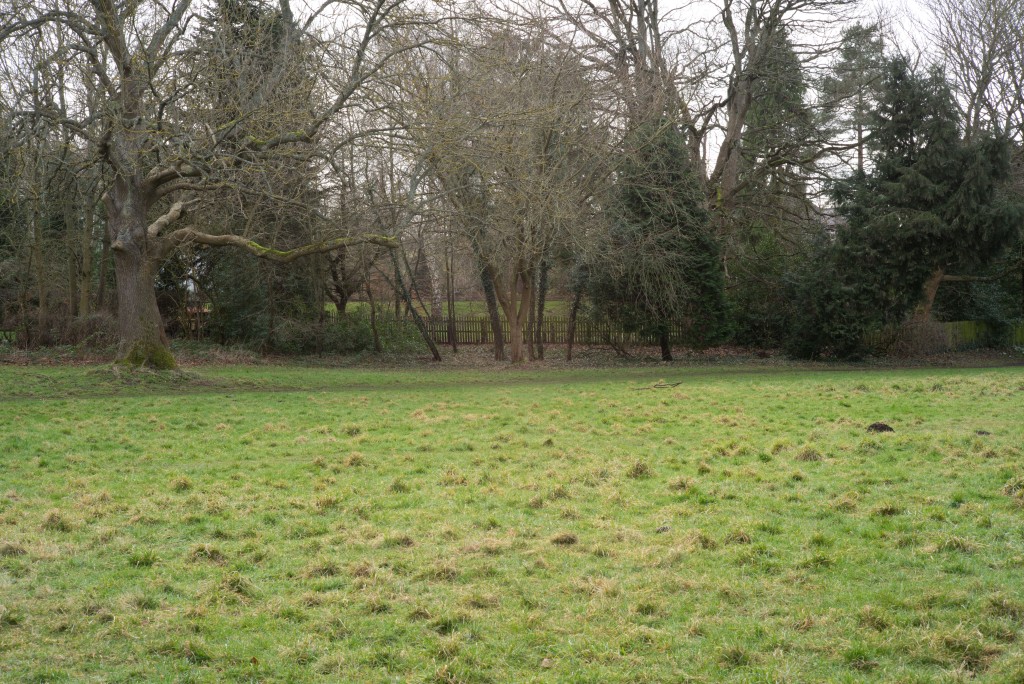
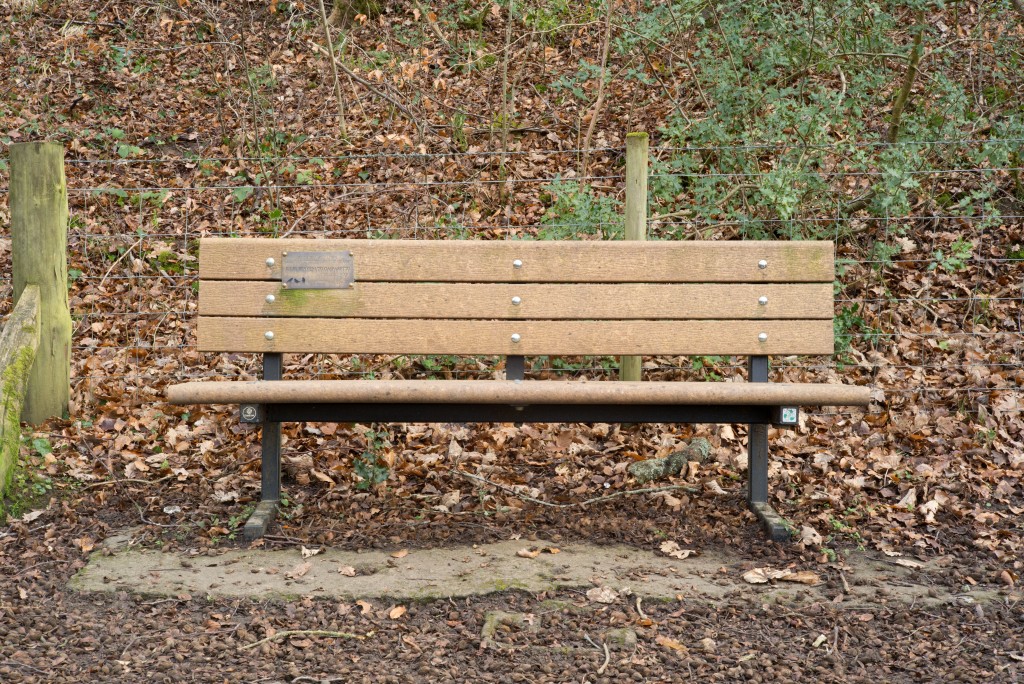
Bearing these points in mind, what I have explored so far is the idea of producing a series of diptychs, showing the bench and its immediate surroundings, together with a view from it. For that view I have chosen one straight ahead, at right angles to the line of the bench in order to avoid giving a partial or distorted impression by choosing one over another.
Not for the first time, and almost certainly not for the last, I find myself at the moment indulging in a typological approach influenced by the Bechers!
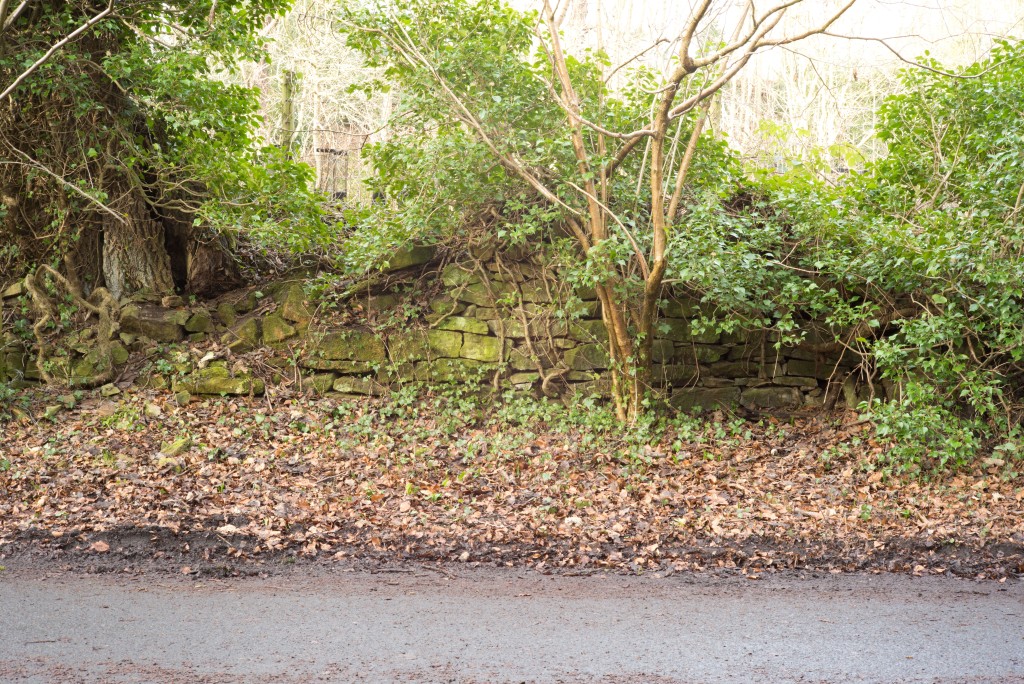
By way of a further experiment, in addition to using a digital camera I am also using a medium format film camera, in black and white only for now (this is, I guess, a nod in the direction of the influence of Fay Godwin that is almost certainly lurking at the back of my mind when I think of a project like this) but obviously I need to finish the first roll before I can develop it, scan, and post the resulting images. Here is what I have got so far just from the digital camera:
Ohashi, E, (2017). Being There. Tokyo: Case Publishing
Ohashi, E, (2017). Roadside Lights. Tokyo: Zen Foto Gallery





 Mark Robinson's OCA Landscape, Place & Environment Blog