“The living language of our time is urban.” Sir Michael Tippett, Songs for Dov
Humans and landscape are inextricably linked. People have helped form the environment within which they live and have in turn been formed by it. This is nothing new, as Schama points out (1996, at page 7):
“Objectively, of course, the various ecosystems that sustain life on the planet proceed independently of human agency, just as they operated before the hectic ascendancy of Homo sapiens. But it is also true that it is difficult to think of a single such natural system that has not, for better or worse, been substantially modified by human culture. Nor is this simply the work of the industrial centuries. It has been happening since the days of ancient Mesopotamia. It is coeval with writing, with the entirety of our social existence. And it is this irreversibly modified world, from the polar caps to the equatorial forests, that is all the nature we have.”
With that background in mind, the question that I want to address here is whether the photographing of people in an urban environment, street photography, can itself be regarded as a form of landscape photography; whether the picturing of the human elements of a city can tell us anything about that urban environment without the direct depiction of the built environment itself. I also want to challenge the idea of genres and different disciplines within photography and argue for a greater sense of fluidity and overlap. As in many walks of life and human activity there is a tendency to categorise and draw distinctions. Photography seems particularly prone to this. There are photographers working in landscape, on the streets, in documentary and photojournalism, portraiture, and so on, and these are often presented as distinct disciplines. It is striking though that, for example, many of the photographers interviewed in Wolf (2019) resist such categorisation, reject the ideas of genre and style, and adopt a much more inclusive approach.
In this context what I have in mind is an idea of “street photography” as a form of visual psychogeography rather than a depiction of an identifiable physical, built environment. More than just the photographing of people within a particular environment, but also elements of the physical environment that would not necessarily of themselves be enough to identify with any certainty the particular location at which the photograph was taken, the signs and symbols of human presence and agency, that are encountered on the street.
From earliest times people have been a feature of landscape painting. They have been used to give a sense of scale, to make a political point about ownership of the land, to tell a story about the land. As time has gone on people have become increasingly urbanised. Fewer people inhabit some bucolic ideal but live instead among structures of concrete, glass, and steel. In the early days of photography these urban environments themselves became the subject of “landscape” photography. The built environment was itself the subject and people were again often used in a similar way to the painterly conventions, for example in early work of Stieglitz and Strand.
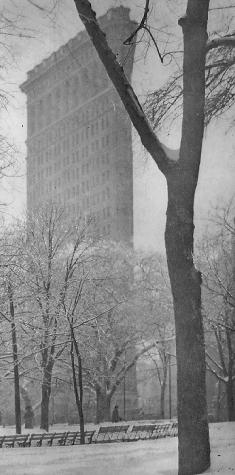
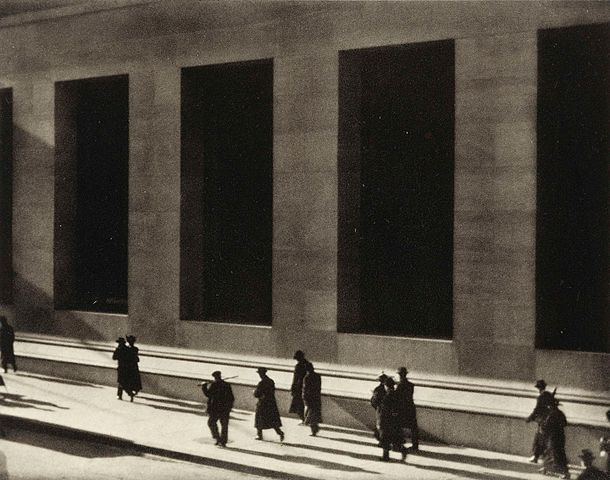
With the advent of more compact, portable cameras the focus shifted more to the people themselves rather than the places they lived. Humanity, with all its quirks and foibles, became the subject of the urban photograph rather than the city itself. The emphasis shifted from the topographical to the anthropological.
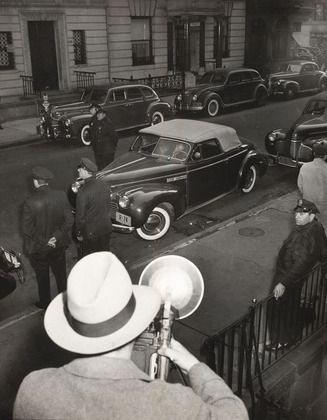
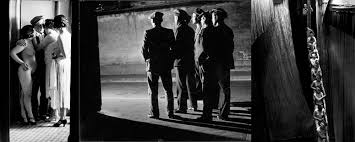
I certainly do not think that all approaches to street photography tell us much, if anything, about the urban environment. “Weegee” does not give us much sense of place as he created his “tabloid” dramas.
Nor do two of the greatest American street photographers, Lee Friedlander and Gary Winogrand.
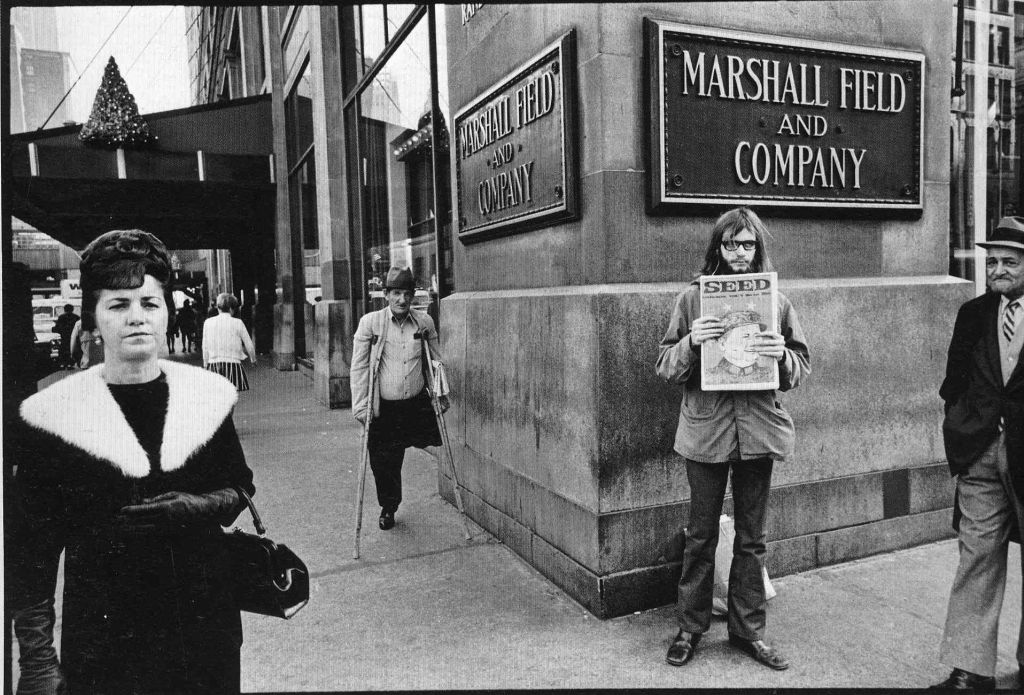
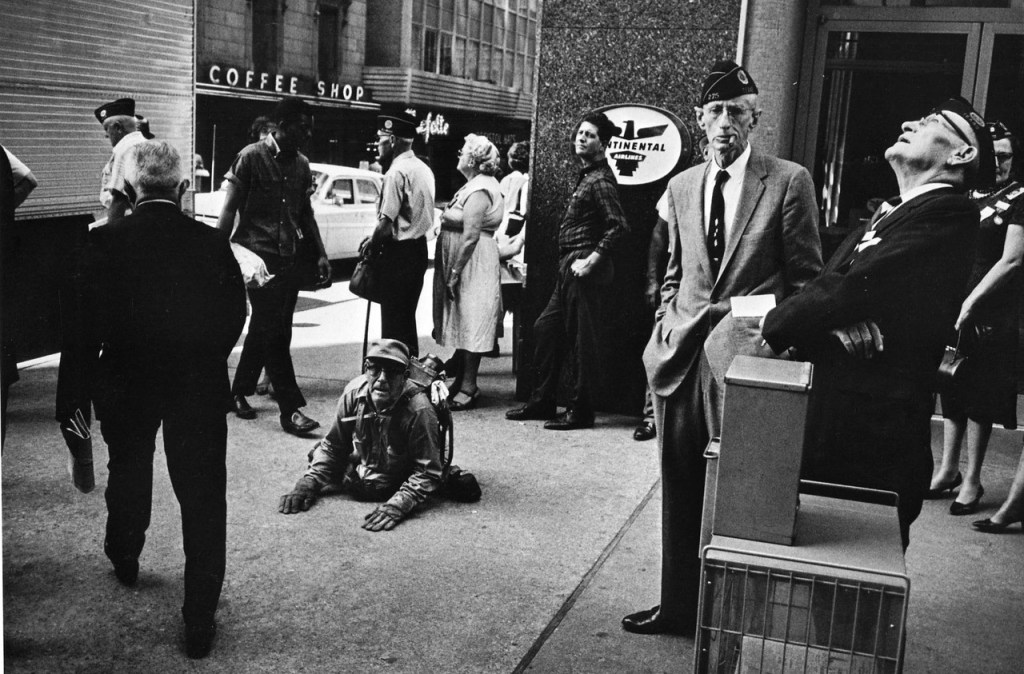
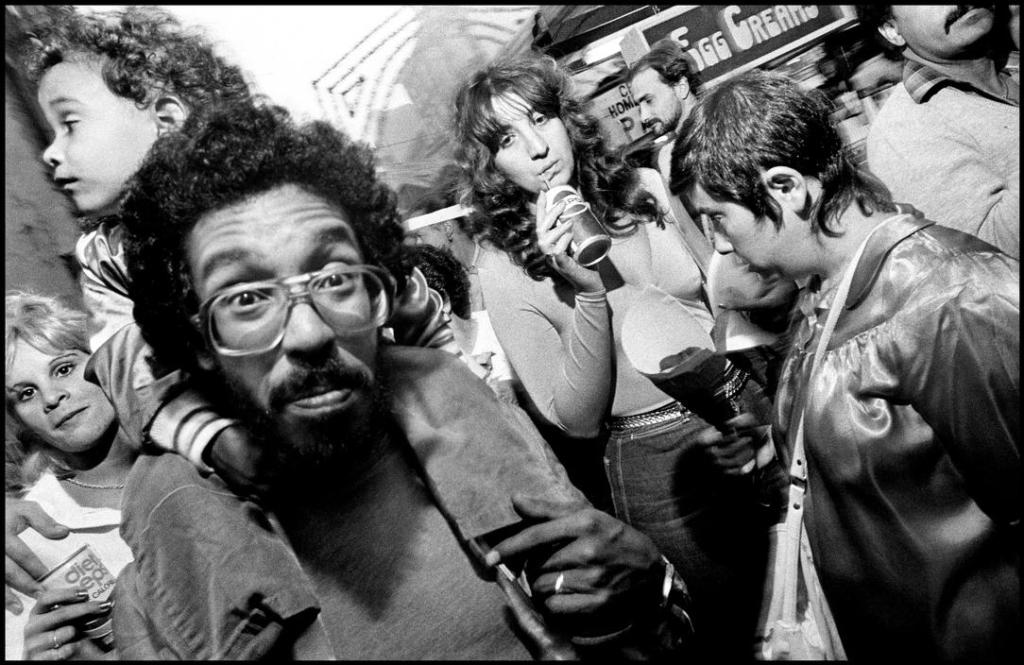
What they do give is a sense of urban, specifically American, society, but not necessarily of the place. Their work is more to do with the ‘social landscape’, as became the subject of a number of influential exhibitions in the 1960s (Warner Marien, 2014, p348 ff) and was subsequently taken further by the likes of Lisette Model and Diane Arbus. More recently there have been characters such as Bill Cunningham, more concerned with fashion and style than anything else, and Bruce Gilden with his (for my taste, rather aggressive and intrusive) flash-in-your-face approach to picturing ordinary people on the streets.
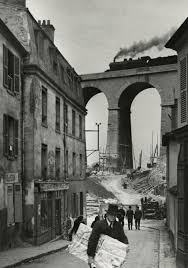
In the birthplace of photography as a medium, and urban photography as a particular approach, Paris, I again do not really find any artists who have caught the physical environment of the city through the photography of its inhabitants: Eugene Atget’s work is more purely topographical and people are largely absent; André Kertész was more interested in Surrealism; Brassai with the social landscape; Cartier-Bresson with the so-called decisive moment.
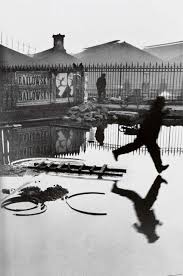
It is perhaps surprising that this is arguable given that the street photographer might be regarded as the photographic equivalent of the flaneur and so immersed in the human/urban environment. It is though my impression that unlike the literary flâneur, particularly the more contemporary psychogeographers, the photographic flâneur does not generally create a photographic equivalent depiction of the city through images of its people alone. As Florian Ebner discusses in his article “Urban Characters, Imaginary Cities” in Eskilden (2008, p186 ff) and as Sontag argued (1979, pages 54 to 58) the photographic flâneur is more concerned with peering into the world outside his or her bourgeois milieu, a particularly socially-downward view (arguably a patronising one as a result) and the camera “makes everyone a tourist in other people’s reality, and eventually in one’s own” (page 57). Sontag’s views are not uncontroversial and accepted universally uncritically, despite the iconic status of her book (I personally have difficulty with many of her pronouncements on the medium). She did of course later revise her own views (2004). I do nevertheless feel there is a kernel of justification for what she says here and that it is a valid charge that can be laid at the door of some street photography; it simply does not always give us any real sense of the environment through which the photographer moves. One passage is particularly apt and worth quoting at some length, despite its hyperbole, (page 55):
“Gazing on other people’s reality with curiosity, with detachment, with professionalism, the ubiquitous photographer operates as if that activity transcends social class interests, as if its perspective is universal. In fact, photography first comes into its own as an extension of the eye of the middle-class flâneur, whose sensibility was so accurately charted by Baudelaire. The photographer is an armed version of the solitary walker reconnoitring, stalking, cruising the urban inferno, the voyeuristic stroller who discovers the city as a landscape of voluptuous extremes. Adept at the joys of watching, connoisseur of empathy, the flaneur finds the world “picturesque”. … The flâneur is not attracted to the city’s official realities but to its dark seamy corners, its neglected populations – an unofficial reality behind the façade of bourgeois life that the photographer “apprehends”, as a detective apprehends a criminal.”
The true irony, I suppose, is succinctly identified by Ebner (at page 192), that despite these indictments, “it is due to photography’s compulsion to collect in an apparently indifferent manner that it has provided the very bedrock of our visual memory of the city”.
Before moving on to my main point I must add a note here about the photographic examples that I am including below. In my view it is extremely difficult to identify one single example of the work of each of the artists I am about to discuss that adequately illustrates the argument. In each case it seems to me that it is the larger body of work, the whole book, or in Moriyama’s case his entire oeuvre, that is significant and that, I would argue, supports my position. Each image that follows is therefore little more than an isolated example of each photographers’ “bigger picture”.
Despite the foregoing I do believe that there are some strands within the broad church of street photography that can be included within the wrapper of landscape photography. Walker Evans (always a good starting point) could perhaps be said to have sown some seeds with his American Photographs (2012), though I see this as work that overall is still more firmly rooted in the topographic.
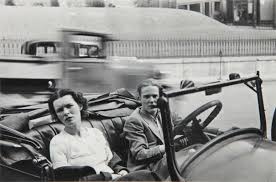
The real catalyst is perhaps Robert Frank’s “The Americans”, to my mind the first work to produce a psychogeographic picture of a nation as a whole (rather than a specific urban environment).
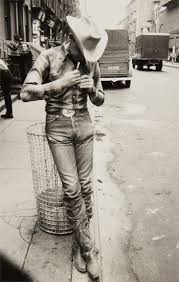
It strikes me that one significant element of Frank’s view, and depiction of then contemporary America, is that Frank was a “foreigner”, in so far as he was born in Switzerland, so was able, to an extent, to bring an outsider’s eye to the nation. To what extent this is a really a significant factor is a debate for elsewhere but perhaps it is more than coincidental that it is something that he shared to an extent with my next example, William Klein.
Klein’s book (2016) is one of the very few that I have come across that seem to me to show that street photography can approach the picturing of a physical landscape without depicting its topography in a literal, conventional “landscape photography” way. His approach is various, eclectic, sometimes apparently chaotic. The editing and arrangement of the images across the physical pages of the book are unconventional and often visually jarring. It sometimes reminds me of the “jump-cut” approach to editing used by French Nouvelle Vague film directors, particularly the sequence in Jean-Luc Goddard’s “A bout de souffle” in which Jean-Paul Belmondo and Jean Seberg drive around central Paris: the editing flits about from place to place in a non-linear manner but nevertheless conveys a sense of Paris itself. In Klein’s work we see people, snatches of places and locations, rarely, but not without exception, easily identifiable, signs, adverts, all sorts of symbols of an idea of the city. Occasionally it falls into Sontag’s flâneur trap, wallowing in the seedier sides of life, but nevertheless the cumulative effect is to give an impression of the city as a physical, geographical, place. In his article included in the 2016 ‘Books on Books’ edition of the book, Max Kozloff comments (unhelpfully, the pages of the commentary section of the book are not numbered):
“The experience of paging through New York comes to seem almost one of being on the run, of stumbling over obstacles, ending in visual fatigue. The big city often does that to its denizens, bombards them with feckless montage.”
And on Klein’s approach:
“Not people within an urbanscape, not architecture with signs of life, but the whole populated setting, far or close, draws his regard.”
Klein himself, as reported by Jeffrey Ladd in his accompanying article on the making of the book, had said from the outset that “he wanted to photograph New York in a “new way””. Not just the people, not just the physical nature and appearance of the city, but something much more. In a way the book becomes a pictorial analog of the physical experience of the city and being within its environment.
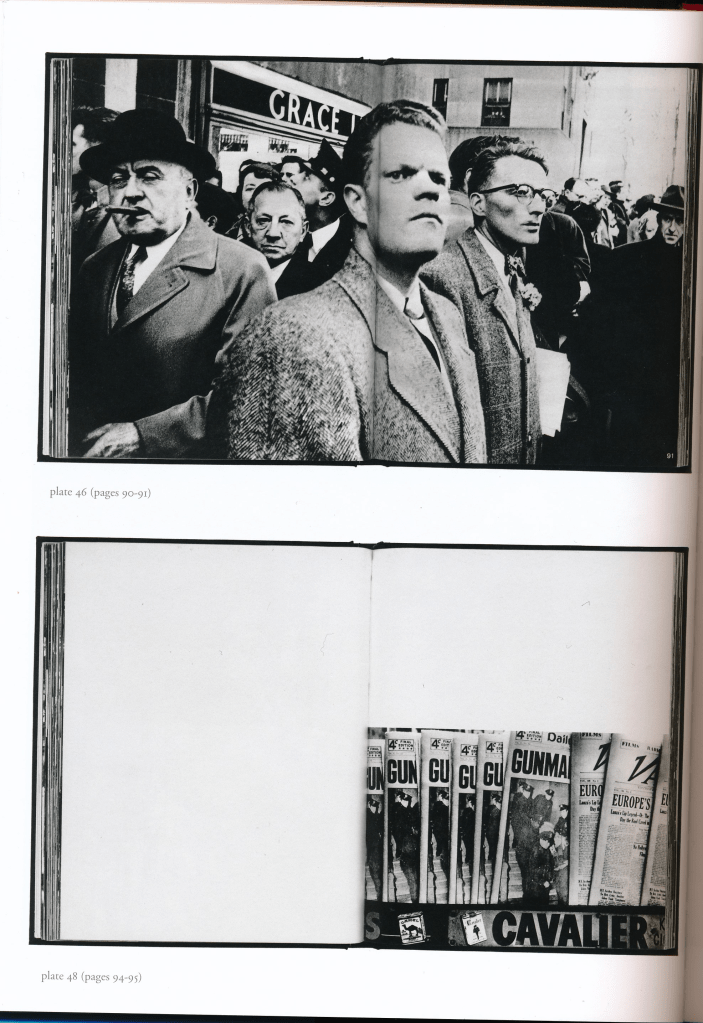
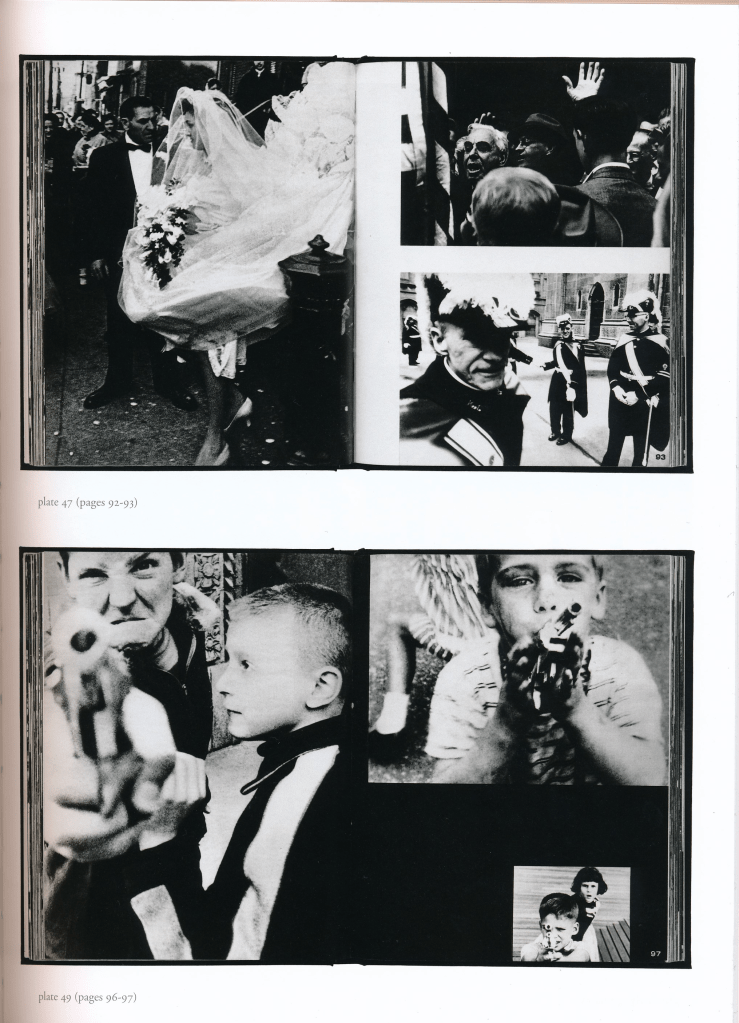
As with Robert Frank, was it significant that Klein effectively photographed the city from the perspective of an outsider having spent the preceding years living in Paris? This recurring question, which is unanswerable here, actually leads me to another example, this time in Japan. (Another question that this investigation has thrown up is why so much street photography has focused on New York? It is no coincidence that all of the examples that I have cited so far have been photographers who have worked in New York City. The only other city that seems to have attracted a similar amount of attention is Tokyo. What is the attraction, what do they have in common given that they are physically such different cities?) The one particular photographer than comes to mind here is Daido Moriyama. His hometown is Osaka, in my own experience a very different city topographically and in terms of “atmosphere” from Tokyo.
Whilst I am not personally well acquainted with Shinjuku (I spent more time in Shiba and more ‘genteel’ areas such as Asakusa and Ginza) I nevertheless find his obsessive photographs give a real sense of this rather shabby, seedy, somewhat disreputable area as a recognisable environment. He is not immune from the charge levelled at the voyeuristic flâneur of luxuriating in the more louche sides of city life – to quote from his 2016 book (again, the pages are unnumbered):
“… I still see Shinjuku as the great backwater, a formidable den of iniquity. The countless other neighbourhoods that make up the huge metropolis of Tokyo sped through the gradual changes of the fifty-plus years since the end of the war and, before our own eyes, have now been reduced to white, hygienic, sterile landscapes … but Shinjuku is still there in its primary colors, a living, writhing monster.”
“No matter in what city of what country I happen to find myself, the outside world I observe as I wander the streets presents me with the exciting or the erotic; my eyes roam freely over these sights and I release the shutter whenever I feel the urges of eternal desire or temptation.”
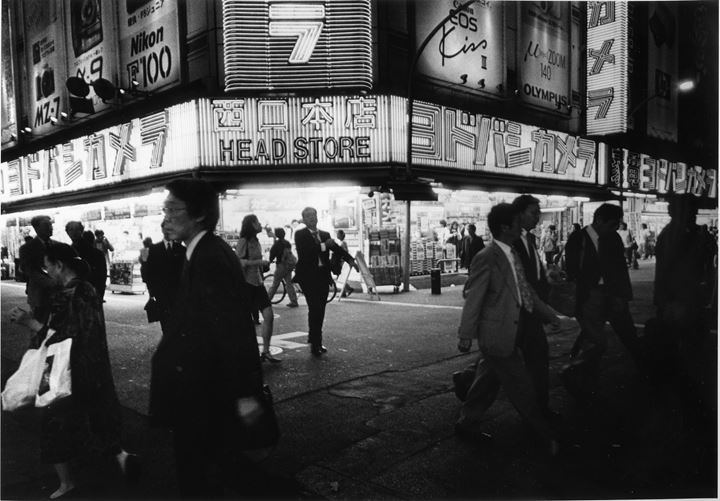
Nevertheless, although Moriyama is not a perfect example, my impression is that there is plenty of work within his vast and sprawling oeuvre that can be taken as supporting an argument that certain aspects of and approaches to street photography are capable of conveying a sense of the built environment without simply and directly depicting its buildings.
So, what conclusions do I reach from this admittedly brief and somewhat superficial survey, how would I now answer my question? The conclusion that I reach is somewhat equivocal. Much street photography does not seem to me offer an affirmative answer to my question; from much I do not get any real sense of the street as a place. On the other hand, certain approaches to street photography can indeed amount to or encompass what might otherwise be seen conventionally as landscape photography and transcend, or transgress, ideas of genre and style. A related question, that is also perhaps beyond the practical scope of this essay, is why that should be the case? My tentative view at this stage is that a significant element might simply be the intention of the photographers; what are they looking for in their work on the city streets: is it sensationalism, squalor, serendipity, or a sense of the landscape as something that reflects the symbiotic relationship between the human and the physical environment?
I give the last word to Mario Carnicelli (another outsider, an Italian photographer who worked in America briefly between 1967 and 1973), quoted in Hotshoe (2019, pages 26-27), who sums up a possible positive answer to my question:
“The element of human beings – people – in the street. We are simply creating a theatrical fifth, a giant stage. The street represents a microcosm of the life, rhythms, feelings of common people. Street photography is a typically “local” universal because it is relatable to other places where people live, even in complete diversity of language, history and traditions. Photographs of faces, and gestures of inhabitants of a certain place, provide anthropological, and geographical, social and humanistic interest, as well as a catalogue of memories in rapidly changing times.”
Eskilden, U, (ed). (2008). Street & Studio. London: Tate Publishing
Evans, W, (2012). American Photographs. New York: The Museum of Modern Art
Frank, R, (2016). The Americans. Göttingen: Steidl
Klein, W, (2016). Life is Good & Good for You in New York. New York: Errata Editions
Moriyama, D, (2016). Daido Tokyo. Paris: FondationCartier pour l’art contemporain
Schama, S, (1996). Landscape & Memory. London: Fontana Press
Sontag, S, (1979). On Photography. London: Penguin
Sontag, S, (2004). Regarding the Pain of Others. London: Penguin
Warner Marien, M, (2014) (4th ed.). Photography: A Cultural History. London: Laurence King Publishing
Hotshoe Issue 204, 2019 Vol.II NYC Street ’57-86
http://www.mariocarnicelli.com/gallery/58741/usa-1967
Total word count: 2726
Word count excluding quotations and references: 2030
 Mark Robinson's OCA Landscape, Place & Environment Blog