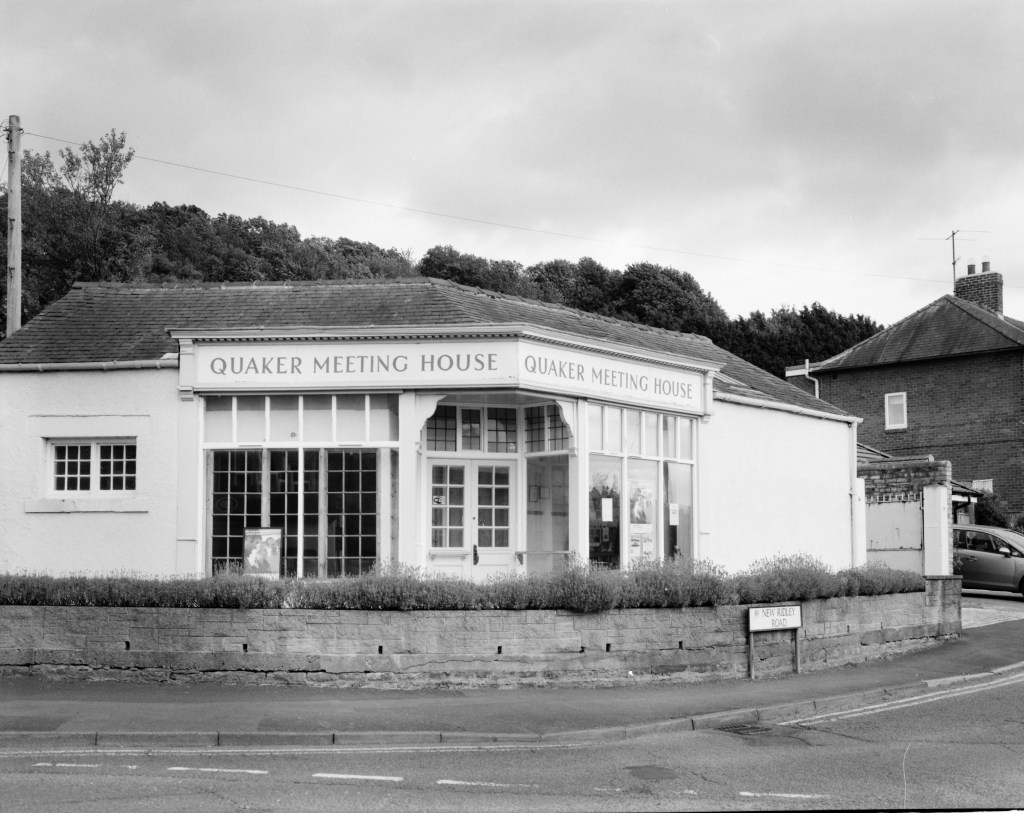
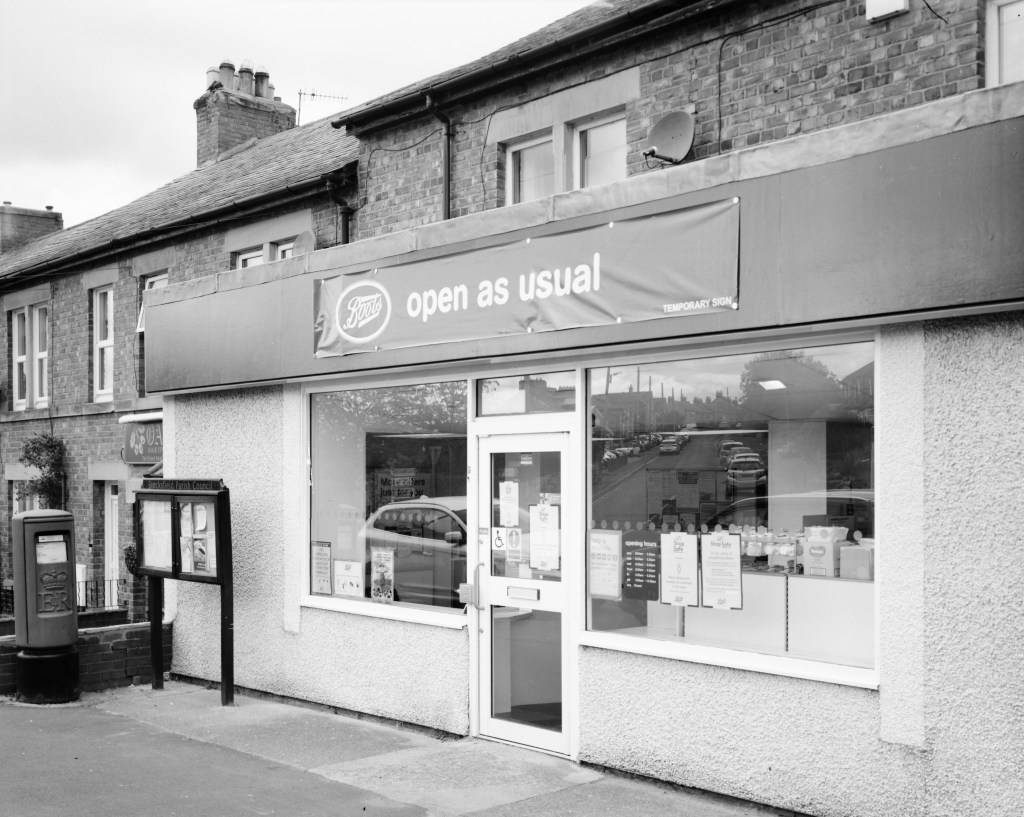
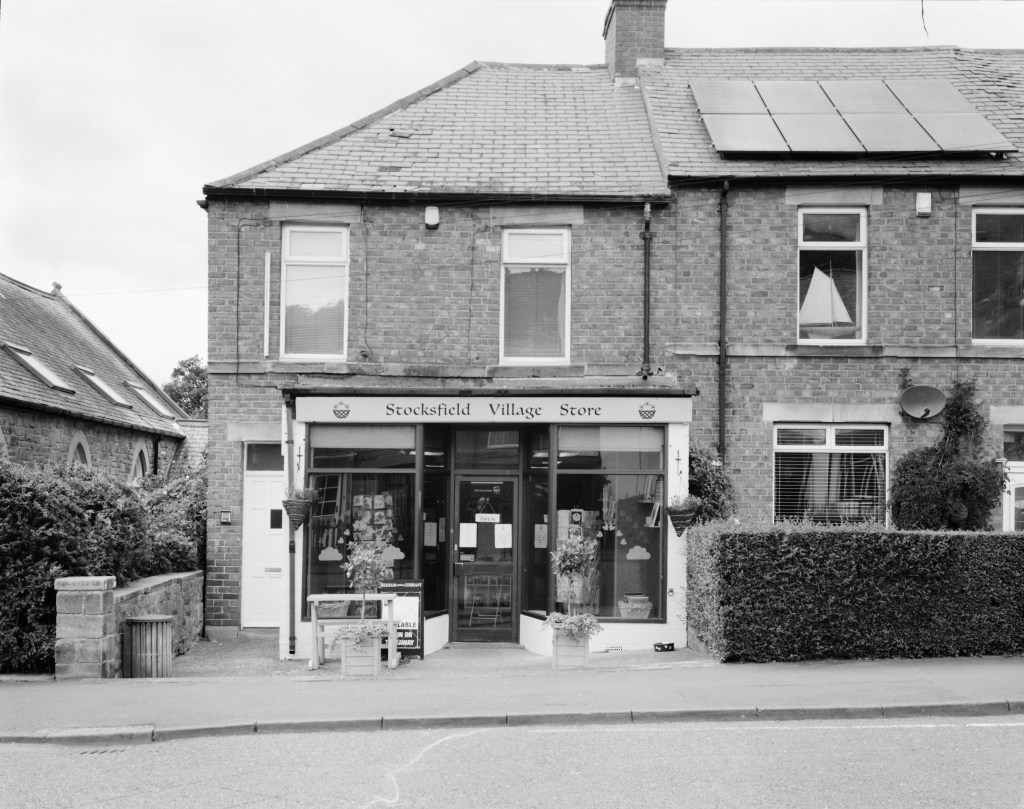
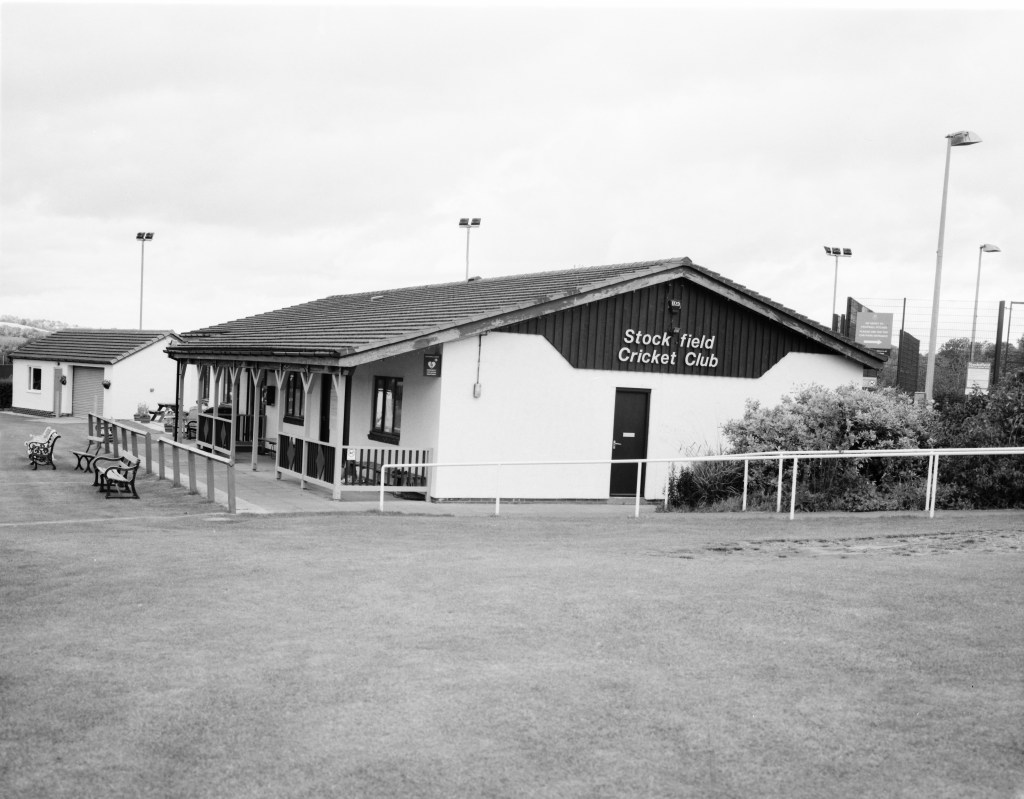
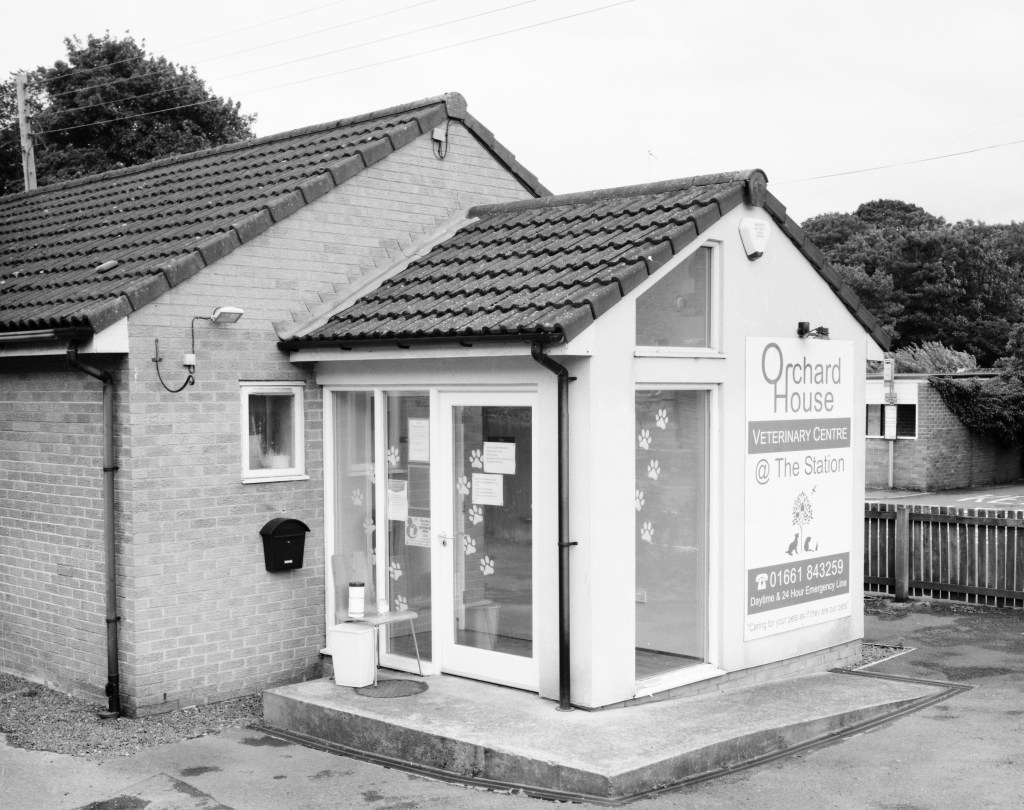
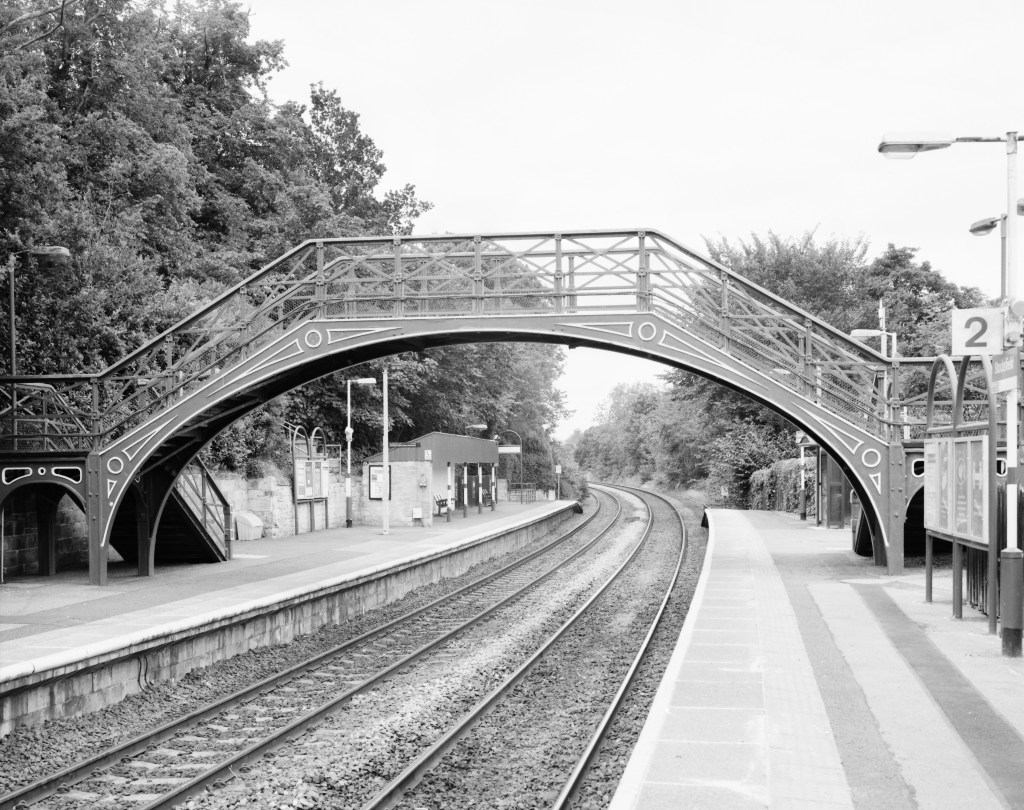
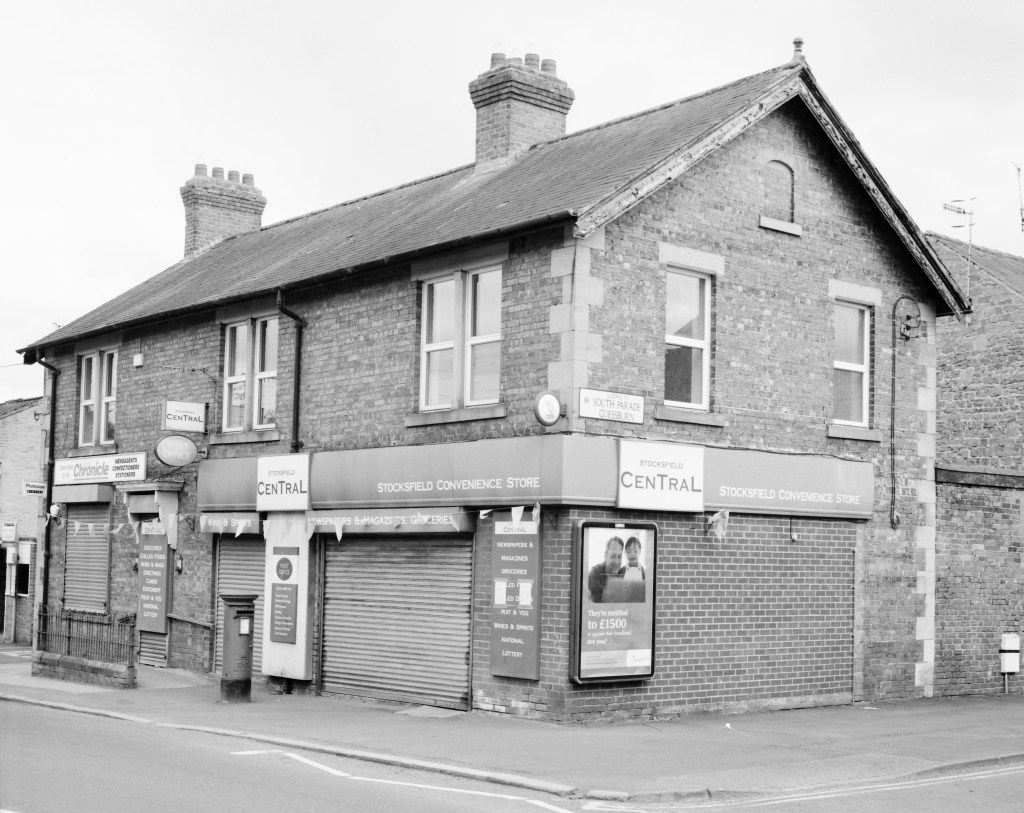
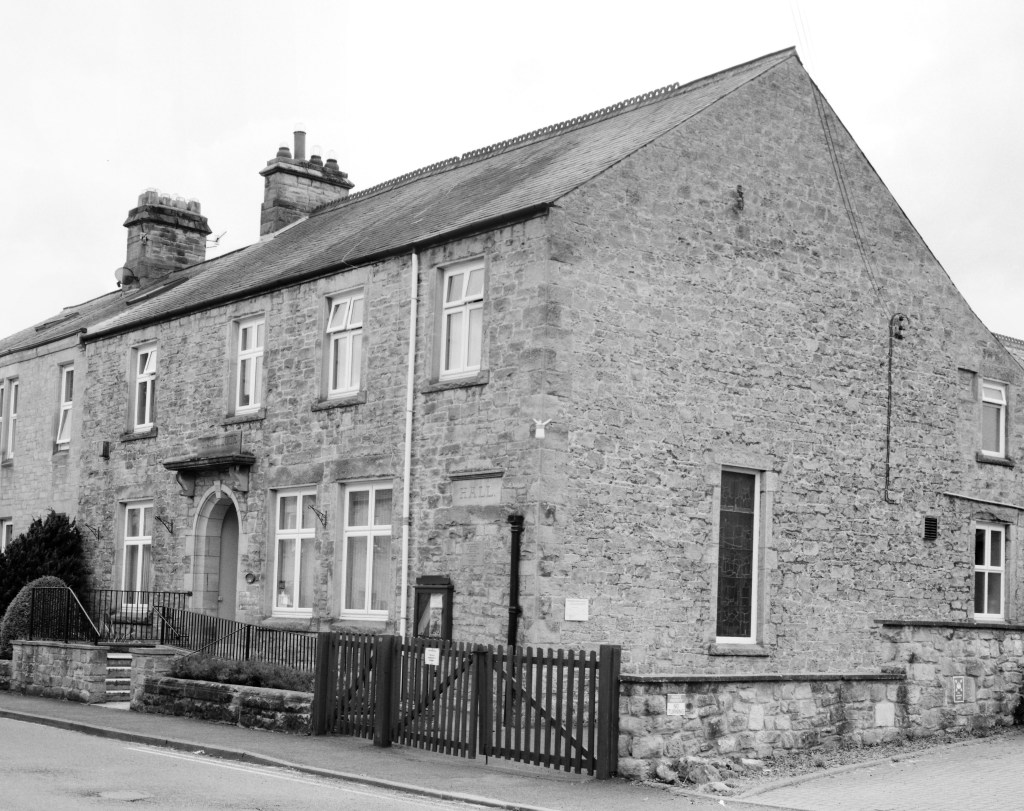
At last this project is now complete, after a total of eight separate shoots, and a number of practical and technical problems encountered along the way as I have chronicled in recent posts. For the film element, I reverted to my original 150mm lens on the 4×5 large format camera and the results are now something that I am happy with. Despite some of my earlier speculations though I have decided not to crop these images to remove “extraneous” background, merely to tidy up the uneven edges produced by the original negatives. I have made this choice after seeing the scanned negatives as I feel that the wider fields of view actually help to create a little more context for my chosen sites, fitting them more clearly into the wider environment of the village. Also, from a purely practical point of view, I do not feel that the wider angle provided by this shorter lens has actually made as much difference as I expected.
So far as the postcard set is concerned, having reviewed them again I have made only a few very slight adjustments. Otherwise they remain very much as they appeared in my earlier post on them. Here are both sets:
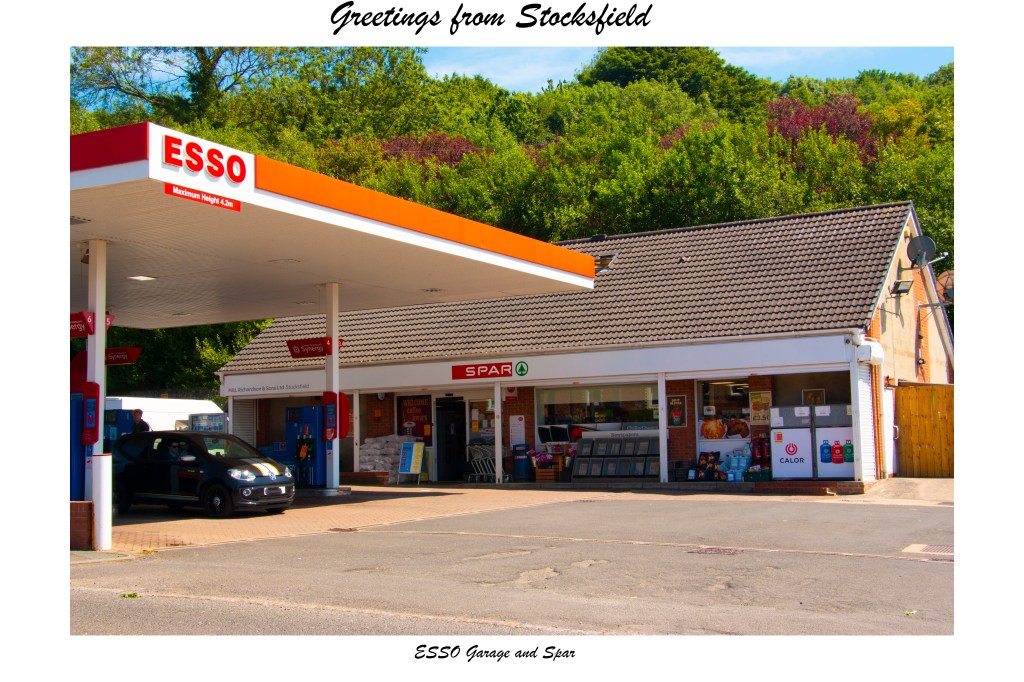
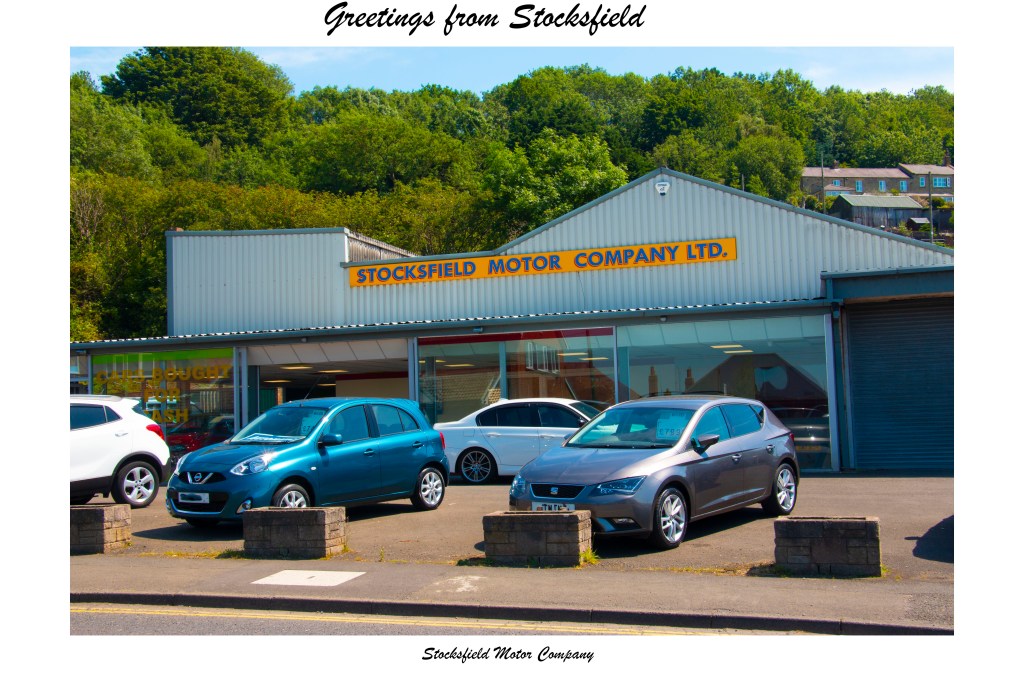
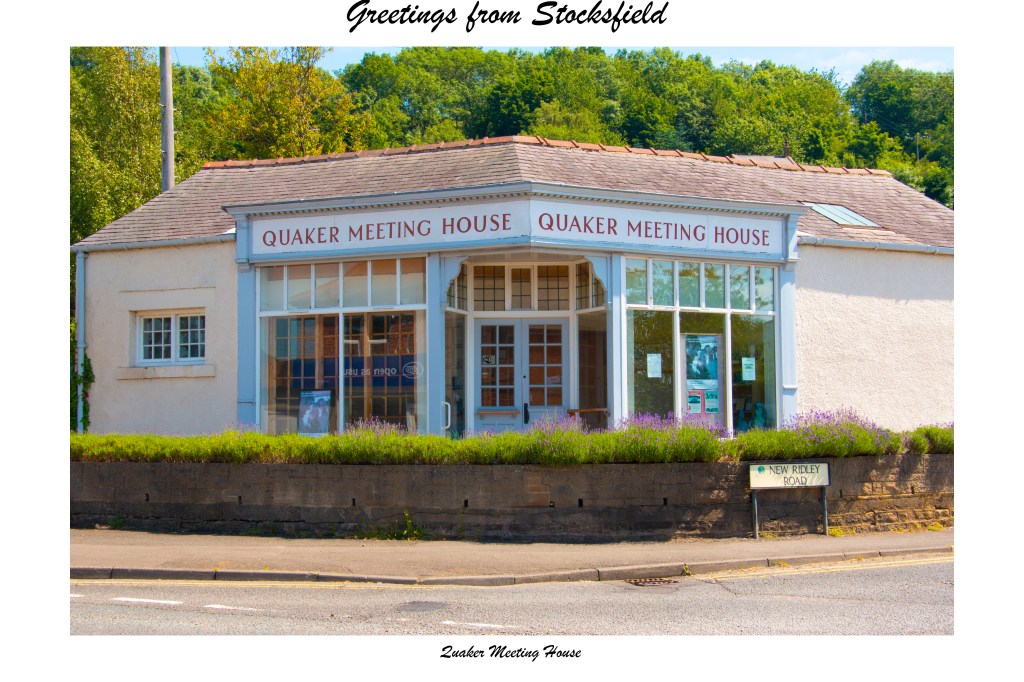
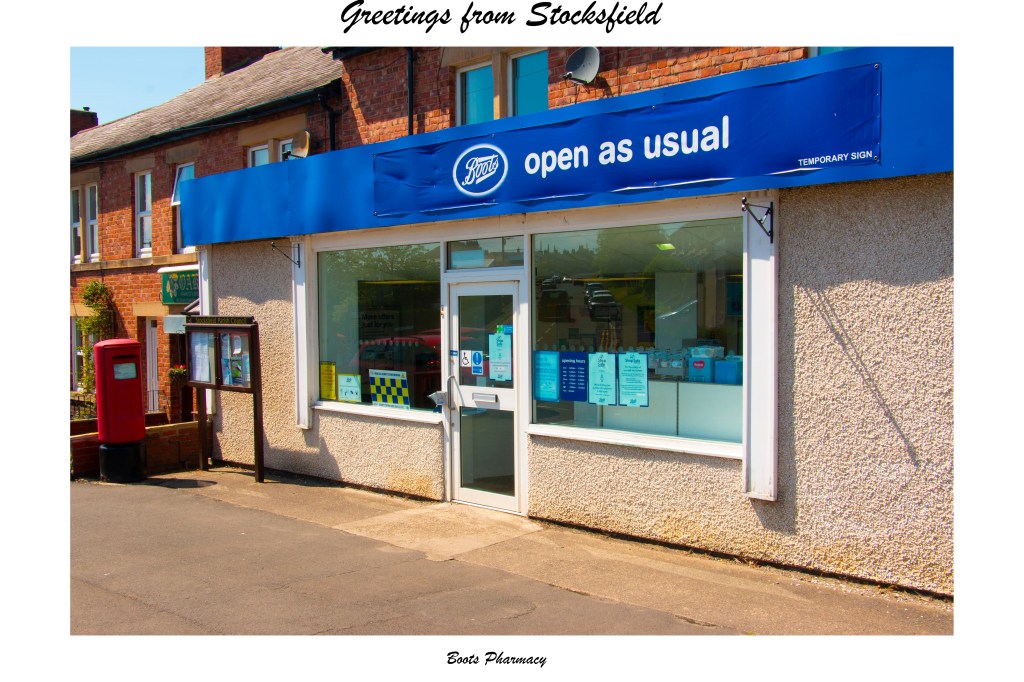
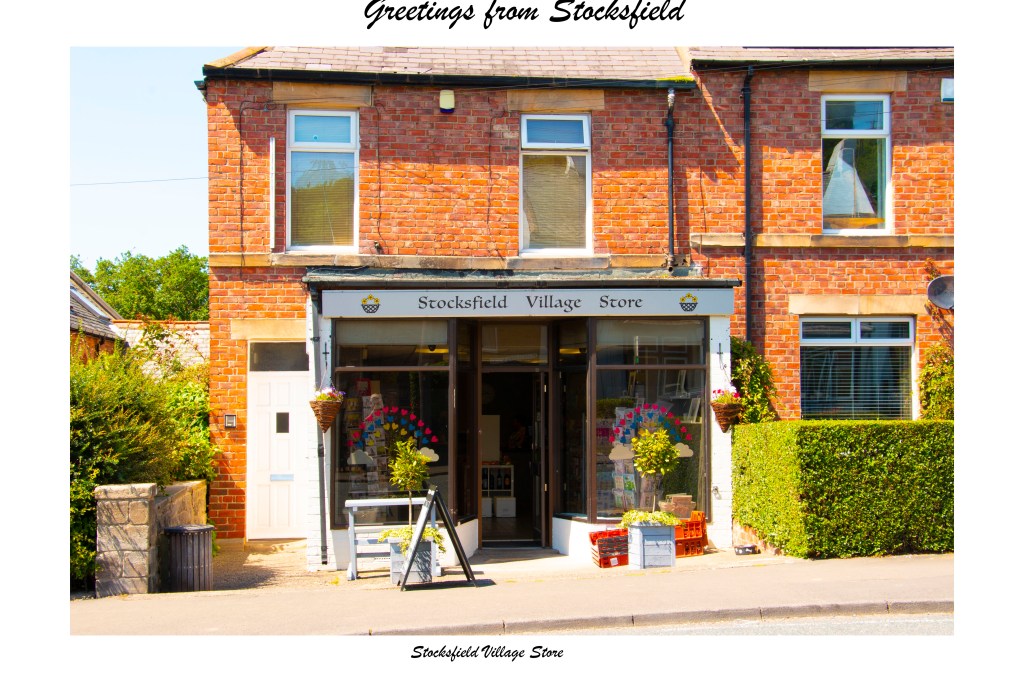
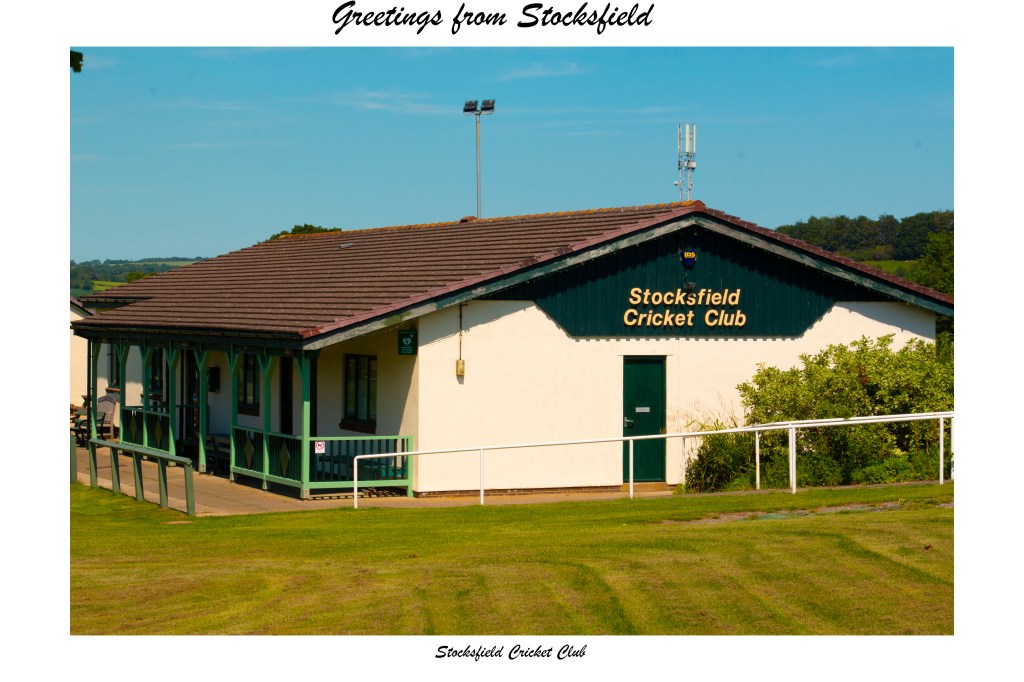
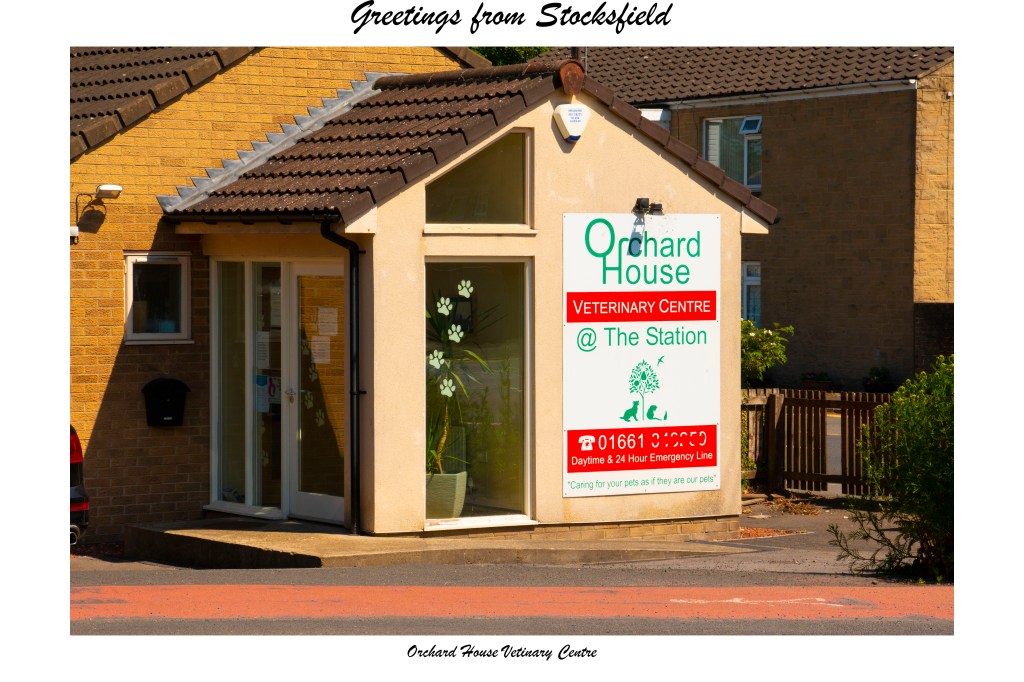
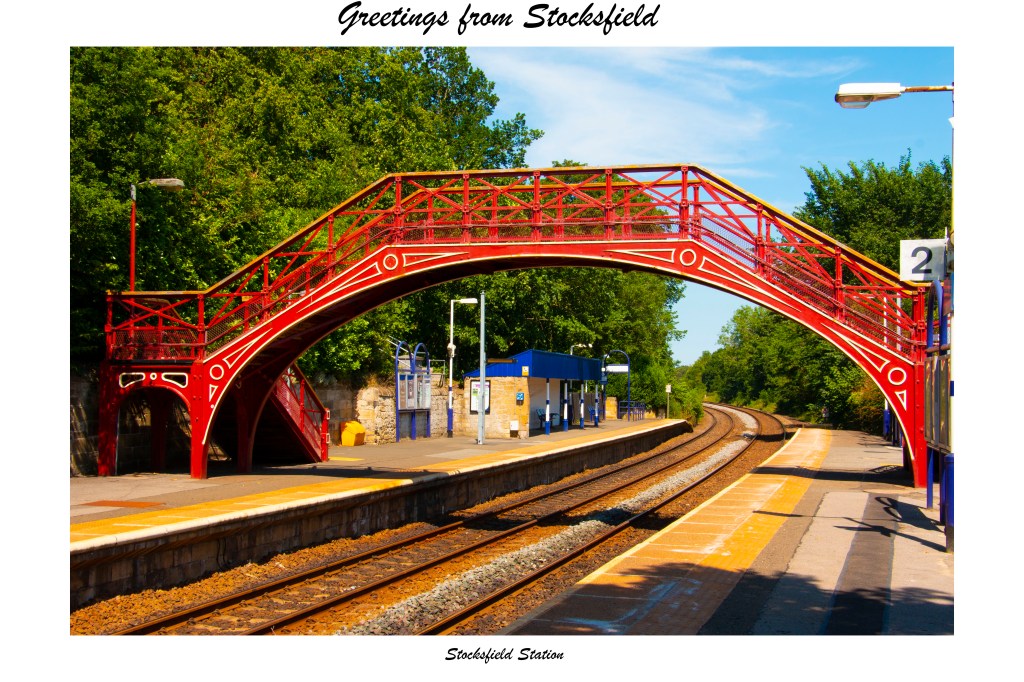
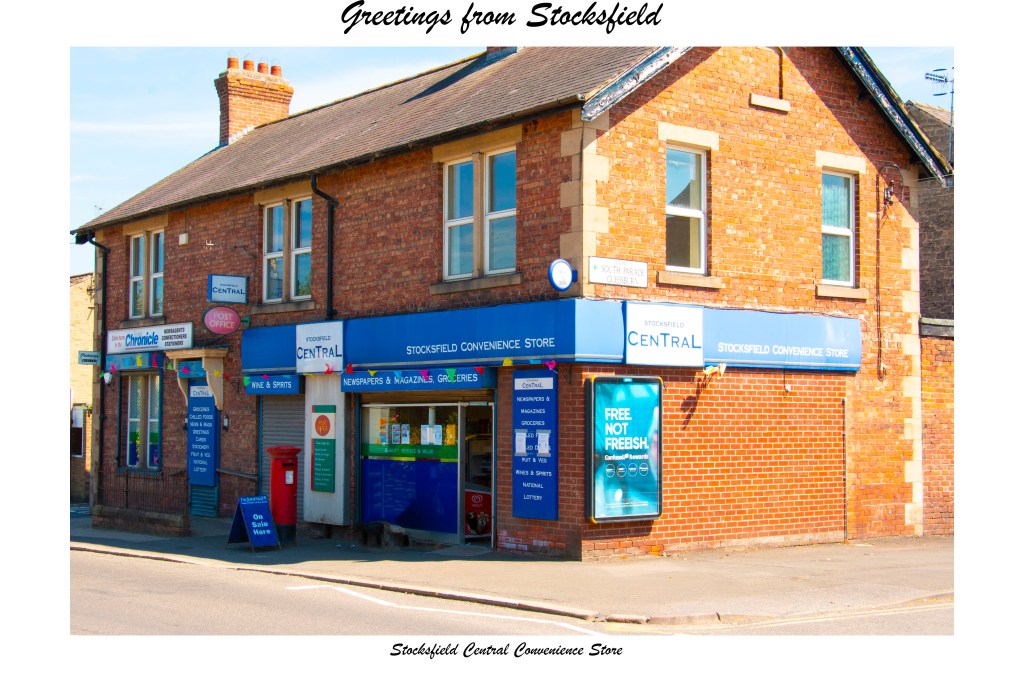
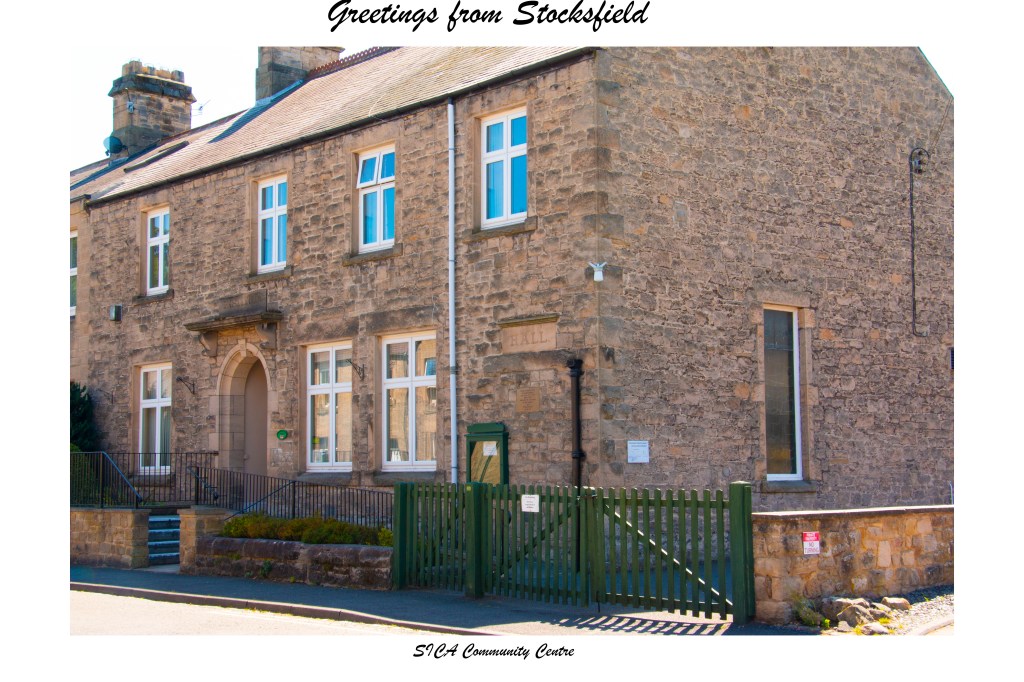
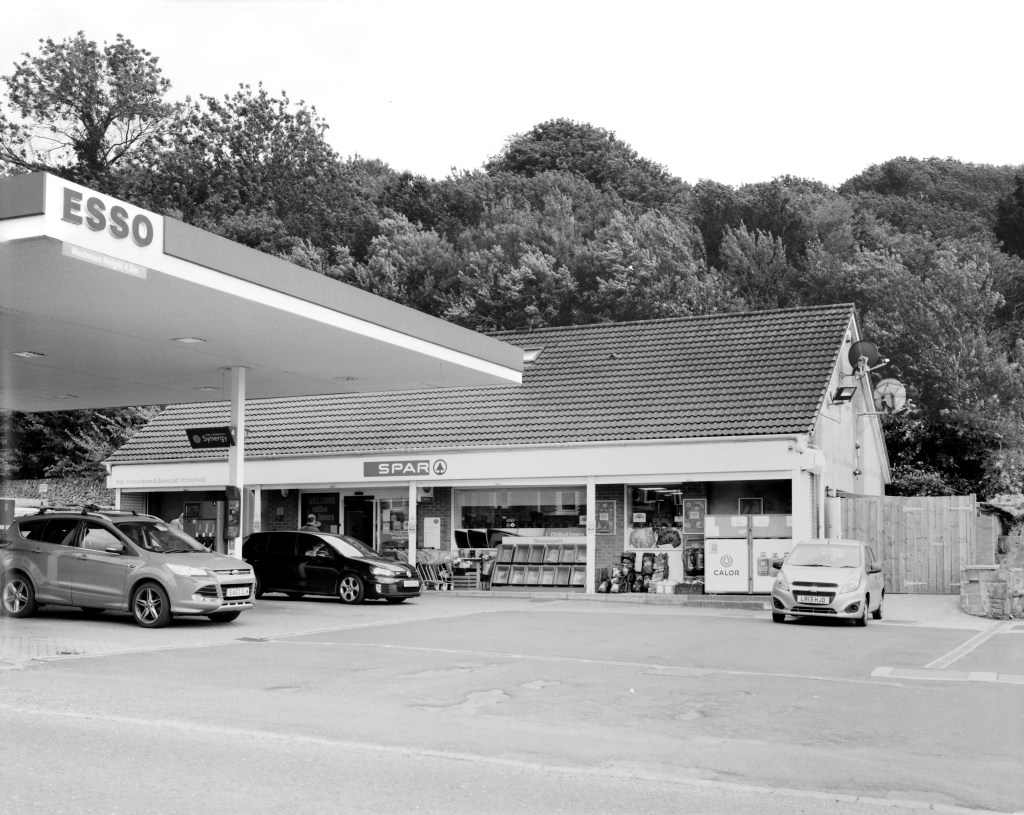
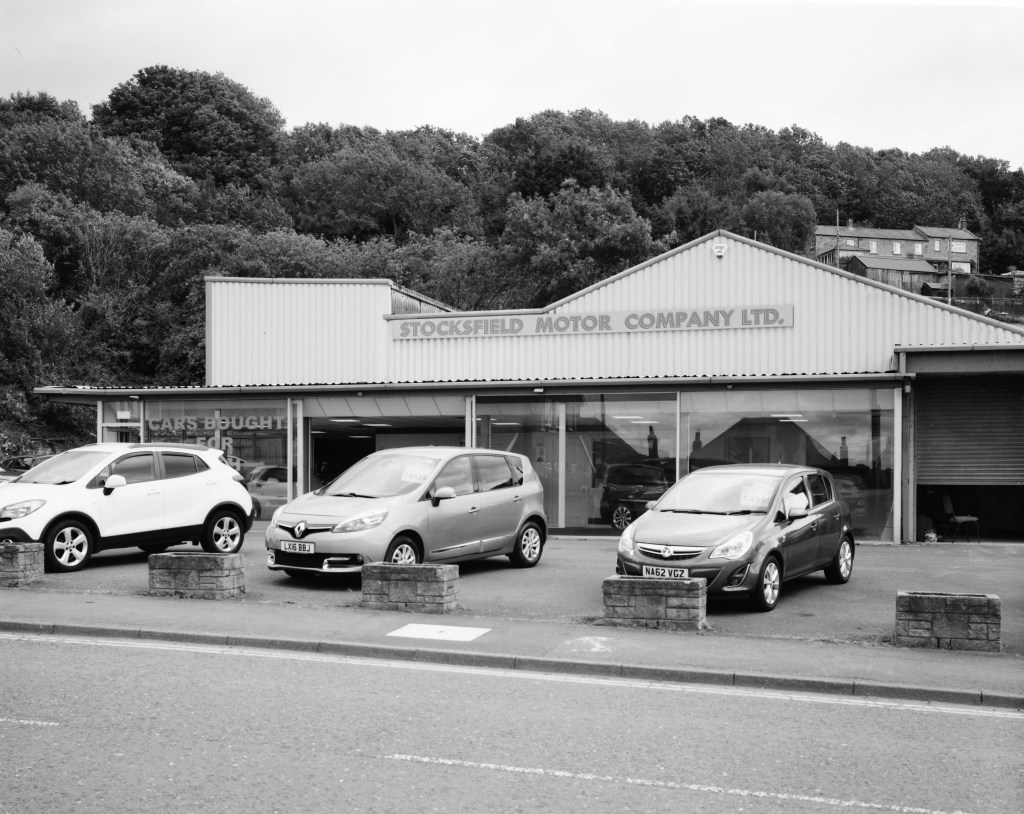
Original Proposal
I made my original proposal for this project in Exercise 4.6 – https://markrobinsonocalandscape.photo.blog/2020/05/03/exercise-4-6-proposal-for-the-self-directed-project/ – and the basic idea has not really changed. I would though say that the seriousness of the approaches has increased and that the results are a little less ironic that I had originally envisioned. The key point that has developed is the importance of these particular sites for the identity of the village as a whole. Without them the village would be little more than a dormitory. Their presence turns the space, the wider physical environment of the village, into a particular place, somewhere that is significant for the people that live here and where they can carry out the ostensibly mundane but nevertheless very significant tasks and activities of everyday life. This importance has become increasingly apparent to me in the light of the restrictions on “normal” life imposed as a result of Covid-19.
There is still a sense of irony – would people really want to visit the village and send postcards home? – but I feel that irony serves to emphasise the underlying importance to us as residents of these places. We need them and so they are worthy of being recognised as significant, worthy of being visited and memorialised in a postcard, and treated with the dignity of a more “fine-art” photograph.
Another important element of the work that comes out of this latter point, is a greater sense of nostalgia. The over-vibrant postcards are a throwback to cards bought on childhood trips (real or imaged memories). The film set look back to the work of the likes of Anselm Adams. Both are in a sense touching on a nostalgia, again real or imagined, for past village life, a sense of a rural ideal. All that is missing here to make it perfect is a village green (I suppose the cricket club comes the closest to serving such a purpose).
Otherwise, and still quite importantly, there is a sense in which by choosing such “ordinary” views, I am challenging, or at least questioning, received notions of “landscape” photography and what are worthy subjects of attention.
The other significant development, since I put forward that first proposal, is that I now have a good quality photo-printer and so can now do all my own printing (all the way up to A3 size!) and do not have to rely on external resources. I can also still print up to 8×10 from the negatives in my darkroom.
Artist’s Statement
For the purposes of this project I would refine what I proposed in Exercise 5.7 – https://markrobinsonocalandscape.photo.blog/2020/06/14/exercise-5-7-prepare-your-artists-statement/ – to deal with the points made above. Something along the following lines:
“My current work is concerned with the role landscape can play as a place that contains and records memory. I am also interested in how human relationships with the landscape affect that memorial function and can give places particular meanings and significance beyond being merely a geographical location. This project deals particularly with this latter aspect of landscape and explores how ostensibly mundane places can carry significance in themselves and how they contribute to the transformation of space into a place. The choice of such ordinary locations itself challenges received notions of the subject matter that is deemed to be suitable for landscape photography. Questions of memory are also addressed by evoking a sense of nostalgia for an imagined ideal of the rural village, both through the irony of the holiday postcard (which in turn conjures memories of childhood holidays) and the “fine-art” approach of the large format black and white photographs.”
Further Learning
Following on from earlier work on this module, the decision to involve black and white film photography has offered a practical opportunity to revisit and explore further the Zone System. What was striking when shooting these images was the range of different exposure readings that were obtained for almost every shot, depending on where in each scene a point of focus was chosen. In the more extreme cases, for an aperture of f/22 (I wanted good depth of field and to capture as much fine detail as possible but without having to go for really long exposures), shutter speeds ranged from 1/20s to 1/100. By adopting the system (even as imperfectly as I understand it!) I was able to choose points that would serve as Zone V, and set the shutter speed accordingly, without either blowing out the highlighted areas completely, or losing too much detail in the darker areas. I am sure I could tweak and refine this approach further but for now I am quite happy with the tonal ranges that I have achieved – not least as they have not been adjusted at all in Photoshop.
Evaluation
As Assessment is moving away from the old assessment criteria to learning outcomes, for this assignment I am not going to work through the old criteria. Nor am I, in any formal or structured way, going to look at the assignment from the new point of view, if only because I am only just starting to get my head around the new assessment process. I do though have some general observations.
First and foremost, I am quite happy with the way this has worked out. This was the first time that I have planned, developed, and executed a substantial, sustained project for myself, rather than just following a preassigned brief. The technical difficulties encountered with the new large format lens were unexpected and caused not a little emotional angst and upset my schedule. Nevertheless, I am happy that I was able to overcome them. This in itself was an important learning experience for me. Until now I have really only dabbled with the large format camera, more than anything just to find out its capabilities and limitations, so this was the first time I have used it to make a substantial body of work. I am also pleased that I feel that I have been able to capture in the final sets of images (and I remain happy with the decision to follow two distinctly different approaches) the basic ideas that underlay my original proposal.
Fortunately, the concerns that I had from the point of view of Covid-19 did not really materialise. Public attention and sensitivity were pretty much as I expected and again were not difficult to deal with. What my experiences this time have reinforced for me is that a little engagement is what is needed: once people know what is going on their concerns seem largely to evaporate.
Would I do anything differently if I was to revisit this project? Not fundamentally, I think, apart from possibly looking at including a couple more sites. My only hesitation about this is that there is a consistency among the images I have made in that they are all along the length of the main road that runs through the village – imaginatively named Main Road! Some of the other possible sites are away from that road, and so do not form an immediate part of the physical experience of travelling through the village. There are a couple more on the same road, that I did consider from the outset, but they are invariably masked by parked cars, so tha you see more car than site. Approaching the project again with a view to expanding it would therefore necessarily involve some serious rethinking of the underlying concept.
 Mark Robinson's OCA Landscape, Place & Environment Blog