Category: Assignment 6

The Last Post

Lower the flag, sound the bugle.  

I have now received feedback from my tutor on Assignment 6 so LPE is effectively now finished.  The final step is to prepare for assessment in March next year (and I am nearly ready for that) so this will in all likelihood be my final post on this course.  Although I am producing a submission document to go for assessment I am not proposing to make it public and post it here.  So here is the final feedback:

Overall Comments

(RM: Congratulations on completing the course.  You have produced thoughtful and engaging work throughout.)

This final assignment of the module, although from my own point of view not the best work I have done (although I am not entirely unhappy with it) has been an extremely useful exercise in a number of respects and to an extent serves to tie together much of the work that I have done over the course of the year and has helped to develop and established some of my views about the concept of landscape in photography.

Feedback on assignment 

This has worked well.  The regular and disciplined approach, photographing every week throughout the year, as opposed to a mere handful of times, has clearly paid dividends and has meant that the locality has been well observed, has had close attention paid to it.  Your preference is for the view to the east, if only because of the slightly wider view as the burn downstream and the road diverge.  You also queried whether the sequence actually works better without the soundtrack, although the choice of music seems to work well, which led into a wider discussion about the combining of images and sound generally.  I remain slightly equivocal about the use of the music:  it was certainly a useful exercise to find something suitable and to engage with the composer directly to obtain permission for its use; I can though also see that the flow of images alone has merits.  I drew a, slightly paradoxical, comparison with the music of Morton Feldman which unfolds over lengthy stretches of time with apparently little change from moment to moment, interrupted from time to time by more noticeable changes (Rothko Chapel and String Quartet II in particular) which is what the sequence of photographs does.  In both cases the nature and extent of the changes and development is only apparent from the overall arch of the work.  I can also see there is a danger of the soundtrack dominating or imposing a particular significance on the images, although I do not feel that is a problem here.

In passing, in connection with the use of sound, we touched on the technical difficulties involved with matching the different media, and the awkwardness of Lightroom as a tool.

We nevertheless agreed that sound and image can successfully be combined.  As an example of this I pointed to the recent work of Japanese photographer Masao Yamamoto whose book Sasanami is paired with music by Akira Uchida:  the different media are presented so that the book can be viewed separately from the music or in combination with it, leaving it to the viewer/listener to make their own variable combinations of experience.

Coursework

Work throughout this module has clearly been affected and to an extent limited by Covid.  Paradoxically though the limitations have actually proved to be quite liberating and have opened up a more developed and richer view of what can be achieved with landscape photography, and what is worthy of being photographed, focusing more on a limited locality and paying closer attention to what is there to be seen, no matter how apparently, objectively insignificant.  This more mindful and attentive approach has coincided with and been nourished by a deepening of my Buddhist practice, which has turned out to have a significant impact on how I have approached this work.

Here we also touched on the influence of, in particular, the work of Rinko Kawauchi and her approach of taking apparently random and unconnected photographs of mundane, every-day, easily overlooked things but then through judicious editing and juxtaposition finding new themes, correspondences and meanings, something that I want to explore further.  (Off at something of a tangent, we also touched on the appeal and influence of other “anti-aesthetic” Japanese photographers, such as the Provoke group and Masahisa Fukase’s Ravens, whose work I have not sought to emulate, largely simply because from a purely technical point of view I am not sure how they achieved their effects.)

These limitations have also meant that I have very much made the exercises and assignments my own, developing my own interpretations of and approaches to them – developing my own voice – and immersing myself in the medium more than might otherwise have been the case

Research

(RM: Research is your strong point; a high level of enquiry which informs your practice and reflects your deep literacy of the medium.)

Learning Log

The log remains full and varied.  If anything, looking forward to assessment, my most difficult task is going to be in editing down the material that needs to be presented.

Pointers for the next assignment / assessment

Much of our discussion focused on how I should prepare for and present my work for assessment in March.  Considering a number of options, the most attractive seems to be to produce a sort of narrative, with links to relevant blog posts, exploring my experience of the course and how it has helped with the development of my voice, how the assignments have fed into each other.  We agreed that although I will focus on assignments 2, 3, and 5, plus the essay, the first assignment is still worth mentioning as it developed some ideas that fed into the later more substantial works. My learning from the technical aspects of using film, particularly in Assignment 5, is worthy of inclusion.   I should also add a note about my interactions with fellow students and the much greater importance to me of looking at and reacting to the work of other more established artists.  

So far as the next module is concerned, we briefly discussed my preference for Self and The Other: how this is another  that at one level I do not necessarily really want to do but how it is important for me to take on something challenging (it will no doubt be affected by continuing limitations as a result of Covid) so that, hopefully, I will get more benefit from it, as I have with landscape, which I was not initially that keen to do but nevertheless chose in order to take me out of my comfort zone.”

Turn off the lights.
Assignment 6 – Finished!

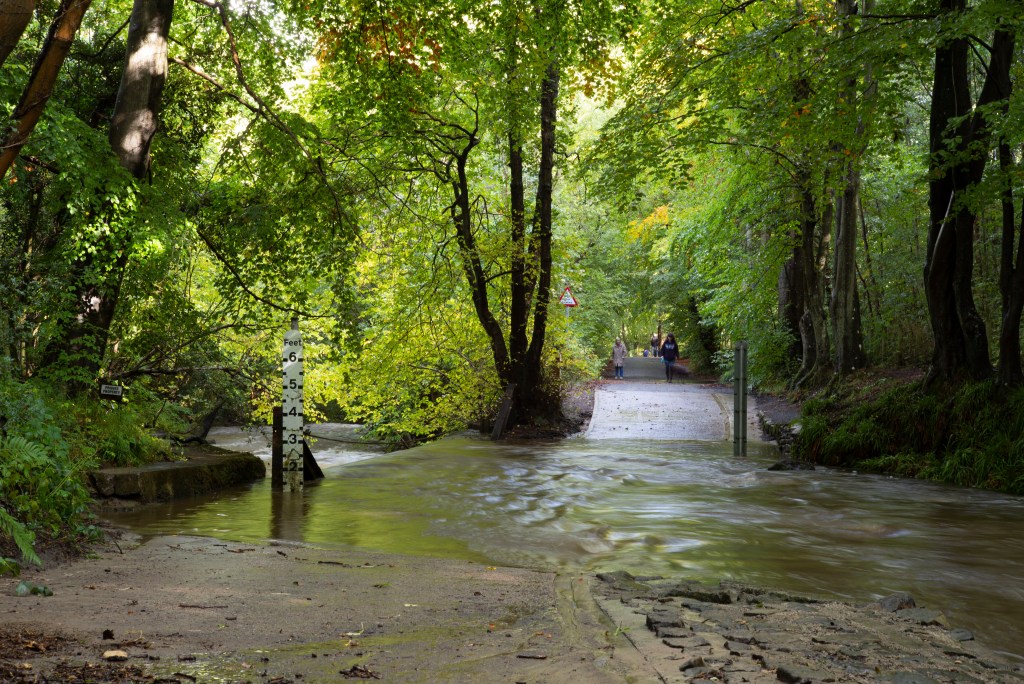
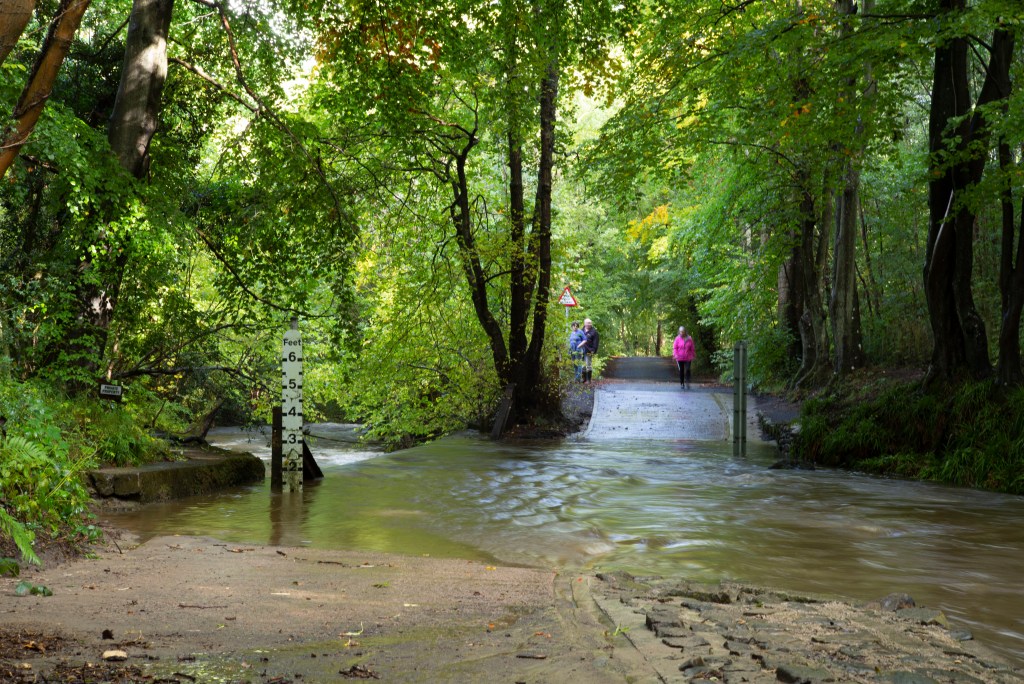
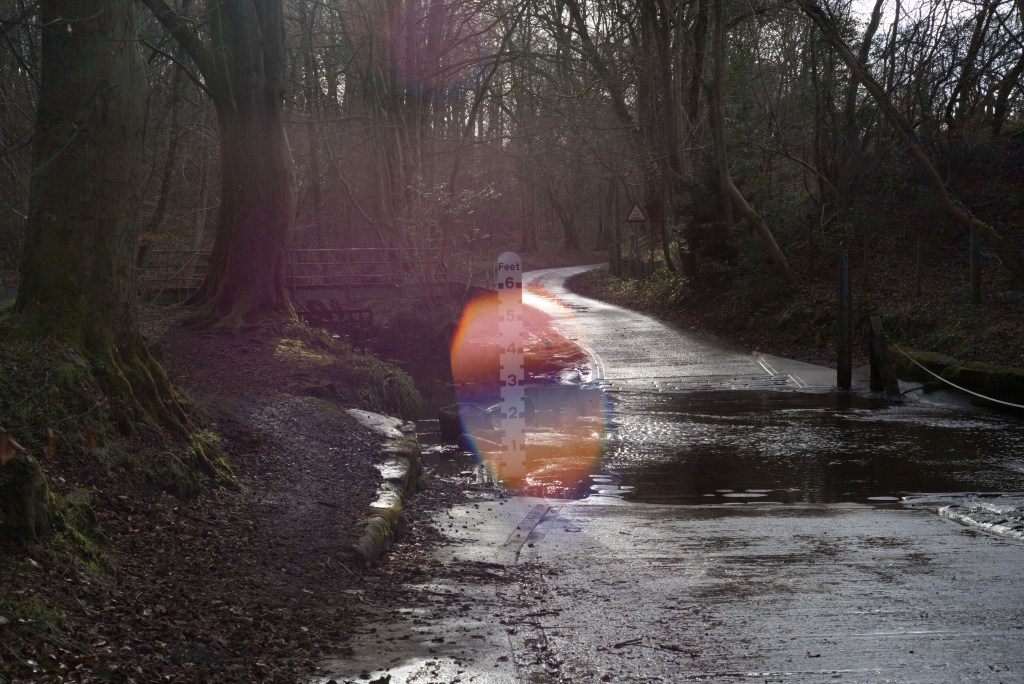
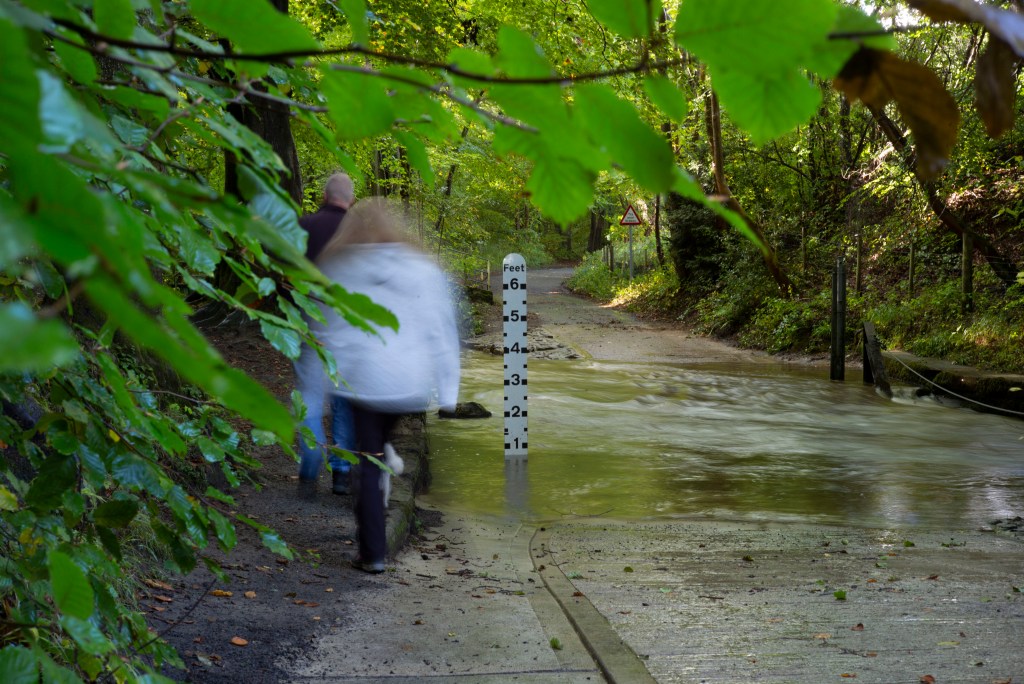
I have at last finalised Assignment 6, producing two slideshow sequences, one viewing the ford from the east, the other from the west.  I have decided to keep both sets not least because of the different ways the light has changed between them over the year.  When it came to editing, I decided that I would use nearly all of the photos that I took over the year – each time I went out I took multiple shots of each view.  The ones that have fallen by the wayside are a few that I found on review to be out of focus.  What I think has happened with these is not that they were not focused properly (though that cannot be ruled out given that the camera I used throughout, my digital Leica, can only be focused manually) but that the aperture changed.  Throughout I shot at f/16 to get a reasonable depth of field (the maximum available on the particular lens I have been using) but for a few I suspect I inadvertently used a larger aperture as the shots in question seem to be in focus for objects close to the camera but not for those more than a couple of metres away.  There were also a couple taken early on for which I set up the camera in the wrong position.  I had not then got into a proper routine of making sure I put the tripod in the same place every time.  As it is, the first couple of shots for the view to the west are in a different position, the opposite side of the road to that from which all the others were taken.  That position was more in the road and so vulnerable to passing cars, meaning that at the least I would have to move the camera out of the way each time someone drove past.  The other side of the road offered a bit more shelter and room to avoid being run over!  I have kept those shots because they themselves represent an element of transition, for the project itself as it developed as opposed to the environment within which I have been working.

Another similar element of transition is also present in the final work in so far as slight shifts in position of the camera are evident throughout.  Although I settled into putting the tripod into particular positions, using certain trees by the side of the road as markers, and always set the tripod itself to the same height (I have in fact barely used this particular tripod, a lightweight travel one, for anything else all year, using a more heavyweight one for the other assignments to accommodate the larger cameras I used on them – 4×5 for Assignment 5 and a medium format Hasselblad on Assignment 3) there are nevertheless shifts in camera position from shoot to shoot, and sometimes between individual shots.  Most of these I expected to be quite subtle but some are rather more noticeable.

The combination of lots of images and substantial soundtrack means that the resulting mp4 files are quite large exceeding the limit for my free (cheapskate!) account with Vimeo so I cannot post them there, even without the soundtrack.  As a result, I cannot include a link now.  For the purposes of submission to my tutor I am simply going to have to send the source files which can then be run using Quick-Time (or Windows Media Player, or whatever).  In a way this suits well given that I have agreed with the composer that the audio version will be accessible only by my tutor.

I have tried embedding a silent version of the slideshows into this blog post but without success. I fear the file sizes are still too large.

Returning to the question of quality that I touched on in my previous post, on reflection I am not sure I have much more to add.  The end results are, I have to confess, perhaps a bit too long running to almost 20 minutes each.  That said I am not sure that anything shorter would really do justice to the project, and the amount of time spent on it, nor give an adequate sense of the nature and extent of the changes that do occur here over the space of a year.  Being able to distil everything down to, for example, one emblematic image for each season would have worked but because there was so little real snow here last winter there is not really anything that would stand alone to represent winter.  As it is, blink and you could easily miss the few most wintery shots that I did manage to get when there was a mere sprinkling of snow for one day only below about 100 metres above sea-level.

Having played through the sequences a number of times now I remain happy with the choice of music, which anyone can listen too in full on the composer’s Bandcamp page (link below).

I think perhaps the most important thing that I take away from this project has been the discipline of concentrating on a specific location over a prolonged period of time and observing it closely, watching how it changes, registering the nuances of light, vegetation, water level, changes in weather, and so on.  This is not something that I would normally be aware of in such a focused way.  Certainly, I do notice seasonal, weather related, and other changes here on a regular basis because, if nothing else, I walk this way with my dog nearly every single day.  Taking a camera to a particular location on such a regular basis (at least once a week on average, and a few times on consecutive days to record more sudden changes in water level in the burn after periods of heavy rain) though introduces a much greater degree of concentration and awareness.  It gives a structure to, and produces a record of, those otherwise casual observations.  That alone, I feel, makes this project and the experience of it, valuable as a learning exercise.

https://sergeyakhunov.bandcamp.com/album/the-seasons

Assignment 6 – What a long strange trip it’s been

“What a long strange trip it’s been”, as the Grateful Dead sang on “Trucking” on their “American Beauty” album.  (No, I am not a Deadhead and this is the only one of their albums that I have in my collection. It just struck me as apt for present purposes.)  To within just a couple of days I have been shooting this assignment for a full year so I think it is now time to stop.  The next step is to finalise the slideshows, which are already largely ready, but for now I have some initial observations on the whole process.

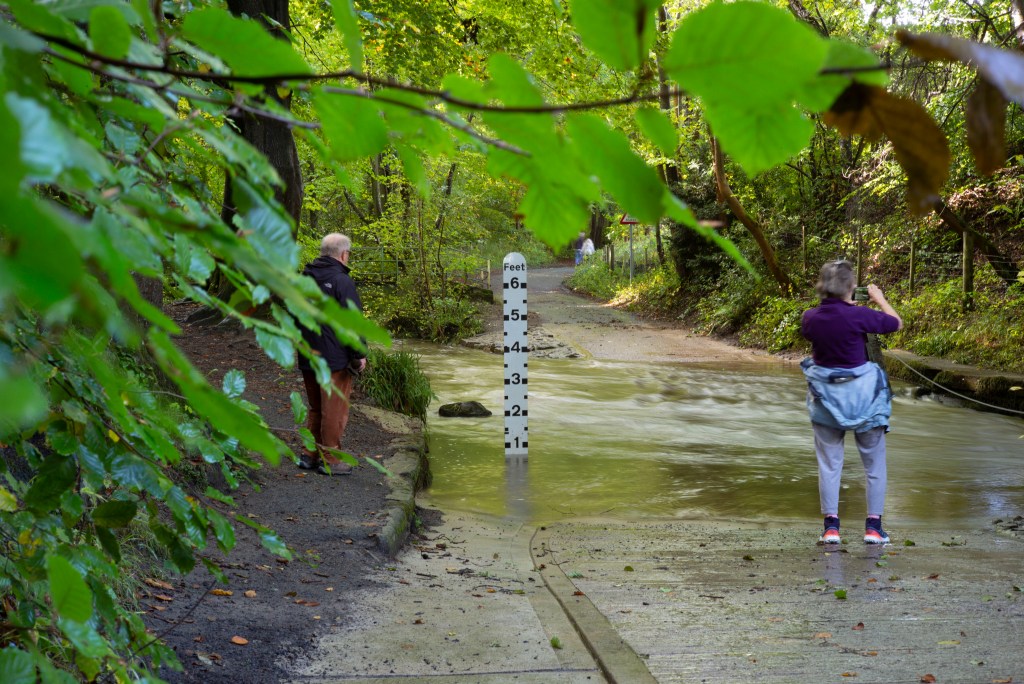
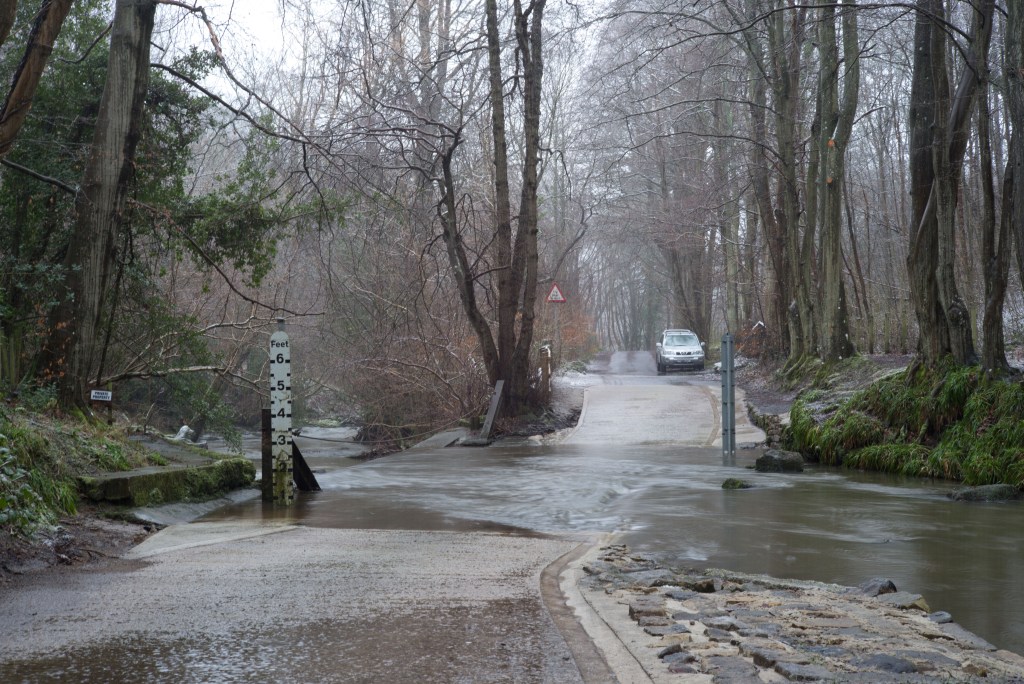
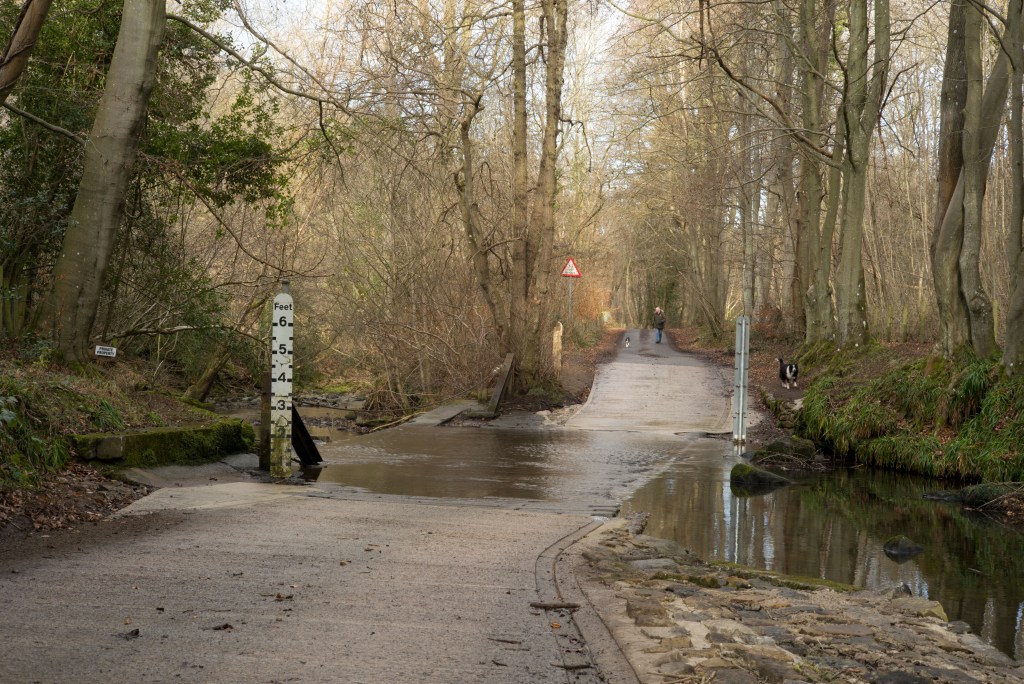
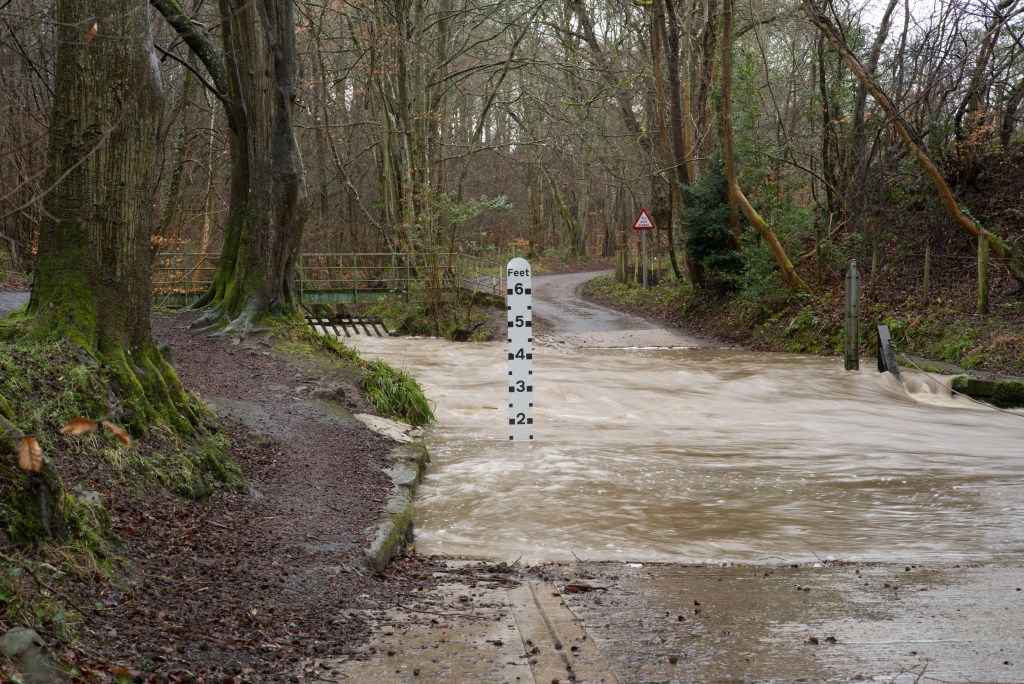
First, here are some of the pictures that I took today.  After months on end when no-one else was around while I was shooting, today everyone and their granny seemed to be out.  Yesterday it rained – boy, did it rain – all day, in quantities of Biblical proportions.  Today has been much more pleasant and I guess that has attracted people out again.  The fords can also be pretty spectacular after heavy rain and people go down there to take pictures.  Surprisingly, despite yesterday’s monsoon-like downpour the water in the ford was just under twelve inches (I have seen it before hit three feet, and that is certainly scary), nevertheless deep enough, and more to the point, fast flowing enough, to prompt a couple of cars to turn back.

What of the assignment itself?  Looking back over the past year I find it all a little bit strange.  This is quite a big project and one that had to be committed to very early on while working on this module.  There was no real scope for a change of mind, of direction, or subject matter along the way.  As the point at which work had to start on this assignment was so early it was a bit of a shot in the dark.  At the time it started I did not really know where I was going with anything to do with landscape photography.  There was still a lot of material to read, other photographs to be taken, and more importantly, thoughts about landscape photography and what it means to me to be developed.  When I started this sequence I did not fully understand my own thoughts about landscape photography.  The themes and ideas that I have explored subsequently had not really started to evolve and take on a more concrete, and coherent, form.  That did not really happen until I started to think about spaces/places and work on Assignment 3.  It is really only over time that a sense of theoretical underpinning and background for this last project has emerged and developed.  The ideas behind what I have been exploring and trying to do in relation to landscape photography have probably always been there, although they have taken time to solidify, and that is perhaps why after a year I feel this project does still fit within my overall thinking.  

Would I have done anything different if from the outset I was more conscious of what landscape means to me?  An impossible question of course, purely rhetorical, but I think probably not, if only because of the limited options that have been available.

Does it work?  Yes, I think so, though I am far from convinced it is the most interesting piece of work I have done.  Assignments 3 and 5 are more interesting in themselves and more directly illustrative of the ideas I have been trying to articulate.  This is perhaps another effect of having started this project so early on.  I will though for now postpone any further judgment or reflection upon it until I have finalised the slideshows, of which more anon.

Assignment 6 – Soundtrack

Since my last post on this assignment I have been in contact with the Russian composer whose music I intend to use as a soundtrack to the slideshows.  He has come back with his agreement, which is good news.  I suspect he is simply pleased that I want use his work.  I will still though keep this password protected so that it will not be generally accessible other than to my tutor, and for assessment in due course if I decide to make this part of my submission (which at the moment I am not at all sure about).

Next weekend I will take what I think are going to be the final images and I will then finalise the project and submit it to my tutor.

Assignment 6 – Struggles with Lightroom

Not for the first time I find myself struggling with Lightroom.  I find it particularly un-user friendly and the “help” function not very helpful at all.  I recognise that in part it no doubt comes down to a lack of familiarity with the way it works but I am having so much trouble with it that I am disinclined to use it and so will not gain that familiarity.

The problem that I am having with it at the moment is that it will not let me rearrange the order of the images in the slideshow that I am working in.  I have followed the instructions provided by Adobe on how to do this (which is reasonably straightforward) only to be informed by the program that I cannot do it.  I am therefore stuck at the moment with the current running order, starting in Autumn.    The solution, as I see it at the moment, is to change the order of the accompanying music.  Having relistened to both the original and updated versions of my chosen music I have decided to stay with the earlier one (the later version goes into five movements, adding a repeat of the opening Spring movement which serves to complicate things still further) so the music opens with Summer.  What I have discovered though, which has proved to be remarkably easy, is to change the order of the music tracks, moving Summer from the start to the end.  The “seasons” are not entirely in sync with the images but by starting with Autumn there is a reasonable match.  Fortunately changing the order of the music does not greatly compromise the work as a whole.

Unless and until I can get better to grips with Lightroom this will have to do for now.  At least it does work!

Assignment 6 – First Experiments

I started shooting for Assignment 6 back in October last year, with a view to recording seasonal and other changes, “transitions”, for a full year.  That twelve months is now nearly up so I have started experimenting with possible presentations of the project.  I have already discussed and agreed with my tutor that the slideshow approach is probably the best to adopt and so for now I am concentrating on that.  I have also been thinking more about, and experimenting with, suitable soundtracks.  A few things have become clear immediately.

In so far as one of my primary themes throughout this course has been the effect of humankind on the landscape, and in turn the effect of the landscape on people, what the final sequence needs to show is not just seasonal changes in the landscape but the passage of people through it over time, both on foot (with and without dogs), and in vehicles.  I have written elsewhere before now a little of the history of the ford I have chosen for this project.  The road follows the route of an ancient pack-horse trail that goes back at least until Medieval times, and quite probably still further back.  Given the heavy Roman presence in the area, the proximity to the river Tyne, the transport of lead ore down from the local hills, active farming by the local Roman-British population, this is a route that could well have been in use for at least the last two millennia.  Over time the track developed into a road, no doubt a rough one at first, at least partly paved later (there is an off-shoot bridleway nearby that goes back at least to the 17th century that still has remnants of early cobbles and stone setts), before in more recent times becoming metalled.  The ford itself developed from a simple track through the water to the present-day concrete footbridge.  Including pictures with people and cars in them serves to highlight the latest iteration of this continuing human impact on the landscape.

Something else that is clear is that the slideshow needs to be quite long to have the right impact – at the moment I anticipate sequences of something in the region of 175 images that will run for about 15 – 20 minutes (there are going to be two, one looking west, the other looking east).  Anything shorter does not seem to work well.

This last point has implications for the soundtrack.  What is obvious is that my idea of using an old Bobby Gentry song is not going to work as it is only about two and a half minutes long.  I still do not want to use Vivaldi, but the Four Seasons concerto is in any event too long.  Similarly, staying with the seasonal theme, Haydn’s “The Seasons” (which I was a bit surprised to discover when I checked my music collection I do not have) is even longer still, running to about two hours.  By chance though, something I do have in my collection is a work by a contemporary Russian composer, Sergey Akhunov, which follows a similar structure to that used by Vivaldi, with one short movement for each season, that runs to about 20 minutes, which is just right.  So far the sequence of images starts in Autumn while Akhunov’s sequence starts with Summer (in an early version, Spring in a later one) so I am going to have to adjust the running order of the photographs.  Nevertheless, a quick run through yesterday suggests that the pairing should work:  it is striking how, wholly coincidentally, some of the passages in the music seem to fit naturally with the images.  I am not going to try otherwise to manipulate the order of the pictures to try to match the progression of the music, something well beyond my capabilities!

Using such a piece of contemporary music raises the possibility of being able to get permission to make the project public.  Although I do not know Akhunov personally I have been supporting some of his work over the last few years (along with a fairly small band of others) which might give me enough on an intro.  Certainly, contacting him would not be difficult.   Possibly worth a try.  The worst he can say is “no”, in which case the project will simply remain private and accessible only to my tutor.

https://www.sergeyakhunov.com

The Learned Pig & Recollecting Landscapes

A bit of a digression (but not much), possibly interesting for some doing this particular module, but here is a recommendation of a website that revels in the name of The Learned Pig. As they put it, “The Learned Pig is an online arts magazine that brings together multiple perspectives on relationships between the human and the non-human.” Personally I find it a source of stimulating thinking about our relationships with environment.

Something I have just picked up from their latest email newsletter is a reference to what sounds like a fascinating book that is directly relevant to what we are doing here, not least to the long term project of Assignment 6: “Recollecting Landscapes”, a photographic survey and record of the changing landscapes in Flanders over the last century. Obviously this is not a project that we can possibly emulate in the short term but the idea is nevertheless intriguing and inspiring.

I shall see if I can get a better look at the book.

https://www.orderromapublications.org/publications/recollecting-landscapes-rephotography-memory-and-transformation-1904-1980-2004-2014/198050

http://www.thelearnedpig.org

Assignment 6: Snow!?

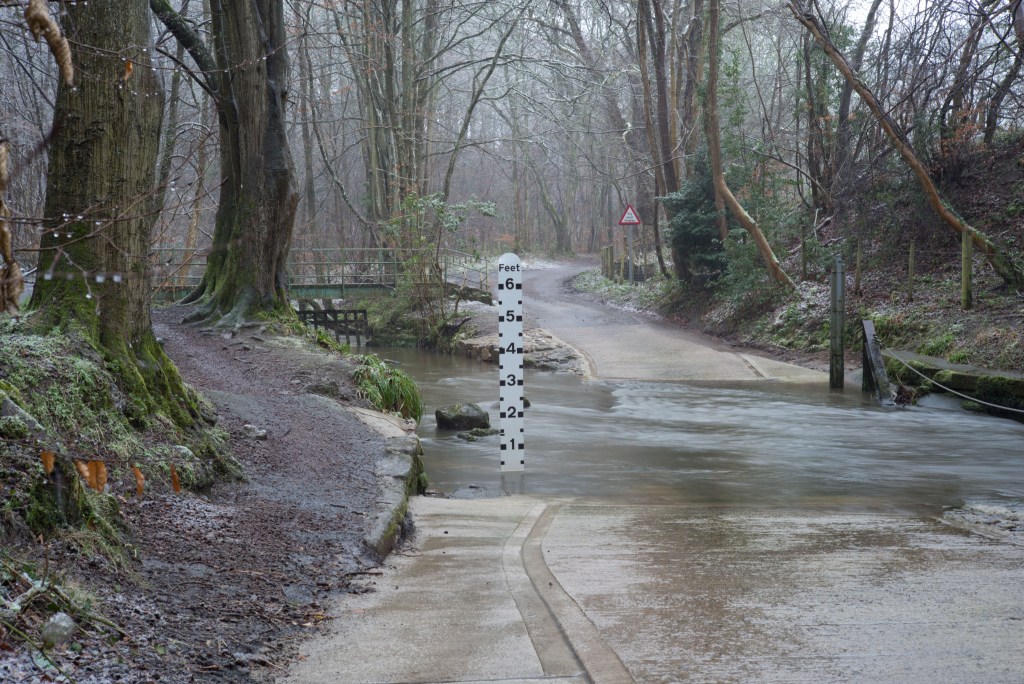
Another brief update as we have just had our first snow of the winter. We did in fact have some snow a week or so ago, but only down to about 100 metres above sea-level (my house is at about 70m and the fords at 50m). Today though it snowed right down into the floor of the valley. So, despite the horrid conditions – it was more wet than anything else – I went down to the fords again this morning to try to catch the changing conditions. There is not a great deal of snow to be seen, but at least there is something to indicate this is winter! Also the light was so poor the exposures were quite long (up to 1s) so that it is not possible to see individual flakes falling. There is though general blurriness that indicates the weather was not good!

24/02/2020
24/02/2020

Assignment 6: An update

Though I continue to take shots for this project every week I have not posted an update for a while. I have decided to do so this weekend to reflect the way this scene can change significantly at very short notice.

Yesterday was calm and sunny so I decided to make some pictures before Storm Ciara struck, in case the weather became too bad to get out. Paradoxically, despite the almost hysterical warnings about this storm, today has not been so bad at all; wet and windy certainly but I have seen far worse!

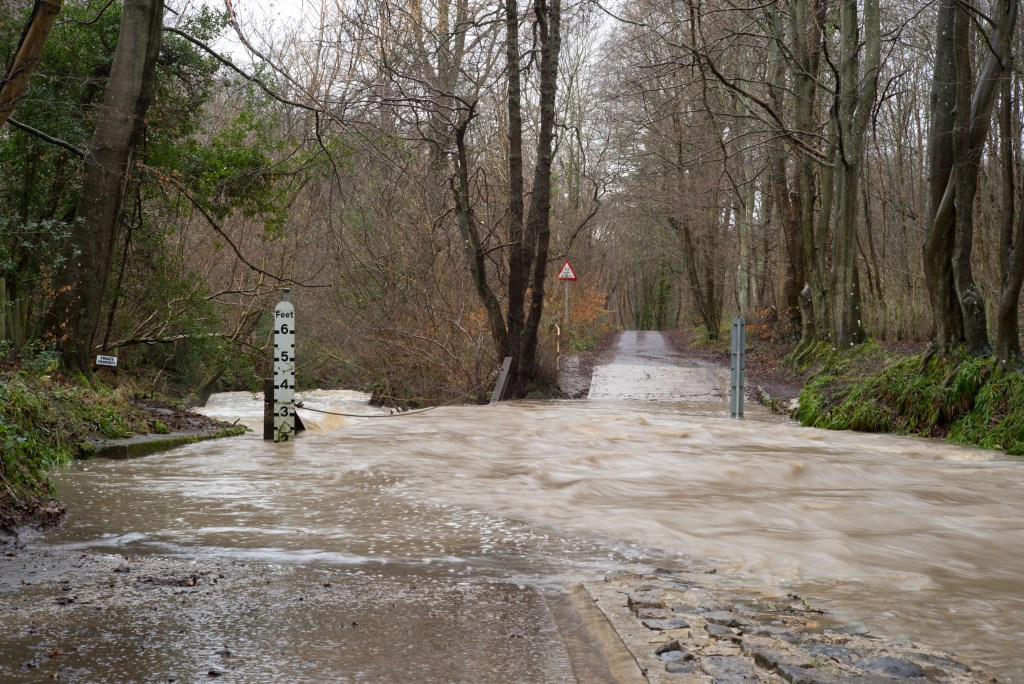
Note there are only a couple of inches of water in the ford. Compared with today, less than 24 hours later, almost two feet deep on the upstream side:

Exercise 1.5: More people and a car

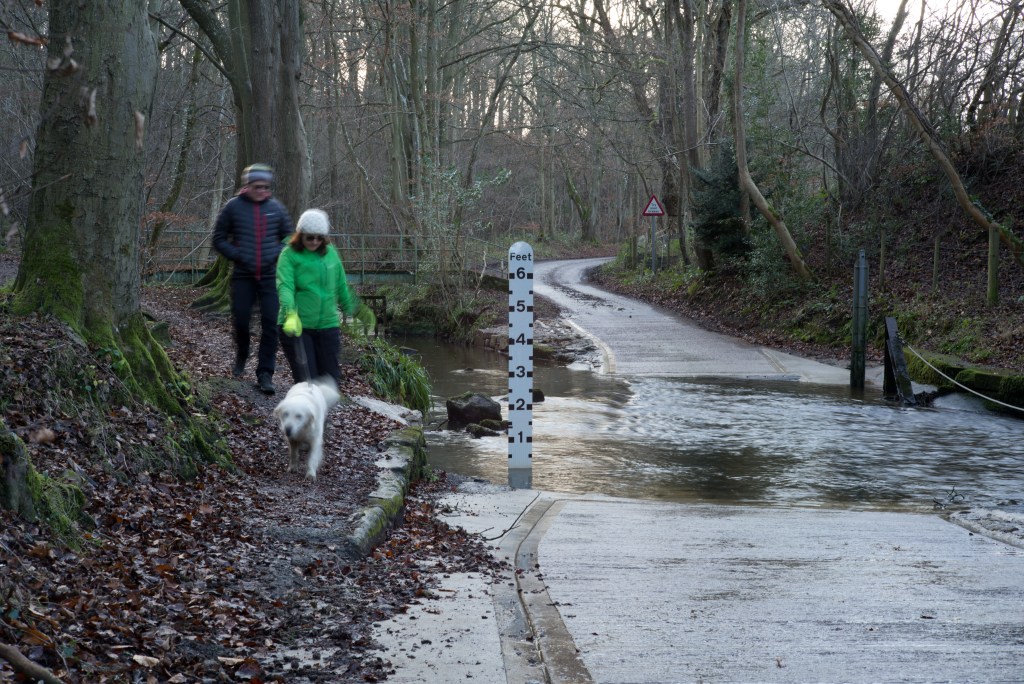
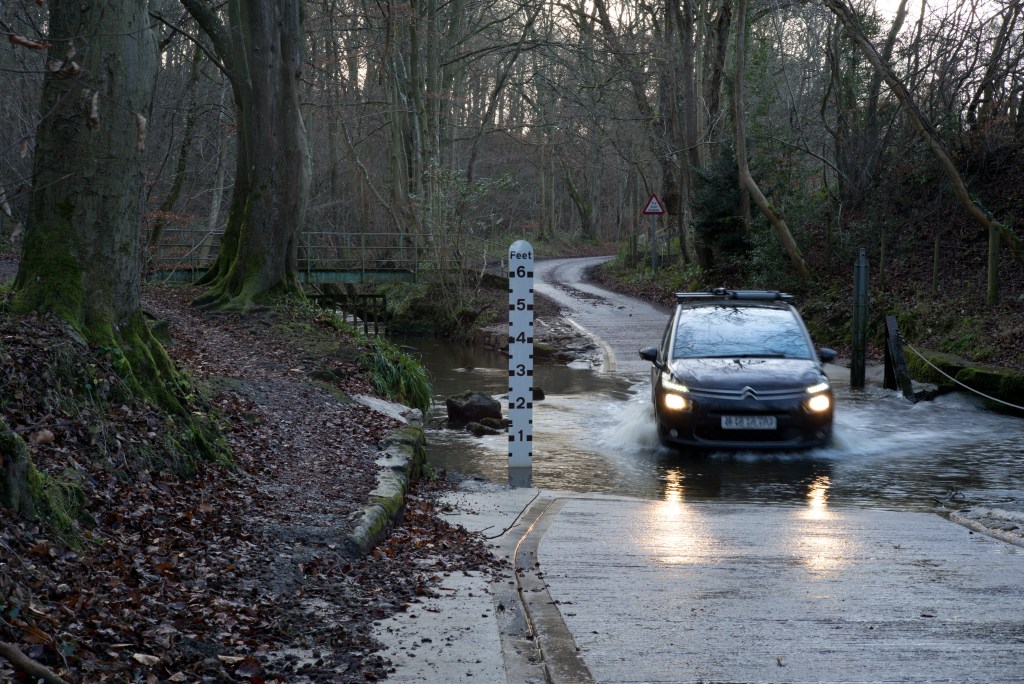
Following my last brief post on this project, and my tutor’s comments about the possibility of including people and cars, as luck would have it the ford today turned out to be quite busy. While I was there a couple came through with their dog, whom I caught with less blur this time as the light was better (it was not raining today) so my shutter speed was a bit faster. There were three cars that came through quite close to each other. One came through while I was setting up, another while I was moving from one side of the ford to the other, but one dropped, as it were, right into my lap.

So here is a little more variety: