I had a long discussion with my tutor the other day about Assignment 5 (which, happily, he liked) and various other issues (I will deal with the feedback on this session anon) but for now one particular thing stands out for me. Something that I have not done with this latest project is juxtapose the two sets of images that I have produced side-by-side, for direct comparison. My tutor though has done just that and he has made an interesting observation as a result, how two views of the same scene, although taken from almost the same position, can be very different when taken on different cameras.
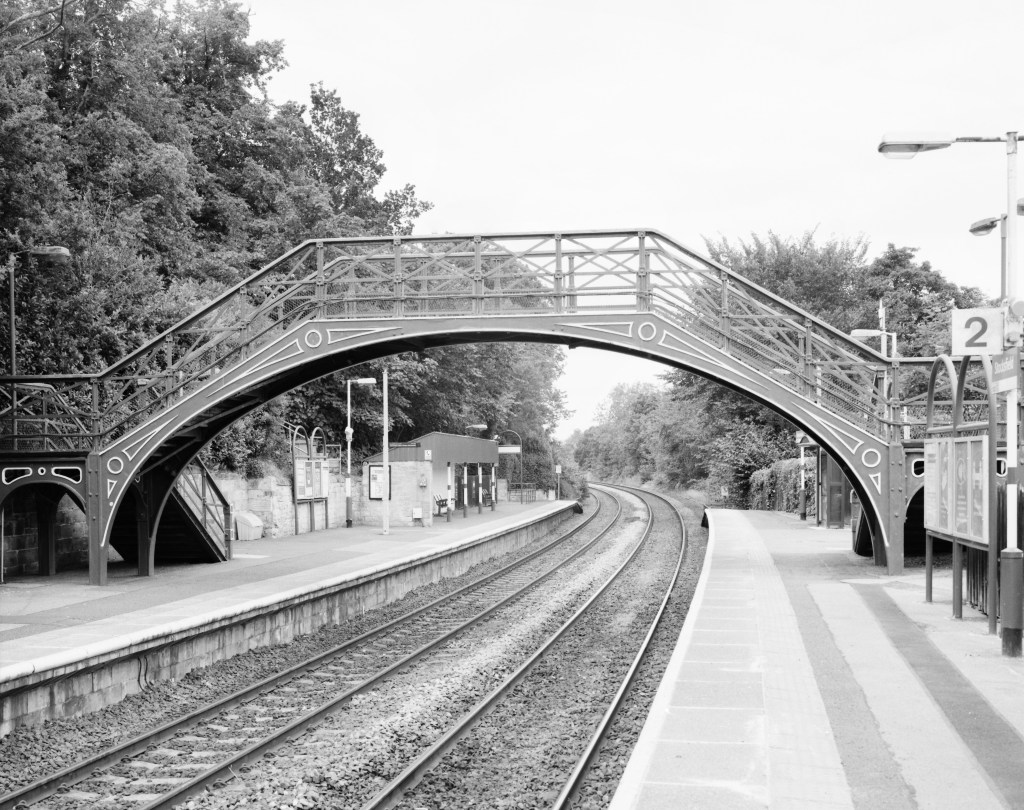
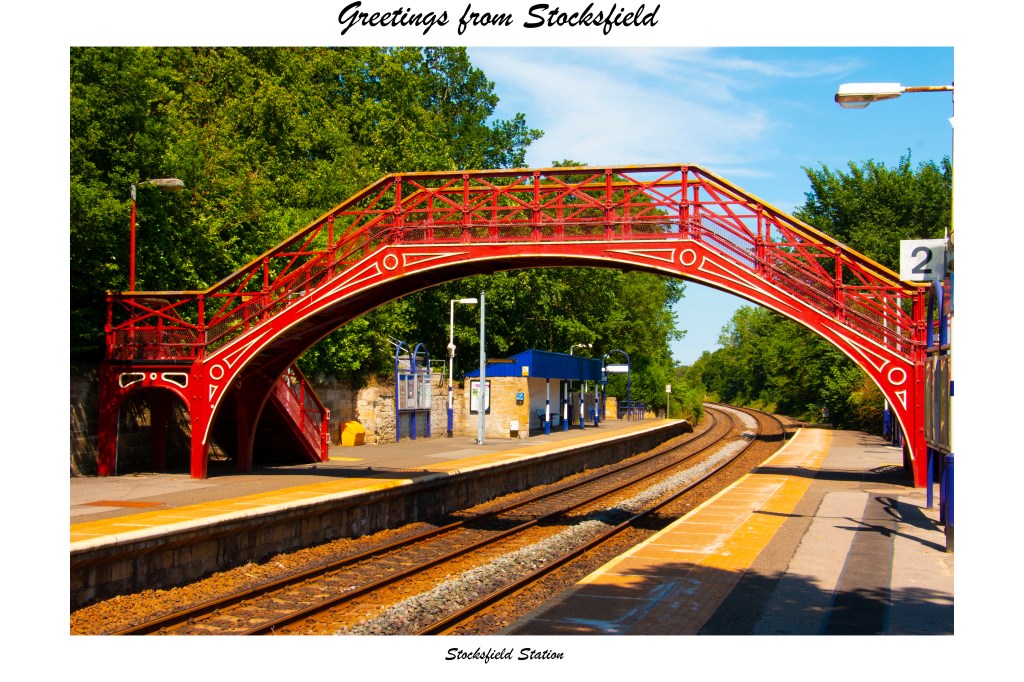
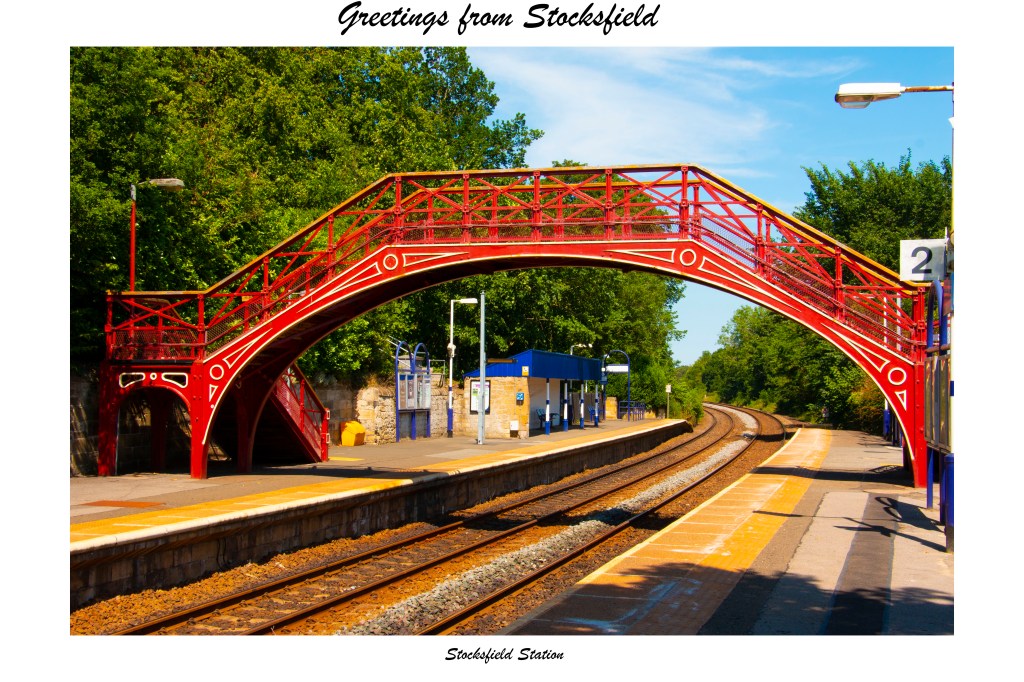
I have been aware throughout this project of the different characteristics of the different cameras that I have used and their different lenses: a digital Leica, full frame sensor, with a 50mm lens; a digital Canon, cropped sensor, with a 18 – 135mm zoom; and the 4×5 film camera with a 150mm lens (roughly equivalent to a 50mm lens on a 35mm camera. What I had not quite appreciated until my tutor pointed it out is how certain of the views I shot look significantly different from one camera to the other. This is particularly evident on the images of the train station. It does not really show up on most of the others as they are quite deadpan with a flat focal plane. The views of the station though have more depth and the eye is drawn into the picture, and into the distance, by the train tracks. Here are the pictures:
A couple of things strike me. One is how the bridge looks longer in the postcard, which was taken with the Leica and apart from the colour balance has not otherwise been adjusted in any way in Photoshop. The other is how much straighter the tracks appear in the large format camera version. Both were taken in almost exactly the same position. I had expected some differences as a result of the very different aperture settings and the resulting differences in depth of field: the Leica set itself to f/6.8; the film camera lens was set at f/22. It is often apparent in the work of Ansel Adams how the depth of field can have the effect of flattening out the image and a sense of depth starts to disappear as both near and far objects are in clear focus, which sometimes can seem almost hallucinatory. (All the more so when he went all the way to f/64. My 150mm large format lens stops down that far but I have not really had the courage to push it to that limit yet as it requires such long exposure times.) There is an element of that at work here but what I had not expected was how it might affect the apparent geometry of elements in the composition. Interesting, and something that I need to be aware of in future, and think about, before choosing which camera to use for a given project.
That consideration is I think the most important thing that comes out of this comparison. It is said (still, and all too often, and I profoundly disagree) that the camera does not lie. What this exercise demonstrates for me is that even if cameras do not lie, they do not necessarily tell “the” truth. Obvious really bit nevertheless still worth reflecting upon is that they are just means of seeing and recoding an image of a view, mechanical and technological analogues of human eyes. Different cameras, with different lenses and technical specifications and characteristics are going to capture images in different ways, just as the image that I perceive with my eyes and brain is going to be different from what someone else perceives when looking at the same object. There is no “truth” or “reality” in what we see, rather a physiological and neurological version of objective “reality”. As my Buddhist principles would have it though, reality is itself an illusion. So once again I am drawn back to idea that photography is fundamentally unreliable as an objective medium.
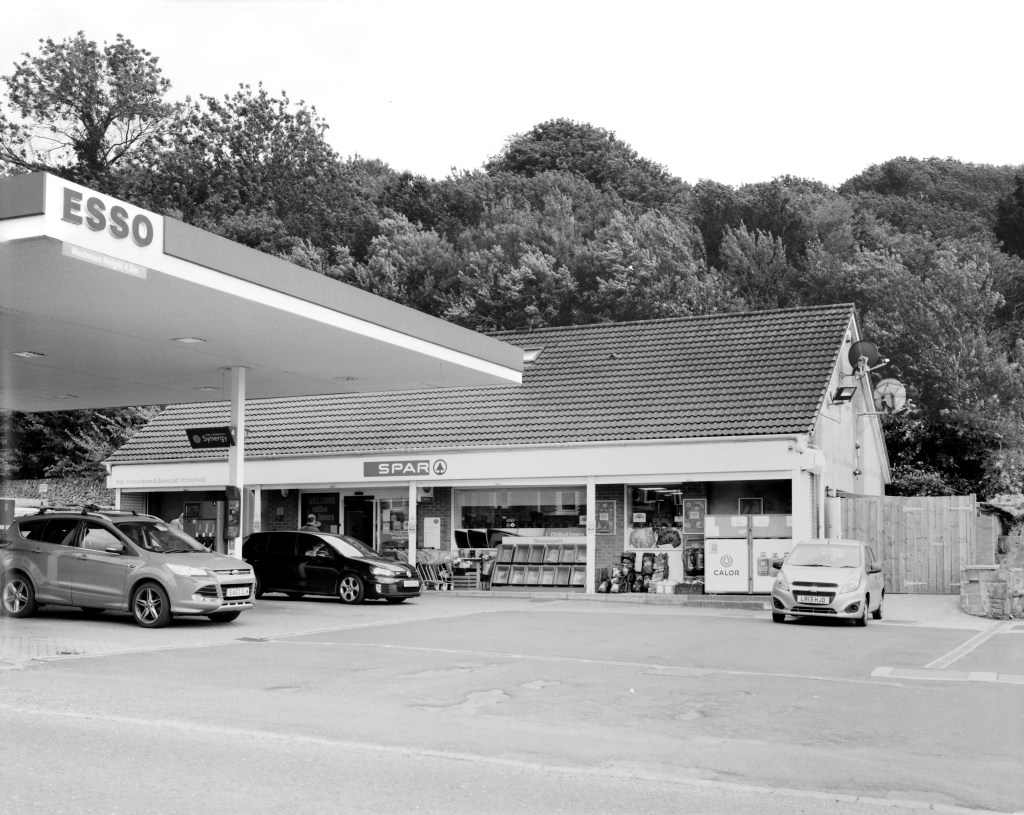
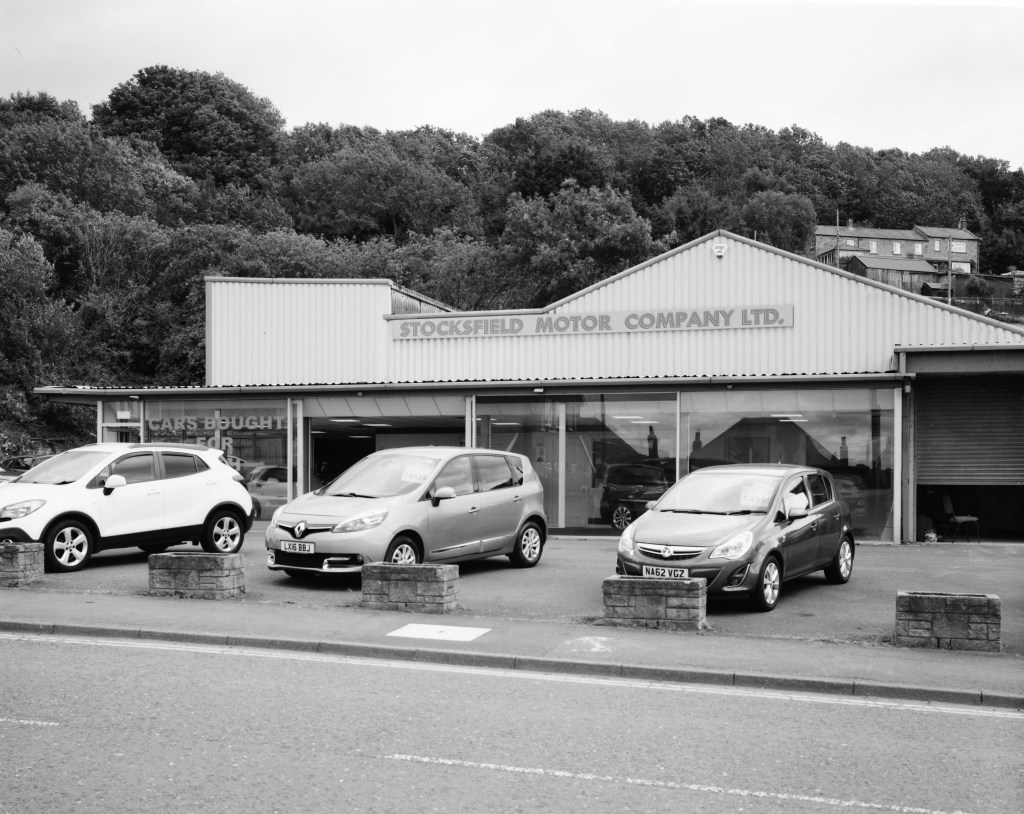
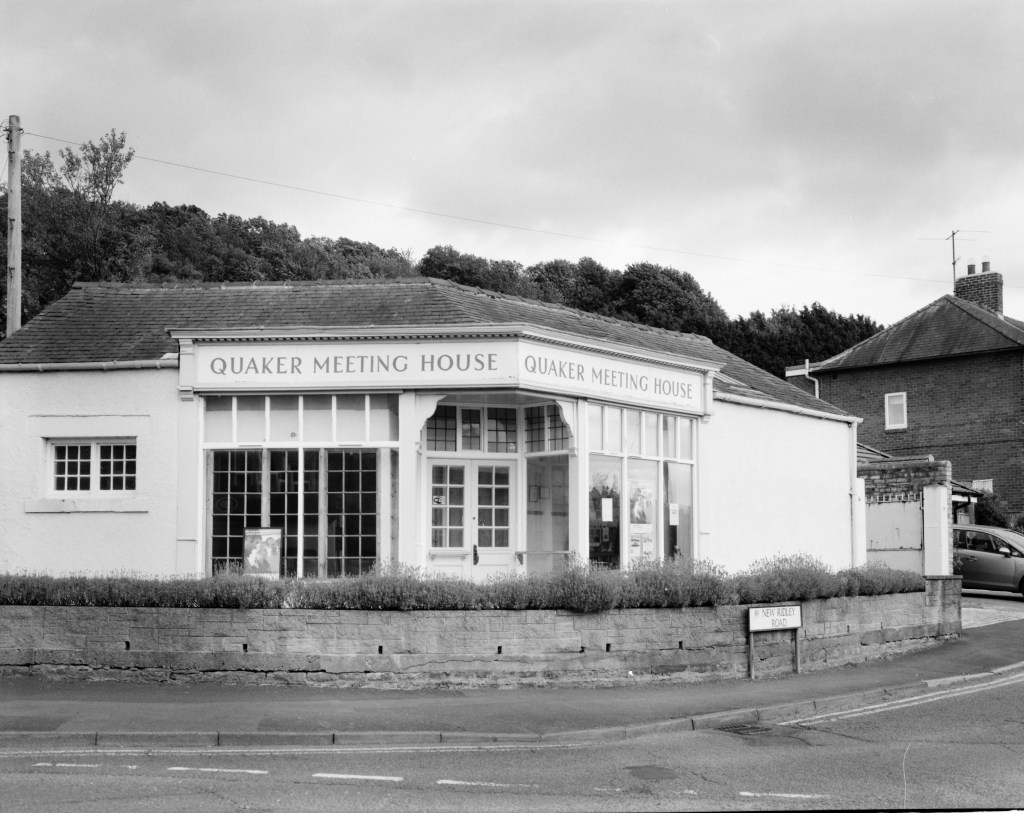
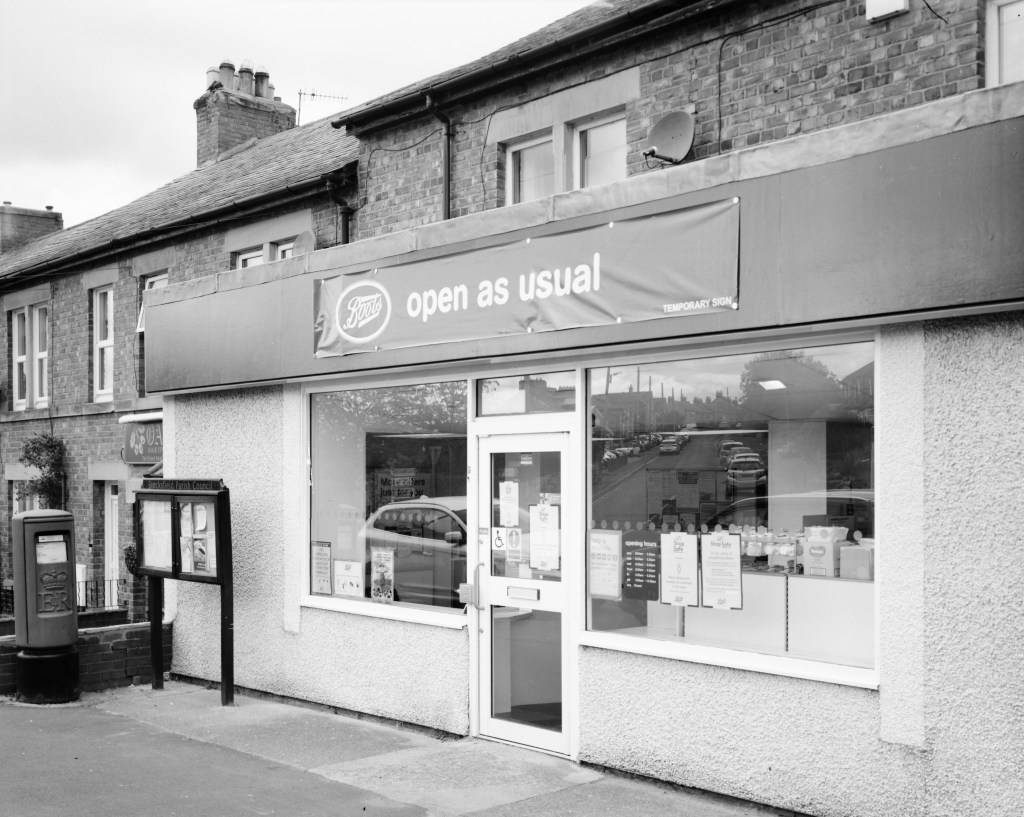
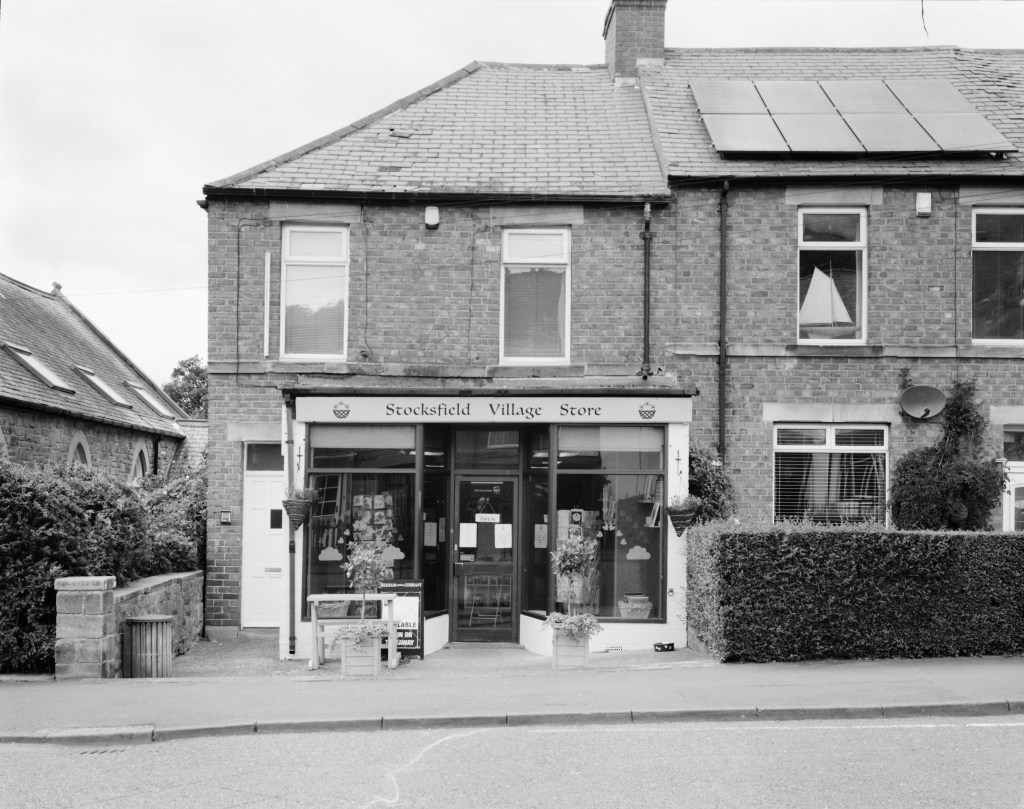
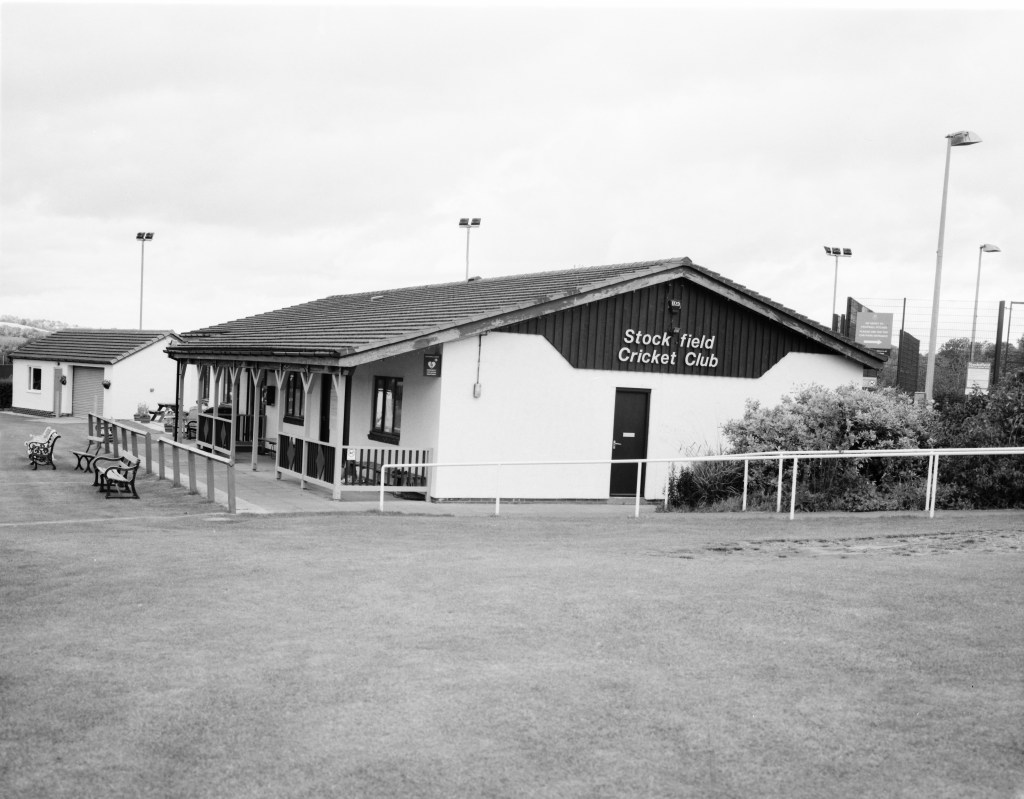
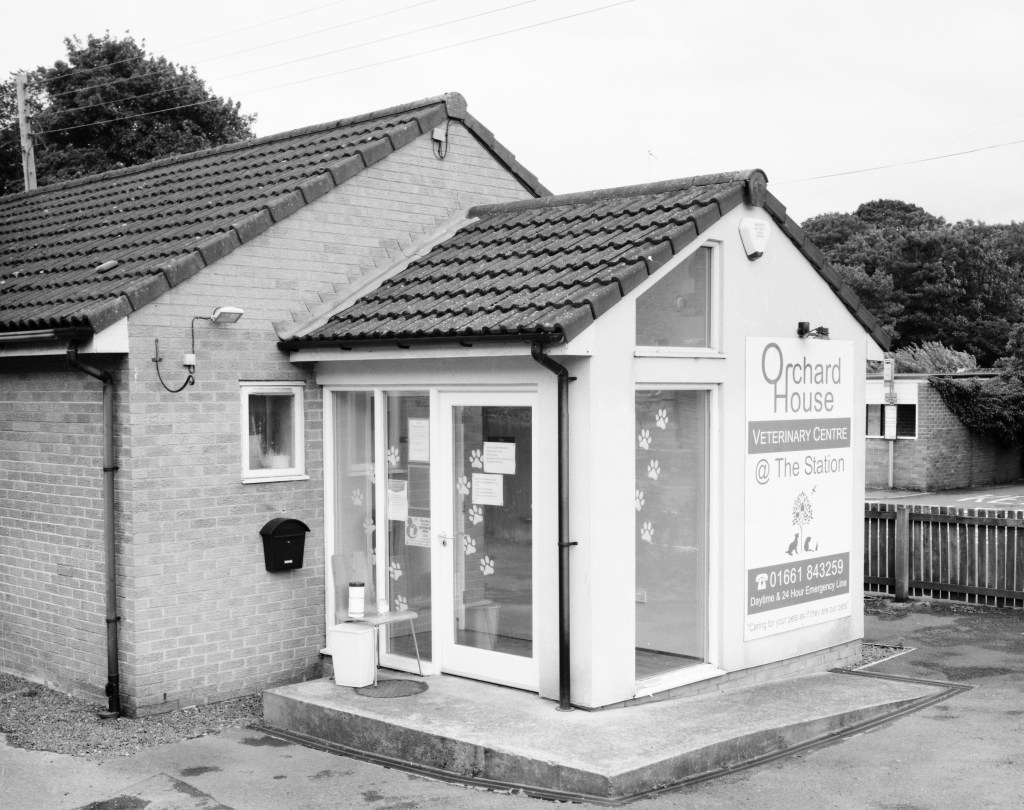
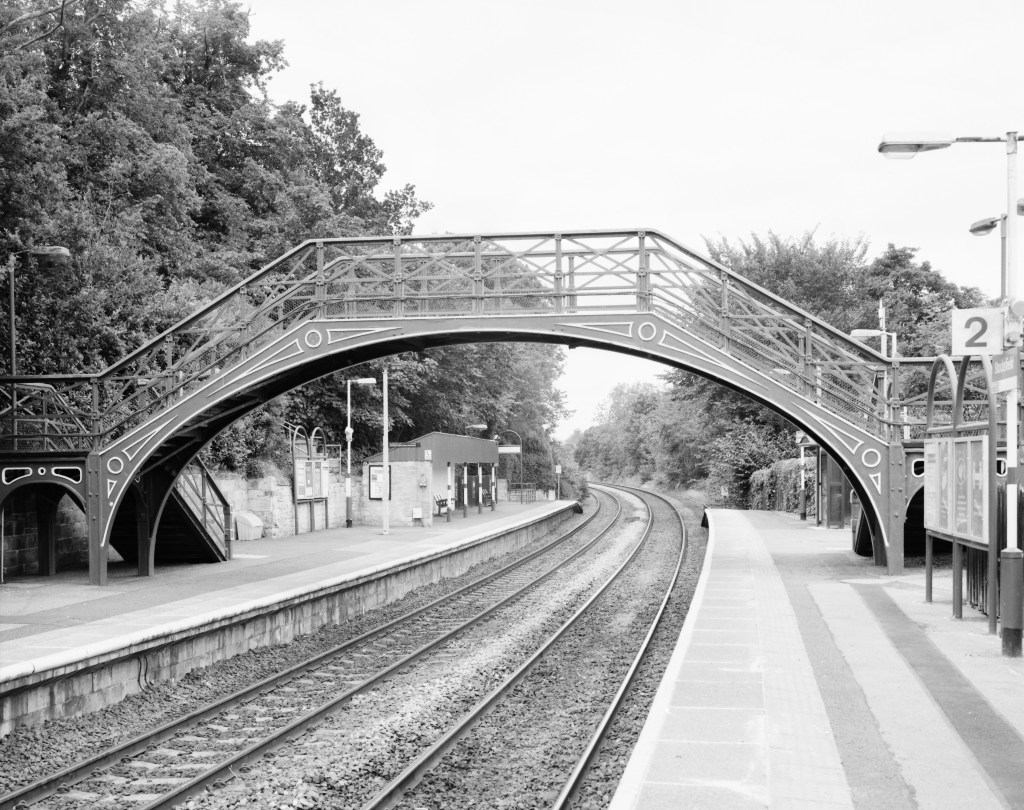
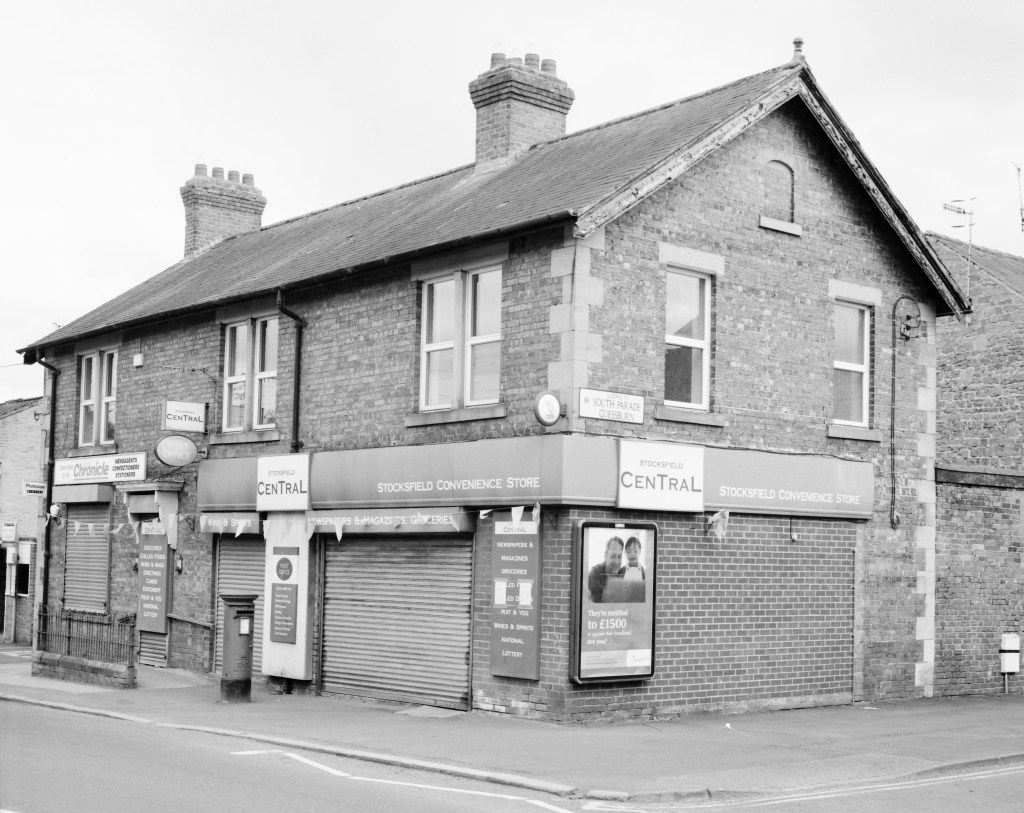
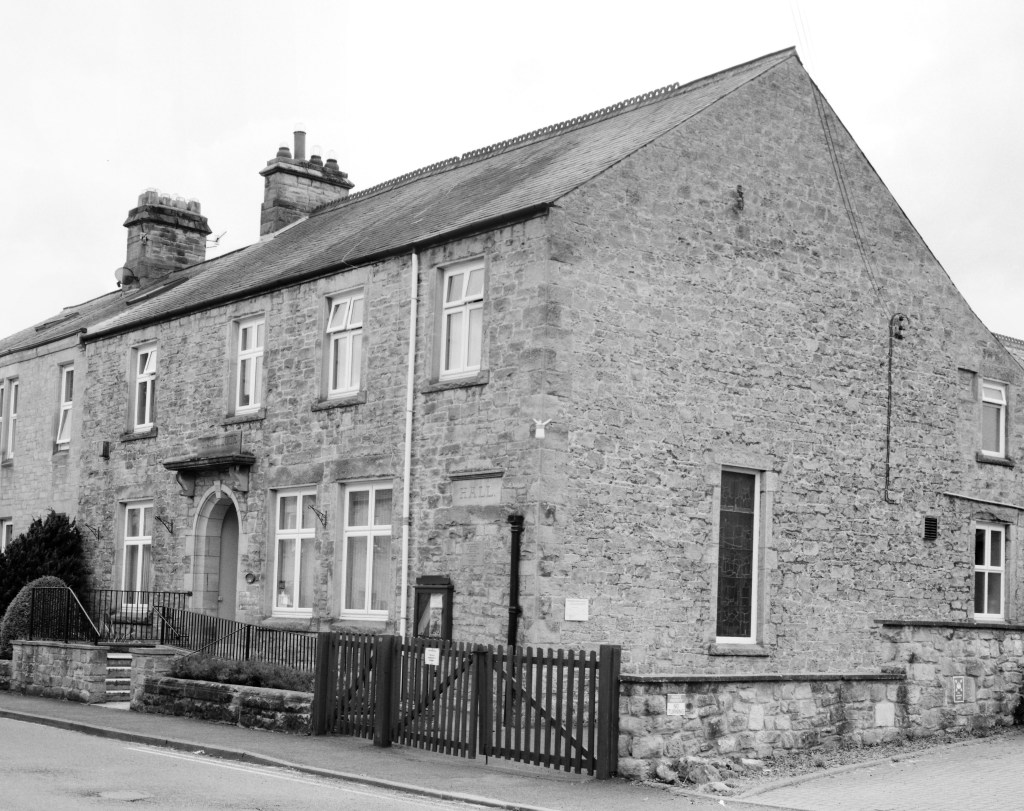
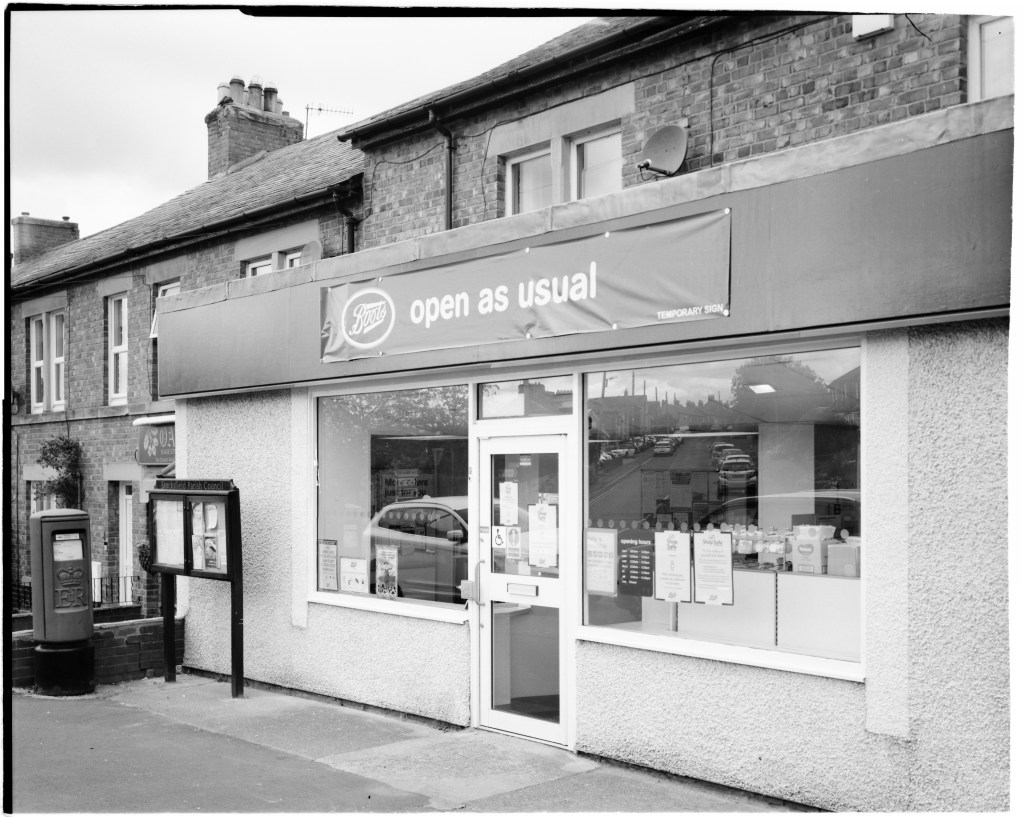
At last this project is now complete, after a total of eight separate shoots, and a number of practical and technical problems encountered along the way as I have chronicled in recent posts. For the film element, I reverted to my original 150mm lens on the 4×5 large format camera and the results are now something that I am happy with. Despite some of my earlier speculations though I have decided not to crop these images to remove “extraneous” background, merely to tidy up the uneven edges produced by the original negatives. I have made this choice after seeing the scanned negatives as I feel that the wider fields of view actually help to create a little more context for my chosen sites, fitting them more clearly into the wider environment of the village. Also, from a purely practical point of view, I do not feel that the wider angle provided by this shorter lens has actually made as much difference as I expected.
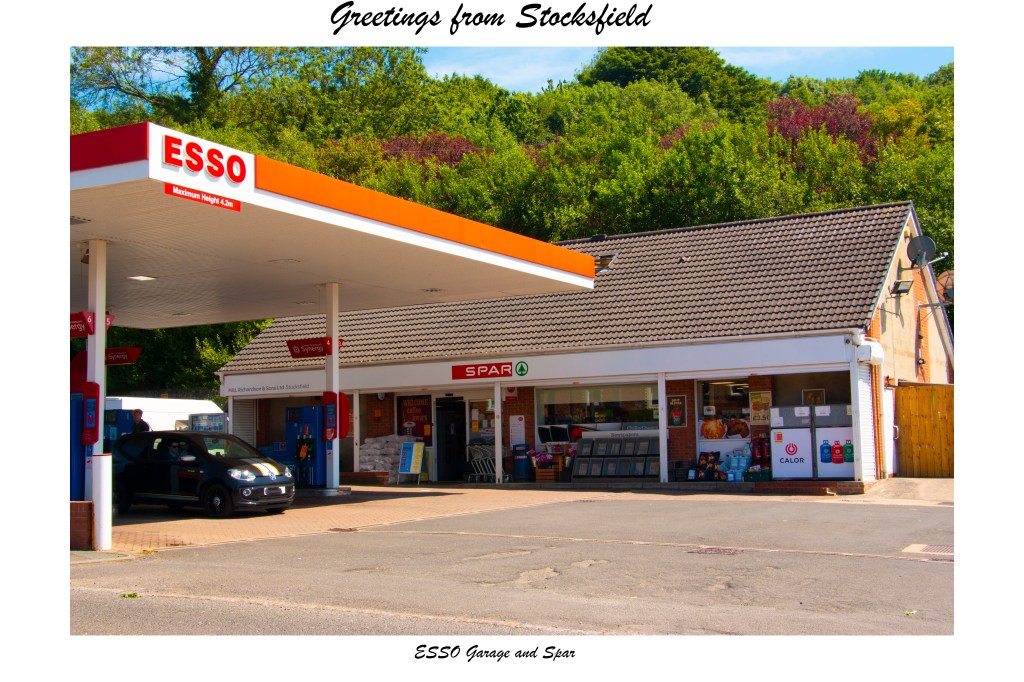
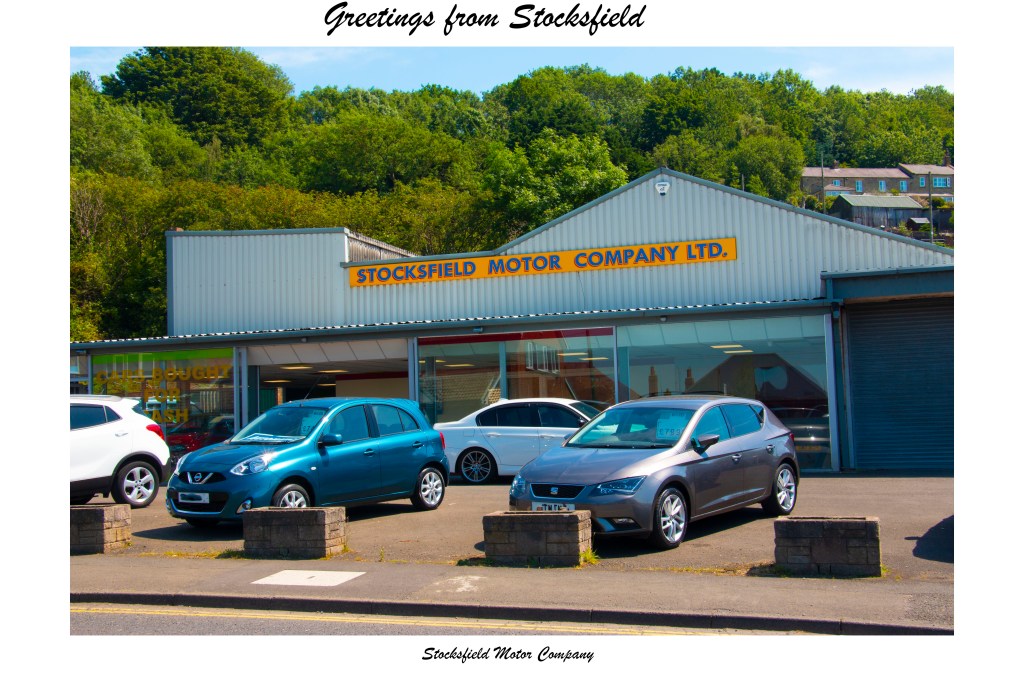
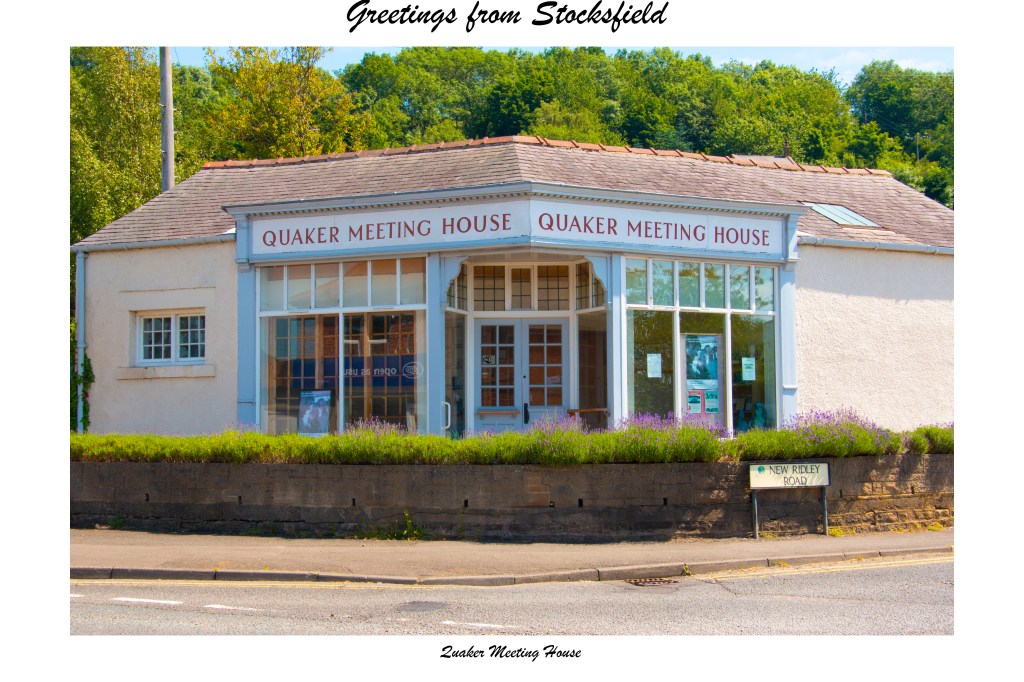
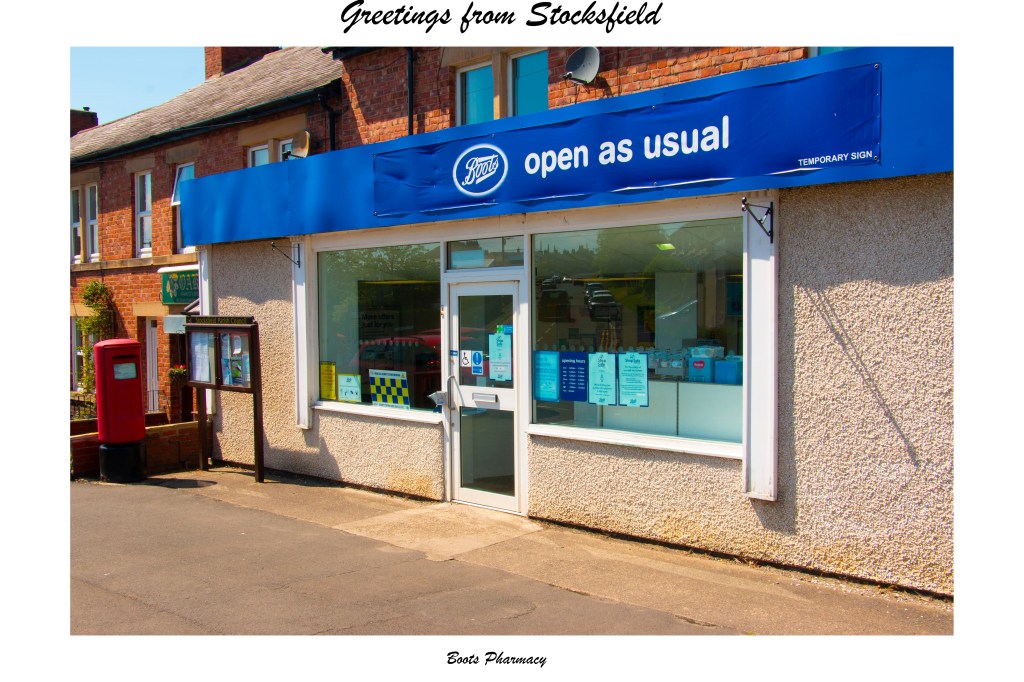
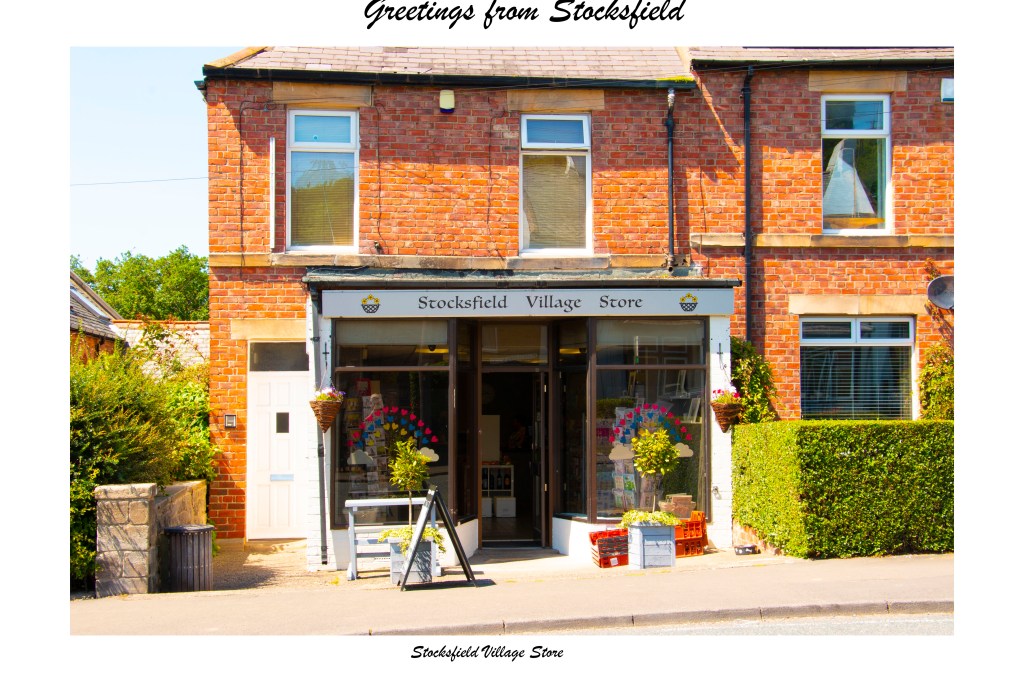
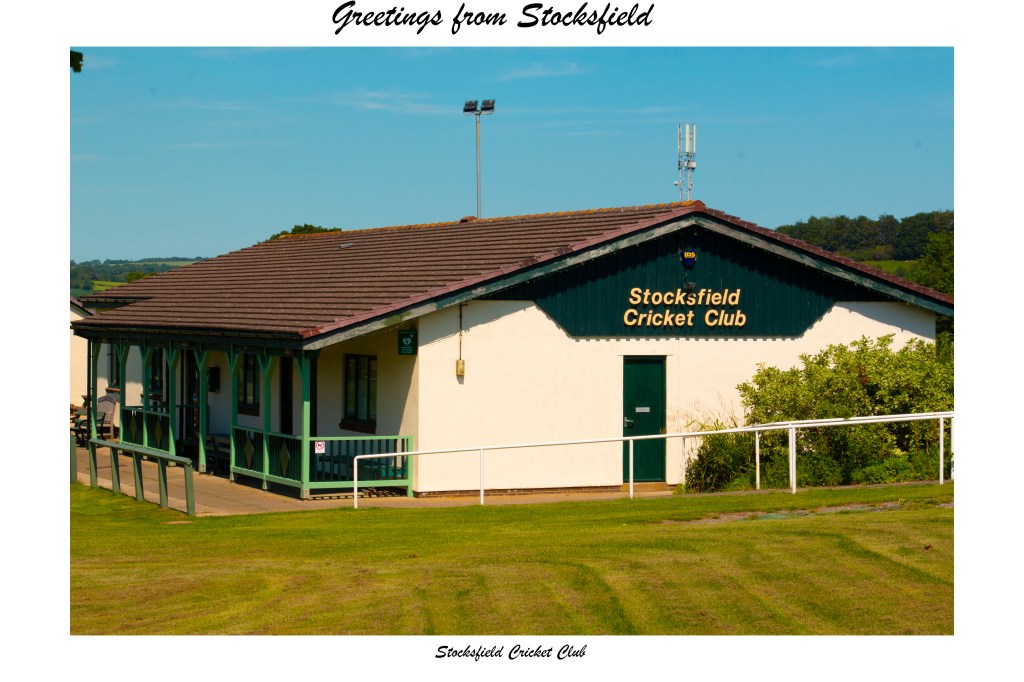
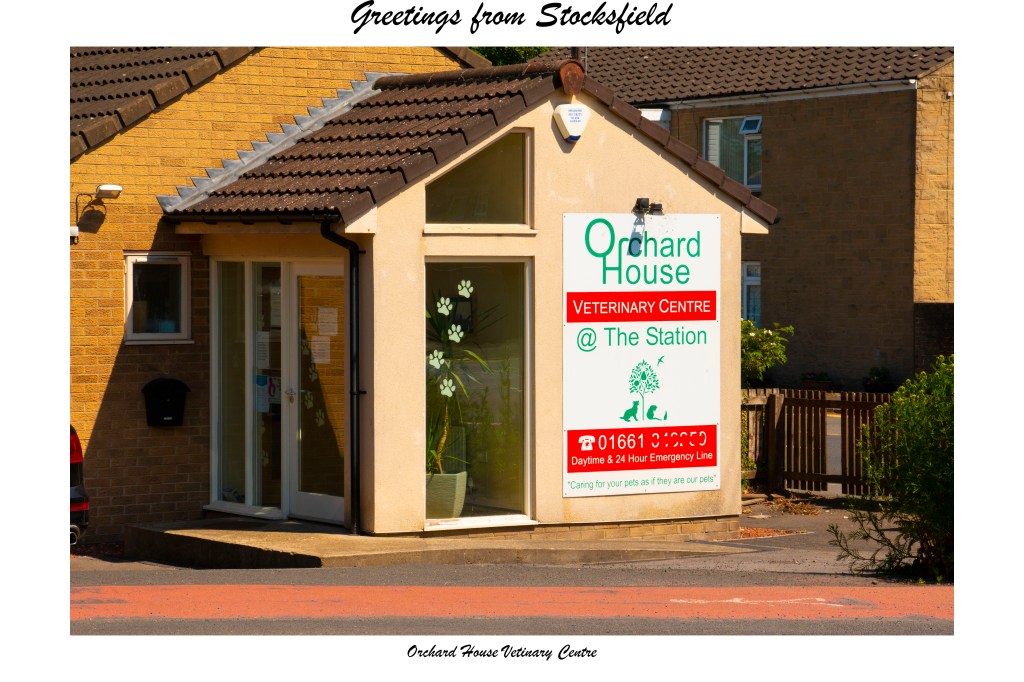
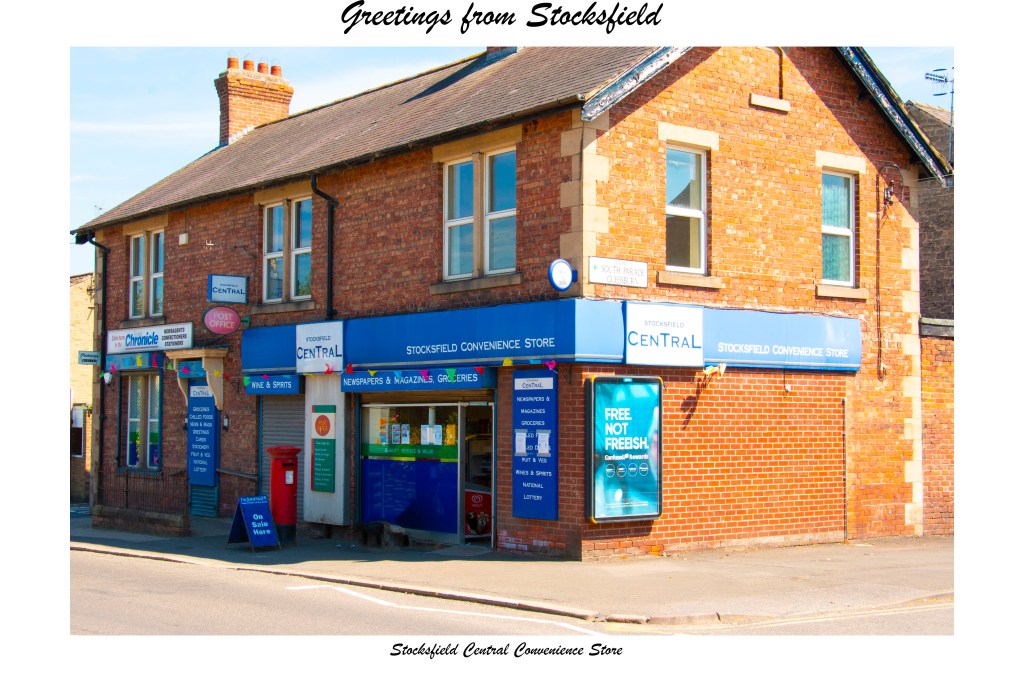
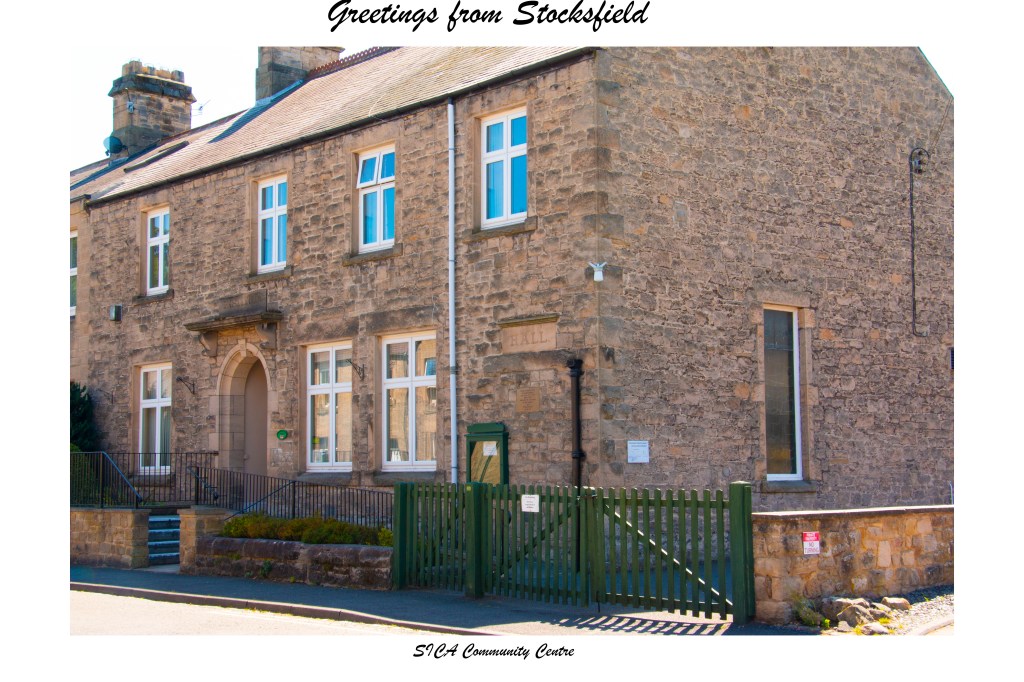
So far as the postcard set is concerned, having reviewed them again I have made only a few very slight adjustments. Otherwise they remain very much as they appeared in my earlier post on them. Here are both sets:
Original Proposal
I made my original proposal for this project in Exercise 4.6 – https://markrobinsonocalandscape.photo.blog/2020/05/03/exercise-4-6-proposal-for-the-self-directed-project/ – and the basic idea has not really changed. I would though say that the seriousness of the approaches has increased and that the results are a little less ironic that I had originally envisioned. The key point that has developed is the importance of these particular sites for the identity of the village as a whole. Without them the village would be little more than a dormitory. Their presence turns the space, the wider physical environment of the village, into a particular place, somewhere that is significant for the people that live here and where they can carry out the ostensibly mundane but nevertheless very significant tasks and activities of everyday life. This importance has become increasingly apparent to me in the light of the restrictions on “normal” life imposed as a result of Covid-19.
There is still a sense of irony – would people really want to visit the village and send postcards home? – but I feel that irony serves to emphasise the underlying importance to us as residents of these places. We need them and so they are worthy of being recognised as significant, worthy of being visited and memorialised in a postcard, and treated with the dignity of a more “fine-art” photograph.
Another important element of the work that comes out of this latter point, is a greater sense of nostalgia. The over-vibrant postcards are a throwback to cards bought on childhood trips (real or imaged memories). The film set look back to the work of the likes of Anselm Adams. Both are in a sense touching on a nostalgia, again real or imagined, for past village life, a sense of a rural ideal. All that is missing here to make it perfect is a village green (I suppose the cricket club comes the closest to serving such a purpose).
Otherwise, and still quite importantly, there is a sense in which by choosing such “ordinary” views, I am challenging, or at least questioning, received notions of “landscape” photography and what are worthy subjects of attention.
The other significant development, since I put forward that first proposal, is that I now have a good quality photo-printer and so can now do all my own printing (all the way up to A3 size!) and do not have to rely on external resources. I can also still print up to 8×10 from the negatives in my darkroom.
“My current work is concerned with the role landscape can play as a place that contains and records memory. I am also interested in how human relationships with the landscape affect that memorial function and can give places particular meanings and significance beyond being merely a geographical location. This project deals particularly with this latter aspect of landscape and explores how ostensibly mundane places can carry significance in themselves and how they contribute to the transformation of space into a place. The choice of such ordinary locations itself challenges received notions of the subject matter that is deemed to be suitable for landscape photography. Questions of memory are also addressed by evoking a sense of nostalgia for an imagined ideal of the rural village, both through the irony of the holiday postcard (which in turn conjures memories of childhood holidays) and the “fine-art” approach of the large format black and white photographs.”
Further Learning
Following on from earlier work on this module, the decision to involve black and white film photography has offered a practical opportunity to revisit and explore further the Zone System. What was striking when shooting these images was the range of different exposure readings that were obtained for almost every shot, depending on where in each scene a point of focus was chosen. In the more extreme cases, for an aperture of f/22 (I wanted good depth of field and to capture as much fine detail as possible but without having to go for really long exposures), shutter speeds ranged from 1/20s to 1/100. By adopting the system (even as imperfectly as I understand it!) I was able to choose points that would serve as Zone V, and set the shutter speed accordingly, without either blowing out the highlighted areas completely, or losing too much detail in the darker areas. I am sure I could tweak and refine this approach further but for now I am quite happy with the tonal ranges that I have achieved – not least as they have not been adjusted at all in Photoshop.
Evaluation
As Assessment is moving away from the old assessment criteria to learning outcomes, for this assignment I am not going to work through the old criteria. Nor am I, in any formal or structured way, going to look at the assignment from the new point of view, if only because I am only just starting to get my head around the new assessment process. I do though have some general observations.
First and foremost, I am quite happy with the way this has worked out. This was the first time that I have planned, developed, and executed a substantial, sustained project for myself, rather than just following a preassigned brief. The technical difficulties encountered with the new large format lens were unexpected and caused not a little emotional angst and upset my schedule. Nevertheless, I am happy that I was able to overcome them. This in itself was an important learning experience for me. Until now I have really only dabbled with the large format camera, more than anything just to find out its capabilities and limitations, so this was the first time I have used it to make a substantial body of work. I am also pleased that I feel that I have been able to capture in the final sets of images (and I remain happy with the decision to follow two distinctly different approaches) the basic ideas that underlay my original proposal.
Fortunately, the concerns that I had from the point of view of Covid-19 did not really materialise. Public attention and sensitivity were pretty much as I expected and again were not difficult to deal with. What my experiences this time have reinforced for me is that a little engagement is what is needed: once people know what is going on their concerns seem largely to evaporate.
Would I do anything differently if I was to revisit this project? Not fundamentally, I think, apart from possibly looking at including a couple more sites. My only hesitation about this is that there is a consistency among the images I have made in that they are all along the length of the main road that runs through the village – imaginatively named Main Road! Some of the other possible sites are away from that road, and so do not form an immediate part of the physical experience of travelling through the village. There are a couple more on the same road, that I did consider from the outset, but they are invariably masked by parked cars, so tha you see more car than site. Approaching the project again with a view to expanding it would therefore necessarily involve some serious rethinking of the underlying concept.
This is not a book about landscape photography as such but I nevertheless mention it here because it relates to one of the issues that was thrown up by the work that I did for the critical review in Assignment 4: to what extent does an artist’s outsider status, specifically so far as a particular place is concerned, affect or inform their photographs of that place and offer a new perspective on it. This book, which is effectively the catalogue of a show at the Israel Museum in Jerusalem in 2013 looks as if it might go some way towards answering that question, or at least offering a further perspective on it.
I had not come across this show or book before but within the last week or so my wife listened to an on-line talk given by the author and tipped me off. Nor have I yet had time to delve into it beyond a quick first glance to see who is in it. The answer to that question is just about everyone who was a significant figure in photography, particularly during the first half of the last century. Too many to mention in full, but Robert Frank and William Klein, key figures in my essay, are there in some numbers.
After the work that I did, I am firmly of the view that inevitably one’s relationship to a particular place will have an effect on how one sees and portrays it. Where that relationship is as an “outsider” then the possibilities arise of disclosing new insights, as Frank and Klein did.
At the moment I do not really have to time to indulge in a further detailed investigation of this subject as I am presently more preoccupied with this particular course: getting Assignment 5 finished (it is very nearly there); finalising Assignment 6; and then getting ready for Assessment (which looks as if it is going to be quite a big job since the processes changed). I will though nevertheless be thinking more about this issue once I have the time, not least because it occurs to me that this might be something that will be touched on in my next module in so far as I am thinking of doing Self and Other.
Perez, N.N, (2013). Displaced visions. Jerusalem: The Israel Museum
I have at last worked out what the problem with the new lens that has dogged this project has been caused by. Aghh!
Having checked (I thought) everything, I could only surmise that the problem lay with the new 210mm lens itself. The good people who supplied the lens, though, have conducted a number of tests on it and confirmed that it is in perfect working order. I have otherwise checked the camera and am happy with it. I am also confident in my ability to take reliable light meter readings and expose the film properly: why should my efforts work for my 150mm lens but not the 210mm? What though is the one thing I did not check thoroughly? The lens board!
This is the one other new piece of kit that I needed for the new lens but to which I did not pay much attention. For anyone unfamiliar with large format cameras, lenses are attached to the front frame by a square plate, which is, by and large, of a standard size. In the centre is a hole, through which the front and back elements of the lens and shutter, are screwed together. The diameter of the holes in the centres of these plates are also standard sizes (known as Copal 0 to 3). Each lens will conform to one of the sizes within this range, so a particular Copal lens board is needed for any given lens. My Rodenstock 150mm is Copal 0, the smallest size. The Schneider 210mm is Copal 1, the next size up. I therefore needed a new board for this new lens. The board I bought for the 150mm lens is metal, and absolutely light-proof. The new board is acrylic. It looks opaque. When I checked the interior of the camera for possible light leaks nothing showed. The people who supplied, and have confirmed the quality of my 210mm lens, wondered whether the problem might be a light-bleed on a double-dark slide. This struck me as inherently unlikely as I have not had a similar problem with anything shot on the smaller lens. Nevertheless, I did start to wonder yesterday whether there might be an issue with the new lens board. In particular, when I refitted it to the camera I noticed it was a little loose and rattled. The design of the front frame is though such that this alone is not an issue and does not let any extraneous light in, as I confirmed with judicious application of torchlight. Having nothing else left to do, almost out of idle curiosity, I turned the torch directly onto the lens board itself. And there was the answer, the light was shining straight through. Problem identified!
A phone call to the makers of my camera confirmed that they have only just become aware of the problem and a new board, with a suitably light-proof coating, is on its way to me, together with a fresh box of film to make up for all the frames wasted. Which is what I regard as good service.
I am not going to reshoot this project again (yet again – I have just had to go out to one of my sites for the umpteenth time to photograph it again as I unfortunately discovered that the last frame I took there a few days ago has been affected by a bit of light-bleed; I suspect the double-dark slide got nudged very slightly out of position, probably when I putting the slide into the changing bag before transferring the film into my developing tank, just enough to over-expose one side of the negative and just enough to be noticeable, and render it unusable). I am happy with what I have achieved with the old lens and cannot really afford yet more time on this assignment. I do though now have the excuse, and impetus, to find something else to do, probably not connected with this course, to experiment and see just what this new lens can do. I have high hopes!
And what is to be learned from this episode? One thing is of course the reminder that shooting film is a very different prospect from shooting digitally. Digital cameras do much, if not necessarily everything for you (compare my Canon DSLR and my Leica, which are a bit like chalk and cheese), and “light hygiene” is not really an issue. With film on the other hand, you have to go right back to basics for just about everything and light hygiene is absolutely paramount. Shooting film requires so much more care and attention, all the more so if you develop your own negatives and print from them. For some time I have been of the view that far from being “Luddite”, using film is a useful way of learning, relearning, reinforcing, the basics of photography that are in danger of being lost in an otherwise monolithically digital world where the camera does so much of the legwork for you (though even the very best cameras will not make you a good photographer if you do not know how to use what is, after all, just another tool). I would not necessarily advocate making it compulsory as part of the course to spend some time using film (as I believe some schools have in the past) but I certainly agree with the OCA recommendation that if at all possible students should get some experience of large and medium format cameras (I am conscious that I still need to spend more time with my old Hasselblad). Despite the recent frustrations, hopefully now resolved, I certainly feel that it has been a worthwhile experience getting to grips, even if still only at a fairly elementary level, with film photography and that this will inform future work with digital cameras.
The tribulations continue! Having sorted out the issues with developing the film I have now discovered another problem which is causing me to rethink (again) my approach to this assignment – the new lens.
I have only had the lens that I have chosen for this job, the Schneider 210mm, for about a month and this is the only project that I have used it on so far. Though the lens looks to be in very good condition, with nice clean, clear optics, it is simply not producing good pictures. Image quality is poor, the picture is very grainy and foggy, completely unusable. In contrast, my older Rodenstock 150mm lens, which I used for one picture on the shoot last week (exactly the same film and developed with those taken with the 210mm) has worked perfectly producing a photo with good grain and detail, nice contrast.
In light of this I am going to have to go back and reshoot (for the third time!) using just the 150mm. This is inevitably going to mean rethinking camera angles and positions, and I might have to crop pout some extraneous background in Photoshop, but needs must. Otherwise I would simply have to abandon this part of the project and do something else. Already, as an exercise if nothing else, I have created a set of black and white images in 4×5 format from some of my original colour digital images, which if nothing else offer me something of a fall-back position, to offer an indication of what the more artistically driven and influenced set would look like. I would though rather not have to use them as it feels a bit like cheating so I will persevere with the film. At least I am used to and comfortable with the 150mm lens, and have confidence in it. I just have to find yet more time to get a further shoot done, and put up with still more attention (some unwelcome) that a big camera on a tripod, and the spectacle of me covered by a heavy, dark focusing cloth (under which it can get amazingly hot!) inevitably attracts.
The first half of this assignment, the postcard set, having worked out quite well (the next step is to print them) I have been turning my attention to the other half, the black and white, large format film set. After having been out on a first shoot yesterday I have been reminded of the joys, and frustrations, of shooting large format film and developing.
The big difference between shooting digitally and on film is of course that in the latter case you do not know what you have got, and whether the images are any good, until the film has been developed. It was of course common for some photographers to use Polaroid film for a first shot to make sure everything is ok before committing to the sheet film. Unfortunately, Polaroid film, when you can still find it, is quite expensive, as are the film backs/holders for large format cameras. I did once look seriously at tracking down a Polaroid back that would fit my 4×5 but could not find anything reliable at a sensible price, let alone affordable film. In the end I decided that even at the risk of wasted sheets (thank heaven I am only shooting black and white and not colour film, which is considerably more expensive) it would be cheaper in the long run to forget about Polaroids. Over the last couple of years that I have been using this camera I have established a rigid routine for the various steps that are needed before any shot is actually taken, which takes a lot of the hazard and chance out of the process, but nevertheless I always have a slight sense of trepidation before releasing the shutter.
It also takes a lot longer to set up a shot, because of all the steps that need to be gone through. No such thing as automatic mode, auto-focus, or in-camera light metering on this sort of camera! Working with one of my digital cameras I have been able to capture the full set of ten images in not much more than an hour. Yesterday it took an hour and a half to get just four shots! (Admittedly some time was lost while I had to wait for people to get out of the way, but even so.) Factoring the additional time for developing the negatives and making a set of test prints in the darkroom, it is going to take me considerably longer to complete this part of the assignment.
It should of course have been obvious from the outset but I had unaccountably forgotten that what I have seen and photographed through my digital cameras is not what I can see through the 4×5: the format is obviously different, and so is the focal length of my available lens for this camera. Fortunately, as I already knew what I was after from my first recce and shooting the postcard set, I was able to set up fairly quickly. I had already worked out that the new 210mm lens would be better suited to most of the shots (with one particular possible exception) than my usual 150mm. This choice was driven by bearing in mind that for many of the images I have to shoot across a road, so cannot get physically close the subject, and the distance would mean with the shorter lens that I would get too much extraneous background.
Then there is the developing, and this is where the real tribulations have come in! I normally have no problem with developing. All of my black and white work is done using Ilford film and I develop it all using Tetenal Paranol S (the old Agfa Rodinol), a combination that works really well for me: just enough grain, good tonal range, and sharp contrasts. Normally I use a fairly low concentration in the solution and develop slowly (Ilford FP4 125 ISO, which is what I am using, takes a good half hour). It is though possible to speed up the process by increasing the concentration so, as I was a bit pushed for time yesterday, and keen to see the first results before getting out on another shoot (I already had in mind that they might have to act as little more than test shots anyway, not least because it was the first time I had used the new lens), I tried this alternative, which is recommended by Tetenal themselves. Disaster! Despite the more concentrated solution the shorter time has simply not allowed the film to develop properly. To start with I was not sure what had gone wrong: whether there had been a light leak in the camera, or the film backs, or a problem with the new lens (which would be particularly infuriating!). It looked as if each sheet of film had been uniformly exposed, producing an apparently even, fog-like effect. So, I double checked all the physical kit and took a few test shots at home, checking that any variables could be accounted for and identified. I then developed them this morning, going back to my usual, slow process, and, hey presto, no problems. A couple that I took using the 150mm lens for comparison purposes after the 210 are somewhat under-exposed but to keep variables to a minimum I did not readjust the shutter speeds or aperture setting and the light conditions did change slightly, but that is neither here nor there for present purposes.
The lesson is, clearly, to be patient, stick to the process that I am familiar with and that I know works. It takes time to take each shot so take time to develop the negatives. Looking at an enlarged scan of one of yesterday’s failures I can now see that the film did expose properly, there is an image to be seen, but the full tonal range had not yet emerged; the new recommended time was simply too short.
I am now going to have to go back and reshoot these first four sites. The consolation, I guess, is that because of the time I had already spent out and about yesterday, a sudden change in the weather and the onset of rain, and a dog needing his lunchtime walk, I called it a day without shooting the full six that I had originally intended (without carrying a changing bag and developing tank, which will take six sheets at a time, I can only manage six shots as I have only three, double sided film backs for 4×5 – and let us face it I need to lug around more than enough kit as it is with this camera.) The whole process though is also going to take a bit longer than planned as well because with yesterday’s failure and the test shots developed today, I have now run out of developer and fixer, and am low on film, so have had to order some more. I should though be able to get out with the camera again later this week, weather permitting, lessons now duly learned.
At my tutor’s suggestion I have had a look at an old television programme called Return Journey (which dates back to 1981 but is available on YouTube). This focuses on three photographers: Humphrey Spender and the work he did in Bolton (“Worktown”) for Mass Observation, Derek Smith, and Jimmy Forsyth. The question with which I approached this programme was what, if anything, does it have to say about the thesis I proposed for the Assignment 4 essay. The short answer is, I think, not a lot, but nevertheless it raises some interesting points that are relevant.
Mass Observation, and Spender’s work for the scheme, was expressly anthropological in nature (the programme begins with a somewhat tongue in cheek description of the discovery of that exotic race the Northern Working Class was discovered and needed to be investigated and documented which unfortunately does not disguise what comes across as a sometimes fundamentally patronising streak in Mass Observation, worthy though the scheme certainly was) recording how people lived. It was not so concerned with where they lived, with portraying the environment they inhabited, except to the extent that environment influenced the way the people lived. It was not a visual description of Bolton, or any other generic northern working town, in the same way that Klein described New York.
Smith’s work does not take me much further forward. His story was more to do with his return to Newcastle after studying in London, his ceasing to work as a photographer, becoming involved instead with Amber Films and the Side Gallery (some interesting shots of the old interior of the gallery as I remember it in the mid-1980s).
Forsyth of course spent much of his life on Tyneside and all of his work was done there. It is his that is perhaps the most relevant to the question that I was exploring. Rather than include examples of his work here I am instead putting a link below to the Amber archive of his work, which includes some really nice examples of what he did. Does he fit my thesis? I have to say I do not think so. He was in many ways a classic street photographer, taking pictures of the people, places, things, that he saw around the Scotswood Road. I do not feel that he was making a photographic portrait of his adopted city through the medium and subject matter of its people in anything like the way Klein did. If anything, although not formally so, I feel he was again acting in more of an anthropological way, even if he would not necessarily have seen it that way. He simply set out to record the area and its people as the old fabric of this part of the city was gradually, but inexorably, destroyed. Not just the physical environment (hardly anything of the old Scotswood survives) but, more importantly, the communities that lived there who were dispersed or housed in new high-rise blocks (most of which have also since fallen prey to the wrecking ball). Yes of course his work does describe the city through its people to some extent but that does not appear to have been his intention. Perhaps therefore, albeit in a negative way, his work might be seen as support for the argument that I mooted that one of the key elements in determining the effect of such bodies of work is the intention of the photographer. Klein wanted to depict New York “in a new way” but that was not also Forsyth’s aim.
So what do I get from this programme, apart from the simple pleasure of seeing really good work in an interesting and well made documentary? Above all I suppose it is more questions. It certainly does not close the open question that I ended my speculation on. It certainly highlights for me the slippery and unreliable, and ultimately unhelpful, categories and genres into which we try to force so much photographic work. Here the boundaries are so blurred as to be almost meaningless. At the same time this work is anthropological, typological, social documentary, topographical, portraiture, etcetera, etcetera. It all depends on the purpose of the work, the intentions of the photographer, and how that work is used subsequently by editors, curators, critics. What this particularly brings back to mind is something that Paul Hill said in his lecture (on YouTube, again; link below):
“Landscape photography is not about the land. Like all photography genres it is about the medium – and the maker – not the subject matter …”
Although there is a danger of this being used as a Humpty-Dumptyish credo (“When I use a word it means just what I choose it to mean – neither more nor less.”) this is something with which I very much agree. To the extent there is any firm conclusion to be drawn from the issues that I considered in the essay, this perhaps is it.
Carroll, L, (ed. Gardner, M), (1966). The Annotated Alice. London: Penguin
Despite what I have just written with regard to my tutor’s feedback on the Assignment 4 essay, I already find myself looking at it again! What has brought it back into focus is leafing through a little book that I bought recently, effectively a catalogue of an exhibition put on by Street Level Photoworks in Glasgow of the work of Oscar Marzaroli.
I have known Marzaroli’s work for some time, but it did not really come to mind when working on the essay. At the time, because of the relative breadth of his subject matter, and the way his work is often presented simply as street photography influenced by the likes of HCB, it did not seem to fit my thesis. This recent exhibition (which I did not see) and the accompanying book though have changed my view. By focusing on work that he did in Glasgow it puts his work there in a different light. These are predominantly pictures of Glaswegians rather than Glasgow itself. Whilst his aesthetic was very different from that of William Klein, it nevertheless now strikes me that Marzaroli actually did something similar for Glasgow: by portraying the city’s people he was showing us something of the city itself, as it was in the 1960s in particular, a city that has long since ceased to exist, both socially and physically. To that extent it might be said that this element of his work fits the thesis I was exploring in that essay.
It also adds to my question about the role of, or the importance of being, an “outsider”. Like Klein in New York, he was a native of Glasgow, but did his work there after an absence of a number of years in Sweden and London.
Regardless, it is good to see this work again, which is warm and deeply sympathetic, and deserves to be better known in its own right. In turn this makes me realise that Tish Murtha was also doing something similar with her work on the west end of Newcastle (another returnee after time away from her home region, after studying with David Hurn in Newport). Why that did not occur at the time is beyond me! Perhaps I am going to find something similar when I revisit Jimmy Forsyth’s work.
Dickson, M, (2020). Oscar Marzaroli. Glasgow: Street Level Photoworks
Whilst the feedback from my tutor on Assignments 3 and 4 has been very positive, indeed throughout this course, I have nevertheless been thinking about whether there is still anything that I need to reflect upon and address.
So far as Assignment 3 is concerned I think there are two points, both of which I have already addressed to an extent elsewhere. The first relates to presentation of the work. At the time I produced the work I did not give this much thought. Since then I have of course gone on to use the final set for the print on demand exercise and have had actually had the book made up. For the purposes of presentation for assessment I do not now think there is anything more that I need to do with this work and I could simply put the book forward in the vent of physical submission. Whether OCA reverts to this of course remains to be seen.
The other point relates to the development of a personal voice, which was something my tutor and I discussed at some length. This is something that I wrote about specifically at the time (https://markrobinsonocalandscape.photo.blog/2020/04/29/further-musings-on-development-of-a-voice-body-of-work/). I have since continued to think about this issue but I am not sure I have got very much further forward with it. The issue is, I feel, that whilst I do seem to be finding a particular voice of my own, it is at the moment, inevitably, very much tied to the nature of the work required by this module. I have found an aspect of landscape photography that especially interests me and that has produced a recurring theme throughout that I have done so far. Whether I will want to continue in a similar vein once this module has been completed, whether it will feed through into what I do for the next module, or whether I will explore this further in my personal projects (not that I have much time for them at the moment!), I cannot yet tell. For now I have to recognise that I am still developing and there are plenty of other avenues yet to explore.
This actually strikes me as a good thing and that development and change are to be welcomed and embraced. And this leads me to my second general point from the feedback. In previous modules it has been a case of completing an assignment and moving on to the next. To an extent that is perhaps a result of the nature of the earlier modules and the way they have been constructed. The present LPE module comes across to me as more integrated, at least thematically linked and consistent. As a result, each step calls for a reassessment of what has gone before. This, as my tutor has observed, is what I have been doing by going back to look again at the work done for earlier assignments and reconsidering it in the light of more recent work and developments in my thinking and experience. It has felt important to me to consider how earlier work might be developed or readdressed, so that the assignments have become for me, to an extent, not fixed but dynamic pieces of work. This is why I have gone back to each of the first three assignments and done more work on them, in particular with a view to means and modes of presentation. This is probably also what is behind my decision for Assignment 5 to produce two distinct sets of images exploring different ideas about landscape photography.
So far as Assignment 4 is concerned, I do not think there is much more that I can add for now. I still very regard this as an introductory piece, a first look into my chosen subject that in some ways raises more questions than it answers. It would really benefit from expansion and development but I do not see that as a realistic prospect within the confines of the current course. I suspect though that in the future I am going to think more about those further questions as I can see that they might well be relevant to work that I do in the future. Whilst the essay in its current form does not necessarily, at least at face value, fit within the continuum of the work for the previous three assignments, and what I am doing for the next two, I do nevertheless see what the work on the essay has done is affect might broader thinking about landscape and the role of photography as a means of expressing my ideas of landscape.
On a few other points that have arisen out of the tutorial: I did look at Chris Steele Perkins Japanese work in connection with Assignment 2, but I will look at it again with a view to working out how best to present the work for Assignment 6. Shibata’s influence on what I am doing for Assignment 5 is something I have already addressed in writing about research for that project. Otherwise, I will follow up the Mass Observation and Jimmy Forsyth suggestions soon.
My wife copied one of my postcard pictures (the station) to a friend of hers who is a journalist – writer and film-maker – as she visited by train from the South West just before the lock-down started. She commented that the picture would make a good jigsaw. I had not thought of this before but that might actually fit the sort of aesthetic I have been looking for and is another interesting example of how images of places can carry extra significance, this time acquiring an element of diversion and entertainment. I quite enjoy jigsaw puzzles from time to time so this might actually work. I have already found on a quick internet search a couple of companies that will turn photographs into puzzles. They are not at all expensive so I might just give one a go. I am quite amused by the prospect of including a jigsaw in a submission for formal assessment in due course: it would not be practical, I fear, to have the full set made into puzzles and unfortunately the assessors would not have enough time to be able to sit down and complete the puzzle! Nevertheless, I do not think it is too off-the-wall an idea.
I remember from when I was quite small that my grandparents had lots of things that had on them “postcard” views of places that they had been on holiday. The possibilities for portrayal of any locality are legion: decorative crockery, tea-towels, place mats and coasters, and more besides.
 Mark Robinson's OCA Landscape, Place & Environment Blog