Following my post about my bibliography for the current course I have had another look across my shelves and made the following list of the other books I have looked at this year (most were only published this year) but have not otherwise had a direct impact on my work. There are others but these are the ones that stand out. What they all have in common is that they investigate, at one level or another, peoples’ relationship with particular places, peoples’ impact on those places, and those places’ impact on the people. As such the range of styles and approaches is quite wide. Some is street photography, but with more of a focus on people in their environment rather than just capturing chance happenings and encounters on the street. Some is social documentary, but firmly rooted in specific places and physical environments. Some concentrates on the landscape and the presence of people, and their relationship with the landscape, is more implicit. Some is more intimate, personal rather than public, and poetic. Some of the artists are already familiar to me, old favourites, others new. Not surprisingly there is a significant showing of Japanese photographers.
I also find that I have gone back from time to time to reread essays and stories by John Berger, too numerous to try to list now, that deal with peoples’ relationships with places. A writer always worth revisiting.
Now that this particular module is nearly at an end – I just have to speak to my tutor about Assignment 6 and then prepare for assessment – this is probably as good a time as any to post a bibliography of all the books and other materials that I have consulted and used while working on this unit, though it might need a bit of updating before I actually finish.
A couple of things strike me. One is how heavily “front-loaded” the course is, with much of the reading list coming in at the early stages. As the course has progressed there has been noticeably less by way of references to consult and follow up and material to read. Another point is that on the recommended reading list are relatively few books that I would regard as really essential. There is quite a lot of material that is only touched on lightly or tangentially that one could probably have got away with (if I can put it this way) not reading at all. Indeed, a couple of books strike me as not really worth the effort, and one a complete waste of paper and ink, not mention my time and money (I will refrain from naming the guilty parties!). That said, a couple of titles that I would not regard as being essential were in fact simply a pleasure to read in their own right.
Otherwise, as I have done with previous course units, much of what I have looked at has been at my own initiative, “reading around the subject”, a practice drummed (if not actually beaten) into me back in the days when I was at school and then an undergraduate, keeping my eyes open for anything that is interesting, and ideally relevant to the work I have been doing.
The other notable point is just how many other photography books I have looked and over the last year or so that have not made it into the bibliography. Notwithstanding that many of them have dealt, more or less straightforwardly, with issues of landscape and peoples’ relationships with their environment, not all have had any direct relevance to or impact upon the work that I have been doing. To that extent I have decided not to include them in the list that follows. Perhaps though I should make a separate list, even if only a partial one, of these other books to record the fact that I have looked at them. I do feel that even if not of direct significance to this academic work it is important to keep a broad and open outlook and, simply put, to look at as much other work as possible. This will inevitably inform the work that I do, even if only at an unconscious level and at some unforeseeable time in the future. Looking at the work of others is one of the best ways that I know of learning more about the art and craft of photography, that cannot otherwise successfully be transmitted and absorbed simply by sticking to a fairly narrow prescribed reading list. It is also simply fun (if expensive!) just to get out there and see what wonderful work is being published, not to mention to support contemporary artists and often small, independent, publishers.
Books
Adams, A, (1983). Examples: The Making of 40 Photographs. Boston: Little, Brown & Co
Adams, R, (1996). Beauty in Photography. New York: Aperture
Alexander, J.A.P, (2015). Perspectives on Place. London: Bloomsbury
Andrews, M, (1999). Landscape and Western Art. Oxford: Oxford University Press
Axelsson,R, (2019). Faces of the North. Reykjavik: Qerndu
Baas, J, & Jacob, M.J. (ends) (2004). Buddha Mind in Contemporary Art. Berkeley: University of California Press
Barachini, V, (2019). Cuore Velato. Livorno: ORIGINI edizione
Barthes, R, (2000). Camera Lucida. London: Vintage
Barthes, R, (1977). Image Music Text. London: Fontana Press
Barthes, R, (1972). Mythologies. London: Jonathan Cape
Bate, D, (2009). Photography, The Key Concepts. Oxford: Berg
Bate, D, (2010). The Memory of Photography, Photographies, 3:2, 243-257
Bates, E S, (ed), (1937). The Bible: Designed to be read as living literature, the old and the new testaments in the King James version. New York: Simon and Schuster
This is neither an ad nor a puff but a brief note on a small, independent publisher, based near Inverness, that I have come across relatively recently, that fits very well with the way I have come to think of landscape photography.
My first encounter with this press was through a book by Frances Scott, titled Undertow, photographs taken around her home in Orkney. I was attracted partly by the connection with Orkney – my wife had a friend who used to live on Shapinsay, whom we visited some few years ago, and provided a stepping off point to visit a number (but by no means all) of the islands over a couple of trips. (We had planned to visit Papa Westray a couple of years ago, but were prevented by bad weather – we were due to land by Gemini from a larger boat but the approach was more than a mile and at the time the weather conditions made it unsafe.) More importantly, it deals with the connections between people, landscape, and the act of photography.
One of the striking elements of her book is the combination of photographs with maps of the walks that she undertook while taking the photographs. Whilst not in itself a direct, conscious, influence, this echoes with the work that I did for Assignment 2. It also resonates with the work of Zoe Childerley (The Debatable Lands) that has had a much more direct impact, as I have discussed in previous posts, not least on the book that I made for that assignment. I am, by the way, delighted to see that Zoe’s book, Dinosaur Dust – shot in Joshua Tree National Park in California, somewhere I have been a number of times and love for its otherworldliness – is at last making it into print courtesy of another | place. A copy is naturally on order!
The series of Field Notes is of particular interest and relevance to my own recent practice, focusing as it does, on the relationship between people and place, not least because of their affordability – but beware the short print runs, blink and you might miss them!
While much of publishing is beset with difficulties, notwithstanding – or perhaps because of? – the huge number of new titles that continue to appear, it is encouraging to see that there are smaller imprints out there producing work of the highest quality and evidently thriving (as much as anyone can in the current climate).
Childerley, Z, (2016) The Debatable Lands. High Green: VARC
Scott, F, (2020). Undertow. Jamestown: another | place
This is not a book of, or about, photography. Rather, it is a portrait of an island archipelago, its history and culture, focused through the prism of one hundred physical, geographic, places, current and historical, (including a few specific artefacts). Nevertheless, it is clearly a work that is significant to me and my thinking about landscape as explored throughout this course and the medium of photography.
This is a book that I picked up at the Hexham Book Festival in April 2019 (only eighteen months ago but already a world away) after listening to a very engaging and entertaining talk by the author, Neil Oliver, who will be familiar to anyone who ever watches some of the better offerings on BBC 4 about archaeology, history, and topography. As with many books that really interest me it took a while to work to the top of the waiting to be read pile and it was only last night that I finished it. It was only last night that it struck me how relevant this book is to, and how much it resonates with, my ideas about landscape photography as they have developed over the course of this module. It has been about three months that I have spent on this book, while reading other things in the interim as well, roughly a chapter an evening, so its import has had a little time to be felt and absorbed. Which is perhaps why it has taken a while to come to the forefront of my consciousness, and for me to offer a note about it only now.
What has interested me throughout this course, and what I have endeavoured to explore, is the two-way traffic of how the environment is affected by the people who live within it and how they in their turn are affected by that environment. The story that Neil Oliver tells, stretching back over nearly a million years to the earliest recorded hominids in this part of the world, exemplifies for me both aspects of this equation, but in particular how the specificities and peculiarities of the landscapes of these islands have played parts in shaping and determining who “we”, the British, are now.
Obviously, as I had already done much of the work for this module before I even picked up this book and settled down with it seriously, it has not consciously affected any of the work that I have made. It nevertheless remains, if only in retrospect, important to me and that work (not to mention the benighted island archipelago upon which I live). If nothing else it helps to offer some validation, albeit ex post facto, to what I have already done and the thinking behind my efforts.
Beyond that (and this is not a review!) it is well worth reading and thoroughly enjoyable in its own right.
Oliver, N, (2018). The Story of the British Isles in 100 Places. London: Penguin
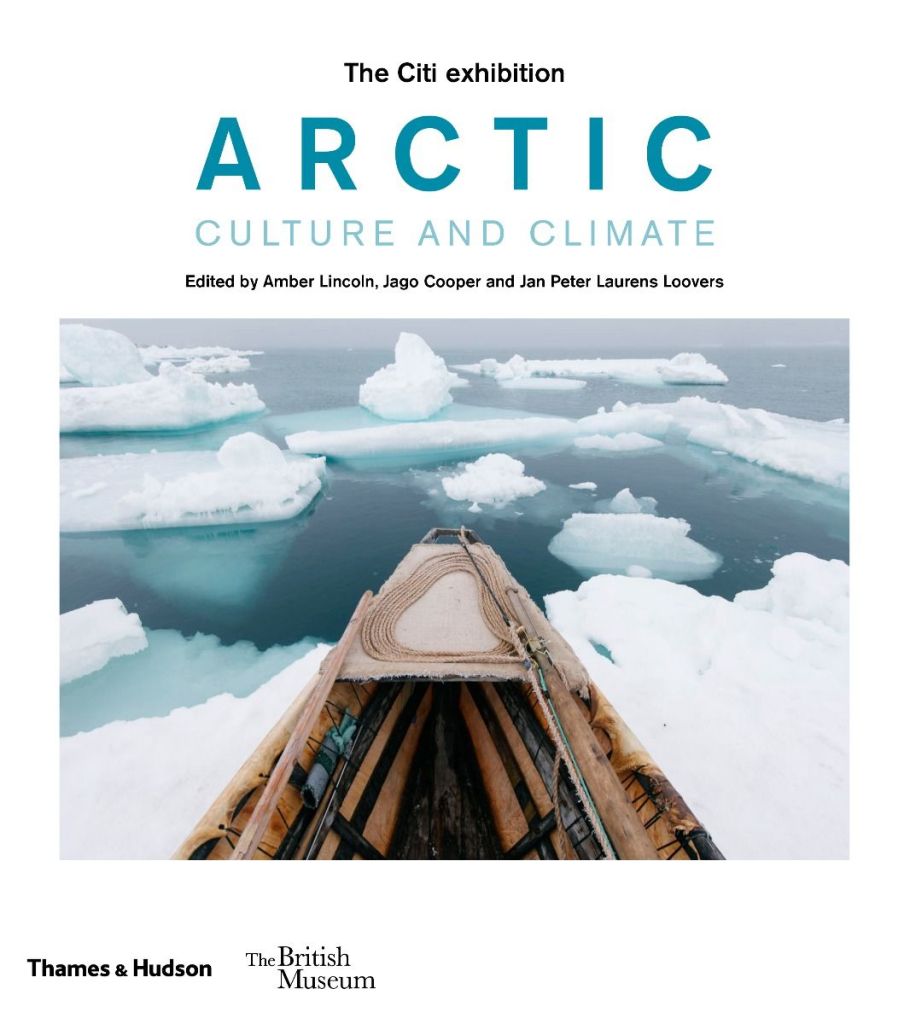
As that post, and others, might have suggested, one of my abiding fascinations (forget for now Japan and its photography) is for the Artic polar regions, their environment, ecology, people, and their ways of life and culture. I am therefore excited that there is at last (much delayed because of Covid-19) a major exhibition on the region at the British Museum: Arctic: Culture and Climate. Unfortunately I am not going to be able to visit the exhibition in person but I do at least now have a copy of the accompanying book, of the same title, and as appropriately hefty as a slab of ice.
As it only arrived a couple of days ago I have not yet had a chance to go through it in detail (though on a quick flick through it is clear that there are many treasures here waiting to be discovered) but there is one chapter in particular that has already caught my eye, written by a couple of residents of the Alaskan settlement of Shishmaref, the subject of Dana Lixenberg’s book about which I have already written and which still very much remains in my mind’s eye even when looking at, and thinking about, other environments. (Unfortunately Lixenberg does not get a mention in this new book, which is perhaps a shame given her work to record this community and its predicament and bring them to a wider, though still possibly fairly limited, audience, albeit one that is, I hope, more engaged and concerned.)
Against all the odds and predictions, the community is still there! They are still at severe risk, in need of help, and at the mercy of indifferent State and Federal authorities. But most importantly they are still there, still living a life that is intimately connected to, influenced and shaped by, their environment. There is clearly much scope for pessimism but also still room for hope.
What I perhaps find most interesting, coming across this short chapter, only a few pages long, is how moving I find the plight, if that is the right word – the predicament these people face – and how it relates to my own thinking about landscape as it has developed throughout this course, how people affect the landscape, and how they are in turn affected by it. If I had to identify one totemic symbol of my own thinking about this connection it might well be the people of Shishmaref. (And how appropriate that this new book should sit right next to Lixenberg’s in my personal bibliography for this course – kindred spirits at work!)
Lincoln, A, Cooper, J, Laurens Loovers, J P, (2020). Arctic: Culture and Climate. London: British Museum / Thames & Hudson
Central to my thesis about the meaning and significance of landscape photography is the idea of the impact, or at least influence, on the environment of humankind. I have though now come across a collection of photographs, presented as “postcards”, that deal with a physical landscape that has not been affected directly (let us for now leave aside man-made climate change) for millennia.
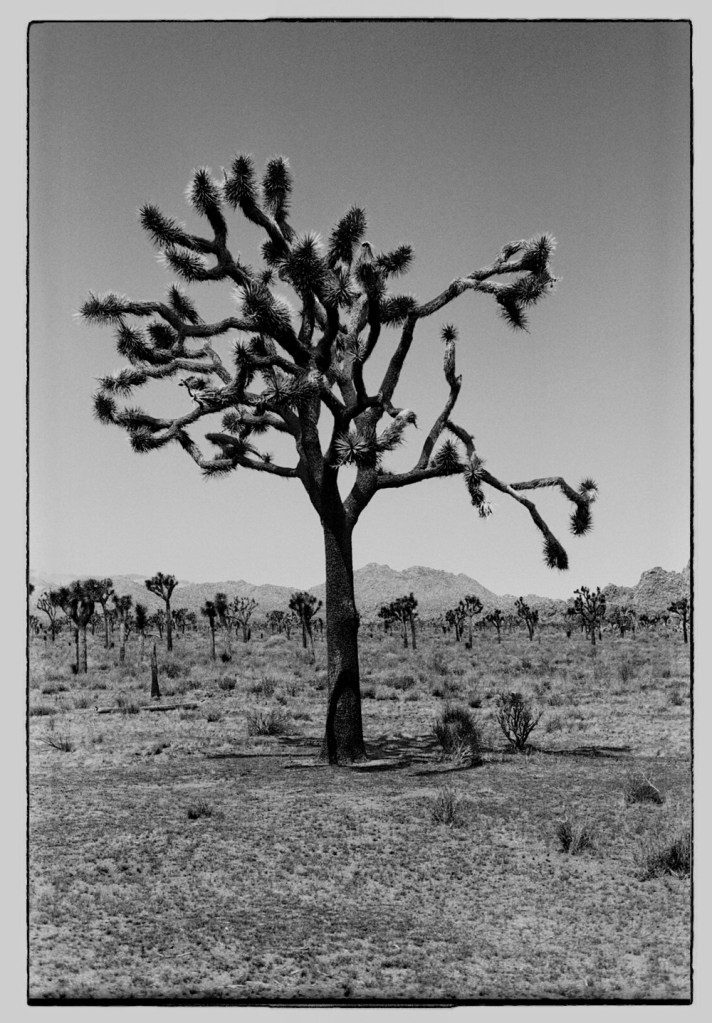
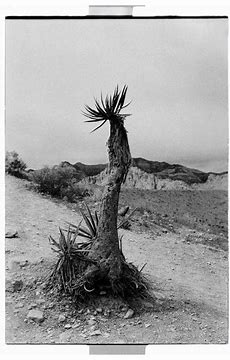
Elena Cremona’s “Postcards from the past” is a set (still a book?) of twenty photographs, all of them postcard size (a ratio of 2:3) taken in Joshua Tree National Park, in the Mojave desert in California, during the break-up (break-down – is it not odd how we use two directly opposed directions to describe the same thing?) of a relationship. I cannot speak to that personal cataclysm but I do respond to these images on not only a photographic but also on a personal level, not least because I have been to that part of the world, more than once (driving, hiking, camping), and have been captivated by this primeval landscape. Apparently, at least superficially (human impact has of course been profound but not always immediately visible), this is an ancient, pristine landscape untouched by homo sapiens where you might not be surprised if a living dinosaur suddenly came into view around the next pile of rocks – think “Jurassic Park” without the vegetation. When U2 released their eponymous album (which I am afraid I did not like much) I thought, somewhat naively, that there was just one tree. There are in fact hundreds of thousands of them – possibly millions – (not strictly speaking trees at all, members of the Yucca family) though now direly threatened by climate change.
From a photographic point of view, there are a couple of things that strike me about these images. One is that they are clearly analogue, shot on film, though I find it hard to identify what format, which gives them an almost physical, tactile quality. Unlike Ansel Adams’s work, they are quite grainy, with relatively shallow depths of field, which I find particularly appealing given the, literally, “grainy” – dry, dusty, gritty – nature of the landscape (the grit gets everywhere). Whereas with Adams’s work when looking at his pictures you can feel like a disembodied observer with these photos I have the feeling of being there in the landscape, just looking at it through a limited aperture (admittedly, possibly because I have been there and seen it in just this way). Although postcard size the images are a little subversive in so far as all but one use portrait rather than conventional “landscape” format. This I find interesting as it not only subverts received notions of what a “landscape” picture should look like but also relates directly to the environment that is depicted. Joshua Tree National Park is high desert, a vast plain at least 1300 feet above sea level. The horizon is broad and flat. There is little to puncture the visual plane other than rock outcroppings. Apart from the trees themselves. They introduce a verticality, like exclamation marks, that serve to emphasise the way the flatness of the landscape actually accentuates the vastness of the sky above, making the experience of being there more of a vertical one than horizontal. It is hard to describe but the feeling that I have had there, every time I have been, is not only of the breadth of the horizon but how much space is above, as if standing on the bottom of a deep sea and looking up towards the sky.
The postcard medium also strikes me as itself entirely appropriate as a means of depicting this specific landscape. There are people that live here (there is a town called Joshua Tree in which I have stayed, and stayed awake much of the night, woken by the comings and goings of a local family of coyotes!) but to visit is to feel a strong sense of being a visitor, an outsider, so that any view that one brings back is little more than a “postcard”.
In their physical postcard form they induce a degree of nostalgia. “Wish you were here!” It is very unlikely that I will ever revisit, but in some ways I would dearly like to do so. Although the memories that these photos encapsulate for the maker, for Elena Cremona, will be quite specific, and not necessarily pleasant, for me they embody very different and personal memories of my own. Although they are not my own photographs they nevertheless speak to me at a very personal level.
Cremona, E, (2019). Postcards from the past. London: Guest Editions
This is not a book about landscape photography as such but I nevertheless mention it here because it relates to one of the issues that was thrown up by the work that I did for the critical review in Assignment 4: to what extent does an artist’s outsider status, specifically so far as a particular place is concerned, affect or inform their photographs of that place and offer a new perspective on it. This book, which is effectively the catalogue of a show at the Israel Museum in Jerusalem in 2013 looks as if it might go some way towards answering that question, or at least offering a further perspective on it.
I had not come across this show or book before but within the last week or so my wife listened to an on-line talk given by the author and tipped me off. Nor have I yet had time to delve into it beyond a quick first glance to see who is in it. The answer to that question is just about everyone who was a significant figure in photography, particularly during the first half of the last century. Too many to mention in full, but Robert Frank and William Klein, key figures in my essay, are there in some numbers.
After the work that I did, I am firmly of the view that inevitably one’s relationship to a particular place will have an effect on how one sees and portrays it. Where that relationship is as an “outsider” then the possibilities arise of disclosing new insights, as Frank and Klein did.
At the moment I do not really have to time to indulge in a further detailed investigation of this subject as I am presently more preoccupied with this particular course: getting Assignment 5 finished (it is very nearly there); finalising Assignment 6; and then getting ready for Assessment (which looks as if it is going to be quite a big job since the processes changed). I will though nevertheless be thinking more about this issue once I have the time, not least because it occurs to me that this might be something that will be touched on in my next module in so far as I am thinking of doing Self and Other.
Perez, N.N, (2013). Displaced visions. Jerusalem: The Israel Museum
I have of late been supporting the work of a Russian photographer, Ekaterina Vasilyeva, whose latest work, Black Stripe, is an interesting piece of psychogeography. Although I have tagged it as a “book” it is not really a book in the traditional sense, or at least it is an unorthodox one (as can be seen on her website): photographs taken on the Russian Baltic island of Kotlin, with Google maps on the reverse illustrating walks made by Ekaterina around the island photographing objects and places encountered on those walks.
What I find most interesting is the slightly unsettling, disorienting effect the physical artefact has and how it stands in for mental unsettling that I would no doubt experience if I was to go to the island itself. The physical structure of the work is partly responsible for this: the maps/photographs are hinged together with tape in a less than predictable way so that on any run through the work the sequences shift and change, and nothing seems to fold back the way it was to start with! The maps themselves add to the effect. Rather than clearly illustrating the parts of the island around which Ekaterina walked they do little more than offer some sense of movement. In common with most maps, in the absence of some sense of scale, and an underlying understanding of the physical environment, they can be less than informative. I have no real sense from these maps of the scale of the place, what it looks like, how its parts relate to each other. This is added to by the fact the text is in Cyrillic script (which I can just about decipher) and I do not speak Russian. The information contained in the maps is therefore effectively denied me. If I was there I would in essence be clueless even with the maps, just as I am now as a mere mental visitor. With the aid of the maps and the photographs I can wander around in the manner of a Baudelairean flâneur but as Debord proposed I am in fact doing little more than drifting about, aimlessly and lost. An interesting effect to get from a book!
I am not sure why it did not occur to me before but I suppose my own journey book, coming out of Assignment 2, is also a psychogeographic work, with its combination of map and photographs, but this time rather less opaque or confusing!
Despite what I have just written with regard to my tutor’s feedback on the Assignment 4 essay, I already find myself looking at it again! What has brought it back into focus is leafing through a little book that I bought recently, effectively a catalogue of an exhibition put on by Street Level Photoworks in Glasgow of the work of Oscar Marzaroli.
I have known Marzaroli’s work for some time, but it did not really come to mind when working on the essay. At the time, because of the relative breadth of his subject matter, and the way his work is often presented simply as street photography influenced by the likes of HCB, it did not seem to fit my thesis. This recent exhibition (which I did not see) and the accompanying book though have changed my view. By focusing on work that he did in Glasgow it puts his work there in a different light. These are predominantly pictures of Glaswegians rather than Glasgow itself. Whilst his aesthetic was very different from that of William Klein, it nevertheless now strikes me that Marzaroli actually did something similar for Glasgow: by portraying the city’s people he was showing us something of the city itself, as it was in the 1960s in particular, a city that has long since ceased to exist, both socially and physically. To that extent it might be said that this element of his work fits the thesis I was exploring in that essay.
It also adds to my question about the role of, or the importance of being, an “outsider”. Like Klein in New York, he was a native of Glasgow, but did his work there after an absence of a number of years in Sweden and London.
Regardless, it is good to see this work again, which is warm and deeply sympathetic, and deserves to be better known in its own right. In turn this makes me realise that Tish Murtha was also doing something similar with her work on the west end of Newcastle (another returnee after time away from her home region, after studying with David Hurn in Newport). Why that did not occur at the time is beyond me! Perhaps I am going to find something similar when I revisit Jimmy Forsyth’s work.
Dickson, M, (2020). Oscar Marzaroli. Glasgow: Street Level Photoworks
Something I picked up from an email from the publishers MACK yesterday, the announcement of the winner of their First Book Award for 2020, 45 by Damian Heinisch. This caught my eye for a couple of reasons.
First, and foremost, it is based on a train journey between Ukraine and Oslo, all pictures taken through the train windows. This resonates not least because the subject of my project for Assignment 2 was a train journey, albeit a much shorter one, and the pictures were taken through the window (though I was more concerned with landscape than people, as in Heinisch’s case). I did though undertake a similar, small scale, project of photographing people on station platforms (though it did not get very far with it at all) as part of the Decisive Moment assignment for EYV (https://markrobinsonocablog.wordpress.com/2017/05/31/assignment-three-the-decisive-moment-part-3/). It also has something in common with Obara’s work (2018), which coincidentally is set in Ukraine, and uses a physical journey to tell stories about people. Given time and an opportunity to travel (neither of which are likely to happen soon) this is very much a strand of work that I would like to pursue further on a larger scale.
The other thing is the binding. I am often attracted by different styles of binding and this one is “Japanese fold”, which I understand to be a form that involves printing a long sheet of paper that is then concertinaed, one set of edges then being bound. The result is that each page is effectively two pages folded back-to-back. Barachini’s book (2019) follows this mode, as does the Dog Man section of Kimura (2019), though that one differs in that it is also printed inside the folded pages, making the inner bits hard to look at properly! Eiji Ohashi also used a version in one of his vending-machine books (2017). I also have in my general library a beautiful old book (I am not sure of its actual age or publisher) of brush and ink drawings of, mostly, botanical specimens, interspersed with some poems, that unfortunately I cannot read, and a few landscapes in a Chinese style, housed in a silk covered folding box. It all makes an aesthetically pleasing change from the standard form of binding and can add an additional layer of interest to the photographs.
Barachini, V, (2019). Cuore Velato. Livorno: ORIGINI edizione
Heinisch, D, (2020). 45. London: MACK
Kimura, H, (2019). Snowflakes Dog Man. Italy: ceiba editions
 Mark Robinson's OCA Landscape, Place & Environment Blog