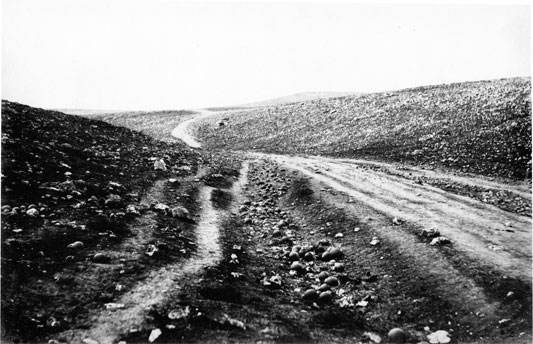
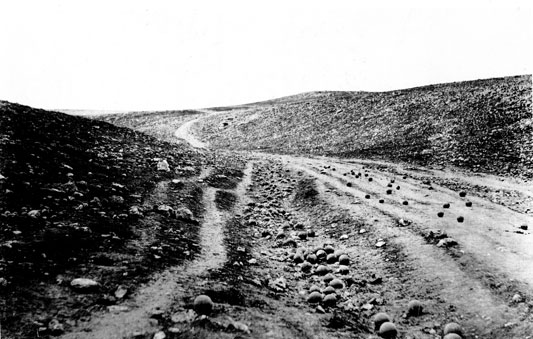
As I wait for my tutor to come back to me on Assignment 6, I am metaphorically twiddling my photographic thumbs. In doing so I came across an article on a website that is new to me, run by Jason Kottke, on which he posted an interesting piece about one of Roger Fenton’s best known photographs from the Crimean war, of the Valley of the Shadow of Death. This is something that I looked at in particular during C&N while considering the idea of Late Photography. What I did not consider then, but that Kottke’s piece addresses now, is the question of which of the two versions of the scene was made first, and whether either was “staged”. What is interesting about these images – as purely landscape photographs they do not show very much at all – is what they say about “truth” in photography, the inherent unreliability of the photograph itself, but how they are sometimes nevertheless interpreted by critics and writers, or indeed simple viewers, without there necessarily being any evidence to support the conclusions reached about them. These are all issues that I keep coming back to and have looked at in one way or another in every module of this degree so far. They are issues that do not simply go away, indeed in my opinion should never be allowed to go away, and remain fundamental to how we should approach, view, and interpret any photograph, whether made by someone else or our own, after the event and as we make it.
A point I have made repeatedly is that photographs are in and of themselves not reliable, that they do not illustrate a “truth”, in the absence of context and corroborative evidence. As Kottke shows in his article, and as explored in more depth by Errol Morris, the subject of this piece, in his NY Times articles from 2007, conclusions have been drawn about these two photographs that are simply not reliably backed up by objective evidence. (Although I have an account with the NY Times I have unfortunately so far only been able to read two of Morris’s three articles; I simply cannot get the third to load. That does not for now really affect the points I want to make and the short video embedded in Kottke’s piece tells the tale anyway. Because of the difficulties with the NY Times site, and as you might not have an account with them, without which it is difficult to read anything at all, I have not included below links to the original articles.)
There are two questions: one is which image was made first: the other is whether either was staged, the cannonballs having been moved to create a more dramatic image. Of these I think the first is less important although it is an interesting detective story in its own right and does contain a significant issue about the importance of correctly interpreting the intrinsic evidence contained within the photograph itself. It turns out, after a close but slightly erratic forensic investigation of the photographs themselves and the actual location where they were taken, that it is likely that the so called “on” photo, the one with cannonballs on the road, was taken second, as suggested by the movement of a number of small rocks down-hill compared with the “off” photo. What this does not tell us is whether this second image was staged in any way. This is where the issue of context and corroborative evidence becomes important. At least since Ulrich Keller published his book on the photography of the Crimean War (which I have not read), it has been assumed, at least asserted, that the “on” picture came second (possibly correctly although without a proper assessment of the evidence). Keller though went on to maintain that it had been staged by Fenton and that cannonballs were deliberately moved to create a new composition. These were views repeated, without any evident critical consideration by Sontag in her later book (which I still think is better than the earlier, more famous – notorious? – one though still marred by this sort of dogmatism) and have since then become received wisdom. And this is where my complaint lies, that the assertion, the assumptions made about Fenton’s intentions and actions are not supported by any objective evidence. They are mere assertions, indeed little more than fabrications. Unless of course Keller and Sontag were, for example, historical mind-readers. As Morris demonstrates, there is no objective evidence one way or another to cast any light on what Fenton might have intended or what he might have done or directed.
For what it is worth (which in reality is not much) my best guess, and it is only a guess, is that as Morris suggests this second image was not staged but was taken by Fenton after soldiers had moved some of the shot onto the road in the process of recovering some to be reused against the Russians who fired them originally. Would it not make more sense for Fenton to have simply realised once this exercise was underway that by chance the view of the road with the cannonballs on it was more dramatic than that without. If this was the effect he was after would it not have made more sense for him and his assistant, or under his supervision the soldiers who were evidently nearby, to move the shot from the outset before the first photograph was taken? We can probably never know for sure but this at least strikes me as being plausible.
A couple more things lead me to this admittedly speculative conclusion. One is to question how likely it was that there were soldiers about at the time with nothing better to do than move stuff around for Fenton so that he could make pictures while they were, it is worth remembering, under fire from the Russian positions? Another stems from my own limited experience of large format film photography. Fenton and his assistant took an hour and a half to make two photographs. I assume (but have not checked) that they were using a wet plate technology. This is not something that I have used myself but understand it is tricky and time consuming. Even using modern sheet film I know from my own experience that it can easily take half an hour or so to take just one exposure of a subject (and I seem to recall from her exhibition at the Side Gallery that this this was also the experience of Alys Thomlinson while shooting her Ex Voto project). So would Fenton have had the time even to direct his assistant or some soldiers to start moving things around? I do not know but my gut tells me that it does not sound convincing in the circumstances.
The main point, the most important point, is that there is no objective evidence to support the assertion that the scene was staged. This does not necessarily mean that the scene was not staged, just that we have no reliable evidence that it was.
The photographs simply show what was in front of Fenton when he took them. They do not in themselves tell us anything about how, where, or when, they were made. Anything else is little more than speculation and over-interpretation.
Sontag, S, (2004). Regarding the Pain of Others. London: Penguin
Following my post about my bibliography for the current course I have had another look across my shelves and made the following list of the other books I have looked at this year (most were only published this year) but have not otherwise had a direct impact on my work. There are others but these are the ones that stand out. What they all have in common is that they investigate, at one level or another, peoples’ relationship with particular places, peoples’ impact on those places, and those places’ impact on the people. As such the range of styles and approaches is quite wide. Some is street photography, but with more of a focus on people in their environment rather than just capturing chance happenings and encounters on the street. Some is social documentary, but firmly rooted in specific places and physical environments. Some concentrates on the landscape and the presence of people, and their relationship with the landscape, is more implicit. Some is more intimate, personal rather than public, and poetic. Some of the artists are already familiar to me, old favourites, others new. Not surprisingly there is a significant showing of Japanese photographers.
I also find that I have gone back from time to time to reread essays and stories by John Berger, too numerous to try to list now, that deal with peoples’ relationships with places. A writer always worth revisiting.
Now that this particular module is nearly at an end – I just have to speak to my tutor about Assignment 6 and then prepare for assessment – this is probably as good a time as any to post a bibliography of all the books and other materials that I have consulted and used while working on this unit, though it might need a bit of updating before I actually finish.
A couple of things strike me. One is how heavily “front-loaded” the course is, with much of the reading list coming in at the early stages. As the course has progressed there has been noticeably less by way of references to consult and follow up and material to read. Another point is that on the recommended reading list are relatively few books that I would regard as really essential. There is quite a lot of material that is only touched on lightly or tangentially that one could probably have got away with (if I can put it this way) not reading at all. Indeed, a couple of books strike me as not really worth the effort, and one a complete waste of paper and ink, not mention my time and money (I will refrain from naming the guilty parties!). That said, a couple of titles that I would not regard as being essential were in fact simply a pleasure to read in their own right.
Otherwise, as I have done with previous course units, much of what I have looked at has been at my own initiative, “reading around the subject”, a practice drummed (if not actually beaten) into me back in the days when I was at school and then an undergraduate, keeping my eyes open for anything that is interesting, and ideally relevant to the work I have been doing.
The other notable point is just how many other photography books I have looked and over the last year or so that have not made it into the bibliography. Notwithstanding that many of them have dealt, more or less straightforwardly, with issues of landscape and peoples’ relationships with their environment, not all have had any direct relevance to or impact upon the work that I have been doing. To that extent I have decided not to include them in the list that follows. Perhaps though I should make a separate list, even if only a partial one, of these other books to record the fact that I have looked at them. I do feel that even if not of direct significance to this academic work it is important to keep a broad and open outlook and, simply put, to look at as much other work as possible. This will inevitably inform the work that I do, even if only at an unconscious level and at some unforeseeable time in the future. Looking at the work of others is one of the best ways that I know of learning more about the art and craft of photography, that cannot otherwise successfully be transmitted and absorbed simply by sticking to a fairly narrow prescribed reading list. It is also simply fun (if expensive!) just to get out there and see what wonderful work is being published, not to mention to support contemporary artists and often small, independent, publishers.
Books
Adams, A, (1983). Examples: The Making of 40 Photographs. Boston: Little, Brown & Co
Adams, R, (1996). Beauty in Photography. New York: Aperture
Alexander, J.A.P, (2015). Perspectives on Place. London: Bloomsbury
Andrews, M, (1999). Landscape and Western Art. Oxford: Oxford University Press
Axelsson,R, (2019). Faces of the North. Reykjavik: Qerndu
Baas, J, & Jacob, M.J. (ends) (2004). Buddha Mind in Contemporary Art. Berkeley: University of California Press
Barachini, V, (2019). Cuore Velato. Livorno: ORIGINI edizione
Barthes, R, (2000). Camera Lucida. London: Vintage
Barthes, R, (1977). Image Music Text. London: Fontana Press
Barthes, R, (1972). Mythologies. London: Jonathan Cape
Bate, D, (2009). Photography, The Key Concepts. Oxford: Berg
Bate, D, (2010). The Memory of Photography, Photographies, 3:2, 243-257
Bates, E S, (ed), (1937). The Bible: Designed to be read as living literature, the old and the new testaments in the King James version. New York: Simon and Schuster
This is neither an ad nor a puff but a brief note on a small, independent publisher, based near Inverness, that I have come across relatively recently, that fits very well with the way I have come to think of landscape photography.
My first encounter with this press was through a book by Frances Scott, titled Undertow, photographs taken around her home in Orkney. I was attracted partly by the connection with Orkney – my wife had a friend who used to live on Shapinsay, whom we visited some few years ago, and provided a stepping off point to visit a number (but by no means all) of the islands over a couple of trips. (We had planned to visit Papa Westray a couple of years ago, but were prevented by bad weather – we were due to land by Gemini from a larger boat but the approach was more than a mile and at the time the weather conditions made it unsafe.) More importantly, it deals with the connections between people, landscape, and the act of photography.
One of the striking elements of her book is the combination of photographs with maps of the walks that she undertook while taking the photographs. Whilst not in itself a direct, conscious, influence, this echoes with the work that I did for Assignment 2. It also resonates with the work of Zoe Childerley (The Debatable Lands) that has had a much more direct impact, as I have discussed in previous posts, not least on the book that I made for that assignment. I am, by the way, delighted to see that Zoe’s book, Dinosaur Dust – shot in Joshua Tree National Park in California, somewhere I have been a number of times and love for its otherworldliness – is at last making it into print courtesy of another | place. A copy is naturally on order!
The series of Field Notes is of particular interest and relevance to my own recent practice, focusing as it does, on the relationship between people and place, not least because of their affordability – but beware the short print runs, blink and you might miss them!
While much of publishing is beset with difficulties, notwithstanding – or perhaps because of? – the huge number of new titles that continue to appear, it is encouraging to see that there are smaller imprints out there producing work of the highest quality and evidently thriving (as much as anyone can in the current climate).
Childerley, Z, (2016) The Debatable Lands. High Green: VARC
Scott, F, (2020). Undertow. Jamestown: another | place
This is not a book of, or about, photography. Rather, it is a portrait of an island archipelago, its history and culture, focused through the prism of one hundred physical, geographic, places, current and historical, (including a few specific artefacts). Nevertheless, it is clearly a work that is significant to me and my thinking about landscape as explored throughout this course and the medium of photography.
This is a book that I picked up at the Hexham Book Festival in April 2019 (only eighteen months ago but already a world away) after listening to a very engaging and entertaining talk by the author, Neil Oliver, who will be familiar to anyone who ever watches some of the better offerings on BBC 4 about archaeology, history, and topography. As with many books that really interest me it took a while to work to the top of the waiting to be read pile and it was only last night that I finished it. It was only last night that it struck me how relevant this book is to, and how much it resonates with, my ideas about landscape photography as they have developed over the course of this module. It has been about three months that I have spent on this book, while reading other things in the interim as well, roughly a chapter an evening, so its import has had a little time to be felt and absorbed. Which is perhaps why it has taken a while to come to the forefront of my consciousness, and for me to offer a note about it only now.
What has interested me throughout this course, and what I have endeavoured to explore, is the two-way traffic of how the environment is affected by the people who live within it and how they in their turn are affected by that environment. The story that Neil Oliver tells, stretching back over nearly a million years to the earliest recorded hominids in this part of the world, exemplifies for me both aspects of this equation, but in particular how the specificities and peculiarities of the landscapes of these islands have played parts in shaping and determining who “we”, the British, are now.
Obviously, as I had already done much of the work for this module before I even picked up this book and settled down with it seriously, it has not consciously affected any of the work that I have made. It nevertheless remains, if only in retrospect, important to me and that work (not to mention the benighted island archipelago upon which I live). If nothing else it helps to offer some validation, albeit ex post facto, to what I have already done and the thinking behind my efforts.
Beyond that (and this is not a review!) it is well worth reading and thoroughly enjoyable in its own right.
Oliver, N, (2018). The Story of the British Isles in 100 Places. London: Penguin
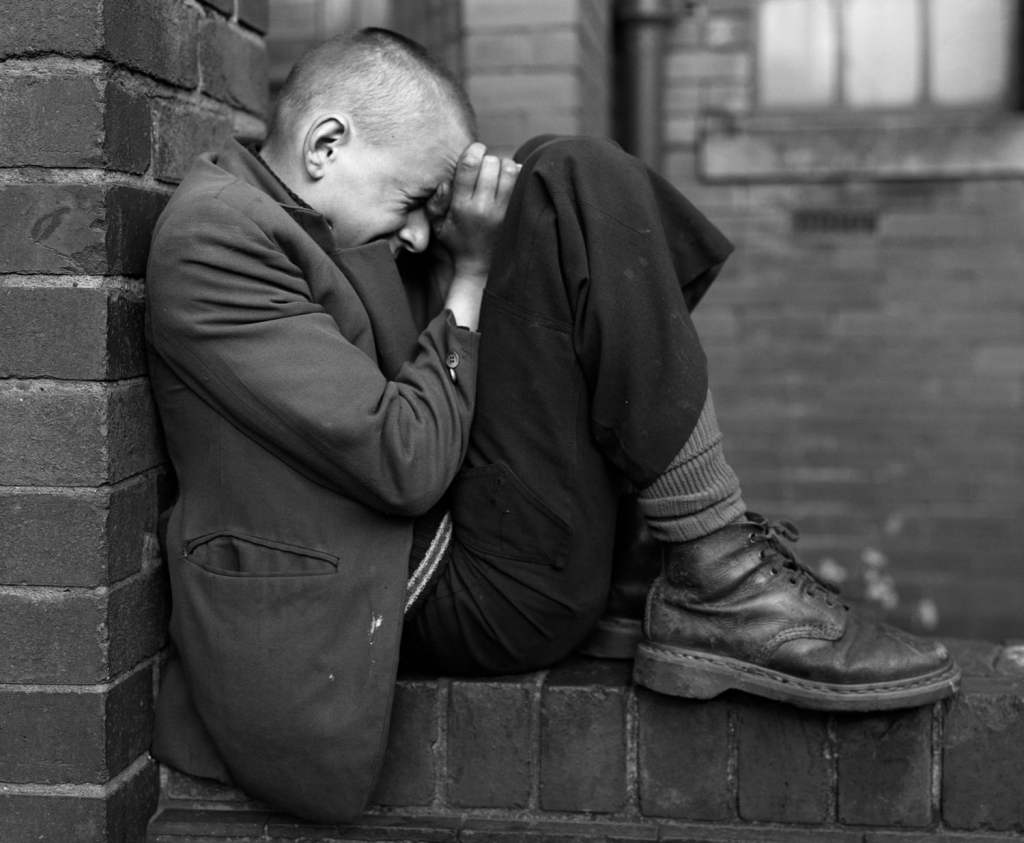
I was saddened to read last week of the passing of the social documentary photographer Chris Killip. I am not going to write an obituary. I am more than happy to leave that to Sean O’Hagan of The Guardian who has covered it in the two pieces linked below. Rather I have a personal observation or two from the point of view of the work I have been doing on this course.
I think the first picture of his that I ever saw was Youth on a Wall, Jarrow, Tyneside, 1976:
This was probably around the time that In Flagrante was originally published in 1988, just a couple of years after I moved to the North East. At the time the significance of this work was lost on me and it has taken a while since then for his work really to grow on me. For a while I felt it was a bit too much “it’s grim up North” but I have since been helped along by the work of others in the region ploughing a similar furrow: AmberSide collective (which of course Killip helped to establish), Tish Murtha, Markéta Luskačova, to name but a few. I now see the work he did in this region in a different light, and this is the point that is relevant to this course.
I am not going to explore the question any further here for now but I feel there is an argument to be made that Killip fits into that category of photographers that I considered in the essay for Assignment 4, who are able to convey a sense of the local landscape by focusing on the local people. There is certainly a strong sense of portrayal of the social landscape, but taken broadly I do feel that some of the work he did here does paint a picture of the physical landscape, without necessarily addressing it directly.
There is also the “outsider” element. He came from the Isle of Man and lived and worked in the region for only about 15 years, not enough for many locals to regard someone as anything but an outsider (and usually a southerner at that; even after more than 36 years up here in the eyes of some I am still an incomer) and I think this possibly colours the work that he did and the way I now view his work.
Sadly, in the current climate of the Covid pandemic and the growing inequality between North and South, some aspects of life in the region have not changed fundamentally for some sections of society, and there is still a need, indeed a pressing urgency, for work such as that Killip made.
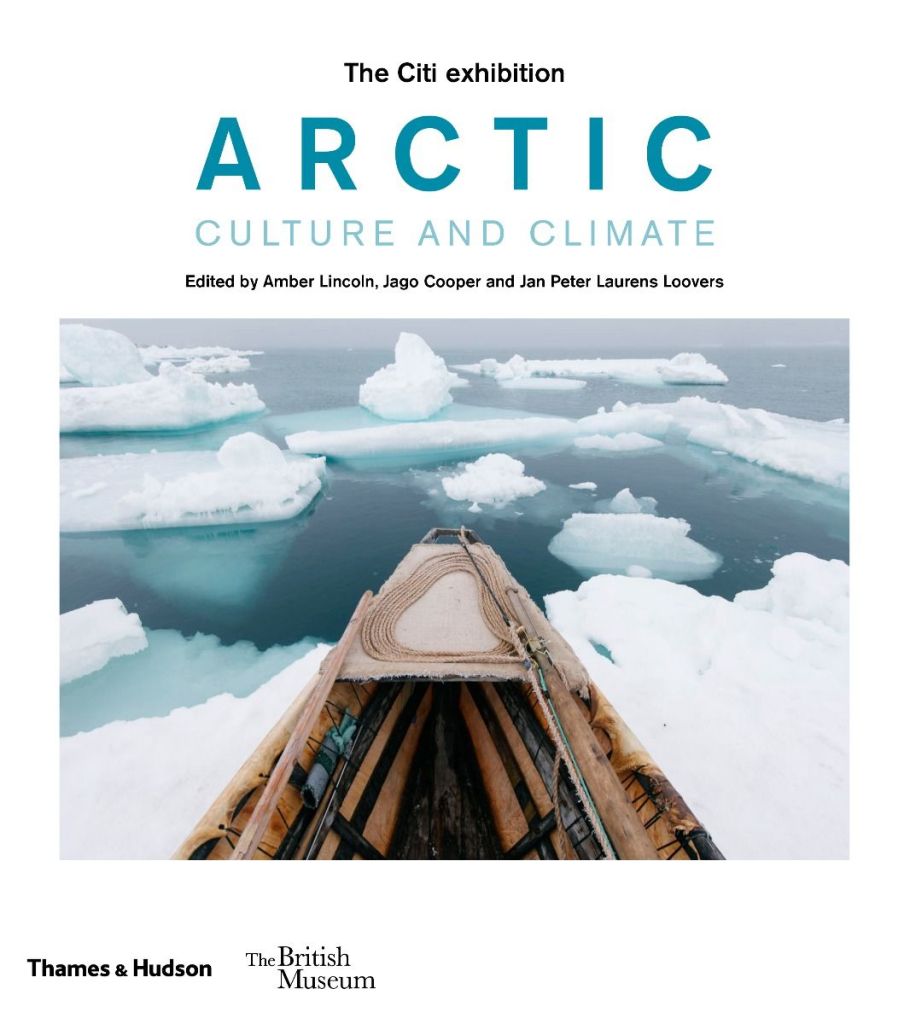
As that post, and others, might have suggested, one of my abiding fascinations (forget for now Japan and its photography) is for the Artic polar regions, their environment, ecology, people, and their ways of life and culture. I am therefore excited that there is at last (much delayed because of Covid-19) a major exhibition on the region at the British Museum: Arctic: Culture and Climate. Unfortunately I am not going to be able to visit the exhibition in person but I do at least now have a copy of the accompanying book, of the same title, and as appropriately hefty as a slab of ice.
As it only arrived a couple of days ago I have not yet had a chance to go through it in detail (though on a quick flick through it is clear that there are many treasures here waiting to be discovered) but there is one chapter in particular that has already caught my eye, written by a couple of residents of the Alaskan settlement of Shishmaref, the subject of Dana Lixenberg’s book about which I have already written and which still very much remains in my mind’s eye even when looking at, and thinking about, other environments. (Unfortunately Lixenberg does not get a mention in this new book, which is perhaps a shame given her work to record this community and its predicament and bring them to a wider, though still possibly fairly limited, audience, albeit one that is, I hope, more engaged and concerned.)
Against all the odds and predictions, the community is still there! They are still at severe risk, in need of help, and at the mercy of indifferent State and Federal authorities. But most importantly they are still there, still living a life that is intimately connected to, influenced and shaped by, their environment. There is clearly much scope for pessimism but also still room for hope.
What I perhaps find most interesting, coming across this short chapter, only a few pages long, is how moving I find the plight, if that is the right word – the predicament these people face – and how it relates to my own thinking about landscape as it has developed throughout this course, how people affect the landscape, and how they are in turn affected by it. If I had to identify one totemic symbol of my own thinking about this connection it might well be the people of Shishmaref. (And how appropriate that this new book should sit right next to Lixenberg’s in my personal bibliography for this course – kindred spirits at work!)
Lincoln, A, Cooper, J, Laurens Loovers, J P, (2020). Arctic: Culture and Climate. London: British Museum / Thames & Hudson
This is a bit of a random post, the result of a chance encounter with a Chinese photographer, of whom I had not previously heard. One of my wife’s friends posted something about him on Facebook (I have no idea why, perhaps just a chance discovery on her part), Lang Jinshan, whose Wikipedia entry is cited below.
I have to confess I know little about Chinese photography and am familiar with only a handful of contemporary practitioners. Nor do I know much about traditional Chinese painting (I know a bit more about Japanese conventions) but what I found immediately striking about this work is the way it mimics in film traditional Chinese brush and ink landscape painting. By juxtaposing and layering multiple negatives, and adding some of his own brush work, Lang contrived to produce images that look more like paintings than photographs: there is that, what I take to be traditional, flattening of perspective, and the paring away of detail so that certain elements of the composition seem to float on the picture plane.
Mooring in the Misty River at Night, 1937
I suppose this should not be at all surprising. European and American landscape photographers had their roots deeply embedded in the conventions of Western landscape painting, as we explored in the early sections of this course. It should come as no surprise that Chinese photographers (or at least Lang as I do not really know any other landscape photographers who were contemporary with him) should have relied upon and explored the conventions of their own artistic traditions. Above all else what this really brings home to me is how our artistic outlook here in the West is rooted in, and perhaps to an extent limited by, the Western artistic canons, and consequently how Western-centric this course is. This is by no means a criticism but is just a reflection on what seems to me inevitable within the confines of the course.
I do know a bit more about Japanese photography, as I have written elsewhere, but it is only now, reflecting on Lang’s work, that I can see how an argument could be made for Japanese photographers having taken a different approach to landscape, one much more “Western”, and less tied to the conventions of Japanese painting (which I assume in fact share much in common with Chinese art). Their approaches have been much more naturalistic, less idealised. Many though have been, and continue to be, influenced by a sort of negative aesthetic (think Provoke, Moriyama, Fukase’s Ravens, for example) which is not at all naturalistic, carefully contrived, and in its way every bit as stylised as Lang’s recreation of Chinese landscape painting. Early Western landscape photography (and some contemporary work of course) is in its own way equally stylised and contrived.
So far as the Japanese work is concerned, I wonder how much this style has to do with the concept of wabi-sabi – beauty in imperfection and impermanence – which would serve to place this particular aesthetic still more squarely within Japanese artistic and philosophical conventions, so that even some of the apparently most radical work is still tied to the past. This though is a bigger question for further thought at another time and place but for now it is interesting to think that it might be said that however one approaches landscape photography, specifically, today, the past is inescapable.
Something I picked up from an email from the publishers MACK yesterday, the announcement of the winner of their First Book Award for 2020, 45 by Damian Heinisch. This caught my eye for a couple of reasons.
First, and foremost, it is based on a train journey between Ukraine and Oslo, all pictures taken through the train windows. This resonates not least because the subject of my project for Assignment 2 was a train journey, albeit a much shorter one, and the pictures were taken through the window (though I was more concerned with landscape than people, as in Heinisch’s case). I did though undertake a similar, small scale, project of photographing people on station platforms (though it did not get very far with it at all) as part of the Decisive Moment assignment for EYV (https://markrobinsonocablog.wordpress.com/2017/05/31/assignment-three-the-decisive-moment-part-3/). It also has something in common with Obara’s work (2018), which coincidentally is set in Ukraine, and uses a physical journey to tell stories about people. Given time and an opportunity to travel (neither of which are likely to happen soon) this is very much a strand of work that I would like to pursue further on a larger scale.
The other thing is the binding. I am often attracted by different styles of binding and this one is “Japanese fold”, which I understand to be a form that involves printing a long sheet of paper that is then concertinaed, one set of edges then being bound. The result is that each page is effectively two pages folded back-to-back. Barachini’s book (2019) follows this mode, as does the Dog Man section of Kimura (2019), though that one differs in that it is also printed inside the folded pages, making the inner bits hard to look at properly! Eiji Ohashi also used a version in one of his vending-machine books (2017). I also have in my general library a beautiful old book (I am not sure of its actual age or publisher) of brush and ink drawings of, mostly, botanical specimens, interspersed with some poems, that unfortunately I cannot read, and a few landscapes in a Chinese style, housed in a silk covered folding box. It all makes an aesthetically pleasing change from the standard form of binding and can add an additional layer of interest to the photographs.
Barachini, V, (2019). Cuore Velato. Livorno: ORIGINI edizione
Heinisch, D, (2020). 45. London: MACK
Kimura, H, (2019). Snowflakes Dog Man. Italy: ceiba editions
While Assignment 4 has been simmering away in the background – I am just about ready to start writing in earnest – I have been thinking more about Assignment 5 and this has in turn set off further musings about the issue of development of a personal voice (which I last wrote about when reflecting on the work I did for Assignment 3) and the development of something that might at least start to form a recognisable body of work.
It increasingly looks likely that what I want to produce for Assignment 5 will be feature aspects of the village where I live and will develop the theme of spaces and places that I looked at in Assignment 3. With that at the back of my mind, it occurred to me while walking the dog this afternoon on one of his increasingly well-trodden routes round the village that a lot of the work I have done while studying with OCA has been local, much of it within the confines of the village itself. Newcastle, half an hour away by train, is about as far as any of my work has taken me physically. Starting right at the beginning with Square Mile for EYV, many of the exercises for that module, much of I&P, and just about all of the photographic work for LPE, has been local. C&N was a bit different in that it was more personal because of the events of that year but still was very locally based.
For all that I have before questioned the extent to which a personal voice is developing, it strikes me now that this fairly consistent, close focus on my immediate surroundings, how the locality is feeding and developing my ideas, and is consistently offering material to work on, is in itself becoming something of a distinctive voice.
It also struck me that there is at least the potential for a definable body of work. I can well imagine taking much of the work I have done to date, separating it from the specific context of the OCA courses and their assignments, and starting to build from it a personal vision of and response to where I live. Something to think about over the longer term but for now I think I will just let it take its course and see where I end up.

 Mark Robinson's OCA Landscape, Place & Environment Blog