A while ago when writing about the Karl Blossfeld exhibition I mentioned that I would be coming back to Laszlo Moholy-Nagy but it is only now that I have been able to get round to doing so.
I just wanted to add a brief note about a remarkable book that was published last year on the photography of Laszlo Moholy-Nagy. Until this came out I did not know much about his photographic work. I knew of him primarily as making sculptures. I knew about his photograms and his work at the original Bauhaus in Weimar, and indeed have a copy (only in pdf format alas) of his Malerei, Photographie, Film (1925). What I had not realised was how extensive his what I might describe as more conventional photographic work was. This new book brings a significant amount of that work together (roughy 350 individual images). With the predominance of portraits and pictures taken while travelling, not least when he moved to London and then America, this has the feeling of a family album, though one that contains also quite a lot of interesting architectural photography.
These are though “family snaps” that are distinctly modernist and show considerable innovation in composition, lighting, angles and points of view, for example. It is also interesting to see him working in a typological way, particularly with many of the photos of non-family, which at face value at least have something in common with August Sander’s work.
As a personal aside I was intrigued to find towards the end of the book some pictures from 1936 taken in Port Erin on the Isle of Man showing buildings that I recognise from repeated childhood summer holidays that I spent there. So little had the place changed over thirty or forty years!
Unfortunately, apart from a brief introduction in English by his daughter, Hattula, the rest of the text, mostly descriptions of and commentaries on the photos, is only in German. Fortunately I can still read German fairly well so am not troubled by this but anyone without knowledge of the language might be put off. I would though say that the range and quality of the pictures makes the book worthwhile despite this.
Fiedler, J, (2018). Moholy Album. Göttingen: Steidl
Moholy-Nagy, L, (1925). Malerei, Photographie, Film. Munich: Albert Langen
Further to my last post on this subject I now have a copy of the book – and what a book; how did I miss this when it first came out? And how did I miss this site when driving past it given its sheer size?
Now I can see the typological elements properly. Although all of the images are from the same site I can now see that they are arranged in a way that is clearly typological: “inertias” and “steriles” (‘dead-zones’ but at least without the machine gun towers that might otherwise be associated with concentration camps); roads; yards; cells with beds and neat piles of bedding, all taken from exactly the same position.
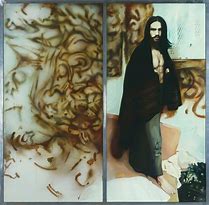
The book is actually a bit of a jolt. I had got used, when growing up, to seeing the Maze through the prism of the dirty protests, to the inmates dressed in nothing more than a blanket (here I think of Richard Hamilton’s iconic, Christ-like painting), the walls daubed with shit, the emaciated and dying Bobby Sands, so it is a bit of a shock to the system to see the surprisingly domestic nature of, of all things, the curtains in the cells. Everything else though reminds us that this was not a holiday camp but a place of imprisonment, of oppression, of disorientation, and of violence (both inmates and guards died here).
A scary thought, looking at all of those walls and lengths of razor wire: it is so reminiscent of that great British invention, the concentration camp. We invented these god-forsaken places back during the Boer Wars. Then it was men, women and children. Here it was only men but that does not make it feel any less uncomfortable. At least we did not go the whole hog and turn them into death camps. This place is though nevertheless burdened with an uneasy ethical legacy in so far as many of the inmates were “interned”, an administrative euphemism for locked up without trial. Without question there were people incarcerated here who were, without wanting to be too coy about it, not the nicest. Nevertheless this place remains for me an indelible stain on “the rule of law”. I am glad that is is gone, but it is nevertheless important that it be remembered.
Although Czech, locally at least, Markéta Luskačová is best known for her work on the coast, mostly at Whitley Bay in the 1970s. Indeed, I am afraid that I know nothing else of her work since that time, somethings that clearly I need to remedy. A number of her pictures were included in the Women by Women exhibition at the Baltic Gallery in Newcastle last summer about which I wrote a short piece (https://markrobinsonocablog2cn.wordpress.com/2018/06/28/women-by-women-exhibition/), which was the first time that I encountered her work.
At last the work that she did then has been published and naturally I had to buy the book. Rather than discussing the book itself though what I want to focus on for now is an interesting question that it raises in connection with this module on landscape photography: to what extent can a photograph be about, and tell us anything of, a particular place if it is not possible, or at least difficult without extrinsic knowledge, to identify that place?
In the absence of the list of photographs at the back of the book listing the places and dates of their making, and in the absence of any other knowledge about the making of this work, is it possible to identify a particular place? In a sense, is this work about, a representation of, the North East? Is this landscape or social documentary?
Clearly it is the latter in so far as it shows people at play in the late 1970s though while some of the hairstyles and fashions can be confidently placed in that particular time many of the images of older people would be much harder to date. If I did not know better I would have said that some of them could be from the 1950s or 1960s. But what about a sense of place? This is much harder. In a few of the pictures there are some clues, but resolving them does require some local knowledge. Some of the places I recognise as they have barely changed over the last forty years or so. Without that local knowledge though I would expect any viewer relying purely on the internal context of these pictures alone to identify where they were made.
There is the tricky question. If you cannot, or cannot easily, identify the place in question, can it be said that the pictures are “about” that particular place? Do they simply become emblematic of a time or type of place rather than a specific location? Does the actual location stand in for and represent any or all similar types of place? Does it actually matter?
I know this work is about the North East; I could confidently take you to a few of the specific places depicted. To that extent I very much see this as, amongst other things, a work of landscape photography. Without that local knowledge though I am not sure that I would. I suppose where this leads me is to the point that has been made any number of times before that without context photography is not reliable, that it does not necessarily tell a particular truth.
And does it matter if you can or cannot place this work? No, it stands on its own merits!
Luskačová, M, (2019). By the Sea. Bristol: RRB Photobooks
The pile of photobooks in my study just seems to get bigger and bigger but not yet quite to the point where it starts to totter and represent a physical threat. (The impact on my bank account is of course another matter and still perilous enough!) Fortunately they do not grumble too much if I take a while to getting around to writing anything about them.
Step up Sadie Catt’s impressive book about the Canadian town of Woodstock (in Ontario and not to be confused with its more infamous name-sake in New York state the other side of the border) and its inhabitants. I came across her work for the first time in the May issue of BJP this year and was immediately struck by it. Why mention it now? Because it very much fits with my thesis about the nature of landscape photography, that is it not just about pretty, picturesque views but also about the people that inhabit it, help to form, and are formed by it. Sometimes it is a matter of a book needing to settle into my consciousness (or unconscious?) for a while before I feel ready to write anything about it. For some reason that time has just arrived, not least because I realise, as I look over the pile of volumes waiting for my attention, and thinking about a lot of the books already in my library, that one of the things that really interests and engages me in photographic terms is work that deals with people in their local environment. Documentary, humanistic, socially engaged, topographical, environmental, and portrait, photography all collide, meet, mingle, and coalesce without boundaries and without categories being needed, helpful, nor particularly informative.
So this is a collection of portraits, some of them quite intimate, of inhabitants, many, if not all, of whom have tales to tell (though we are not taken into their confidence), mixed with various views of the town. Together they show a more nuanced and complex picture of the place than a merely topological approach might have made possible. This sort of approach I find so much more appealing and engaging, intriguing and challenging, than any straightforward depiction of a physical place.
It has to be said it is also just a rather beautiful physical piece of work. I am a bit of a sucker for nicely produced, artisanal, books, whatever the subject matter, as works of art in their own right. (There are any number of artists and small presses out there that I am more than happy to allow to help hoover up my savings, and fill my bookshelves.) The fact that this is a such a well considered, compassionate and empathetically engaged set of images also helps to ensure this volume’s place in my study.
Catt, S, (2019). Woodstock. From: The Lost Light Recordings
This is a book that has been in my library for quite a long time but one that I had not previously thought of in connection with photography. Perhaps simply because at the time I first got it I was not so focused on photography I did not register sufficiently clearly that there is a chapter on photography in it. I was more intent at the time on other aspects of the visual arts and their relationship with Buddhism.
This is a little ironic as this short chapter on photography, just five pages long, Seeing the Light: Photography as Buddhist Practice (pp 141 ff) is written by Stephen Batchelor, who has for quite some time been one the writers who has had the greatest impact upon me so far as my understanding and practice of Buddhism are concerned. It was thinking about the last exercise and the work of Hiroshi Sugimoto that sent me back to this book on the off-chance there would be something useful in it and so I rediscovered this piece.
Somewhat to my surprise I discovered that Batchelor is also a photographer, though so far I have not seen any of his work, and he has some interesting observations on the practice of photography that resonate with some of my own thinking (both so far as photography and Buddhism are concerned). It also expresses ideas that fit nicely with Exercise 1.5 and its idea of repeatedly photographing a particular scene over a prolonged period of time to record its shifts and changes.
One of his key points are that photography is itself a mindful activity, one that depends on attention and focus, of careful observation of what is before you. In this sense Batchelor is clearly an admirer of Cartier-Bresson who emphasised the importance of looking and concentration. Whilst I do not subscribe much to the idea of the decisive moment I nevertheless do very much agree that at the heart of photography is the act of looking and paying attention and am whole-heartedly with HCB in this regard.
Another, which is relevant to Exercise 1.5, is that no two moments are the same. A photograph captures a singular moment, one that can never be repeated or replicated. The more you look, the more you can see that everything – the light, the imagery, everything that makes up the scene – is constantly changing. Taking a photograph is like stepping into a river: you can never step into the same water twice, it is constantly flowing and changing.
In a way therefore, another of his arguments is that the notion of a real, discrete object in view is thrown into doubt. This links back to the notion of emptiness, nothingness, sunyatta, that I discussed in connection with the Sublime. This has profound implications for any suggestion that there is “truth” in photography, that “the camera does not lie”, which is not something to which I subscribe, as I have commented on at various points through my current journey through photography on this degree course.
One particularly interesting point for me is that Batchelor’s then current photographic work was concerned with reflections. This is something that I have explored myself and written about in the past. It is something that still interests me, again raising questions about the reliability of the photographic image.
Neither for Batchelor nor for me is photography itself an activity of Buddhist practice. Rather, Buddhist practice is an influence on the way we approach and think about photography. Photography becomes a tool for looking at the world in a more concentrated, literally focused, attentive, and mindful, clear-sighted way. As I have progressed through this course and developed as a photographer I have become more and more aware of the need to slow down and take a much more considered approach to the act of releasing the shutter. My forays into film in particular have helped me to be more mindful of the act of taking a photograph, and of what is being photographed. I have, in Buddhist terms, become much more mindful about he processes of photography, and its implications and effects.
Baas, J, & Jacob, M.J. (Eds) (2004). Buddha Mind in Contemporary Art. Berkeley: University of California Press
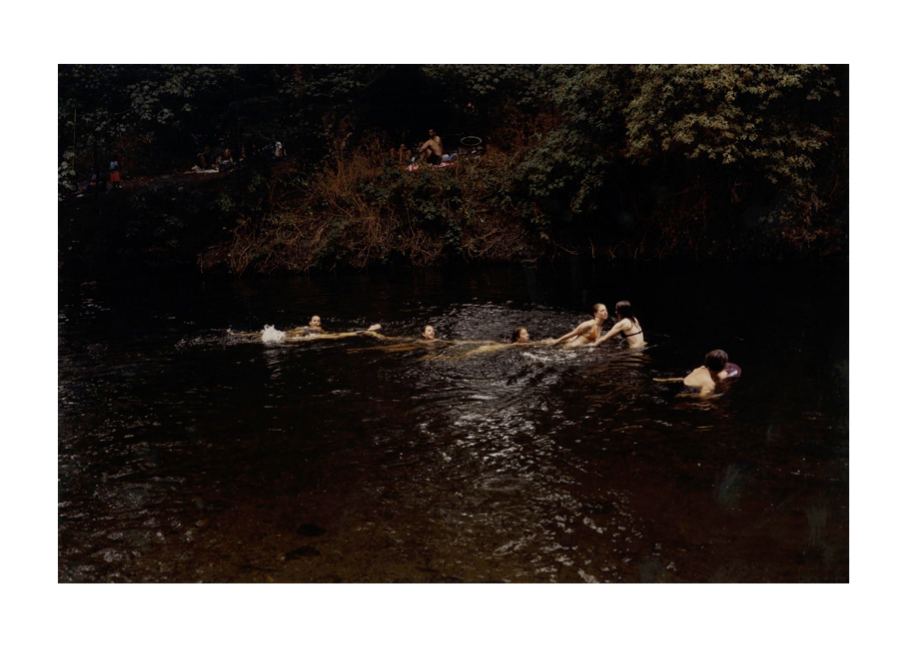
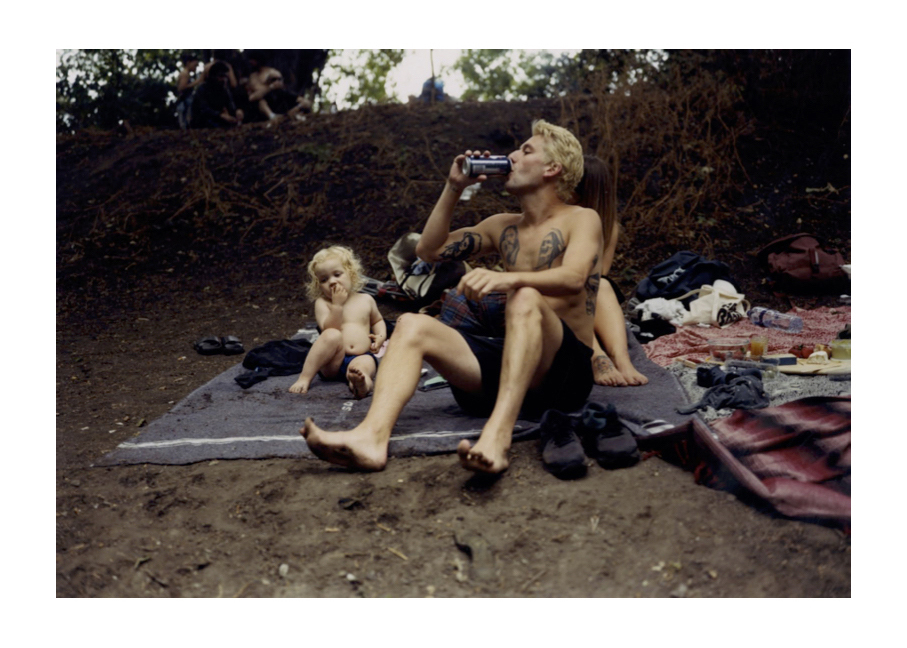
This is a bit of a random post but one that is nevertheless pertinent to my current thinking about landscape photography. I was not sure how to title it but have settled on this pun on the title of a recent work by a favourite artist/musician/writer, Richard Skelton – Landscapes with Absented Figures. This has been triggered by something I saw in The Observer newspaper this morning about a work by the photographer Nick Waplington, photographs of people swimming and generally just enjoying themselves by a river bank in Hackney.
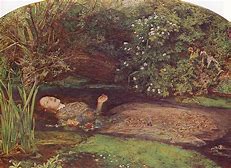
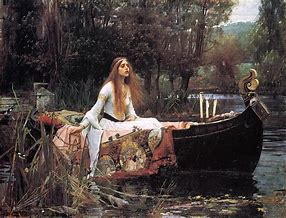
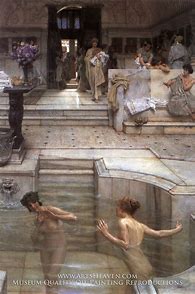
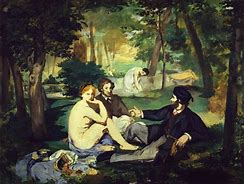
A couple of things really caught my eye and my imagination. First and foremost his pictures made me think of Victorian genre painting, in particular, that would not normally be associated with landscape – John Everett Millais’s Ophelia, Waterhouse’s Lady of Shallot, the coyly erotic confections of Alma Tadema (without the crystal clear, diaphanous water!) – and the likes of Manet’s Dejeuner sur l’herbe. What we have here is a photographer, of whom I confess I had not heard before, consciously playing with painterly conventions but nevertheless producing work that is wholly contemporary. Although not necessarily what one might call humanist photography it nevertheless strikes me as still socially concerned. Slightly to my surprise I like it so much I have just bought his book!
It is a far from profound notion but nevertheless an important one for me that this article got me thinking about the role of people in landscape photography. The title of this module is Landscape, Place, and Environment. Conventionally landscape painting has often included people, or at least references to their presence, their impact upon, and how they are affected by, the physical world. Ideas of place and environment are for me closely bound up with the same issues. From my own perspective, pretty views interest me little; how a physical place, the environment, is affected by people, how it in turn affects people, how they live there, is much more important. (Am I at heart a humanist, socially concerned photographer, or at least a would-be one? Quite probably.)
That in turn has brought me to reflect on some of the work that I have been looking at recently – ostensibly off-piste and not directly connected to the present curriculum – and to think about how in fact it is relevant to Landscape, Place, and Environment.
Two books particularly: Ragnar Axelsson’s Faces of The North (2019) (the recent re-issue of the 2004 original, which I unaccountably missed first time round) and Marketa Luskačova’s By the Sea (2019). (The same point though I can see applies equally to a lot of the work that attracts my attention and that I have focused on, buying the books, over the last few years.) The first is what at first glance appears to be just (!) a collection of portraits of people living in Greenland, the Faroes, and Iceland – places I have visited and love, environments that resonate deeply within me. The second, “street” photographs of people on the beach, mostly at Whitley Bay (the nearest bit of coast to where I live and somewhere I have visited a lot), in the late 1970s. (The same could be said of a lot of what I have been looking at throughout the year but these two are the ones that have landed on my desk within the last week or so and so are jostling more vigorously for attention.)
What both of these books do is portray people within particular environments. They are not simply pictures of the people, portraits, but images of people in particular places and give some indication of how those people relate to the places, how they live there, how the environments shape their lives, and to an extent how they in turn have an impact on those environments. I feel this is a particularly strong element in Axelsson’s work (who has spent a lot of time photographing the people of the Arctic and some of whose other books I have had for some years now) but I do not think it is fanciful to say the same of Luskačova’s work, though the environment she was concerned with is much less exotic, and notwithstanding that there is little in the physical appearance of the locations that would tell you where they in fact are.
Conclusion? People make the “landscape”? Needs more thought and no doubt I will continue to wrestle with this as I progress through the module.
Axelsson,R, (2019). Faces of the North. Reykjavik: Qerndu
Luskačova, M, (2019). By the Sea. Bristol: RRB Photobooks
A brief note on a new book that has been sitting in a pile of other recent acquisitions that are waiting, as patiently as books can, to be looked at in proper detail, that is beginning to show its relevance to the work that will no doubt be involved with this course.
I first came across Sugimoto’s seascape photos at the Stills gallery on Cockburn Street in Edinburgh, possibly as long ago as 1997, and was immediately struck by their haunting, almost abstract quality and have admired them ever since. Until then I had not really thought about the possibility of making landscape work that does not in itself tell you anything about place, or time. Such identifying information is available only through the accompanying captions. Their impact was enhanced by their physical size, as some were the better part of four feet by six, which gave them something of an immersive quality.
So when this new edition of his book was issued I snapped up a copy.
The sense of scale is unfortunately lost as the book is just less than a foot square. Nevertheless there is still a significant impact from simply having so many images gathered together, 150 or more. Apart from a brief introduction there is no text, just the photos and their bare, minimal captions, so the pictures have to speak for themselves. From this mass what comes across surprisingly clearly is that although all are in the same mode, a sea view with a more or less distinct horizon with any sight of land, and in black and white, there is so much variety.
What I suppose this work is saying to me now in the context of this Landscape course is that there are far more ways of depicting a landscape or environment besides a straightforward, pictorialist view. Apart from playing around with the idea of homage while working on EYV (https://markrobinsonocablog.wordpress.com/2017/10/04/exercise-5-2-part-2-homage/), in which I included my own Sugimotoesque seascape (below) I have not felt directly influenced by this work. Nevertheless I think it is something that is going to be at the back of my mind as I work through this course and I would not be surprised if my awareness of it does start to open different possibilities for viewing and representing landscapes that I encounter.

 Mark Robinson's OCA Landscape, Place & Environment Blog